MOLESKINE | Release of Four Architectural Research Paper Series
MOLESKINE
Limited Edition of 100 Copies Each, Available Exclusively at the Official Moleskine Online Store
Release of Four Architectural Research Papers
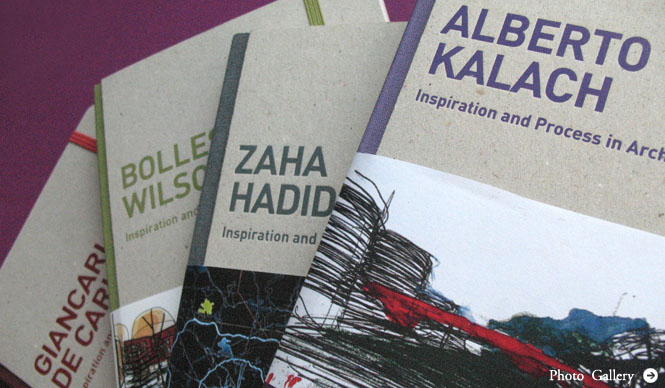
Moleskine presents "Inspiration and Process in Architecture," a series of four research papers exploring the design processes of four internationally acclaimed architects. These limited editions, with 100 copies of each title, have been available since late June exclusively through the official Moleskine online store.
Text by KAJII Makoto (OPENERS)
High-Quality Images Printed on Warm, Matte Paper
The "Inspiration and Process in Architecture" series, released exclusively by the official Moleskine online store, follows Moleskine's previous publications: "The Hand of the Architect" (2009), "The Hand of the Designer" (2010), and "The Hand of the Graphic Designer" (2011). This new series features monographs on Zaha Hadid, Giancarlo De Carlo, Bolles+Wilson, and Alberto Kalach, architects who are leading contemporary architecture.
The series profiles Zaha Hadid, who continues to lead futuristic architecture and designed the aquatic center for the Summer Olympics held this month in London; Giancarlo De Carlo, who made significant contributions to Italian urban planning; the German-Australian duo Bolles+Wilson, who exhibited the Science Museum Pavilion at the International Garden and Greenery Exposition (Expo '90); and Alberto Kalach, an architect increasingly recognized for his work in urban development in Mexico. Each monograph includes profiles, interviews, and images, revealing crucial insights and realities from the architectural field.
Furthermore, the series offers a glimpse into the creative processes of these international architects and the enduring power of handwriting and drawing, even in the age of AutoCAD®.
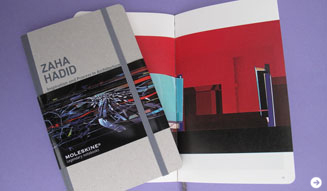
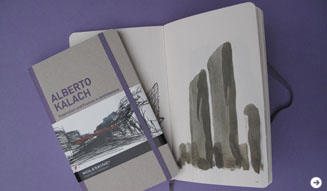
The binding of this series also incorporates fabric for the first time, inspired by the classical binding techniques first employed by typographer Giambattista Bodoni in the late 18th century. While retaining Moleskine's signature visual identity—including the elastic band, rounded corners, and expandable inner pocket—the spine is wrapped in fabric, and the cover features a grey cardboard finish.
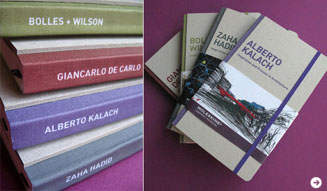
"Inspiration and Process in Architecture"
Price: ¥3,885 each
Size: 13 x 21 cm (Equivalent to Moleskine Large Notebook)
Pages: 144 pages each
*All text is in English
Moleskine
http://www.moleskine.co.jp/