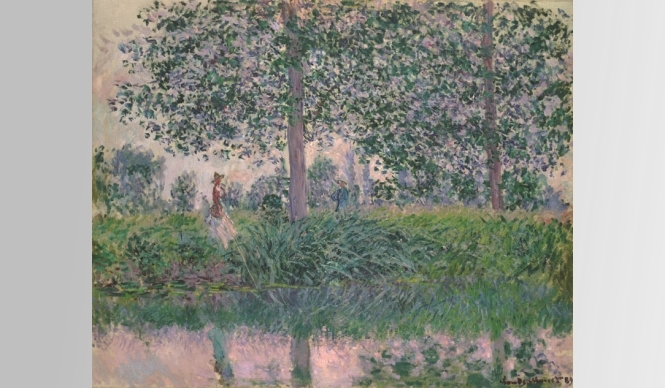
ART | 'Monet, The Eye That Sees Landscapes – Innovation in 19th-Century French Landscape Painting.'
ART | A Rare Opportunity to Compare Works from Two Museums
The National Museum of Western Art, Tokyo: 'Monet, The Eye That Sees Landscapes – Innovation in 19th-Century French Landscape Painting'
Monet, a leading Impressionist painter, is known for works such as 'Water Lilies.' This exhibition, 'Monet, The Eye That Sees Landscapes – Innovation in 19th-Century French Landscape Painting,' explores how his gaze perceived landscapes and how painting spaces emerged on canvas. It is on display at the National Museum of Western Art in Ueno until Sunday, March 9.
Text by YANAKA Tomomi
Works with Shared Themes Presented Together to Illuminate Monet's Perspective
'Monet, The Eye That Sees Landscapes – Innovation in 19th-Century French Landscape Painting' is a joint project by the National Museum of Western Art and the Pola Museum of Art, both of which house significant Monet collections in Japan. It offers a precious chance to compare Monet's works, including his series such as 'Water Lilies' and 'Haystacks.'
Cézanne, also an Impressionist, famously said of Monet, "Monet is nothing more than an eye; but what an eye!" Yet, Monet's gaze did not merely capture the sensory, fleeting impressions received from natural scenery. In his later years, suffering from cataracts that severely impaired his vision, he painted landscapes filled with evocative power, a purified inner vision born from memory.
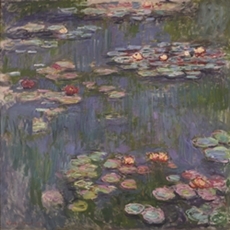
Claude Monet, 'Water Lilies,' 1916. Oil on canvas. The National Museum of Western Art, Matsukata Collection.
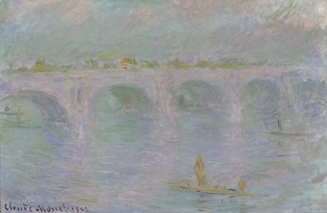
Claude Monet, 'Waterloo Bridge, London,' 1902. Oil on canvas, 65.7×100.5cm. The National Museum of Art, Matsukata Collection.
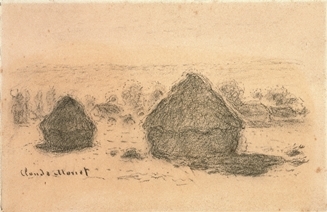
Claude Monet, 'Haystacks,' 1890-1891. Charcoal on paper, 23.3×29.2cm. The National Museum of Western Art.
The exhibition features around 100 works in total, centered on 35 of Monet's paintings, complemented by numerous major contemporary works selected from the collections of both museums, ranging from Manet to Picasso. It reveals the uniqueness of the painted spaces Monet created on canvas. Notably, works with shared themes, previously exhibited separately, are now presented side-by-side, allowing viewers to discern Monet's perspective through comparison.
This exhibition delves into the eye of Claude Monet, a leading Impressionist painter, and explores how his vision deepened throughout his long career.—The trajectory is examined through the collections of two museums.
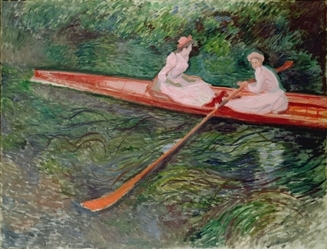
'Monet, The Eye That Sees Landscapes – Innovation in 19th-Century French Landscape Painting'
Exhibition Dates | December 7 (Saturday) – March 9 (Sunday), 2014 (*Closed Mondays, except when Monday is a public holiday, in which case it will be open and the following Tuesday will be closed.)
Hours | 9:30 – 17:30 (*Fridays until 20:00)
Venue | The National Museum of Western Art
7-7 Ueno Park, Taito-ku, Tokyo
Tel. 03-5777-8600 (Hello Dial)
Admission | General ¥1400, University Students ¥1200, High School Students ¥700