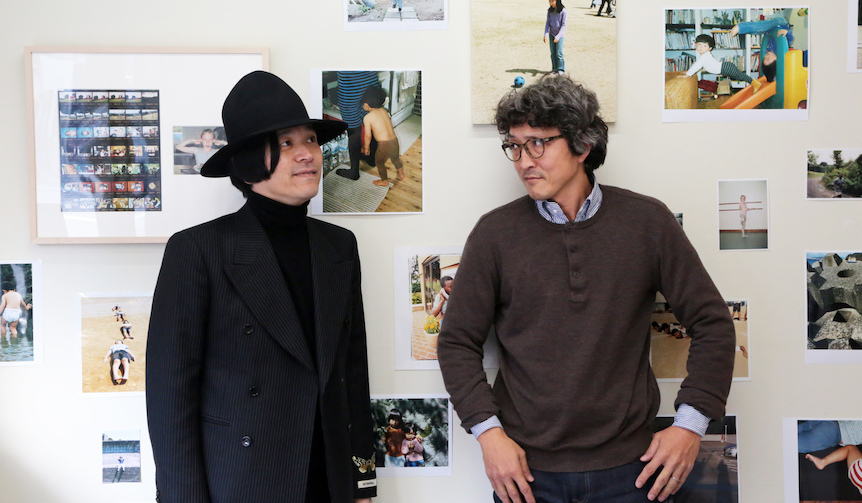
Tomoki Yusuke, Editor-in-Chief's Dialogue | Vol. 32 Kentaro Kase
Page. 1
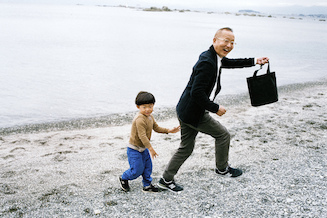
Our guest today is photographer Kentaro Kase. This conversation came about through a request from the "Editor-in-Chief," a big fan of Kase's "Dad, Are You Okay? Diary," a collection of stories about his family, documenting their realistic daily lives and the photos taken by a somewhat unreliable father. We delve into the book, filled with laughter and pathos, while discussing the nature of family.
Interview by Tomoki YusukePhotographs by Yuki SatoText by Satoko Hatakeyama
Many photos of children... it just happened that way.
Tomoki Yusuke, Editor-in-Chief (hereafter, Yusuke)It's a pleasure to meet you. I've been a big fan of your "Dad, Are You Okay? Diary" and have always wanted to meet you if the opportunity arose.
Kentaro Kase (hereafter, Kase)
I'm happy to hear that, thank you. Actually, this isn't our first meeting, Mr. Yusuke.
About 10 years ago, I photographed you once. I believe it was for the relaunch issue of the magazine "Ryuko Tsushin." It was a project where you were photographing actor Ryuhei Matsuda, and I was there to capture that scene.
YusukeHuh, really!? I had no idea!
KaseAt the time, I didn't know what you looked like until the day of the shoot. I greeted someone in the studio who I thought was you, but they didn't match my image. I mistakenly greeted someone with their black hair tied back and wearing a leather vest.
YusukeWho could that have been... Ah, perhaps it was Hirakawa-san from the location van!? (laughs) I still work with Hirakawa-san today, but he has a more imposing presence than me, so people often mistake him for me on set. He's so competent that even the staff and models remember him vividly.
KaseThat's right. After mistakenly greeting Hirakawa-san, you then made a stylish entrance into the studio (laughs)!
YusukeMy apologies, I don't remember that at all (laughs). By the way, I visited your photo exhibition today, and I noticed that most of the works on display were shot on film. Is that correct?
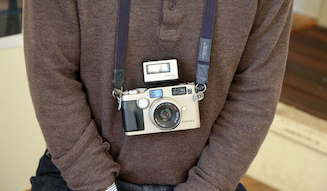
KaseYes, film cameras. The photos in "Dad, Are You Okay? Diary" were also taken with a film camera. I initially used a Ricoh GR1, but unfortunately, it broke. After that, I used this Contax G2.
YusukeWhat's the difference between shooting on film and digital?
KaseFirstly, you can't really carry an SLR camera around all the time, can you? I don't have a small digital camera, so I always carry this one in my pocket. For some reason, the right hem of my T-shirt always gets a hole in it. My wife always asks, 'Why does it always get a hole there?' and I never knew why. But then one day, I realized I was wiping the lens of this camera on the hem of my T-shirt, and it all made sense!
YusukeSo you were wiping it unconsciously on your hem (laughs). It says in the book that "Dad, Are You Okay? Diary" started as your blog. Did you intend to compile it into a book from the beginning?
KaseNo, not at all. At first, my wife's friend found the blog interesting and told her so. Then my wife suggested, 'Everyone says you should make this into a book, why don't you take it to a publisher?'
YusukeBefore getting married and raising children, did your wife have a job?
KaseShe worked in PR for a fashion brand. She mentioned that you occasionally came by to do rentals from that company.
YusukeReally!? Then we might have met. The interactions between you and your wife in this book are particularly exquisite. The episode about standing naked on the scale made me burst out laughing. I kept wondering why, and imagined various scenarios. Was it because your wife was pregnant at the time?
KaseNo, I still do that now, so I don't think that's it (laughs). May I ask you in return, how did you find out about my book?
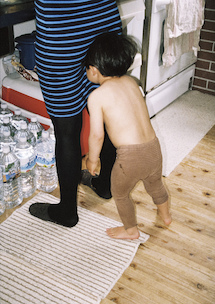
YusukeMy wife found "Dad, Are You Okay? Diary" first, bought it, and recommended it to me, saying, 'It's really interesting.' I like photos of children taken by Robert Doisneau, Arthur Elgort, and in Japan, Ken Domon, and I even have photo collections of their work. Your book, Mr. Kase, not only has wonderful photographs but also very amusing text. I felt a tremendous sense of showmanship. It doesn't seem like the children were forced to do anything, and the balance of that is also interesting. I thought the photos and text were edited together very well. I was laughing the whole way through.
KaseWow, you felt that way reading it? I'm so glad, thank you.
YusukeI have an older brother, and looking back, my father often took photos of me when I was young. I have many photos of my brothers, similar to the ones in your book. How do your children react when you photograph them?
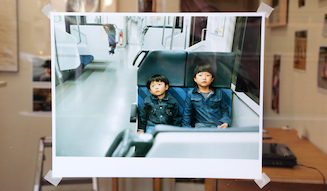
KaseMy younger son doesn't seem to be aware of it, but my older son was cooperative. He'd say things like, 'This is how we do it,' or 'Hurry up, or Dad will get grumpy,' and put his hand on my shoulder. So, the photos of us together have that dynamic. I suppose firstborns tend to have a more serious personality.
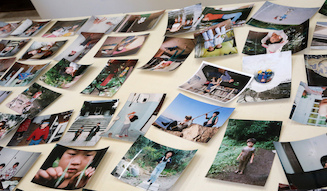
YusukeMale siblings are truly fascinating. Seeing your work at the photo exhibition, there are indeed many photos of children.
KaseIt just happened that way. My first photo collection was also about a boy, titled "Sugni the Boy's Diet Diary." He was a boy who lived about an hour away from London, where I went to study English.
YusukeSo, you became close with the people around you when you couldn't speak much English yet, and were able to take photos this closely? Mr. Kase, your people skills are incredible (laughs).
KaseWith adults, you can't spend a long time together without words, can you? But with children, that barrier isn't there, so you can spend a lot of time together. The photos of Sugni were also taken when I went to places with lots of children. Since I wasn't initially intending to make them into works for public display, the negatives are scattered. It's like how you don't take many photos when you're photographing a friend. It was also a time when I wasn't doing much myself, so I only photographed Sugni and the other kids. Later, I went to a photography school in London, and it was so much fun that I was incredibly sad to leave them. By taking photos and playing soccer together, I had become somewhat popular.
YusukeI see. They seem to have really let their guard down with you.
KaseWhen I went to London, I felt lonely, so I put together this book to give to Sugni the next time I saw him. I created a story about Sugni working hard on his diet, and even drew pictures. I took a set of prints of the photos from that time and submitted them to a publisher, which led to the book. At that time, the publisher asked, 'We have this other thing, would you like to see it?' So, I borrowed this book from Sugni when I went to London, and I still have it. I suppose I have to return it, though.
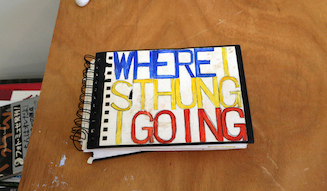
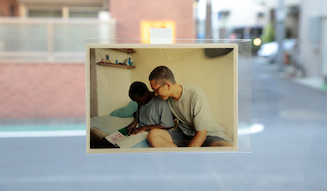
YusukeHow old do you think Sugni is now?
KaseHe was 14 when the book was published, so he should be around 28 now. He's currently in Africa. His older brothers married Londoners and live in the UK, but he couldn't get a visa, so he went to university in Kenya and now lives in Malawi. It's hard to see him because he's so far away.
YusukeIn the end, did he manage to lose weight?
KaseNo, he didn't lose any weight at all.
YusukeIt's great that the conclusion is that he didn't lose weight despite trying hard to run. And there are photos of him making a mess while eating, making you think, 'No wonder he didn't lose weight!' The fact that he didn't lose weight is also interesting.
KaseRight? But not many people say that. The effort to try and lose weight is what gives daily fulfillment, so it doesn't matter if he doesn't lose weight. That's the point (laughs).
Page02.You're the first person to read this deeply and engage with it!
Page. 2
You're the first person to read this deeply and engage with it!
YusukeReturning to "Dad, Are You Okay? Diary," your titles are also very skillful, Mr. Kase. 'Macaroni,' 'Chrysalis.' I even gave someone the nickname 'Chrysalis' when I was little (laughs). Did the style of combining photos and text develop over time?
KaseI didn't think about it at all at first, but when the editor suggested I write some text, I was unexpectedly praised. I had a lot of fun writing for this book. It was so enjoyable, I couldn't stop.
YusukeThe beginning of the book starts with a somewhat stingy tone, doesn't it? That stingy setup is also good. It makes you think, 'I can relate to that.'
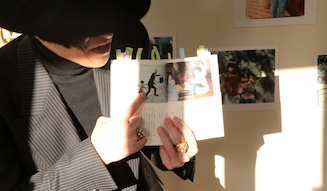
KaseMy wife says I'm quite stingy. I also wrote about my father haggling over my mother's engagement ring, but perhaps it's a stingy family trait, given my father's nature.
YusukeWhere in Osaka are you from, Mr. Kase?
KaseNear Sumiyoshi Taisha Shrine.
YusukeThat's a mecca of comedy! So you grew up watching Yoshimoto New Comedy and Shochiku New Comedy shows, right? Which channel did you watch, Yoshimoto or Shochiku?
KaseI watched both. Since I was young, I leaned more towards Yoshimoto, but I did try to incorporate a bit of the Shochiku style in this book.
YusukeA touch of 'sadness' is characteristic of Shochiku, isn't it? It makes you feel a little sad. Yoshimoto doesn't have that sadness, but Shochiku has tears after the laughter.
KaseSince you also have roots in the Kansai region, Mr. Yusuke, perhaps that's why my book resonated with you? (laughs)
YusukeI've read it very thoroughly. I could tell exactly when a family rift occurred, like when you left the children to play by yourself and then argued with your wife the next day. And the punchline of coming home with a cake at the end is something I really love.
KaseWow, that's amazing. It's true, I can't go into details here, but a small incident did happen. But you're the first person to pinpoint that so accurately!
YusukeGoing out to play while feeling guilty towards your family must mean something happened. And that guilt is definitely conveyed to your wife. So, when the episode suddenly jumped to the next night, I was very curious about what had happened in between. This part really has that Shochiku feel, doesn't it? It's like a sentimental series, a masterful touch of Kanmi-bushi (laughs).
KaseThe children were very happy because I bought them cake, though.
YusukeThat's the most important thing. Cake after something has happened is always good. It settles things down, and then it leads into the episode of the letter to your son. This part is particularly moving. And the environment in Zushi must also be nice. Is it a comfortable place to live?
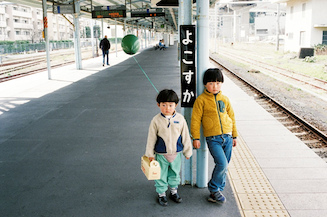
KaseI personally prefer the city, but Zushi is a good place to live. It's relaxed, and there's plenty of space.
YusukeThe text on the back of the book's obi also resonates. I've been working as a freelancer for about 32 years, and it's quite challenging, isn't it?
KaseWhat? Even you find it challenging!?
YusukeNo, no, no, it's tough. However, I don't have the courage to ask my wife, 'Are you going to work?' (laughs). I admire your grit, Mr. Kase. You know those moments when you sense your partner's bad mood? The part where you wrote, 'It's better not to say anything,' really struck a chord. That also has a Shochiku feel, doesn't it?
There are so many pages I like, but the story about 'Take-chan,' who helps with my photography, is also very good. He's a truly kind person.
KaseHe's actually older than me. It's fun to go for drinks with him after work.
YusukeI also liked the episode 'Mom is Spiritual,' and I really related to the page 'A Man's Etiquette.' That awkwardness you feel when you run into an acquaintance of your wife while walking with her. Not being able to be too casual, and inevitably coming across as unfriendly.
KaseThat's right. It's difficult.
YusukeReading this made me realize I need to refine my 'etiquette as a man.' I apologize for turning this into a one-sided fan monologue (laughs). Lastly, I'd like to ask about photography. What does 'photography' mean to you, Mr. Kase?
KaseIt's... 'incidental.' Like, incidental to living. For me, meeting people is more important, and I feel like I'm taking photos incidentally. It's like taking a photo as an afterthought when I meet someone and say, 'Oh, how have you been?'
Yusuke'Incidental' is a wonderful word. In the book, you also wrote that you take photos because you think, 'Maybe I should leave this behind.' I'm sure Sugni the boy also has a record of 'my un-dieted youth was here.' Thank you so much for today. If you have any upcoming projects, please let us know.
KaseHmm, nothing at the moment. It's a blank slate for now (laughs).
YusukeThen, I eagerly await a sequel with the second and third sons in "Dad, Are You Okay? Diary"! (laughs)
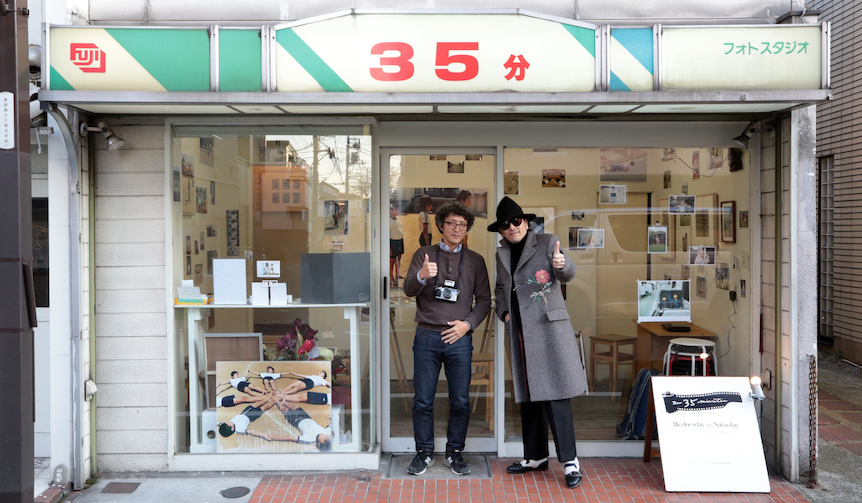
Kentaro Kase
Born in Osaka Prefecture in 1974. After working at a photo studio in Tokyo, he studied abroad in the UK. He is now a freelance photographer active in books and magazines. His previous works include "Sugni the Boy's Diet Diary" (Little More) and "You Didn't Have to Take Photos" (Terme Books). His blog is still being updated.
http://kasekentaro.blogspot.jp/
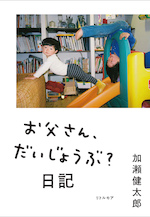
"Dad, Are You Okay? Diary"
By Kentaro Kase, Little More, 1600 yen