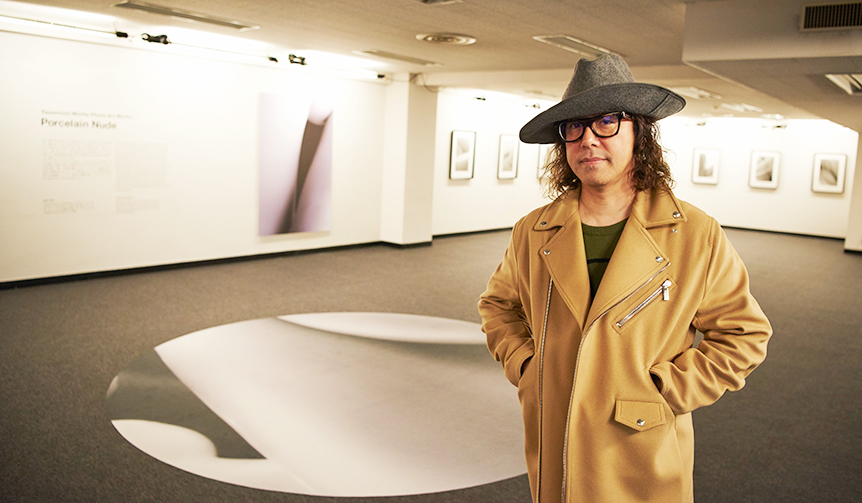
Tomoki Yusuke and Editor Great Demon King in Conversation | Vol. 14 Yasumichi Morita
Page. 1
Yasumichi Morita of GLAMOROUS co.,ltd., who has undertaken numerous projects worldwide, also has a hidden talent as a photographer. He held his first photography exhibition in Paris last year and, just last month from November 18th to 20th, participated in "ART PHOTO TOKYO -edition zero-," a photo fair showcasing works by photographers and video creators active on the global stage, held at the Kōyō Building in Kayabacho, Tokyo. At the ART PHOTO TOKYO venue, we spoke with him about how he came to photography and his thoughts on design.
Interview by Yuma TomokiPhotographs by Junji HataText by Sara Ando (OPENERS)
The Female Body: Pursuing a Ceramic Texture on a Flat Surface
Tomoki Yusuke & Editor Great Demon King (hereafter, Yusuke)Congratulations on your exhibition. All the works are wonderful. When did you start taking photographs, Mr. Morita?
Yasumichi Morita (hereafter, Morita)Thank you. I started taking photographs privately around the age of 20. Being from the fashion generation, in my 20s, magazines like "ELLE" and "VOGUE" found in hair salons were my textbooks. Back then, there weren't many reference books on interior design or design in general.
YusukeThat was precisely the era of supermodels in their prime.
MoritaThat’s right. It was the era when Linda (Evangelista), Cindy (Crawford), Helena (Christensen), and others were active. I was particularly fond of fashion photography, especially monochrome, so I took photos by imitation. I carried a camera with me wherever I went.
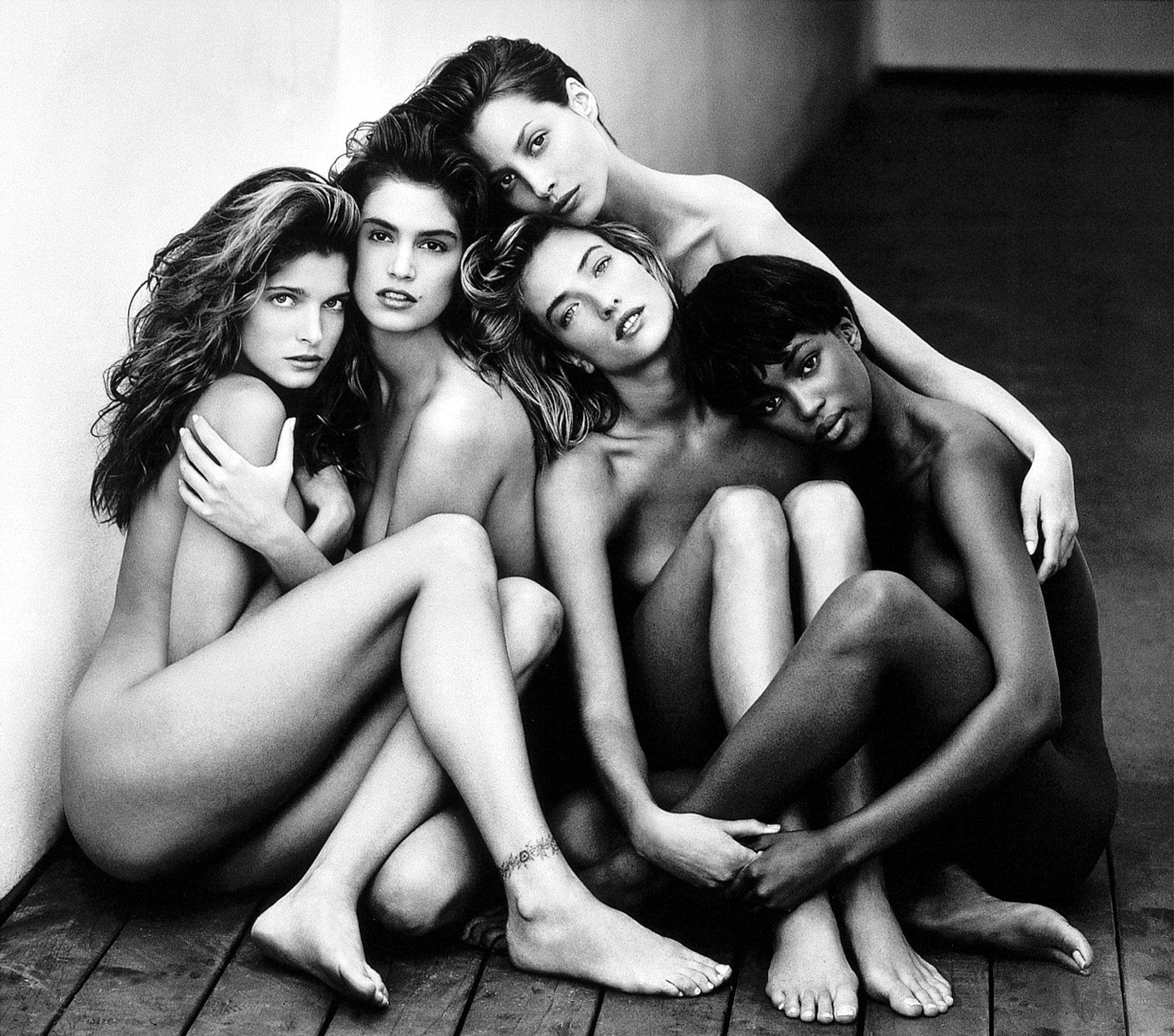
A portrait captured by Herb Ritts in 1989, featuring legendary supermodels Stephanie Seymour, Cindy Crawford, Christy Turlington, Tatjana Patitz, and Naomi Campbell.
From the Instagram of model Tatjana Patitz: https://www.instagram.com/tatjanapatitz/
YusukeYou held your first solo exhibition in Paris last November. What was the catalyst for that?
MoritaI had been looking for monochrome abstract photographs for some time. However, when I searched for pieces that would match my interior designs, I couldn't find anything suitable. I had been taking photos for a while, so I thought, "Why don't I take them myself?" That was the starting point. The works exhibited this time were shown in Paris last year.
YusukeThe title is "Porcelain Nude." Could you tell us more about it?
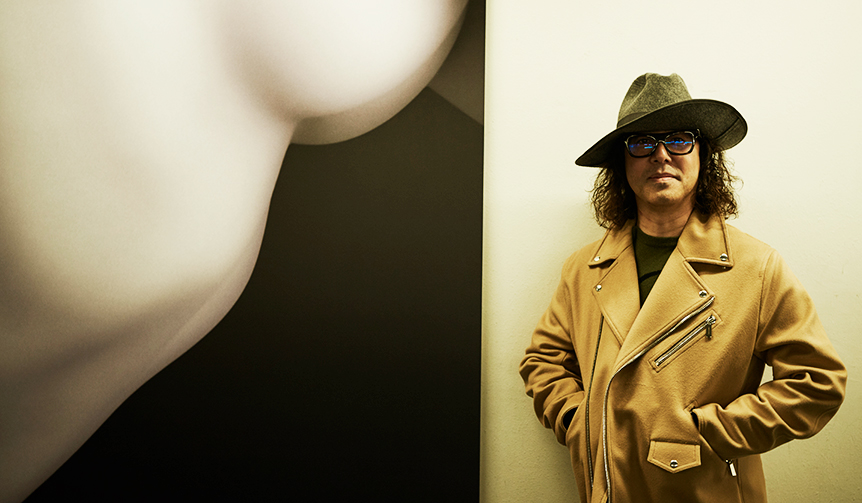
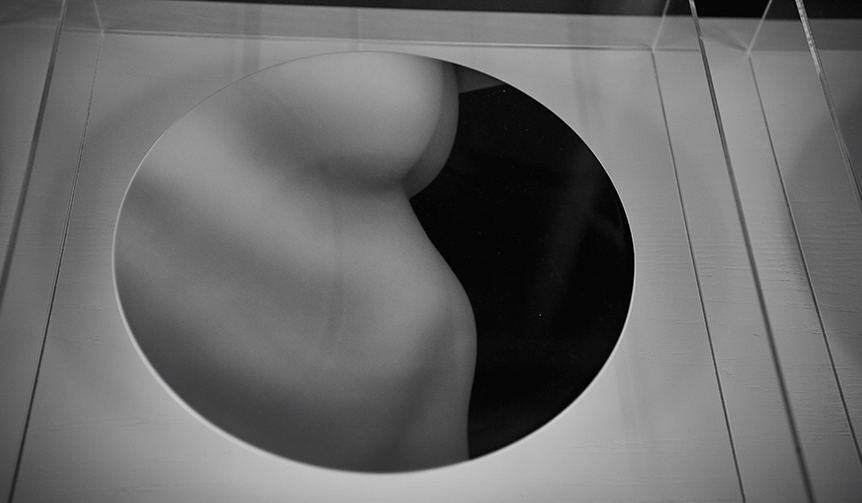
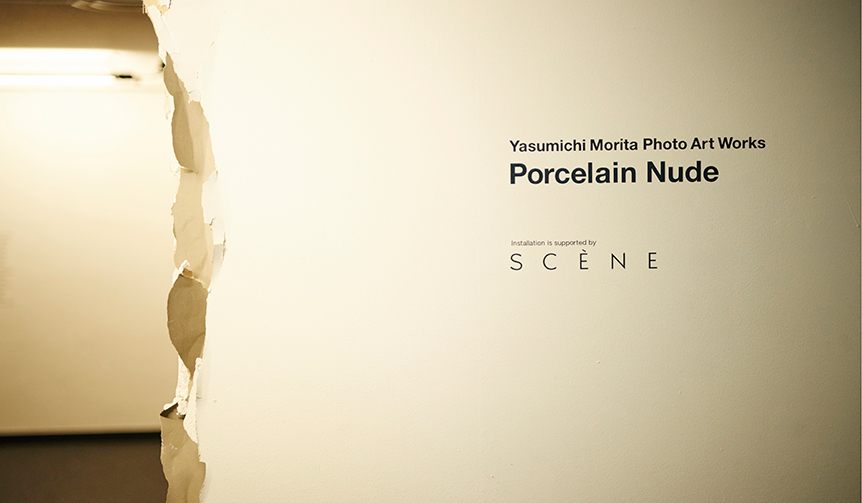
MoritaThey are essentially nude studies of the female form, but I've abstracted them to a point where viewers might not immediately recognize them as such. All were shot from a distance of 40 centimeters, making them quite close-up shots.
YusukeAt first glance, I didn't recognize them as the female body. It's interesting how it leaves room for interpretation – whether the viewer perceives it as a body or not.
MoritaSomeone even asked, "Are these sand dunes?" Art is open to the interpretation of the beholder. It's perfectly fine if some see a female body, others see sand dunes, or perhaps ripples of moonlight on water.
YusukeThat's wonderful. There aren't many photographs like these. They are like flat sculptures within a space.
MoritaI searched extensively for this kind of photography in many places, but while sculptures existed, photographs like these were rare.
YusukeIn fashion photography, even nudes typically show the entire body.
MoritaExactly. When the full figure is visible, it becomes a depiction of a person, which is what I wanted to avoid. I aimed for ambiguity.
YusukeI like that. They don't feel intrusive or suggestive, so they could easily be displayed in a living room.
MoritaMany people hesitate to display nude photographs in homes with children, but these are different. We've had couples purchase them, saying they are suitable.
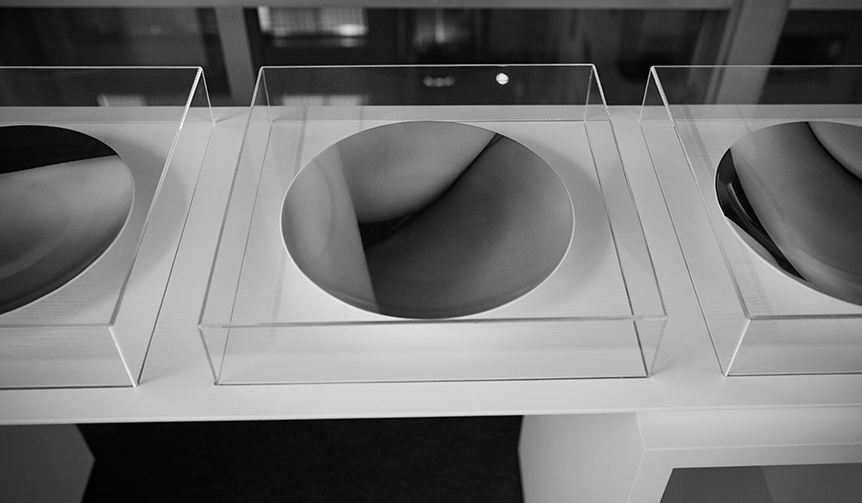
YusukeYour approach must be different from other photographers, Mr. Morita, as you consider the entire space when shooting, not just the subject.
MoritaIt's true that I shoot with the intention of them being displayed in a space, rather than being stored away. Having art in one's life brings happiness.
YusukeHow did you arrive at the theme for this series?
MoritaSimply put, I wanted a ceramic-like texture on a flat surface. I thought that perhaps shooting the human body in monochrome might achieve this. That was the starting point. I believe the world consists of only straight lines and curves, and I am always conscious of these two elements. And I think the most beautiful curve in the world is the female body. It's said that the Coca-Cola bottle was inspired by the female form, and car designers must surely be conscious of it. With ten women, there are ten different curves, but each one traces the most beautiful arc.
YusukeThat's fascinating. Architect Oscar Niemeyer also mentioned drawing inspiration from the female form. And by abstracting these beautiful curves, you make people wonder, "What is this a photograph of?" The frames are also very stylish.
MoritaDespite the abundance of frames available, truly minimal and sharp ones are surprisingly rare. So, I had these made as well. They might look like metal due to their thinness, but they are actually wood.
YusukeSo, a minimal and sharp frame with a curved photograph at the center. Arranging them in a row looks very striking.
MoritaThank you. Incorporating curves within a square format creates a sense of strength, which I believe helps convey the message more effectively.
YusukeYou're also exhibiting ceramics this time, aren't you?
MoritaThey were produced by Bernardaud, a French tableware manufacturer with a 190-year history. As the title suggests, they are made of porcelain.
Page 02.The Reason for Continuously Photographing the Monochrome World Invisible to the Eye
Page. 2
The Reason for Continuously Photographing the Monochrome World Invisible to the Eye
YusukeYou mentioned you've been taking photos as a hobby since you were 20. Have you always shot in monochrome?
MoritaAlmost exclusively with black and white film. While I say I've continued taking photos, it was mostly just taking them and looking at them myself.
YusukeWhat is the appeal of monochrome for you, Mr. Morita?
MoritaIt might connect to interior design. When considering interiors, the most crucial element is lighting. Not just creating beautiful light, but how to create beautiful shadows – that's the most important thing. How to create cool, deep shadows is the same principle as makeup, isn't it? You create shadows to add depth. While our vision is in color, reducing it to monochrome creates a world of light and shadow. That, to me, is the greatest appeal of monochrome.
YusukeI see. That's a beautiful perspective. Speaking of shadows, it reminds me of something Juzo Itami once said. When producing horror films, he would use shadows to evoke fear... Is that unrelated?
MoritaShadows are fascinating. In my current photographs, for example, I'm using front lighting, but it creates truly beautiful shadows. You can really see how humans are formed by the connection of various curves. The human body has bones, but the physical body itself has no straight lines.
YusukeThat's intriguing. What camera do you use?
MoritaA Leica Monochrom, handheld. My eyesight isn't great, so I'm really concentrating when I shoot (laughs). It's quite challenging to use a Leica.
YusukeI use a Leica too, and focusing can be difficult. But I suppose that's part of the appeal.MoritaI like your worldview. How long did it take to shoot this?
MoritaAbout three hours.
YusukeThat's fast!
MoritaI can't hold my breath for that long (laughs).
YusukeHave you photographed anything else interesting recently, besides nudes?
© Yasumichi Morita
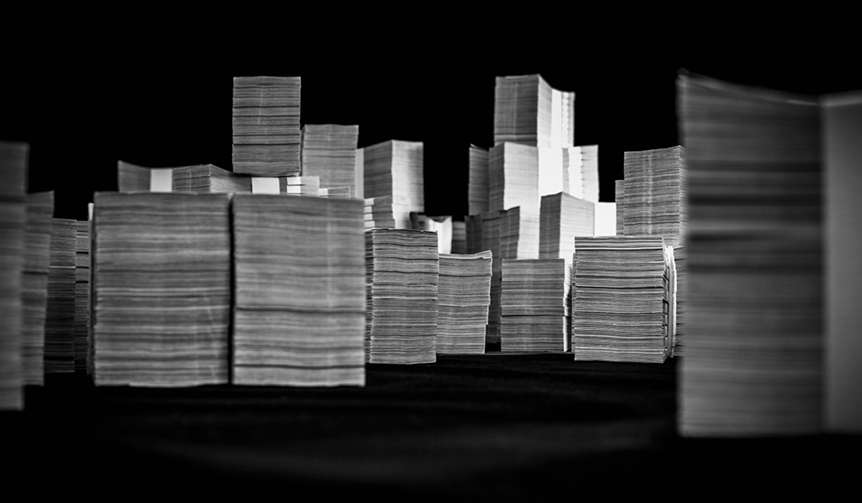
© Yasumichi Morita
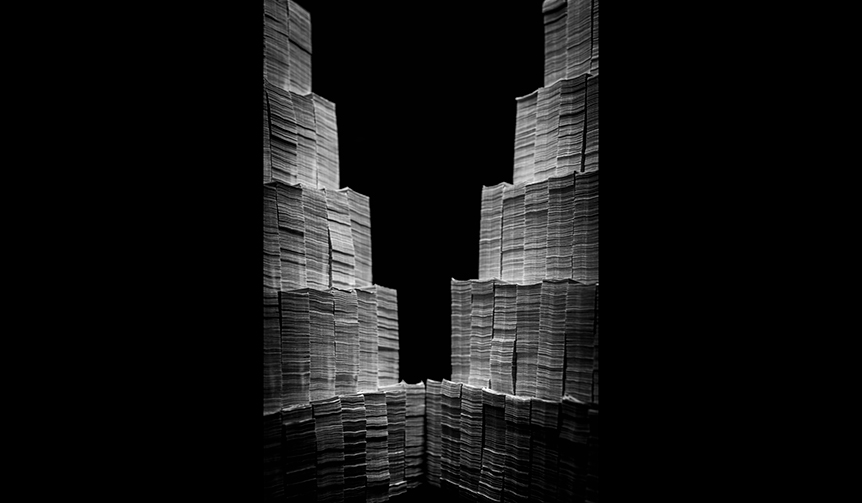
MoritaI presented it at Paris Photo recently: I photographed 1 billion yen.
YusukeWhat! In cash?
MoritaYes, stacks of 10,000 yen bills totaling 1 billion yen. Like the nudes, I shot them up close, so they didn't look like currency at first glance. When I reveal, "Actually, this is 1 billion yen," the reaction is incredible. It made me think about the value of money.
YusukeWell, it's essentially just layers of paper. Still, that's amazing. When you look closely, you realize, "Wow, this is 1 billion yen?" It's a brilliant idea.
MoritaYou can't see the faces, but there are 100,000 Yukichi Fukuzawas (laughs). The mass of bills, resembling buildings or the cross-section of a tree, created a strangely beautiful aesthetic, I think.
YusukeIndeed, what is the value of money, really?
MoritaIn the past, people carved stones to use as currency. Then it evolved to gold, silver, and copper, eventually leading to paper money. Perhaps a few hundred yen could build a fine shop before the war, but as the value of money changes over time, the question becomes: what can you achieve with a certain amount of money? It's asking, "Where does your value lie?"
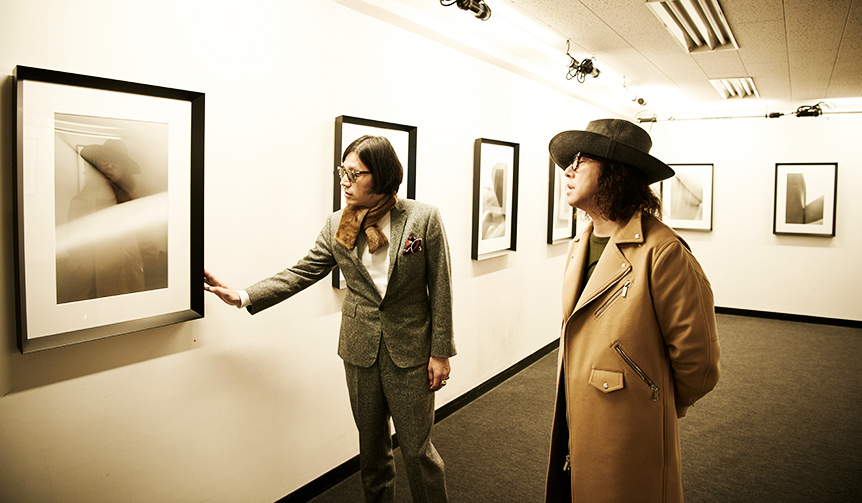
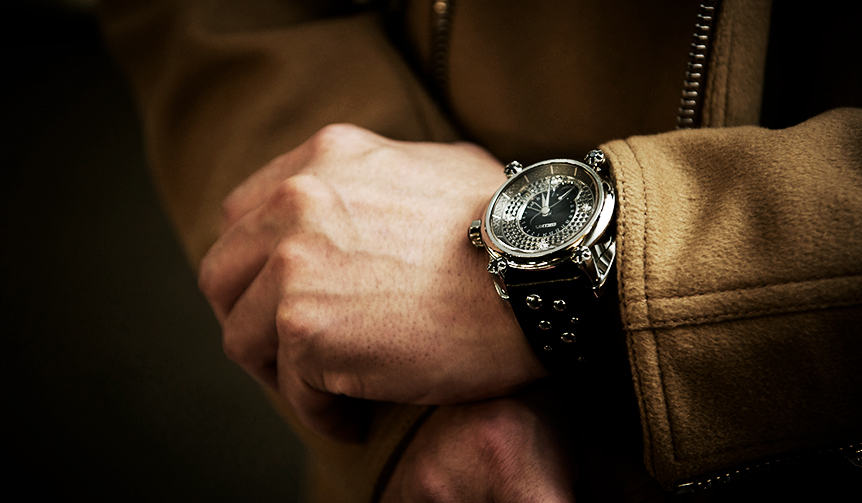
YusukeThrough clothing, I feel similarly. In an era where fast fashion allows us to go anywhere, I wonder about the value of expensive clothing.
MoritaI agree. It's the same with my photographs. Even if I take a picture with my iPhone, I still go through the process of developing it onto film and printing it using silver gelatin. That's a method that goes completely against the current trend.
YusukeWhat does that signify? Does it mean you want something timeless, something to cherish for a long time?
MoritaIt might be going against the times, but I want to preserve things.
YusukeLegacy?
MoritaLegacy.
YusukeBecause, will you wear fast fashion next year?
MoritaNo, I won't.
YusukeI have an overwhelming amount of legacy clothing. That's it, I'll call it a 'legacy closet'.
MoritaYou can't bring yourself to throw them away, can you?
YusukeIt's a predicament. Precisely because it's this kind of era, I believe things that don't fade with time become increasingly important.
MoritaPlatinum prints, at least, last for 200 years. I won't be around in 200 years (laughs), but it would be nice if they were.
YusukeIndeed. It would be nice if they were displayed. They influence those who see them.
MoritaI don't think photography will disappear.
YusukeWhy do you think so?
MoritaAs long as the digital world and internet civilization exist, analog things will continue to flourish. New record shops are opening, and there are even record players with digital functions. There are generations who are moved by the beauty of analog, so rather than just preserving the past, I believe we will see innovation that blends tradition with modernity.
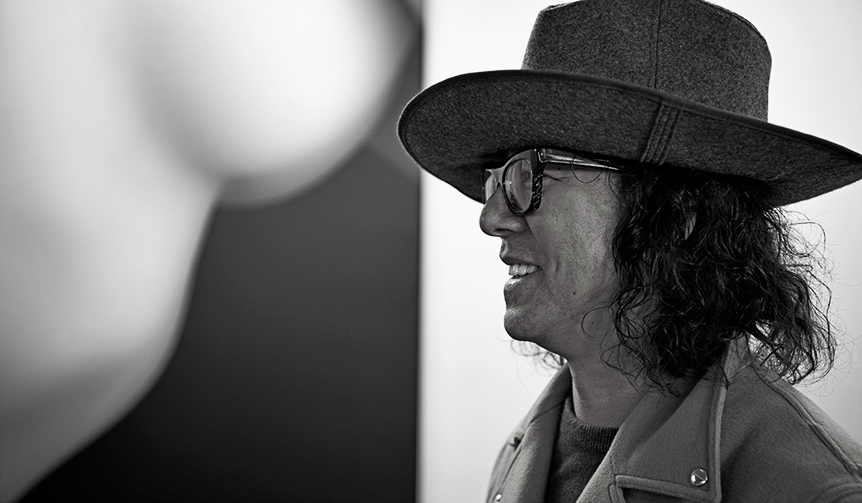
YusukePerhaps that's where we find authenticity.
MoritaThe photographs here are also created by transferring digital images to film. We make negatives and print them using silver – a process that completely reverses the current trend.
YusukeThank you for sharing these valuable insights.
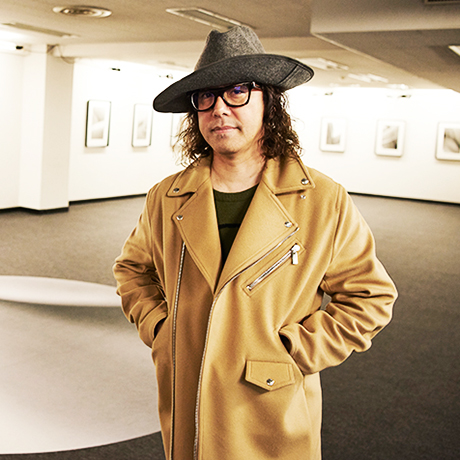
Yasumichi Morita | MORITA Yasumichi
Designer / Representative of GLAMOROUS co.,ltd. Born in Osaka in 1967. Beginning with a project in Hong Kong in 2001, he has expanded his activities internationally to New York, London, Qatar, and Paris, engaging in a wide range of creative work beyond interiors, including graphics and products. In 2013, following the women's apparel and accessories floors, the "Isetan Shinjuku Main Store Redevelopment Project" for the living and children's floors was completed in 2015. His first collection of works, "GLAMOROUS PHILOSOPHY NO.1," was published by Parco Publishing in 2013. He held his photography exhibition "Porcelain Nude" in Paris in 2015 and again in 2016.