March 2, 2015
Junji Tanigawa | Series Vol. 5 "Delvaux Gallery"
Part 5: "Delvaux Gallery" (1)
This August, the flagship store of "Delvaux," the world's oldest luxury leather brand, opened on the first floor of "GYRE" in Omotesando. This time, we'll introduce a limited-time project held prior to the opening,"Delvaux Gallery"which was filled with fantasy and wit, inspired by Delvaux's atelier (workshop) in Brussels. The space embodies the brand's unique worldview in Tokyo, characterized by solid quality backed by history and tradition, and a playful spirit that surprises the world with its sometimes unconventional designs. It's a place to journey through an unfathomable 185 years of history. That is the "Delvaux Gallery."
Text by Junji TanigawaPhotographs by Kozo Takayama
Expressing the Brand's World Beyond Words in Space
At the end of August, Delvaux's flagship store opened on the first floor of GYRE. The beautiful, white boutique is a fitting space for the world's oldest luxury leather brand, born in Brussels, Belgium, in 1829. Known as the "official bag of the Belgian Royal Family," it is quite famous in Europe, as well as in its home country. However, in Japan, it is still an exclusive brand known only to a select few. I wondered how to introduce such a brand to the Japanese public. As I pondered various ideas, I thought, why not create a "Gallery" during the flagship store's construction period, also serving as a teaser, to allow people to experience the brand's worldview? Expressing the brand's world beyond words in space.—Just thinking about it made me excited.
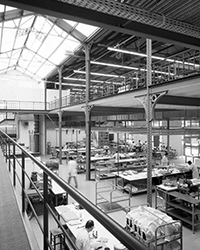
To design the gallery space, I visited Delvaux's headquarters in Brussels. The place, called the atelier, is where skilled artisans meticulously create top-quality products, and the offices that manage the brand are beautifully integrated into a single space. The factory, a renovated building within an old industrial complex (※) built in the early 1900s, had an elegant and tasteful ambiance. It was a space that instantly excited visitors after being modernly renovated.
What particularly impressed me were the "colonnades." Although they were an existing architectural structure, the steelwork from over 100 years ago formed exquisitely sensual curves, and the rhythm of the rivets, driven by necessity, created an indescribable charm.
※Industrial complex: A vast industrial complex housing numerous maisons and artisan ateliers. It was constructed in two phases, in 1901 and 1930. Delvaux has been located there since 1994.
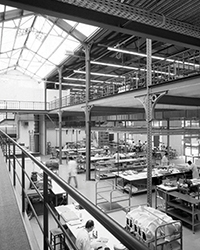
The calm and meticulous work being done in that atmosphere was beautiful and comforting. The "library," archiving all the products created over its 185-year history, was also impressive. The long-standing relationship with the Belgian Royal Family was also wonderful. The marriage of aesthetic sensibility and wit was truly the essence of the world's oldest luxury leather brand.
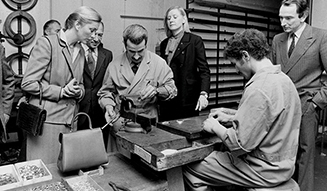
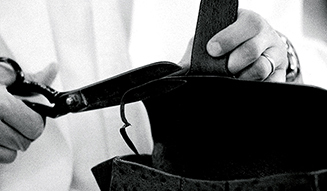
The items in the library are rarely seen by the general public. It's akin to a "historical archive" in a typical company. The space overflowed with the brand's potential, constantly innovating and evolving while preserving tradition. It had avant-garde elements, edgy and fashionable.
While deeply respecting history and tradition, there is no rigid adherence to the past. As part of the fashion domain, the maison is constantly required to create new expressions. This mindset is the biggest difference from "traditional crafts," which are typically passed down through generations. The attitude of "always continuing to create new things" has persisted for 185 years. Moreover, what particularly stayed with me was how the people within the company genuinely enjoy this evolution. While possessing a traditional philosophy, they continuously challenge themselves with innovative creation. Experiencing this atmosphere firsthand was the greatest takeaway from the visit.
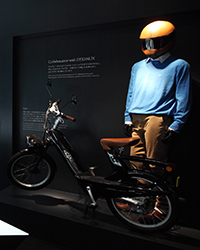
In the atelier, not only handcraft but also state-of-the-art machinery and technology are introduced to enhance precision. Young apprentices learn alongside experienced artisans. The balanced fusion of technology and craftsmanship continuously brings a fresh perspective.
We brought some of the "uniqueness" born from the Delvaux atelier to Omotesando. For example, a motorcycle created in collaboration with "Solex" (※), and acrylic objects in collaboration with contemporary artists. For the motorcycle helmet collaboration, we were able to exhibit it alongside Tintin (from "The Adventures of Tintin"), a representative Belgian character.
The collaborations with various brands, made possible by the consistent high evaluation since its founding and the "official purveyor to the Belgian Royal Family" status since 1883, will likely continue to increase in the future.
※ Solex: A French machinery manufacturer once known for its mopeds. In 2010, they produced a limited edition of 30 collaboration models with Delvaux, featuring leather accents on saddles, handlebars, and helmets.
Part 5: "Delvaux Gallery" (2)
Beautifully Blurring All Boundaries
Back in Japan, I began to formulate the concept for the "Delvaux Gallery." The first thought that came to mind was that a museum-like exhibition, simply arranging history chronologically, wouldn't suit the brand. I wanted to convey a sense of ongoing history, an atmosphere of top-tier fashion that feels traditional yet modern. How could I translate the live energy of the atelier and the youthful vibe of the brand into a spatial experience? It wasn't about replicating the atelier's space exactly, but about capturing its essence. The image became clear, but specific design details eluded me for several days.
As I pondered and reviewed materials, suddenlya photographcaught my eye. I learned it was taken for the British magazine "Wallpaper" (※) some time ago. This was the very spot where I had stood and reflected during my visit to the atelier. It was precisely a photo taken from there. It offered a panoramic view of the entire office and factory. Standing here, I could see everything in the atelier.
※ Wallpaper: A design magazine founded in the UK in 1996, covering a wide range of themes including fashion, art, and lifestyle.
The precise work of the artisans, the conversations of the staff moving about, the sound of carts carrying cut materials and supplies. The soft sunlight pouring through my favorite "colonnades" and the glass canopy. The atmosphere I found so appealing was captured in this photograph. I imagined that the "Wallpaper" photographer, after being guided through the atelier, was brought to this spot and captured the scene before them.
Yes, I decided to construct this exhibition based on this single photograph. Once the core of the composition was set, materials and ideas flowed like a spring, making it difficult to pare them down.
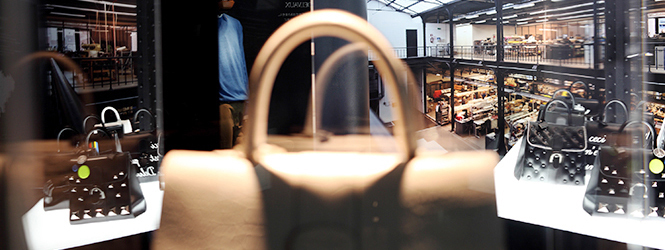
By centering the exhibition design around this single photograph, the axis for expanding the composition became clear. The entrance was a giant photo frame. The concept was to enter a trompe-l'oeil-like space where the photograph and exhibits were intricately combined. It was like a real-life "Alice in Wonderland." In the center of the space, we recreated the colonnades that had so impressed me as a symbol of the atelier. Since there were no blueprints, I meticulously analyzed the photos I had taken on-site to reproduce them accurately. The maison's members who attended the opening of the "Delvaux Gallery" were truly surprised and delighted by this.
A technique I often use in spatial composition is lighting that directly utilizes the light within a photograph. This method involves incorporating the shadows from the photograph into the exhibition space, blurring the boundaries between the real shadows and those depicted in the image. For this project, which aimed to project Delvaux's timeless worldview into the space, this approach felt perfectly suited.
The soft daylight filtering through the canopy in the main photograph. The light in the photo is brought to life through actual lighting effects, creating an illusion as if sunlight were truly entering the space. To further enhance this effect, I placed a single column in front of the background photograph. Yes, the image is as if we borrowed a column from within the photograph. The presence of both the column in the photo and the real column beautifully blurred the boundary between the photographic world and the actual space.
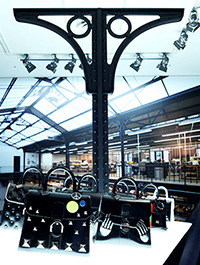
For the finishing touch, I designed an internally illuminated main table, with a line extending from the handrail in the photograph. This massive, slanted lighting table is the centerpiece of the wonderland. Imagined as a fashion show runway, the bags proudly parade across this table. The special "L'heure du Brillant" (="whimsical sparkle") models of the brand's signature "Brillant" bag were displayed in a truly spectacular fashion. The runway, illuminated by a beautiful, strong white light, seemed to connect directly from the Belgian atelier to Omotesando, captivating visitors' eyes.
The table, designed as a runway, is also slightly tilted to match the slope in the photograph. This tilt had another purpose. I believe bags are most beautiful when carried by someone. Just as clothes look many times more appealing when worn by a person than when hanging on a hanger. A handbag is most beautiful and charming when a woman carries it, stops, or turns. Its true expression shines when it interacts with everyday movements.
Of course, the bags displayed on shelves are beautiful, but I am firmly in the "movement" camp. By adding an element of "movement" to a static viewpoint, the exquisite balance is conveyed realistically. The diagonal angle, intended to create a sense of motion in the display, is my personal touch to highlight the bags' allure.
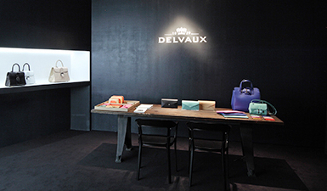
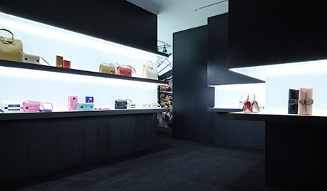
The adjacent room housed a pop-up shop displaying the latest items. This area was designed simply to make the products stand out. However, Delvaux's signature touch is evident in the details. For example, the display counters were created by combining antique tabletops with reproductions of legs from old factory machinery. This was specially made to express the mixed aesthetic of the Delvaux atelier. To create a sense of non-ordinary, floating display shelves were designed using light. The shelves appear to emerge directly from the wall without visible supports, with the seams carefully concealed to create an illusion of depthlessness.
The space narrating the maison's timeless DNA is based in black. The space speaking of cutting-edge fashion is based in white. By creating a contrast based on concept and clearly dividing the spaces, a unique, Delvaux-esque pop-up museum was born. We wanted visitors to feel as if they were transported to Brussels, transcending time and space. In this place filled with beautiful illusions, we hoped they would experience a journey that oscillates between the everyday and the surreal.
Part 5: "Delvaux Gallery" (3)
It's Not Cool Without a Twist
The bags themselves are simply beautiful. I was obsessed with creating an environment that wouldn't detract from their beauty. I wanted the space to be like stagecraft, where the products themselves strongly appeal, rather than the space asserting itself. A stage only shines when there are actors, a prima donna, and soloists.
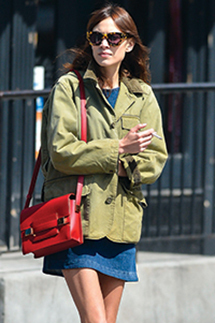
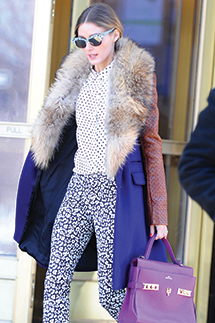
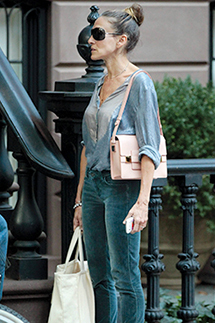
We exhibited videos of celebrities who are fans of Delvaux bags. In the casually edited, coquettish footage, celebrities who know quality were seen using them with genuine ease in their daily lives. Delvaux is for off-duty moments, not just for formal occasions. It boils down to simplicity and sophistication. But Delvaux doesn't stop there. There's fashion, the creator's passion, fantasy, wit, and that certain 'esprit' that Europeans cherish, which I feel lies at the brand's core. A sense of, "It's not cool without a twist." Not going to the extreme, but possessing the power to do so and then playfully deviating.
The "fantasy" and "wit" that the brand embodies have remained unchanged for ages. The special "L'heure du Brillant" (="whimsical sparkle") model of the "Brillant" is a prime example. A bag with hands, holding a rose. A bag covered entirely in mirrors. And personally, I love the bag that says "Ceci n'est pas un Delvaux" (This is not a Delvaux).
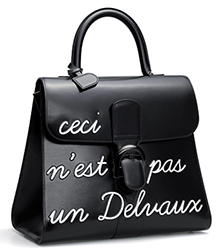
These designs are unthinkable for traditional maisons, but they transcend the realm of practicality and usability, existing as the highest level of fashion art created by artisans. And despite embodying such wit, the meticulous attention to detail is truly impressive, befitting a prestigious maison.
I believe they are likely "lifetime" possessions. Of course, the price reflects that. The question is whether one can feel, "I want to spend my life with this." Many people probably inherit and use items from their grandmothers, giving them value beyond a "lifetime" possession. They hold a beauty that one wishes to pass down to the next generation.
However, this is not about stripping things down to their primitive essence for transmission. It's about something imbued with fantasy, humor, and a general 'esprit.' They possess an aura that perfectly matches the highest praise of any given era.
It changes yet remains timeless. This is truly remarkable. That's why it's such a powerfully strong brand. I believe this is the "power" of a prestigious maison. In essence, it's not just about making things. It's about providing value that cannot be materialized. If visitors can feel that taste and mood in this space, then as a spatial designer, my mission is accomplished.
Delvaux Gallery
Dates: Friday, April 25 - Sunday, June 22, 2014
Venue: EYE OF GYRE
3F GYRE, 5-10-1 Jingumae, Shibuya-ku, Tokyo
Tel. 03-3948-6990
Organizer: GYRE
Planning: HIRAO INC
Total Produce: Junji Tanigawa (JTQ Inc.)
Delvaux Omotesando Store
Business Hours: 11:00 - 20:00
Address: 1F GYRE, 5-10-1 Minami-Aoyama, Shibuya-ku, Tokyo
Tel. 03-6418-0983
http://ja.delvaux.com/