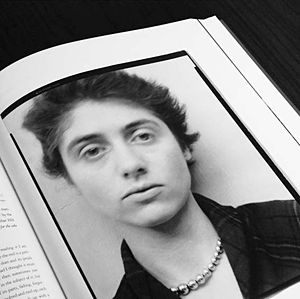
Learning from Diane Arbus (2)
Diane Arbus (2)
Learning to Live!
text by IIZUKA Hidemi
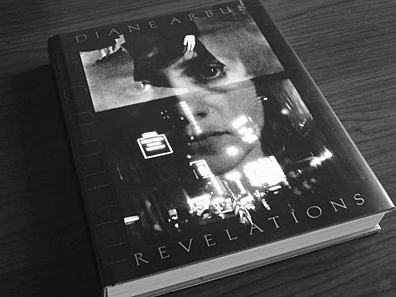
All of the following is from the photobook DIANE ARBUS "REVELATIONS" (San Francisco Museum of Modern Art / Publisher: Random House, New York, NY 2003).
The photobook DIANE ARBUS "REVELATIONS" (San Francisco Museum of Modern Art / Publisher: Random House, New York, NY 2003) is a collection created to commemorate the exhibition "DIANE ARBUS REVELATIONS" held at the San Francisco Museum of Modern Art in 1999. It features works by Diane Arbus up until her death in 1971, as well as letters and diaries sent to her acquaintances.
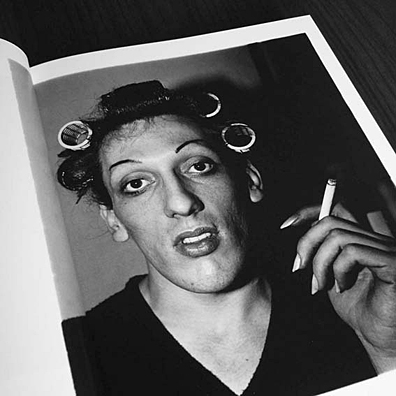
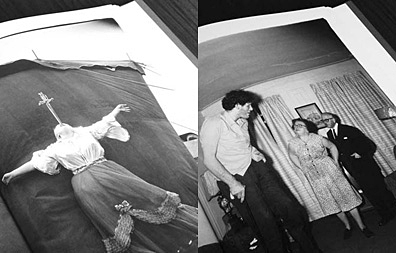
It also includes photographic criticism by Sandra S. Phillips and Elisabeth Sussman, the curators of this exhibition, and a discussion on printing techniques by Neil Selkirk, who has handled all of Diane Arbus's photographic prints since her passing.
At 350 pages, it is a substantial collection that requires considerable time and ability to fully comprehend, but it offers a wealth of learning opportunities.
Alexey Brodovitch, Lisette Model, John Szarkowski, Edward Steichen, Marvin Israel, Richard Avedon, Weegee, Hiro.......
It clearly explains the stories of those who were contemporaries of Diane Arbus, and the philosophy that guided her photographic practice.
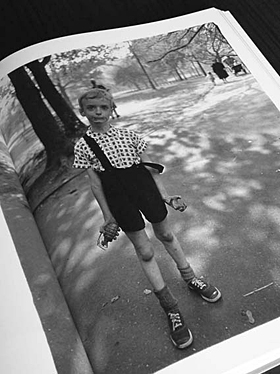
While I do not intend to critique Diane Arbus's photographs, I have had a certain feeling when looking at her work.
Lately, I have encountered many magazine articles, comments, and blog posts discussing environmental issues and wars around the world. It is true that we all wish for an end to war, for global peace, for children to grow up in harmony with nature, and for people everywhere to live in peace, transcending religious differences.
Information on global social issues is conveyed from media such as newspapers, television, and the internet, as well as from experts, to the general public. However, it seems that many people adopt this information as their own opinions and consciousness, and then express their views and comments.
Upon seeing scenes of dead children or hearing reports of machine guns firing in conflict zones like Africa or Afghanistan, some people develop a sense of righteousness, adopt a virtuous persona, and make pronouncements—even if they do not engage in volunteer activities.
Is it truly considering global environmental issues to worry about Arctic warming while disregarding the air conditioning settings in one's home or the exhaust from one's car?
What are your thoughts on diamonds smuggled from Africa or illicit drugs from Afghanistan, sold in Japan, potentially funding wars and terrorist activities on the other side of the globe?
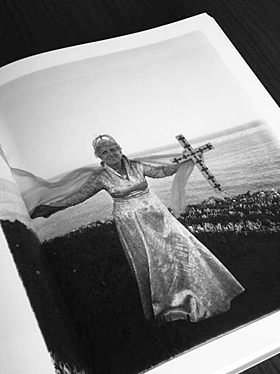
I do not believe the "deep impression" I gained from Diane Arbus's photographs can solve world peace or protect the environment. However, by experiencing these feelings, I can better understand myself. Instead of focusing on large global issues, I can notice small, everyday events and questions around me. By taking these seriously, I can recognize the importance of living, and perhaps, these efforts will one day lead to global peace and happiness.
Let's learn to live from Diane Arbus's photographs!