The Distant Road to Color Photography: Part 3
A Conversation with Fred JOURDA - Part 2
© Fred JOURDA
HidemiWhen was your first solo exhibition?
FredI started photographing landscapes in 1996, and my first solo exhibition was in Cape Town, South Africa, in 1998.
In 2000, I exhibited at Gallery 213 in Montparnasse, Paris; in 2001, in Bamako, Mali; in 2003, in Breda, Netherlands; and in 2004, at Galerie ACTE2 in Paris. This November, I was finally able to hold a small solo exhibition in Tokyo for the first time. Although I could only display about 15 works, the results were very good.
One must be happy if even one more person takes an interest in their work!
© Fred JOURDA
HYou mentioned that your father gave you a KODAK 224 camera when you were seven, which was your introduction to photography. Was your father also involved in photography professionally?
FActually, my father was a color print technician at PICTO for 43 years starting in 1960, supporting the lab alongside its founder, Pierre Gassmann. He initially handled monochrome prints, then moved on to color. He was a wonderful man who loved color printing until his retirement a few years ago, dedicating his knowledge and skills to photographers worldwide.
HWith his retirement, another set of artisanal techniques and lab secrets, unobtainable from books or the internet, has vanished from the world. What a shame!
Does your father take photographs himself?
FOf course, he takes photos as a hobby, but I don't think he has any desire for exhibitions. Perhaps he wants to maintain a free relationship with photography? I might feel the same way.
© Fred JOURDA
HYour father's influence must have been significant, in all aspects?
FLooking back, I suppose growing up in that environment naturally led me to be interested in photography, but there was absolutely no pressure whatsoever.
I decided to attend photography school in Paris on my own. I bought my first enlarger with money I earned from part-time jobs, and my father wasn't even home when I made my first monochrome print in the bathtub.
When I decided to work part-time at PICTO to earn money, I did ask my father for help, or rather, for a word on my behalf. Even after I started working full-time at PICTO, my father and I never worked together. So, I never received any of that traditional transmission of skills from father to son. It's truly a shame, as it's so important! Since my father has retired, it's impossible to learn his techniques and sensibilities now.
© Fred JOURDA
HThis is my last question: What do you think Paris is as a place for photographers?
FOf course, I think it's a wonderful place. I don't photograph Paris much myself, but it's a fantastic city for both taking and viewing photographs. However, despite the many wonderful museums and galleries, and the outwardly impressive artistic culture that France prides itself on, it has become more of an art business than artistic culture. For renowned artists, it's a truly wonderful place, or perhaps I should say, a city!
(End of conversation)
© Fred JOURDA
Concluding Thoughts on the Interview with Fred JOURDA
When preparing for this conversation with Fred JOURDA, I had intended to ask him about his preference for color photography under the title "The Long Road to Color Photography" – why color over monochrome, and the allure of color photography. However, in the end, there was no need to ask those questions.
The British writer George Orwell began writing poetry at the age of four or five, with his mother transcribing his words. From a very young age, around five or six, he thought he would become a writer when he grew up, and although he tried to abandon that idea until he was 24, the awareness that he would eventually write books never left him.
He also states that there are four motives for writing: apart from the need to earn a living. These are pure egoism, aesthetic passion, historical impulse, and political purpose.
Egoism, the desire to be famous; aesthetic passion, the desire to communicate one's own valuable experiences to others; historical impulse, the desire to see things as they are and record them for posterity; and political purpose, the desire to move the world in a certain direction.
I have no intention of imposing or understanding whether Fred JOURDA creates his work based on these four motives described by George Orwell.
Even if he simply has a straightforward desire to show and convey to others what he sees through his lens, I don't sense from him any attempt to connect that to all desires and expectations.
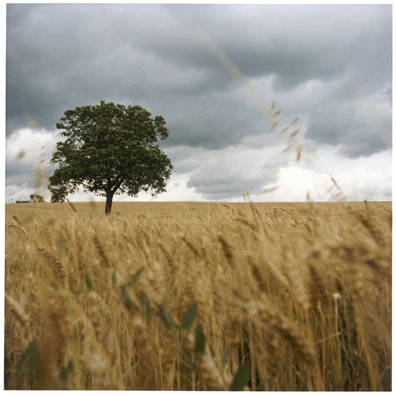
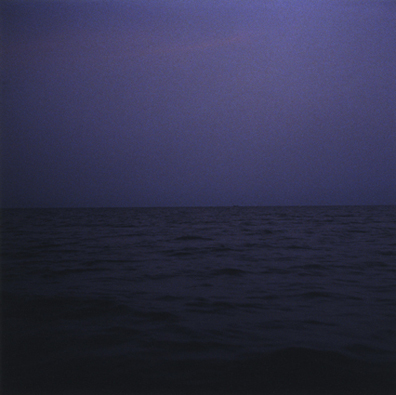
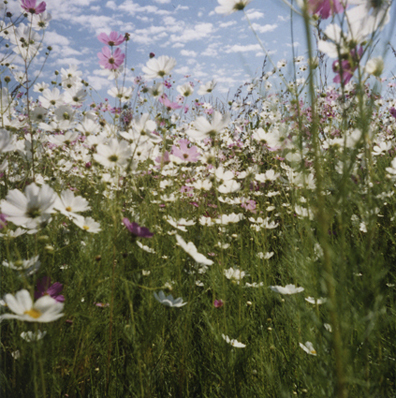
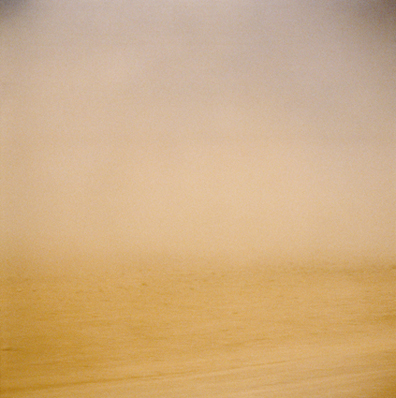
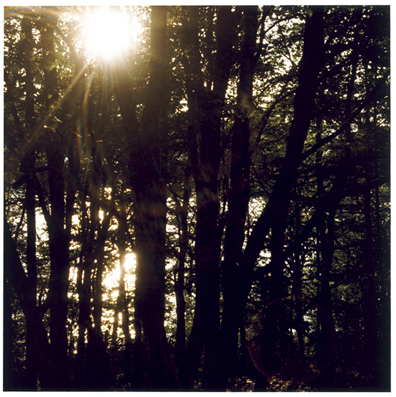
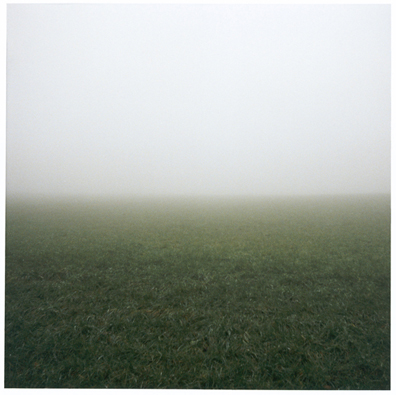
The landscapes he sees on his travels, the large tree in the middle of a field seen from a car, the desert, the night sea, the cosmos fields – in these seemingly ordinary scenes, there is no particular stimulus, emotion, desire, or egoism. There is only the "place," the "time," and the "memory," and I believe he simply uses his camera to "record" them, to turn them into photographs.
I don't know if he foresaw his future when his father handed him the camera at age seven, much like George Orwell in his childhood, but it is certain that he still cherishes the memory and joy of that moment.
© Fred JOURDA
© Fred JOURDA
© Fred JOURDA