What Photographer Yoshihiro Takagi Captured in the Disaster Areas
Yoshihiro Tatsuki | '3.11 Scars'
What Photographer Yoshihiro Tatsuki Captured in the Disaster Areas
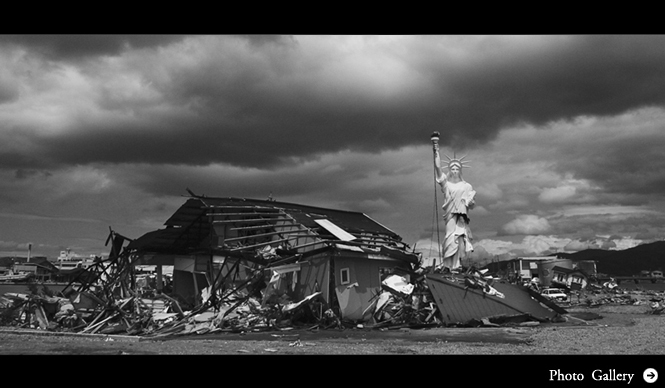
Beneath low-hanging clouds, a replica Statue of Liberty still stands tall amidst the scars of the tsunami. This is one of the photographs from "3.11 Scars," a series by photographer Yoshihiro Tatsuki that ran on OPENERS from September 11 to October 11. Like many photographers, Tatsuki traveled to the disaster-stricken areas and captured images. We spoke with him to understand the thoughts behind the photos he took in a land that suffered unprecedented damage.
Photo: Yoshihiro Tatsuki
A desolate world of gray, with only the eerie sound of waves
──First, could you frankly share your current thoughts on society after 3.11?
We live our lives surrounded by the limits of our current environment, facing risks greater than in any previous era. These include environmental risks like global warming, typhoons, earthquakes, and tsunamis; technological risks from food additives, genetic modification, and nuclear power; and social risks such as unemployment and rising crime. The scale of the disaster brought by the Great East Japan Earthquake and the subsequent tsunami is immeasurable, but it has deeply affected not only the victims but people worldwide, who have offered their support. Even after six months, the landscape of the disaster-stricken areas remains desolate, but I believe in recovery through nature's restorative power and humanity's strength to overcome all challenges. While events in the natural world are inherently impermanent, there is great potential for recovery through the wisdom gained from human-nature coexistence.
What is truly regrettable, even infuriating, is the Fukushima nuclear accident. The excuses offered by the so-called experts, scholars, and organizations involved consistently revolved around "unforeseen circumstances." Their lack of crisis management for unexpected events, despite engaging with nuclear power, stemmed from arrogance and a failure to possess true intelligence – the ability to "read the inner workings" of the technology.
Becoming intensely angry and agitated obscures the true meaning of an issue and diminishes its reality. Therefore, ordinary people must also remain calm. If the times are abnormal, maintaining a sober perspective is the sane approach.
──Which cities did you visit?
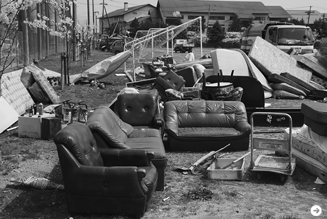
I had intended to go as far as Fukushima and Miyagi on March 19, but I was unsure if I could find gas stations and worried about how far I could travel on a full tank. In the end, I visited Kashima Shrine in Ibaraki Prefecture, Oarai Town, Nakaminato, and then Choshi City and Asahi City in Chiba Prefecture before returning to Tokyo. I was struck by the sight of the Kashima Nada coastline completely covered in small debris and shells, and the scene in Asahi City's Iioka where the tsunami easily overwhelmed the low seawall, devastating the town. Amidst the cleanup, people seemed to recall the worst moments, and their dazed expressions are etched in my memory.
On April 26, 46 days after the earthquake, I went to Miyagi Prefecture. Gasoline was the biggest issue, but I set out with the understanding that I could refuel locally.
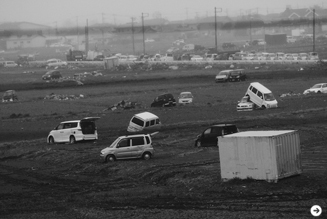
In April, I visited Higashimatsushima City, Minamisanriku Town, and Ishinomaki City in Miyagi Prefecture, and I had to insist on staying overnight at a guesthouse in Kesennuma. This guesthouse was situated slightly uphill and had survived despite all 30-odd guesthouses in Kesennuma being washed away. Of course, electricity and water were still out. Under the light of a generator, the couple recounted their stories of the earthquake and the subsequent tsunami. Arriving at the guesthouse after driving through complete darkness without any lights, I remember being breathless at the view of Kesennuma from my window the next morning. Although the weather was bad, a gray world stretched out, devoid of the sounds of daily life, with only the eerie sound of waves.
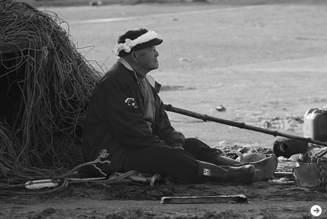
From May 10 to 12, I visited schools in Higashikawa Town, Hokkaido, and with the cooperation of Canon, delivered cameras and other equipment. These were schools whose photography club equipment had been washed away or rendered unusable by the tsunami. The six schools we contacted in advance and understood the situation were all high schools in Miyagi Prefecture.
Subsequent trips to Tohoku also made accommodation difficult, forcing me to travel back and forth from Sendai or Morioka to the disaster areas. Accommodation should be prioritized for those involved in reconstruction.
May 28-29: Sendai City, Miyagi Prefecture (Tohoku Genki Matsuri), Sendai Airport, Yuriage Town, etc.
June 24-26: Watari Town, Minami Town, Yamato Town, Ishinomaki City, Miyagi Prefecture
August 3: Soma City, Fukushima Prefecture
August 25-27: Tago, Miyako City, Iwate Prefecture; Rikuzentakata City
Before I knew it, I had visited many places in Tohoku.
Yoshihiro Tatsuki | Yoshihiro TATSUKI
What Photographer Yoshihiro Tatsuki Captured in the Disaster Areas
His Own Experience of the Great East Japan Earthquake
──It seems you visit disaster areas whenever a disaster occurs. Is that correct?
My first experience with disaster was not a natural phenomenon but a man-made one: war. I witnessed an air raid from my childhood evacuation site in the countryside, seeing the sky engulfed in red flames. When I returned to the makeshift shack my family built in Tokushima after the war, the town was a scorched plain, with nothing left. I could see the steam locomotive from Tokushima Station for two stops; there were no houses, no people. I was in the second grade of elementary school. My grandfather and father took panoramic photos of the scorched Tokushima town from Mount Bizan, which remain valuable records.
At the end of 1946, we were hit by the Nankai earthquake, a natural wonder. An earthquake of magnitude 5 as a child felt like the heavens and earth were tearing apart. My father tried to calm us as we panicked during the aftershocks by building a bonfire in the burnt-out area, which served as our yard, and telling us how devastating and tragic the Great Kanto Earthquake of 1923 had been, suggesting that this earthquake wouldn't be so bad. But people were clearly unsettled; some were fleeing towards the mountains from the direction of the sea along the main street.
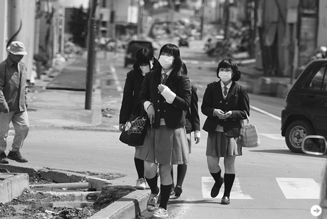
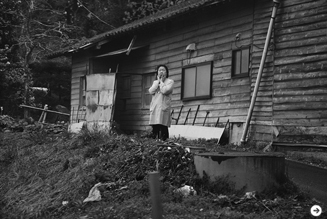
In 1995, the Great Hanshin-Awaji Earthquake occurred. I saw the place I had fond memories of visiting as a high school student, traveling by small boat from Tokushima to see the movie 'East of Eden,' devastated on television. For some reason, I felt compelled to see it for myself and went, despite not feeling well and my family's objections.
I stayed one night at a hotel in front of Osaka Station. Since walking the 40km to Kobe was out of the question, I flew by helicopter from Yao, Osaka, two weeks after the earthquake, without much thought. Needless to say, I was surprised by the helicopter bill later. I was struck by how the damage from fires was clearly distinct from the earthquake damage, and by the countless blue tarps covering roofs. I will never forget what the taxi driver who picked me up in Kobe said: 'It shook, it really shook! It shook like it was angry!'
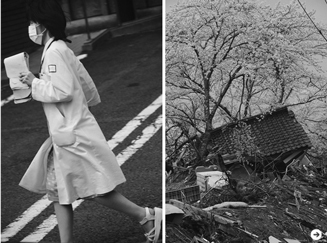
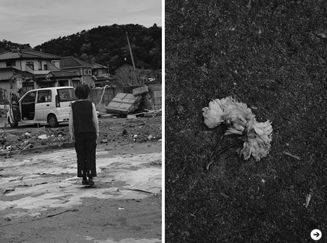
Since then, earthquakes of magnitude 6 or greater have occurred somewhere each year, though there were no particularly large earthquakes in 2002 and 2006. Then, on March 11, 2011, came the magnitude 9 earthquake and tsunami. Even without it being called a once-in-a-millennium event, it must have drastically changed most people's outlook on life, and the public reaction was not one of self-restraint, but a complete halt. The frequent cancellations of work appointments were quite bothersome. More surprisingly, I realized that most parts for various companies were manufactured in Tohoku. The automotive, camera, and beer industries, among others, were unable to deliver their finished products.
Still, the resilience of the disaster victims, who continue to live their daily lives meticulously even at the brink of despair, and the volunteers who have gathered from all over Japan to help in Tohoku are truly admirable. However, as this is a long-term endeavor, the real challenge lies ahead.
Regarding the "urgent reality" of radiation and other issues, it is crucial to visit the actual sites and disaster areas with your own senses, rather than relying solely on the media. Otherwise, ignorance can breed arrogance. Keeping this in mind will prevent us from forgetting. There is perhaps no greater suffering for a human being than to be forgotten or ignored.
Yoshihiro Tatsuki | Yoshihiro TATSUKI
What Photographer Yoshihiro Tatsuki Captured in the Disaster Areas
To Overcome This Hardship
──I believe many people are feeling a sense of emptiness in the face of such immense loss. In such circumstances, what do you think we can do?
The first photograph in this series (uploaded on September 11) is of the Statue of Liberty in Nakase Park, Ishinomaki City. The original stands on Liberty Island in New York Harbor and must have witnessed the unprecedented terrorist attack on the World Trade Center on September 11, 2001, with hijacked airplanes. The symbol of freedom and democracy was forced to watch the ugly conflict between humans, leading to a chain of negative hatred, and I wondered when the strife would end. Ten years after 9.11, on 3.11...Great East Japan Earthquake...the earthquake occurred. The fact that it happened on the same date is eerie. While natural disasters offer no target for anger or hatred, the greatest sorrow comes from the loss of life, particularly for those who lost family members. We must find ways to heal the emotional and psychological wounds. For that, work is necessary, and smiles are needed.
Simply laughing to avoid crying, a common folk wisdom, is not enough. We, too, who could face the same fate tomorrow, should visit the disaster areas as much as time allows. While I believe continued volunteer work will be even more crucial, I encourage interacting with the people of Tohoku, whether through tourism or culinary exploration. What do humans believe in? They seek connection, bonds, and relationships – they seek 'emotional connection.'
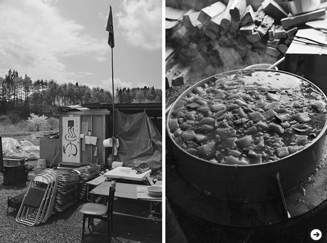
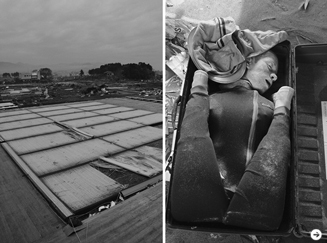
This is a standard that has accompanied humanity throughout its history. I believe it is a precious tradition that will never become outdated. Hands for production, feet for consumption.
Let's all contribute to the reconstruction of Tohoku.
──In times like these, what kind of power does photography hold?
Immediately after the earthquake, the media rushed to report daily on the situation in the disaster areas. This was invaluable, as everyone in Japan, especially those with connections to the affected regions, wanted to know the details. However, it is important to possess the ability to interpret this flood of information proactively and critically.
It is truly encouraging and meaningful that so many people are photographing the disaster areas, leaving behind records in a broad sense. Whether professional or amateur, outsiders or residents, I hope people will take photos of things and people as they are, within the context of their daily lives.
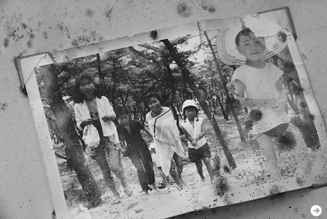
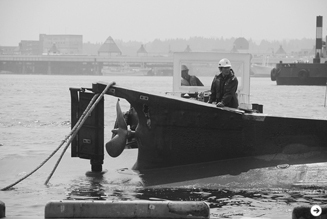
With the development of moving media, our attention is often drawn there, but we must recognize the underlying power of still photography. It is precisely because a photograph is static that we can contemplate and imagine what happened before and after. Standing in the disaster area, when pressing the shutter, we try to capture something beyond words, with emotions, senses, and a respect for their way of life.
To put it simply, I earnestly hope that by delving deeply into the photographs, people will feel the courage to face adversity, the resilience in the midst of tragic and heartbreaking scenes, and the surprising humor, and realize that tomorrow will surely come. However, this is the photographer's ego, so there's no need to worry about it.
What the photographer says about their own work should be taken with a grain of salt. If you like a photograph, simply stand before it for a while; if you don't, just walk away. It's best to enjoy it freely.