April 23, 2015
more trees | Forest Restoration Project in Quirino Province, Philippines
more trees
Reforestation Projects Overseas
The Forests of the Philippines: Four Years On (Part 1)
Currently, more trees (more trees) is engaged in reforestation projects at 11 domestic sites and one overseas. The sole international site is a forest in Quirino Province, the Philippines. Four years since its inception, the steady efforts to protect rich nature and build sustainable communities are beginning to bear fruit.
Photographs by Shinya HiroseText by HIKITA Sachiyo (Fukairi)
Restoring Degraded Natural Forests
Deforestation is a serious issue in developing countries across Africa, South America, and Southeast Asia. It is intertwined with various problems, including unsustainable land development, rapid population growth, and globalization. The Philippines is no exception; forests, which covered 70 percent of the country's landmass in the early 20th century, had dwindled to 24 percent by 2005. The problems of deforestation and degradation have even reached Quirino Province, which retains a relatively large amount of natural forest and is home to 45 percent of the country's species.
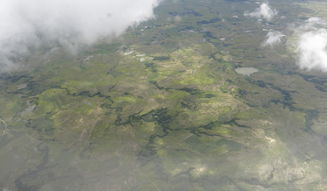
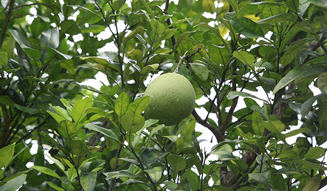
In response, in 2009, more trees, in collaboration with local NGOs and community organizations, launched the "Forest Carbon Project in Quirino Province, Philippines." The project focuses on reforesting with native trees such as Dipterocarps and implementing "agroforestry," cultivating fruits like rambutan and citrus, to foster sustainable forest development.
By providing CO2 absorbed by the forests as carbon credits, the project generates revenue through "carbon offsetting." Simultaneously, it creates opportunities for cash income through fruit sales, fostering a positive cycle of forest conservation and economic development. To address the persistent poverty issues in developing countries, forest management incorporating know-how for generating cash income holds significant promise. The project's goals are to protect biodiversity through reforestation, reduce approximately 30,000 tons of CO2 by 2029, and establish a solid economic foundation for 96 households.
More Trees' Mission Transcends Borders
Furthermore, in 2011, this initiative became the first in Asia to simultaneously pass the rigorous assessments for VCS (Verified Carbon Standard), a globally trusted carbon offset certification, and CCBS (Climate, Community and Biodiversity Project Design Standards), an international standard for project design that yields positive effects on climate, communities, and biodiversity. This recognition established it as a high-quality reforestation project on a global scale.
More trees' mission to revitalize regions through "forest creation," connect people with forests, and build a sustainable future extends beyond national borders, with accumulated case studies being reflected in local activities.
more trees
Reforestation Projects Overseas
The Forests of the Philippines: Four Years On (Part 2)
Photographs by Shinya HiroseText by HIKITA Sachiyo (Fukairi)
"The Residents Themselves Are Beginning to Realize It"
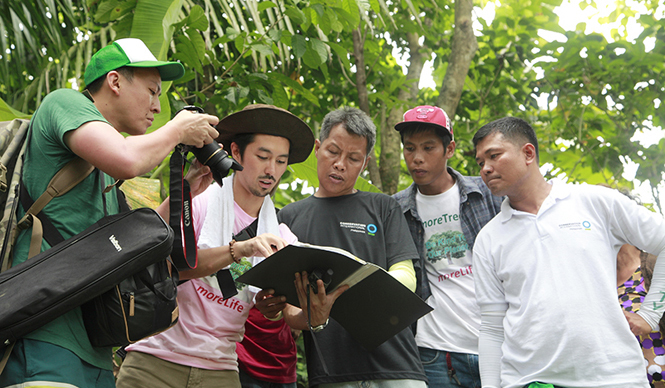
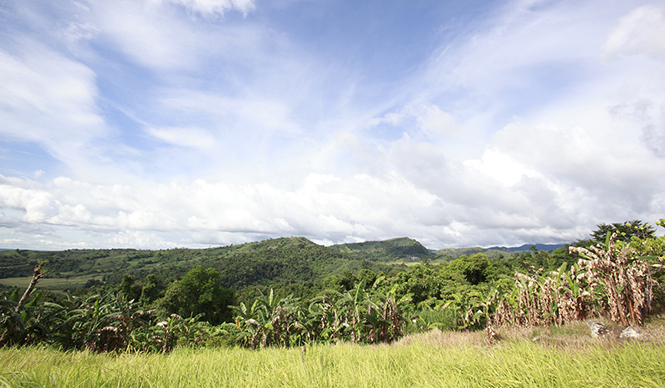
Quirino Province, home to the Sierra Madre mountain range with peaks reaching 1,500 meters and the Cagayan River, the country's longest, is a fertile land where 45 percent of the Philippines' species reside. This summer, Mr. Nobuyoshi Mizutani, Secretary-General of more trees, visited the site for the first time in four years.
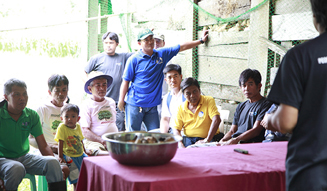
"What impressed me most was seeing the project gain momentum and the residents' spontaneous activities begin to emerge. For instance, they sell seedlings outside the community to generate income, which is then deposited into an account for all residents. The proactive engagement of each community member in 'forest creation' was truly remarkable."
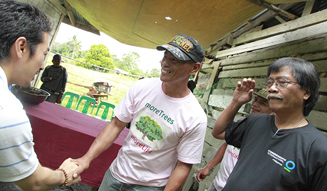
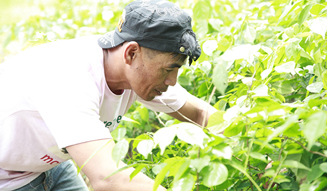
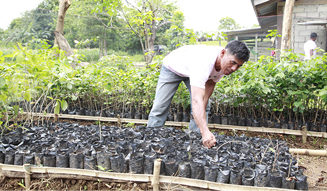
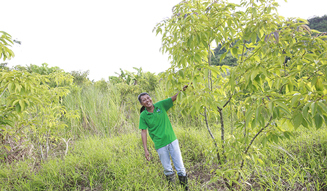
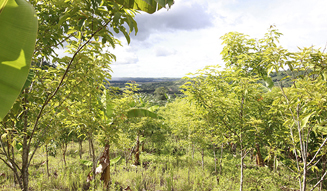
The small saplings planted at the start of the project have now grown to three meters in height, demonstrating the results of four years of maintenance. This success is partly due to the local NGO partner of more trees holding regular meetings several times a year, providing opportunities for residents to deepen their understanding of biodiversity and the importance of forest creation.
"Residents are beginning to personally recognize how forest creation is effective in addressing pressing issues they face, such as the frequent heavy rains, landslides, and sharp temperature increases in recent years," says Mr. Mizutani.
Forest Creation for the Future
To date, more trees has promoted the management of artificial forests through thinning in Japan, fostering positive connections between rural areas and cities through the blessings of the forest. Meanwhile, in the Philippines, the organization continues its activities aimed at regenerating natural forests through afforestation and establishing sustainable regional development systems. Although the methods differ domestically and internationally, the core principle remains that local residents are the driving force behind forest creation. Maintaining the motivation of those involved in forest creation and building a "win-win" relationship—this approach is universally applicable.
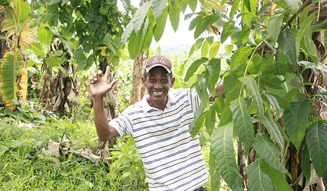
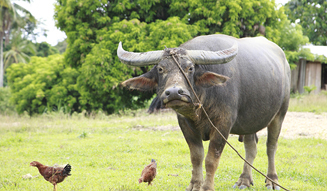
However, the aspect of cash income is far more critical in developing countries. The reality is that to survive, people may have no choice but to cut down forests for crops that will be harvested in six months, rather than engaging in long-term forest creation. This is precisely why forest creation that guarantees long-term economic income, such as "carbon offsetting" and "agroforestry," holds such value. Ensuring that residents can live with peace of mind leads to the development of prosperous communities for the future.
Furthermore, unlike the depopulating rural mountain villages in Japan, developing countries' mountain villages often have many children. Forest creation that generates employment and strengthens community bonds is a crucial factor for these children to continue living in their homeland with pride.
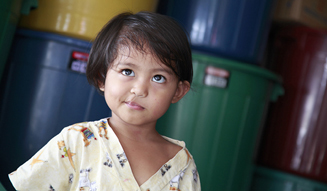
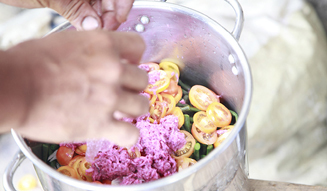
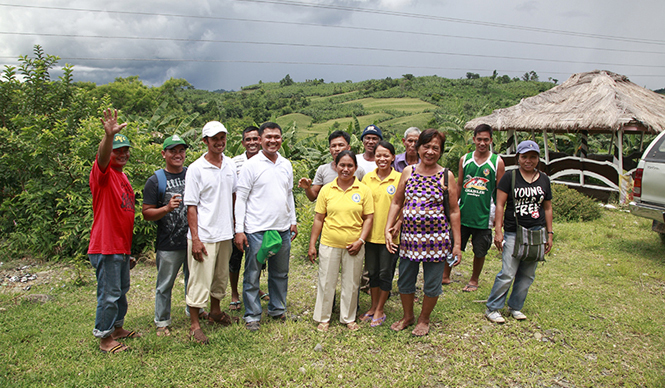
Local women's groups have expressed interest in making jam from the harvested fruits. The day may not be far off when "forest blessings" from the Philippines reach our hands here in Japan.
more trees
Tel. 03-5770-3969