A Forest Journey with Professionals: Nature and Activities in Gifu's Hida Region - Chapter 3
Feature | Exploring Forests with Professionals – Gifu Prefecture's Hida Region – Chapter 3: Goshikigahara Forest and Hida-Furukawa
A Forest with Visitor Limits
Located at the eastern edge of the Hida area, near the border with Nagano Prefecture, at the foot of Mt. Norikura, lies the Goshikigahara Forest, designated a "Treasure of Gifu" in 2010. Entry is restricted, and visitors must be accompanied by a certified guide. We aim to convey the true value of a forest that is so carefully managed to minimize human impact. We also report on the traditional architecture that breathes life into the town of Hida-Furukawa and the initiatives of the people who live there and work with the community.
Photographs by JAMANDFIXText by KASE Tomoshige (OPENERS)
The Era of Reservations and Fees Has Arrived
Goshikigahara is a vast forest of approximately 3,000 hectares spread across the northwestern foothills of Mt. Norikura, the southernmost 3,000-meter peak in the Northern Japan Alps. This forest, part of the Chubu Sangaku National Park, was designated a "Treasure of Gifu" in 2010.(See Chapter 2: The Difficulty of Preserving Wetlands)It is a place of truly untouched nature, something that people living in cities rarely experience. The most distinctive feature of this forest is that "you cannot enter without a reservation and paying a fee."
A 30-minute drive east from Takayama City via National Route 158, known as the Cosmos Line, brings you to the "Goshikigahara Tour Center." It has a spacious parking lot and souvenir shops, resembling a typical tourist information center, but it serves as the base for guided tours and the meeting point for participants. The rain from the previous day had stopped, and a clear blue sky had spread overhead.
I greeted Yoshitsugu Tawa, our guide for the forest today. There are about 40 certified guides, primarily local residents who have a deep affection and pride for Goshikigahara. "There are two guided courses: the Chamois Course and the Shirabiso Course. There is a limit on the number of visitors, with only 150 people per course per day." Kamikochi in Nagano Prefecture, which borders Gifu and is also part of the Chubu Sangaku National Park, is less than four times the area of Goshikigahara, yet it receives an average of over 3,000 visitors per day. While a direct comparison is difficult, these regulations show considerable consideration for human impact. The forest is open from May 20th to October 31st each year.
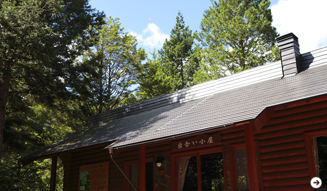
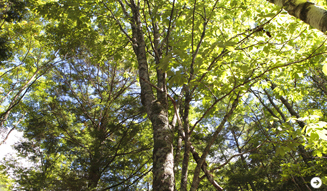
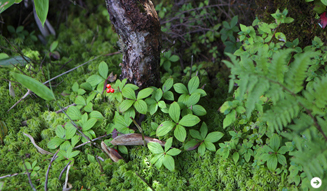
Both the "Chamois Course," which visits waterfalls and streams, and the "Shirabiso Course," which connects several ponds, typically take 8 hours to complete. However, we were granted only 3.5 hours for this report. With sincere regret, we arranged a "customized course" that connected the key highlights. In essence, we got to see only the best parts.
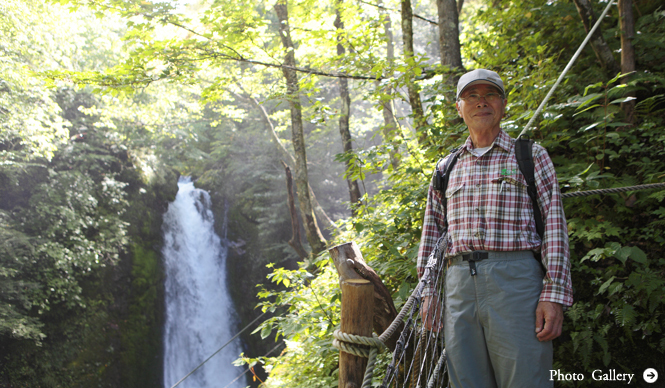
We drove to the "Deai no Koya" (Meeting Hut), the starting point for the Shirabiso Course. The altitude exceeded 1,400 meters, and the air was refreshingly cool, a stark contrast to the lingering summer heat in the city (this was early September). "Let's go see Nunobiki Falls. It's about a 300-meter walk," said Tawa. The path down to the waterfall had a considerable slope, reminding us that we were indeed in the mountains.
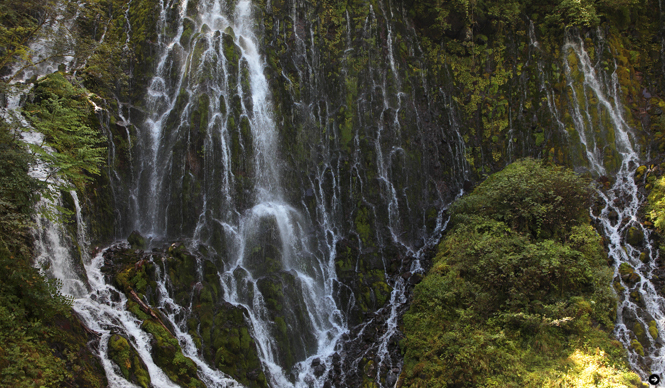
Nunobiki Falls was magnificent. As its name suggests, the water cascaded down the rock face like torn silk, creating a pattern. The countless indentations on the rock, framed by the falling water, resembled Jizo statues. It wasn't a waterfall fed by a stream, but rather water seeping from the forest itself. Perhaps this is why it had such a serene appearance.
To the left of Nunobiki Falls, the Sakurane Falls, which could be described as a cascade, plunges down, and further upstream, Yokote Falls flows. Descending near the plunge pool of Sakurane Falls, we were momentarily overwhelmed by its powerful sound and scenery. The sheer volume of water made us reflect on the health of this forest. Even in September, when water levels in Honshu's mountains are typically at their lowest, the Goshikigahara Forest was abundant with water, presenting us with a splendid stream.
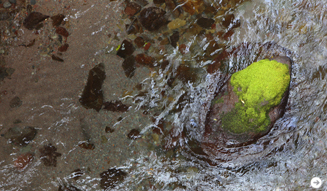
We had been looking upwards, but the water flowing from the plunge pool was equally clear and refreshing. And, as expected, two large iwana (Japanese char) were lurking, waiting for insects to drift by. Judging by their dark olive-green coloration and vibrant orange spots, they were likely Yamato iwana, possibly native to this valley. Witnessing such a scene inevitably leads one to worry about the future of the forest.
The Price of a Sacred Place
From the Deai no Koya, the Wasabidaira marshland at an altitude of 1,600 meters would normally require a hike of about 2.5 kilometers, but we traveled by car. The marshland, with its boardwalks, takes about 20 minutes to walk around. As expected, the forest composition here differs slightly from the area near Nunobiki Falls. Coniferous trees such as Shirabiso, Kome-tsuga, and Goyomatsu become more prominent, evoking the atmosphere of forests in the European Alps or North America.
"Even though it's a shallow flow from groundwater," Tawa mentioned, "there are iwana here too." Indeed, there was a sense of life in the narrow stream, less than 30 centimeters wide. We truly felt the vitality of the iwana that made their way this far upstream and the richness of the mountain that sustains them.
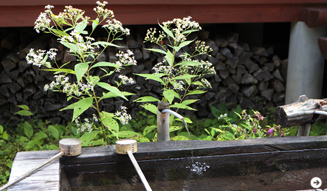

We had lunch at the Iwanami Hut, located near the Wasabidaira marshland. We sat at a table by the stream next to the hut. Lichens, which are said to grow only in clean air, were clinging to the trees.
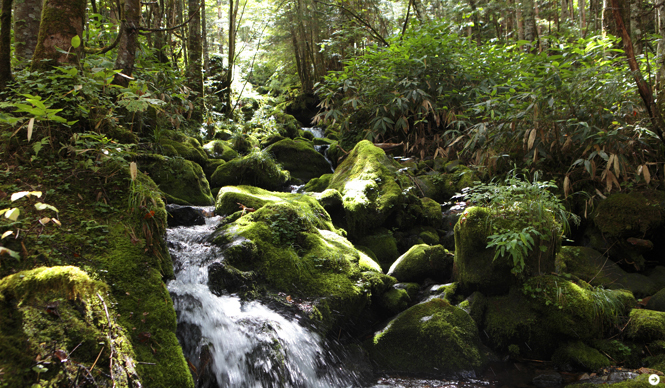
"I apologize for the rush, but shall we go see the source of the Shirabe Valley? As far as time permits (laughs)." Led by Tawa, we ventured into the highest altitude area of this forest. After passing through a path lined with Kumazasa bamboo, we found ourselves in a rocky, scree-covered valley. As we descended along the valley, water gradually began to gather. The rocks were covered in moss, and a sense of life permeated the stream. After about a 10-minute walk, the flow became faster and wider, and the forest stream revealed itself.
Do you realize how precious such small streams are? It's no exaggeration to say that all main and tributary rivers in Japan have dams. And further down the streams, in the smaller tributaries, you find check dams. To put it bluntly, it is extremely difficult to walk down Japanese mountain streams.
The basic survey of the Goshikigahara Forest was conducted in 2001. Professor Emeritus Akira Miyawaki of Yokohama National University, a world authority on plant ecology who visited for the survey, is said to have praised it highly: "Wonderful. The 'prototype of Japanese nature' remains almost untouched."
After three years of surveys and maintenance, it was opened to the public in July 2004. The forest, now in its ninth year, is preserved by certified guides and the staff at the tour center, and supported by visitors with a keen interest in nature. Both the Chamois Course and the Shirabiso Course take approximately 8 hours and cost 8,800 yen. The fee includes guide services, bus fare, accident insurance, and a guidebook.
Whether this fee is considered high or low is a matter of personal experience and subjective judgment, but the era where "reservations and fees are necessary" to enjoy nature is certainly upon us.—That much is certain. Speaking from my own experience and subjective view, the fee to enter the Goshikigahara Forest is extremely reasonable. It is an irreplaceable place worth paying this price to visit.
Feature | Exploring Forests with Professionals – Gifu Prefecture's Hida Region – Chapter 3: Goshikigahara Forest and Hida-Furukawa
The Value of Satoyama
Cycling is Undeniably Fun
As I briefly mentioned in the report on Yatsusankan, the historic inn introduced last time, Hida-Furukawa is characterized by its traditional townhouses (machiya). Furukawa Town, located in the northern part of the Hida area, is about a two-hour drive or train ride from Nagoya. It is a town of human warmth and charm, famously known as "If you get tired of the mundane world, come to Furukawa."
There is a person who fell in love with the satoyama and landscape of this region, moved here, and is now working with the community through various activities. He is Taku Yamada, the representative director of "Churaboshi Inc." "Because of our company name, people often ask if I'm from Okinawa, but I'm actually from Nara. And even people from Okinawa tell me, 'That's not a word we use,'" he says with a disarming laugh. In fact, he was the one who provided various coordination and transportation (vehicles and driving!) for our Hida area coverage.
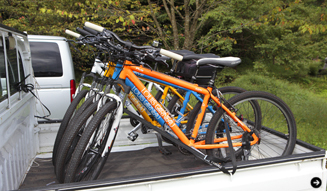
Experience Before Explanation—So, let's get on our bikes. This is the start of the Hida Satoyama Cycling tour. The rice paddies, stretching out before us, have been harvested, and the cut rice stalks sway in the wind, drying in the sun. If you get thirsty, there are several water sources at the foot of the mountains. A truly pleasant rural Japanese landscape unfolds.
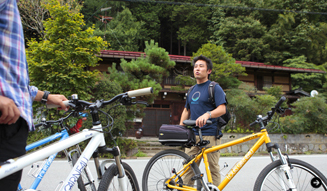
As we leave the rice fields and enter an area dotted with farmhouses, Yamada dismounts from his beloved car and begins his explanation. "This house is a typical old farmhouse with a low-ceilinged second floor for sericulture. It's said to be over 100 years old. The 'magusa' (a unique feature of Hida-Furukawa farmhouses, a single board fitted above the entrance door) is also quite impressive."
This explanation is not superficial; it's based on the interview surveys conducted for the "Hida Satoyama Farmhouse Revitalization Project." While the project itself will be discussed in the next section, Yamada's explanations made it seem as though the Hida Satoyama Cycling and farmhouse revitalization are organically linked.
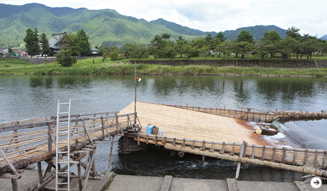
Regardless of the details, let me state clearly: cycling is undeniably fun. After about 30 minutes of pleasant pedaling, we reach the entrance to Hida-Furukawa town. Glancing at the 'yana' (a large fishing structure built in the river with a slatted platform to catch ayu and other fish) on the Miyagawa River, we cross the Imamiya Bridge over the tributary Aragawa River, pass by the town's symbol, Shinsho-ji Temple, and soon, the beautiful streetscape of Hida-Furukawa, lined with traditional wooden townhouses, comes into view. This exhilaration is precisely the charm of cycling, something that cannot be experienced by car or train.
We returned the rented bicycles. Yamada's office was nestled harmoniously within the traditional townhouse scenery. It was the ground floor of a standard two-story house, beautifully renovated into a bright and welcoming workspace. The staff, with their diverse backgrounds, shared a common trait: they were all cheerful and constantly smiling.
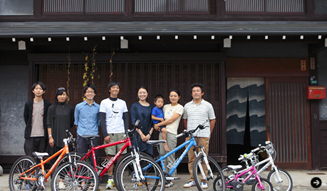
"I believe cycling is the best way to get around the satoyama of Hida-Furukawa. There are landscapes that can only be enjoyed by bicycle," says Yamada. I couldn't agree more. And this is a purely personal observation, but during my three days of coverage, I felt that Yamada didn't dwell on complex matters. By "complex matters," I mean the purpose, philosophy, and methods behind the work he has dedicated his life to. For these three days, he simply and calmly shared the charms of Hida-Furukawa. Perhaps the reason why Yamada, who is not from this area, can live in harmony with this town is entirely due to his personality.—I had that thought.
Feature | Exploring Forests with Professionals – Gifu Prefecture's Hida Region – Chapter 3: Goshikigahara Forest and Hida-Furukawa
Inheritors of Craftsmanship
The "Kumo" Under the Townhouse Eaves
This is the final chapter of our journey through the natural landscapes of Gifu Prefecture's Hida region. I would like to conclude by discussing the specific techniques that form the townscape of Hida-Furukawa. Built upon the foundations of a castle town from the Sengoku period, these traditions have been passed down since the Nara period.—These are the architectural skills of the "Hida Craftsmen," the carpenters of Furukawa, honed over an incredibly long period.
So, what exactly characterizes these "machiya"? Kimihiko Kaneko, the representative director of "Kaneko Komuten," who embodies the spirit of Furukawa carpenters, explained. He seemed as if he were wearing a happi coat emblazoned with their pride.
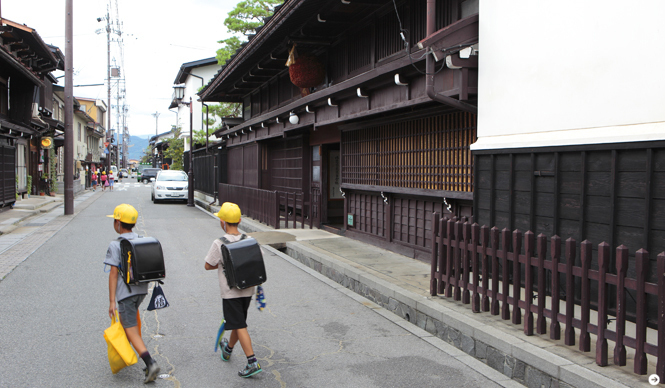
"The most distinctive external features are the 'magusa' and the 'kumo,' wouldn't you say? The 'kumo' is particularly unique to Furukawa, with each house displaying its own elaborate design. The carpenters, wanting to outdo their neighbors, seem to have developed increasingly unique patterns." The 'kumo' are decorative elements under the eaves, carved with various motifs such as leaves and arabesques.
"And these bay windows (wooden lattices fitted around the exterior of the window frames) are also characteristic. Also, many old townhouses have very low ceilings in the entrance area. It's said that this was to prevent someone wielding a sword from swinging it freely, a common saying from long ago." Kaneko continued his detailed explanation using actual townhouses as examples. "Let's go to the Cultural Center next. They have various tools used by the carpenters of Furukawa."
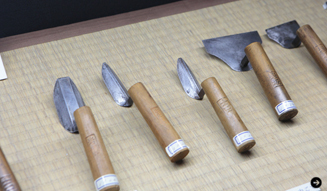
The official name is the "Hida Craftsmen Culture Center." It houses an impressive collection, likely featuring almost every tool used by carpenters in Furukawa, including ink pots, chisels, planes, saws, and trowels. The building itself was constructed using Hida timber by local carpenters. A model of Kaneko's own home is also on display on the first floor.
After leaving the Culture Center, we headed to an interview about another initiative by Yamada of "Churaboshi Inc.": the "Hida Satoyama Farmhouse Revitalization Project." Waiting for us inside a historic townhouse were members of "Yanagigumi Co., Ltd.," a long-established construction company founded in 1907.
In essence, "Churaboshi Inc." and "Yanagigumi Co., Ltd." have partnered on a project to restore old farmhouses in Hida and explore and implement various ways to utilize them. Currently, there are over 500 vacant houses in Hida City and Takayama City that are 50 years or older. If left unattended, these houses are destined to disappear as their owners age. However, both companies see this situation as an opportunity and are working to find new life for these old homes.
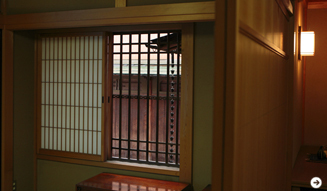
One of these initiatives is the "Hida Satoyama Office Project," which repurposes old farmhouses as resort offices. While maintaining the traditional townhouse architecture, they provide modern office amenities such as computer environments comparable to those in urban offices and discussion spaces equipped with screens and projectors. With kitchens, dining areas, and accommodation facilities, they are also suitable for retreats.
"We receive many inquiries, primarily from IT companies in Tokyo. Those who have used the facilities have given feedback such as 'I can concentrate on my work in a relaxed environment' and 'My productivity has increased,'" says Shiro Yanagi, the representative director of Yanagigumi. Indeed, it feels like work would progress smoothly in such a tranquil setting. Moreover, the unpretentious townhouse scenery seems to offer a respite from daily stress.
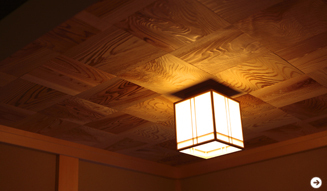
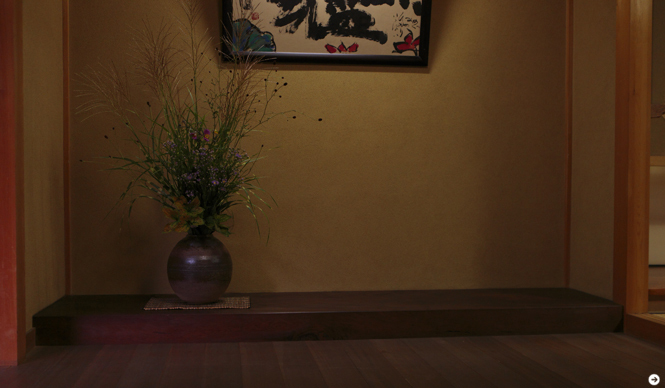
Nevertheless, both Yamada and Yanagi must have faced considerable challenges in advancing these projects, and they likely continue to grapple with numerous issues that need resolution. However, for some reason, we couldn't sense any atmosphere of difficulty from either of them.
Yanagi says, "Honestly, just looking at these houses is a great learning experience for me as a builder. Even the building materials are carefully selected, and hidden parts often feature elaborate designs. It might sound strange, but every time I visit these townhouses, I discover something new."
The forests of the Hida region, explored with professionals, truly represent the heart of Gifu Prefecture's nature. Although it was a short three-day period, my most direct impression as someone who has felt its air, seen its greenery, and touched its water is the wish for these forests to continue to thrive for eternity. I also sincerely hope for a happy conclusion for the people who live in harmony with nature and whose lives are intertwined with the region.
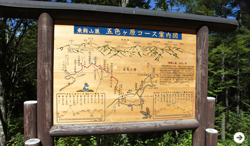
Goshikigahara Forest
Goshikigahara Forest Tour Center
1147 Himen, Niu-kawa-cho, Takayama City, Gifu Prefecture
(Inside Hida Great Limestone Cave)
Opening Period | Annually May 20 - October 31
Tel. 0577-79-2344
Fax. 0577-79-2888
http://www.hida.jp/goshiki/
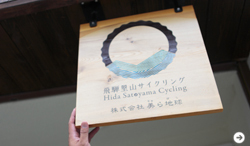
Hida Satoyama Cycling
8-11 Ni-no-cho, Hida City, Gifu Prefecture
Tel. 0577-73-5715
http://www.satoyama-cycling.com/
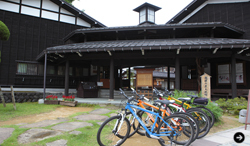
Hida Craftsmen Culture Center
10-1 Ichi-no-cho, Hida City, Gifu Prefecture
Tel. 0577-73-3321
Business Hours | 9:00–17:00 (9:00–16:30 from December to February)
Closed | Thursdays
Admission Fee | Adults ¥300, Children ¥100
http://www.hida-tourism.com/things_to_do/ttd_category1_5_1.php
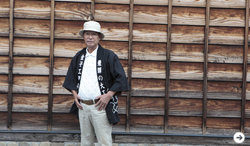
Kaneko Komuten Co., Ltd.
1-2-8 Shige-cho, Hida City, Gifu Prefecture
Tel. 0577-73-3026
http://www.win-g.net/~k-kaneko/
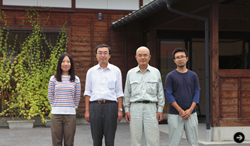
Hida Satoyama Office Project
(Yanagigumi Co., Ltd.)
1605 Asabira-cho, Hida City, Gifu Prefecture
Tel. 0577-73-2800
Business Hours | 9:00–17:00
Open Daily
http://www.satoyama-office.com/

Tel. 058-272-8393
http://www.kankou-gifu.jp/(Gifu Prefectural Tourism Federation Official Website)