April 23, 2015
Feature: A Journey to Meet the Forest Spirit – Chapter 2: Gifu Prefecture's "Wellness Tourism"
Feature: A Journey to Meet the Forest Spirit – Gifu Prefecture’s “Wellness Tourism” – Gifu’s Tono Region
Chapter 2: The Inn is the People, the Food is the People
The Essence of Hospitality (1)
While mountain vegetables and mushrooms are, of course, gifts from the mountains, in Gifu, the “rivers” are as abundant as the forests, if not more so. There’s the Ibi River, the Kiso River, and the Nagara River, known nationwide for its cormorant fishing. The greatest bounty that Gifu’s rivers provide is the ayu sweetfish, and once May arrives, you can expect ayu to be served at your inn without even asking. And where there is good water, there is good sake.—In other words, the meals at Gifu inns are naturally substantial.
Photographs by JAMANDFIXText by KASE Tomoshige (OPENERS)
A Traditional House Inn Where the Crown Prince Once Stayed
About a 5-minute drive from JR Nakatsugawa Station, nestled in a grove of trees facing the mountains of the Ena range and overlooking the town of Nakatsugawa, lies “Yogarasu Sanso Nagataki.” This inn, spread across 10,000 tsubo (approx. 33,000 sqm), comprises six traditional houses, offering a secluded retreat where each house accommodates only one group. Originally a traveler’s inn next to the main lodging of the Nakatsugawa post station since the Edo period, it moved to its current location in 1933.
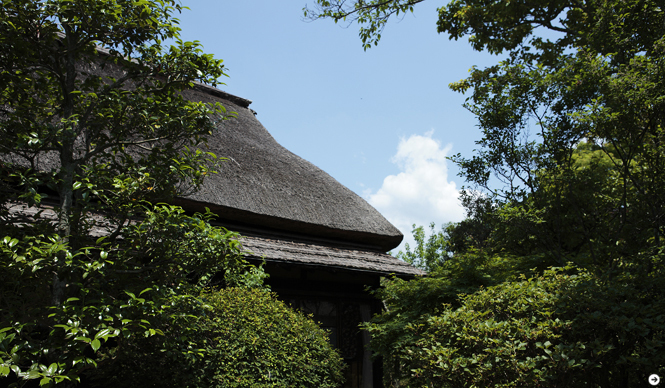
Loved by many literary figures and artists, the grounds feature stone monuments to the poet Wakayama Bokusui and the haiku poet Takahama Kyoshi. Furthermore, in 1957, the current Emperor, during his time as Crown Prince, stayed here. It is undoubtedly one of Gifu’s most historic inns in Nakatsugawa.
“The room where the Crown Prince stayed (at that time) was the ‘Kumo-no-ma.’ Of course, it was newly built specifically for his visit. I heard that the name of the room was decided by the Imperial Household Agency before his stay. We wouldn’t have known what to do ourselves,” says Nobusuke Yoshida, the master of Nagataki. The ‘Kumo-no-ma’ consists of a 10-tatami and an 8-tatami room, making it the largest room in Nagataki.
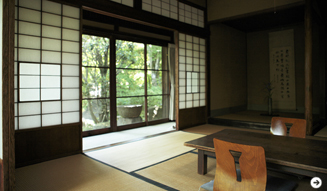
Other accommodations include the ‘Hagi-no-ma,’ offering a magnificent view with Mount Ena as borrowed scenery; the ‘Tsutsuji-no-ma,’ a thatched-roof gabled house; and the ‘Momiji-no-ma,’ a relocated 200-year-old Kiso folk house. These six rooms are scattered across the grounds. Each room, though old, is clean, allowing guests to spend leisurely time while experiencing Japan’s original landscape.
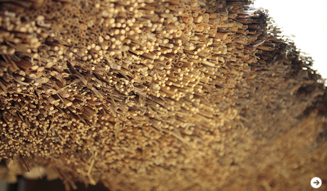
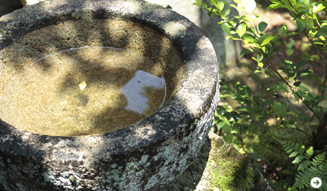
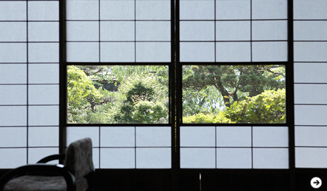
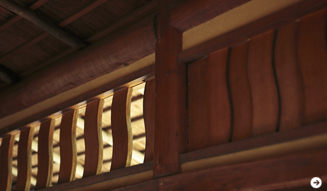
The grove and garden connecting each room are also wonderful. Not only are they meticulously maintained, but being on a hill, the wind passes through nicely, creating a refreshing atmosphere. The sound of birds also soothes the soul. “This grove is a migratory path for birds. In the past, we used to serve wild birds caught with mist nets. Now it’s prohibited, and if we served them, we’d be arrested (laughs),” Mr. Yoshida tells us. A bright grove and a moss-covered garden. This too can be said to be one of Japan’s original landscapes.
Beautiful Bento Boxes: A Treat for Kabuki Goers
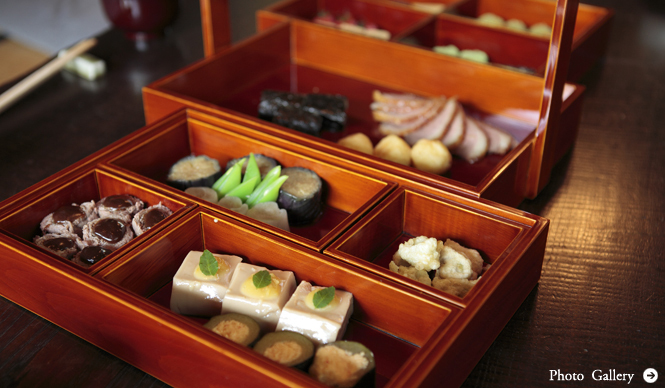
Details will be provided in the third report, but this Tono region of Gifu is famous for its amateur Kabuki, known as “Jikabuki.” Regular performances are still held in several theaters. When attending Jikabuki, audience members bring their own bento boxes. Nagataki also prepares bento boxes for watching Jikabuki. They are called “Kabuki Juhachiban Bento” (Eighteen Kabuki Masterpieces Bento).
We were to eat this bento in the “Kuri-no-ma,” a Mino folk house from the early Edo period, 400 years old, which had been relocated. Upon seeing the bento that was brought, everyone felt its visual beauty. Eighteen small, exquisite dishes were neatly arranged in a lacquered box. We couldn’t help but sigh in admiration.
“Everything is local country cuisine, so I hope it suits your taste…” says Mr. Yoshida, but to conclude, all the dishes showed the careful preparation of the makers, and their taste was not just delicious but conveyed a spirit of hospitality.
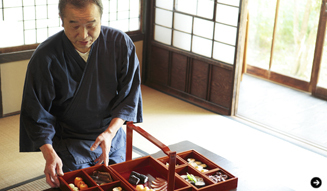
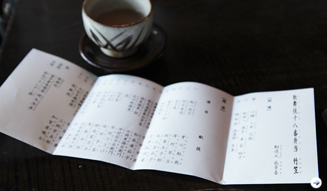
Ayu sweetfish dried overnight, edamame and yuba rolls, pumpkin and yuba rolls, beef and sansho sprout rolls, potato and cheese fritters, duck grilled with mulberry leaves, loquat with plum paste… These jewel-like dishes, with their splendid colors. Fish, meat, vegetables, and fruits – all made with abundant local, seasonal ingredients, creating a bento that is both luxurious and rustic, perfectly suited for “Jikabuki.”
This “Kabuki Juhachiban Bento” requires advance reservation, but delivery to the theater is also available. Enjoying a beautiful bento while watching Jikabuki—is a rich experience, and it makes one realize anew the vibrant culture that thrives in the Tono region.
Nagataki, an inn with only six traditional houses. We visited in June, just before the rainy season, when the green was deep and the blue of the sky was dazzling, but it is an inn where you can feel the changing seasons at any time of year. In spring, the budding treetops; in summer, the sunlight and a refreshing breeze; in autumn, the red hues of the trees; and in winter, the snow and the warmth of the inn will surely welcome guests.
Feature: A Journey to Meet the Forest Spirit – Gifu Prefecture’s “Wellness Tourism” – Gifu’s Tono Region
Chapter 2: The Inn is the People, the Food is the People
The Essence of Hospitality (2)
Gero Onsen: One of Japan's Three Famous Hot Springs
To be precise, Gero Onsen in Gifu Prefecture is located at the southern tip of the Hida region. However, its culture is more akin to the Tono area, and it is connected to Nakatsugawa via Route 257, the Ura-Kiso Kaido. Nevertheless, it is Gifu Prefecture’s most historically renowned “tourist destination,” and it is more accurate to say that it continues to inherit a distinct culture as Gero Onsen.
Gero Onsen is said to have had its hot springs discovered during the Tenryaku era (947–957). The quality of its waters was first publicized by the Muromachi period monk Banri Shuku, who already noted it as a superior spring alongside Kusatsu and Arima in his collection of poems and prose, “Baikka Mujinzō.” Later, during the Edo period, the Confucian scholar Hayashi Razan, who served four generations of the Tokugawa shogunate, also highly praised Gero Onsen, leading to its widespread fame. In any case, for over 1000 years, it has been protected by the local people and has continued to heal the bodies and minds of its visitors.
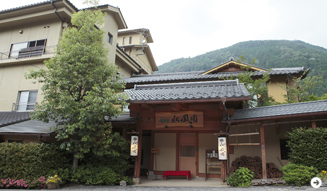
Away from the hustle and bustle of the hot spring town along the Hida River, “Kaiseki Ryori Suhoen” is located on a hill slightly uphill towards Adanitani. It’s a 4-minute drive from JR Gero Station, but if you have light luggage, it’s a leisurely walk, allowing you to explore the town. This inn offers a clean, modern, and attentive staff. It has 19 rooms, including the main building and the annex.
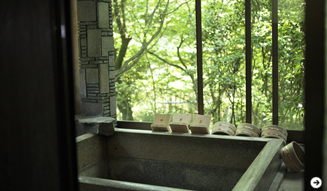
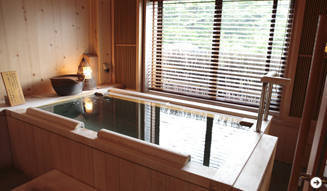
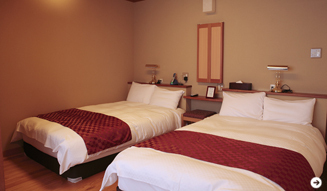
Most rooms are Japanese-style, offering a traditional hot spring inn atmosphere. However, one of the two Japanese-Western style rooms, the “Yoimachi-gusa no Ma,” is remarkably modern. It features a 12.5-tatami main room, a 13.5 sqm twin bedroom, and a semi-open-air bath made of Towada stone with a cypress wood surround. As it is a popular room, early reservations are recommended for stays on weekends and holidays.
We decided to try the bath immediately. The panoramic open-air bath offered a view of the Hida mountains stretching out before us. The water quality is alkaline simple hot spring, with a refreshing feel on the skin. We soaked, got out, and soaked again. The fatigue gradually melted away.
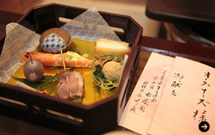
Dinner was served in a room with a sunken hearth. The fragrant aroma of ayu already filled the air. The charms of Suhoen are its waters and its cuisine. It is served in a kaiseki style, with numerous dishes. After the appetizer, hassun (small assorted dishes), and soup, came the sashimi. At this point, the waitress recommended sake. Indeed, Gifu is a treasure trove of fine sake. We ordered the inn’s original brand, Junmai Ginjo “Suiho.” Brewed with water polished by the Hida mountains, the sake had a clear, crisp taste, just like the water itself, enhancing the flavors of the food and enriching the experience.
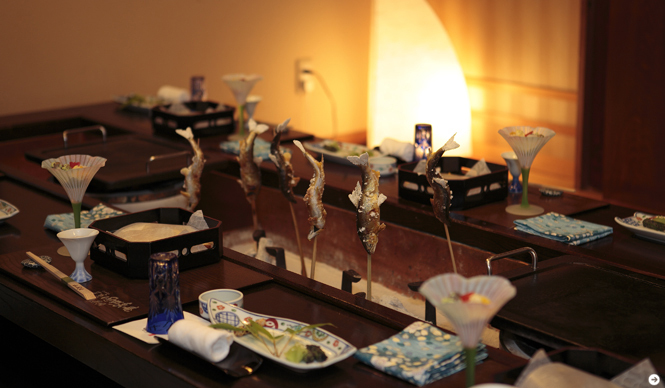
The grilled dish was, of course, ayu. It is a representative delicacy of Gifu, and the various rivers flowing through Gifu compete in its flavor. Taking a bite of the piping hot fish, the non-greasy fat and the rich bitterness of the innards melded together. A superb taste, one might say.
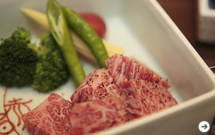
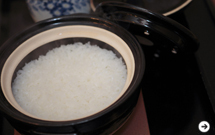
Steamed conger eel, simmered dishes, and then Hida beef. While luxurious, every dish was prepared with a sincerity that aimed to please, offering a taste that was truly heartfelt. Alongside the ayu, another item worth mentioning is the rice. The local brand, “Ryū no Hitomi,” is large-grained, sweet, and sticky. Although we were already quite full, the rice was so delicious that we finished two bowls. It is said to have won a gold medal at the National Rice Appraisal Competition. We highly recommend you savor the “Ryū no Hitomi,” cooked in a traditional cauldron.
Surrounded by wonderful food and sake, the night deepened. This is the true pleasure of a hot spring inn. Our minds and bodies were completely healed, and we drifted into a comfortable, deep sleep.
Tea with a Dashi-like Flavor
Higashishirakawa Village, located in the northern part of the Tono region, is a renowned tea-producing area known to those in the know. It is the northernmost tea-producing region in Japan, where the significant temperature difference between day and night, and the mist rising from the clear Shirakawa River flowing through the village, are said to cultivate high-quality, fragrant tea leaves. You can savor the essence of these tea leaves at the roadside station “Cha no Sato Higashishirakawa” along Route 256, the Shirakawa Kaido.
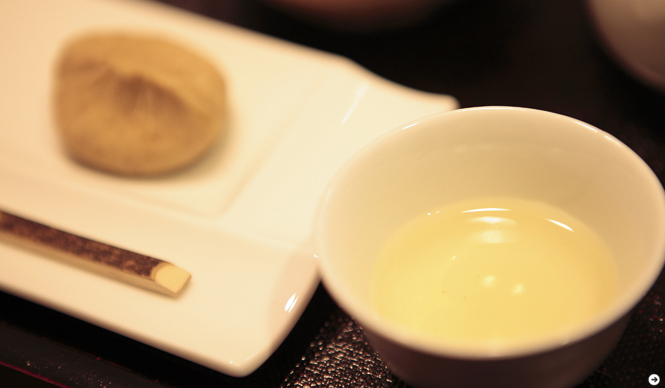
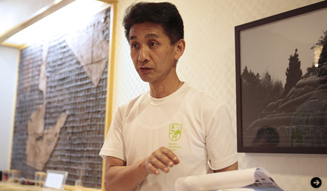
In “Sakuraen,” a small tea house within “Cha no Sato Higashishirakawa,” a tea and sweet set is available. Mr. Yoji Murakumo, who runs “Shinseiki Kobo” and produces the tea sold here, began his explanation: “First, pour hot water and steep immediately. That will be the first infusion.”
The color of the tea in the teacup was more golden than green. Taking a sip, the taste was astonishing. A savory umami, like dashi made from bonito flakes, spread through my mouth. As I stood there, stunned for a moment, Mr. Murakumo spoke, “How was it? Did you get to taste the umami of the tea?” This was a brand called “Kiwami,” considered the highest grade from Higashishirakawa Village. The carefully plucked tea leaves are skillfully rolled into needle-like shapes, increasing their luster, imbuing them with aroma, and developing their umami. It was a superb tea that overturned my previous notions of sencha. The second and third infusions gradually brought out a slight bitterness, and the tea could be enjoyed for five or six infusions.
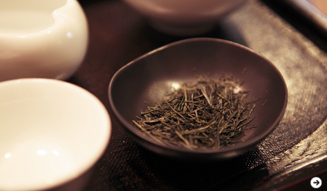
This “Kiwami” can only be tasted at the roadside station “Cha no Sato Higashishirakawa” and is not generally available. Of course, the shop offers various products, including brands that have won the Minister of Agriculture, Forestry and Fisheries Award multiple times, such as the “Emperor’s Cup,” and any purchase is a safe bet. However, if you visit the roadside station “Cha no Sato Higashishirakawa,” you must not miss tasting “Kiwami” at the tea house to complete the experience.
This is the second report, covering the food and inns of Gifu’s Tono region. Ayu, meat, vegetables, fruits, and of course, sake—The numerous dishes and ingredients I experienced were indeed all wonderful. However, I believe what moved me more than the taste of the food and ingredients was the spirit of hospitality from the people who prepared them. And it is this spirit of hospitality that I feel is the true essence of flavor.
Yogarasu Sanso Nagataki
1649 Komaba, Nakatsugawa City, Gifu Prefecture
Tel. 0573-65-3133
Fax. 0573-66-8012
Rates: From ¥15,750
(per person, including 2 meals, service charge not included)
Check-in/Check-out: 16:00 / 10:00
http://nagataki.info/
Kaiseki Ryori Suhoen
2519-1 Mori, Gero City, Gifu Prefecture
Tel. 0576-25-2288
Fax. 0576-25-5338
Rates: From ¥14,500
(per person, including 2 meals, service charge not included)
Check-in/Check-out: 14:00 / 10:00
http://www.e-onsen.co.jp/
Roadside Station “Cha no Sato Higashishirakawa”
1061 Koshino, Higashishirakawa Village, Kamo District, Gifu Prefecture
Business Hours: 9:30 – 17:00
Closed: Mondays
http://oishii22.jp/

Gifu Prefectural Tourism Division
Tel. 058-272-8393
http://www.kankou-gifu.jp/(Gifu Prefectural Tourism Federation Official Website)