May 14, 2015
Event: Experience the Future of Energy Today
EVENT | Experience the Future of Energy Today!
World's Largest International Exhibition "Smart Energy Week" Held
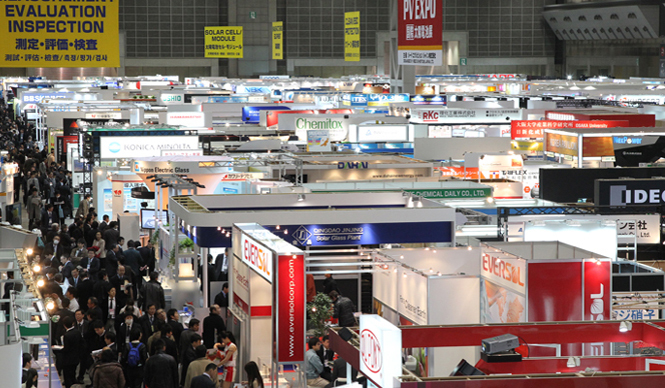
Great East Japan EarthquakeAgainst the backdrop of heightened disaster awareness since the Great East Japan Earthquake, the government has actively promoted energy policies such as subsidies and buy-back schemes. Amidst unprecedented attention on next-generation energy, "Smart Energy Week 2012," an international exhibition featuring 1,950 companies from Japan and abroad, including solar cell, fuel cell, and eco-house manufacturers, was held from Wednesday, February 29th to Friday, March 2nd at Tokyo Big Sight.
Text by TANAKA Junko (OPENERS)Photographs by Reed Exhibitions Japan Ltd.
Seven Major Exhibitions, Japan's and the World's Largest, Held Simultaneously
Seven large-scale exhibitions, each claiming to be "Japan's largest" or "world's largest," were held concurrently, creating a microcosm of the next-generation energy industry. The number of visitors over the three days reached an all-time high of approximately 80,000, filling the venue with a palpable energy.
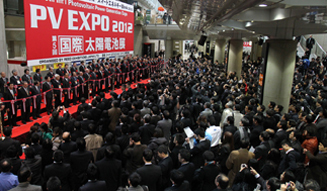
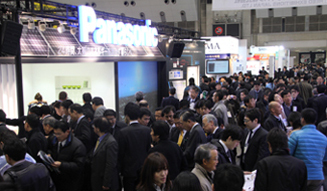
First, we visited the "Solar Power Expo 2012 - PV EXPO 2012 -," the largest domestic exhibition of its kind, now in its fifth year. Alongside Japanese manufacturers like Sharp, Panasonic, and Solar Frontier, the exhibition featured companies from around the world. This included JA SOLAR HOLDINGS (China), which ranked second globally in solar cell production in 2010, along with burgeoning Chinese and Taiwanese manufacturers, and European exhibitors like ISOFOTON and SILIKEN (both Spain), participating for the first time.
Beyond major solar cell manufacturers, the exhibition showcased unique and surprising solar technologies. Konarka Technologies (USA), the first in the world to achieve mass production of lightweight, semi-transparent "organic thin-film solar cells" that challenge conventional solar panel concepts, had a presence through its Japanese subsidiary. Power Bank System presented its innovative "rust-proof" solar panels, the first in Japan designed for coastal installation. The Swiss Solar Pavilion (Switzerland) displayed "Gretzel cells," colorful and artistically designed solar panels resembling stained glass. Following the Solar Power Expo, we moved on to the "PV System Expo 2012," the only exhibition in Japan dedicated to installers essential for setting up solar panels.
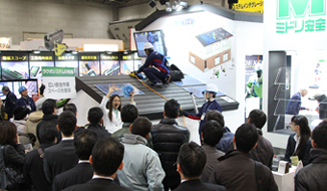
With the "Feed-in Tariff for Renewable Energy" set to begin in July 2012, solar power generation is expected to see widespread adoption. However, a key challenge for general consumers considering solar panels is their susceptibility to weather conditions. How to cope with periods of low sunlight or adverse weather remains the primary hurdle. This exhibition highlighted the latest installation technologies, the unsung heroes behind solar panel efficiency, including panels resistant to rain, wind, and snow, motorized mounts that track the sun's movement, and maintenance techniques crucial for maximizing solar panel output.
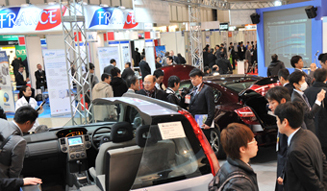
Turning our attention to the "Hydrogen & Fuel Cell Expo 2012 - FC EXPO 2012 -," the world's largest exhibition of its kind now in its eighth year, we found the automotive manufacturers' booths buzzing with activity. Test drives of fuel cell vehicles (FCVs), hailed as the "ultimate eco-car" and anticipated for commercial release in 2015, were drawing significant attention. Major automakers such as Toyota, Nissan, and Honda, all present, seemed genuinely surprised by the high level of interest from visitors eager to experience the ride of these near-future vehicles.
The venue also hosted several other concurrent exhibitions: "Eco House & Eco Building Expo," showcasing insulation materials, heat pumps, and LED lighting; "Second Battery Expo - Battery Japan - "; "Processing Technology Expo - Enertech Japan 2012 - "; and the "Smart Grid Expo," an exhibition focused on smart grids, a topic of recent interest following Tokyo Electric Power Company's announcement to install smart meters (next-generation electricity meters) for approximately 17 million households by fiscal year 2018.
Beyond the sheer volume of visitors, what was particularly striking was the lively exchange of ideas taking place throughout the venue. We eagerly anticipate that these interactions will foster the development of innovative, environmentally friendly, and practical next-generation energy solutions.