Hiroko Takahashi | #008 Hiroko Takahashi's Circles and Lines: First Visit to Korea (Part 2)
A valuable experience, reinforcing my resolve to embrace small challenges daily.
Riko Takahashi's Circles and Lines: First Time in Korea (Part 2)
Experiencing Hanbok firsthand made me realize how little I knew about this neighboring country, despite living so close. Perhaps the similarities were so profound that they failed to spark my curiosity.
Text by Riko TakahashiPhotos by Shiori Kawamoto
“I don’t want to wear a kimono.”
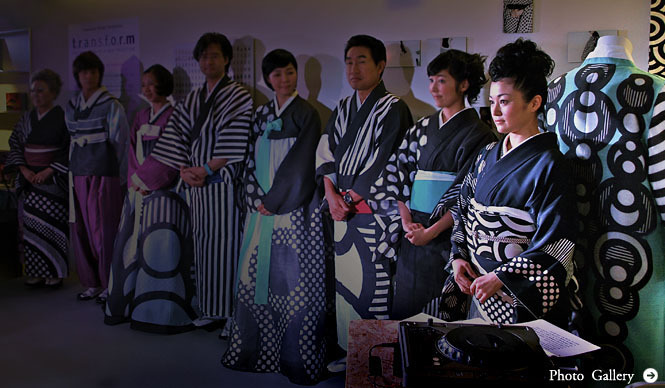
During my student days, Korean exchange students were always part of my atelier. A photograph from our graduation ceremony shows them in beautiful Hanbok alongside me in my kimono. While Korean cuisine is familiar in Japan, I feel that much of its other culture remains largely unknown. Of course, historical issues do create barriers between us, yet at times, through television dramas and music, these walls seem to dissolve. However, during the preparations for this show, an incident occurred that highlighted the magnitude of these barriers. The models for the show included prominent Korean figures, among them athletes who had competed against Japan in the Olympics. While I don't know the specifics of the conversation that led to it, the sentiment "I don’t want to wear a kimono" was expressed. I understand it was a natural reaction. Had I been able to speak with them directly, perhaps we could have found common ground, but bridging that gap from afar proved incredibly difficult.
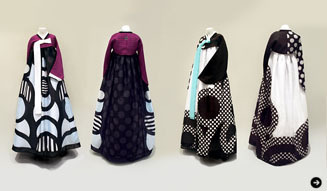
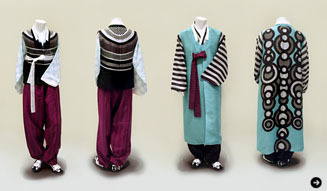
Examining my own perspective on another country's traditional attire
This unfortunate, yet understandable, situation was overcome to bring this show to fruition. The reactions from the Korean attendees at the party were remarkably similar to how people in Japan respond to the kimonos I create. Younger generations, while perhaps having never worn Hanbok themselves, expressed a desire to wear it. It's much the same in Japan today. Many people have never worn a kimono or don't own one, largely feeling they are restrictive and unsuited to modern life. Yet, both in Korea and Japan, there are many who wish to wear their traditional clothing. It seems they are drawn not just by its status as national dress, but by a sense of novelty that contemporary fashion lacks. My own interest in kimonos was sparked not by their role as traditional Japanese garments, but by the fresh appeal of their unique construction and styling as fashion, distinct from Western clothing. When I first saw Hanbok, I perceived it not as a foreign ethnic costume, but as a strikingly designed dress with voluminous, tent-like silhouettes and oriental embroidery. It reminded me of the Japonisme dresses that emerged in 19th-century Western Europe, influenced by kimonos.
I have Korean friends, and while I acknowledge cultural differences and language barriers, I am conscious of not holding prejudices or fixed notions. As someone who studies contemporary fashion and engages with traditional clothing and creation in my own country, I believe that if one approaches beauty and intriguing things with pure intent, national borders should not create barriers, nor should they be created.
My work aims to foster new discoveries and communication, creating small sparks that soften rigid thinking and perspectives. It emphasizes the importance of understanding the essence, not just the surface. While it's difficult to measure how deeply I delved into the essence of Hanbok this time, the creation process allowed me to examine my own stance towards the traditional attire of another nation.
The various outcomes of a single endeavor, for better or worse, give rise to new things and provide food for thought. It was a valuable experience, reinforcing my resolve to embrace small challenges daily.
HIROCOLEDGE
http://www.hirocoledge.com/