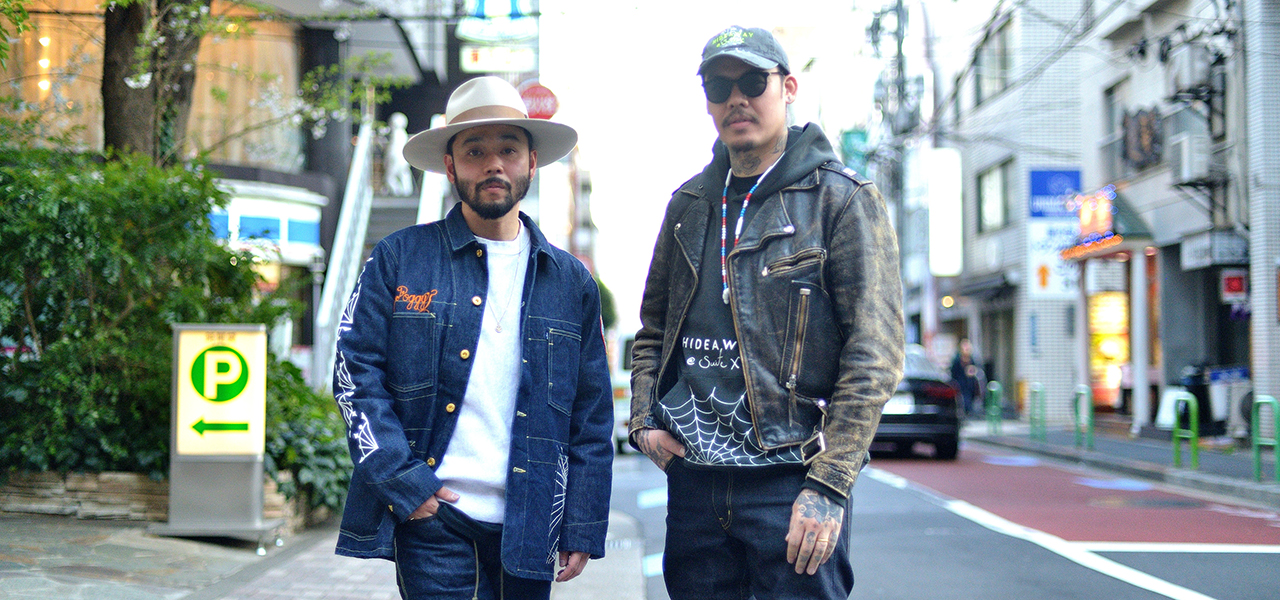
POGGY’S FILTER|vol.8 Dr. WOO
Interview by KOGI “Poggy” Motofumi | Photographs & Text by OMAE Kiwamu
Tattoos: Artistic Creations Expressing Individuality
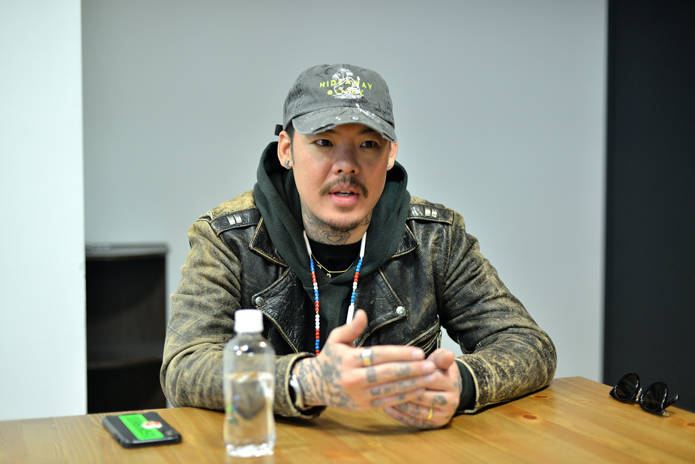
Dr. WooMy parents were immigrants from Taiwan, but I was born and raised in LA. The area I lived in wasn't exactly the safest, and many of my school friends were white or Mexican. At home, it was a Taiwanese world with my parents, but stepping outside felt like living in a completely different one. Partly as a reaction to my parents' strictness, I was a bit of a rebellious kid. After school, I'd hang out with friends, skateboarding, listening to punk rock, and learning graffiti. Later, I started working at a skate shop and even became its manager. This was in the 90s.
Dr. WooThere are so many. Geoff Rowley is one of my all-time favorites, as are Eric Koston and Mark Gonzales. Back then, brands that influenced me included Innes and iPath. For me, growing up in the 90s, guys like Dustin Dollin, Braydon Szafranski, and Andrew Reynolds from Bakerboys were also cool. And from Flip, besides Geoff Rowley, there were Mark Appleyard and Ali Boulala. They were fashionable and stylish, but I wasn't just interested in their fashion. Also, the Supreme team and ZOO YORK, people from the East Coast had a completely different vibe from LA. Larry Clark's film 'KIDS' had a huge impact on me too. And Marc Johnson, Heath Kirchart... they all had cool styles that greatly influenced my own fashion.
POGGYWas Matt Hensley from a slightly earlier generation?
Dr. WooA bit, yes, but Innes, whom I liked, was his brand. I really liked Matt Hensley too; he was very cool. He also played the accordion in a band called Flogging Molly, right? I also liked Tommy Guerrero, Ray Barbee, Danny Way, and John Cardiel.
POGGYSo many names come up, as expected. What happened with your job at the skate shop after that?
POGGYHow did you transition into becoming a tattoo artist from there?
Dr. WooI'd been getting tattooed a lot since I was a kid, and I was even tattooing myself from around 11 or 12. My parents are conservative Asians, so they never wanted their son to become a tattoo artist, and they were completely against me getting tattoos in the first place. So, while I always liked tattoos, I never thought I'd do it myself. The reason I ended up doing it is that the tattoo artist I was getting tattooed by was a very famous person named Mark Mahoney, and he wanted to teach me. I thought, isn't that like saying, 'I don't want to be a doctor, but a famous medical school is offering to let me be one for free'? So, anyone would take that offer, right? I quit my fashion job and became his apprentice. That was about 12 years ago.
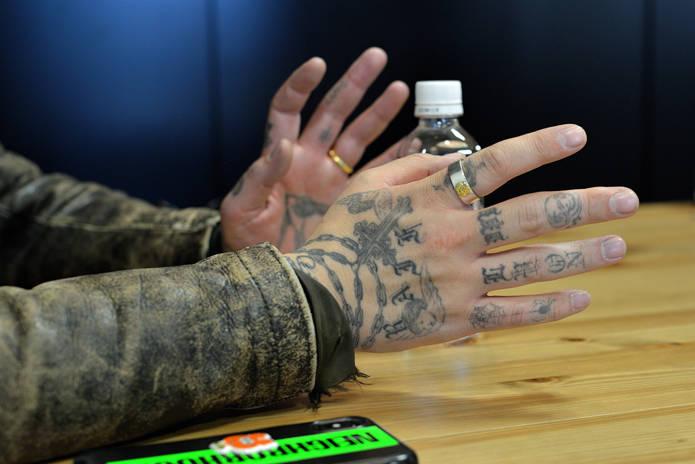
Dr. WooPeople often ask me about the relationship between fashion and tattoos. I think tattoo artists are on the fringes of subculture, outside of mainstream society. Those individuals often have their own unique styles – bikers, rockers, skaters, and so on. Fashion is a way to express who you are, and it reflects your feelings. Tattoos are the same; if you look at someone's tattoos, you can generally tell what kind of person they are, right? What they're interested in. So, perhaps there's an inseparable, mysterious connection between tattoos and fashion. Of course, some people might seek deeper, symbolic meanings in tattoos, unrelated to fashion or style. But ultimately, I believe both tattoos and fashion are artistic creations that express the individual.
POGGYYour unique, delicate tattoo style has garnered many clients, including celebrities. How did it come about?
Dr. WooThe style my mentor, Mark, taught me is called the single needle technique, and he's a pioneer of it. It originated in LA, a prison-style technique developed by Chicano gangs. It involves fine lines, no color, just black and gray. This evolved outside of prison and became popular. However, the motifs and designs were always religious or related to gangs. While I initially worked with those motifs, things changed over time. At clients' requests, I started tattooing things like Jean Prouvé chairs or a single, intricately depicted flower. Gradually, I established my own style using fine lines and intricate details with the single needle. Many of my clients don't necessarily want a lot of tattoos; they prefer to get one small, special tattoo and keep it hidden most of the time. So, I think my style is relatively approachable, even for first-timers. While it's a tattoo, it's not flashy at all, and I'm proud to say I've introduced tattoos that are full of intricate details and beauty.
What is the significance of street and luxury?
Dr. WooYes, I think so. The tattoo culture, much like in Japan, feels somewhat insider-ish, like a world you enter through an invitation. Mark was taught by a master who was active from the 1940s, and his master had a teacher from the 1900s... so I'm at the very end of that lineage. You could say my tattoo lineage is purebred. Nowadays, people see something on Instagram, think 'Wow, that's cool! I'll become a tattoo artist tomorrow!' But when I became an apprentice, it took three years just to be allowed to touch a tattoo machine. I worked under Mark, cleaning, chasing away drunk people, taking appointments, arranging meals. After three years, I finally started learning the techniques from him, and then I developed my own style. We have the same techniques, but his tattoos and mine are completely different. However, all the skills and knowledge I needed to become a tattoo artist came from Mark.
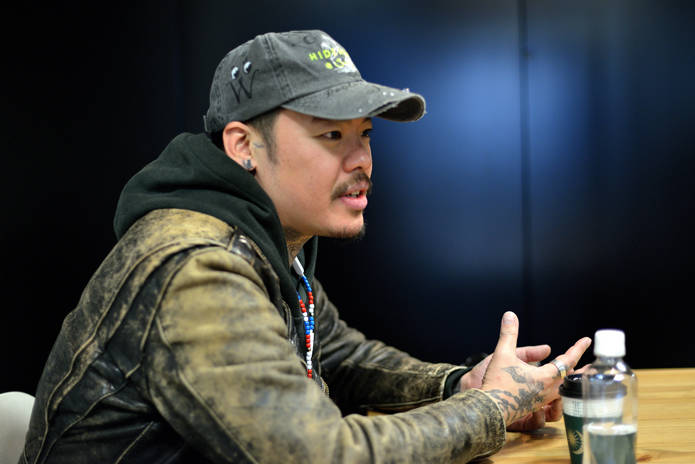
Dr. WooAs I mentioned earlier, I had a brand before becoming a tattoo artist, and I've always been interested in fashion. Tattoos and art can be worn or displayed, but I like fashion in the same way. I enjoy tailoring, and I equally enjoy thinking about silhouettes and fit. Fashion has a different way of telling stories than tattoos, and that process is very intriguing to me. When the skate shop I first worked at became a boutique, I was an assistant buyer, looking at clothes at trade shows. Perhaps that experience is embedded in my DNA. If I hadn't become a tattoo artist, I probably would have been interested in fashion design.
POGGYI really like how you mix heritage and luxury in your outfits. Like today, wearing a vintage jacket with a custom Rolex watch and Sacai headphones. Where does that sense of mixing heritage and luxury come from?
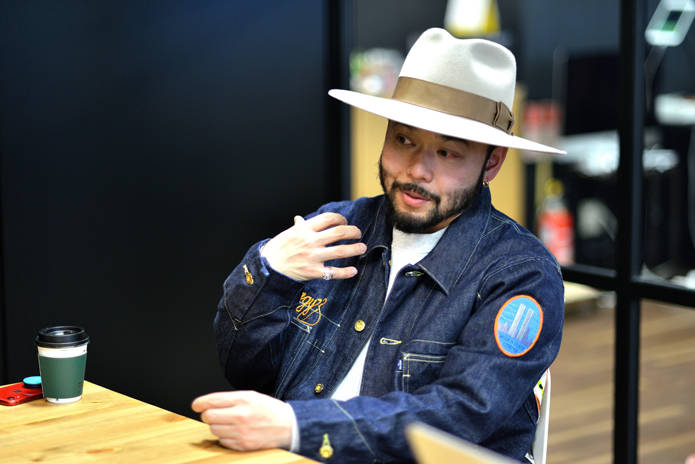
POGGYFinally, you've been attending Paris and New York Fashion Weeks frequently lately. From your perspective, how do you see the current fashion scene evolving?
Dr. WooAccess is now open, which can be good, but it also has its downsides. Sometimes, I dislike how everything is just thrown onto the plate in front of you, like a bento box. You have chicken, you have rice. But I don't want them mixed together. You have streetwear, you have luxury. But if luxury becomes too streetwear-like, where does street leave? What's the point of luxury? I think it's good to change freely, but personally, I don't really like it when everything is mixed together too much. It feels like genres are absorbing each other's energy too much right now. I believe each genre should remain true to its own style.
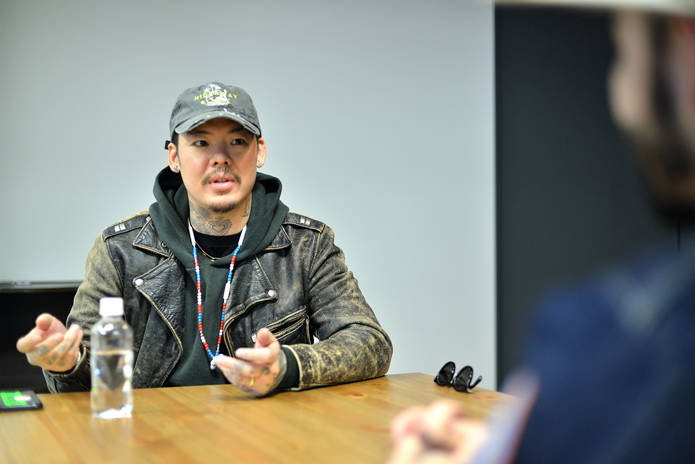
Dr. WooAlso, unlike in the past, people attending fashion shows now aren't necessarily fashion enthusiasts. Previously, attendees of fashion week were people involved in the fashion business, like media, buyers, or models. But now, all sorts of people are attending. Many are engrossed in taking photos with their smartphones, not even properly watching the runway. It's cool that fashion has become more popular and the industry has rejuvenated. When I worked at the skate shop, everyone wanted to be an athlete, musician, actor, or model. But now, young boys all want to be fashion designers. To the point where hardly anyone wants to be a musician. My wife mentioned that when she attended FIT (Fashion Institute of Technology), most students were girls, but now there seem to be many male students. It probably means everyone is seeking freedom in fashion.