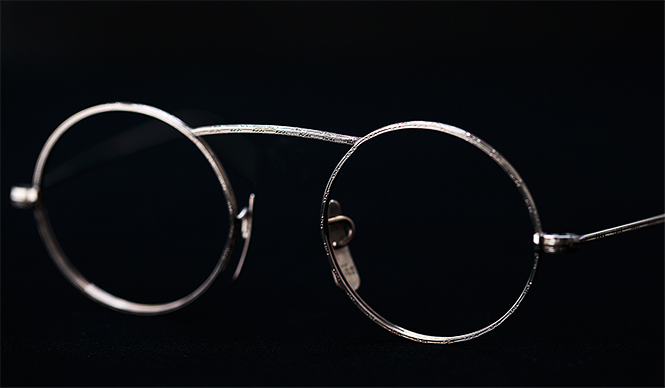
Feature | From Vintage to New Arrivals, What We Want Now Are "Classic Eyewear" Vol. 01 "Round"
Feature: The Classic Eyewear We Want Now
From Vintage to New Arrivals: A Curated Selection
Part 1: The Round Frame
Eyewear trends are now returning in a 40-year cycle.—This trend is a return to classics. In this feature, we focus on three styles—the "round," "Boston," and "brow"—that have driven trends as "classic eyewear" since their origins in the 1930s, and we will explore their appeal over three installments.
This feature is a joint project with "Solakzade," a specialty store for vintage eyewear. We pick out historically significant items from the store's collection of over 10,000 antique and vintage pieces, and under the supervision of owner Ryuin Okamoto, we unravel their roots and trace the evolution of each style from its inception. The first installment focuses on the "round" frame. We'll be talking about the classic "round glasses."
Photographs by JAMANDFIXText by OPENERS
A Primitive Design Retaining the "Round Lens," the Prototype of Eyewear
Considering the 1930s as the starting point for classic eyewear trends, we can see a 40-year cycle. This includes the 1970s, when the flower movement, driven by anti-war sentiment among hippies, was at its peak, and the 2010s, when trends were less distinct and standard fashion became established. The "round" frame, with its distinctive "round lenses," stands out as a prime example, offering a unique individuality.
The oldest extant examples of binocular eyewear found as historical artifacts worldwide often feature perfectly circular lenses. The primitive impression associated with round glasses, or those with nearly circular lenses, is likely due to their status as the prototype of eyewear.
During the era of media development after World War I, a certain figure utilized these round glasses as an icon. This was the American comedian Harold Lloyd in the 1930s.
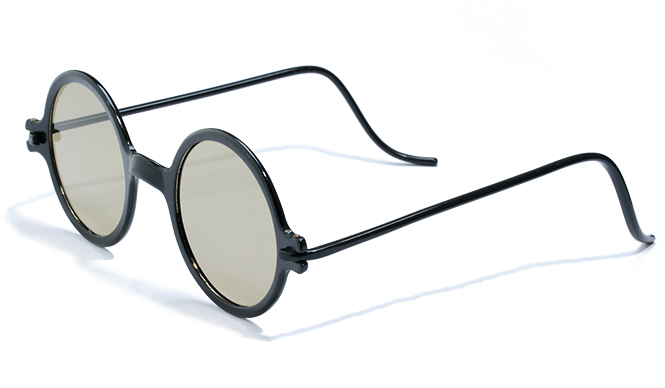
Glasses of the same model as Frank Lloyd's (1905)
In a world plunging into economic depression, comedians who brought smiles to people's faces were immensely popular. Lloyd, however, wore glasses without lenses—which were taboo in the film industry at the time due to light reflection—to express his individuality. In essence, he adopted glasses as a fashion item. His look became widely recognized through the media, sparking a global trend known as "Lloyd glasses."
In the late '40s, the fashion scene gained momentum with the emergence of the New Look. Eyewear and sunglasses also saw a surge in decorative designs. Amidst this, round glasses solidified their status as a classic item, becoming one of the many options within a diversifying range of designs.
Then, from the late '60s to the '70s, round lenses once again captured attention, driven by hippie culture against the backdrop of the Vietnam War.
At the time, John Lennon of The Beatles was revered as a symbolic figure for his anti-war stance, resonating deeply with hippies. He was often seen in the media wearing round-lensed glasses, which were affordably available through the UK's National Health Service. His approach to consumption—unconcerned with expensive or rare items despite his celebrity status—garnered support and inspired followers.
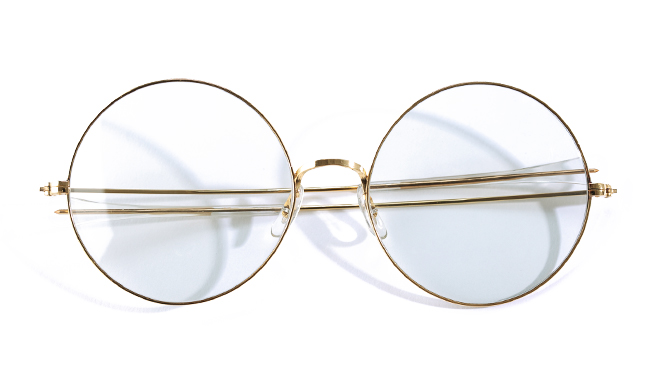
Bausch & Lomb (1960s)
The hippie movement also influenced fashion shows. Under the slogan "Make love, not war," hippies used flowers as a motif for their anti-war protests. Known as "flower children," they significantly impacted the fashion scene.
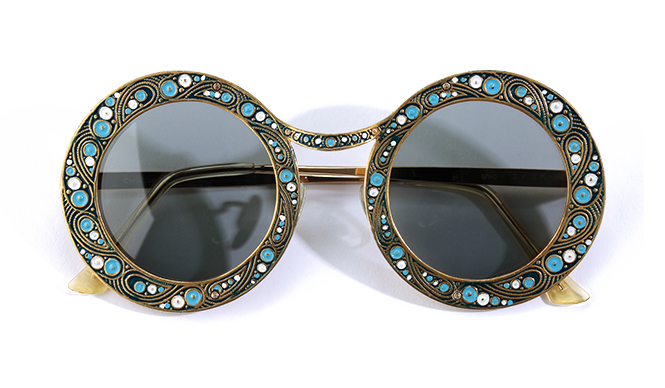
Christian Dior (late 1960s)
Christian Dior reflected the era's spirit in its eyewear designs during the late '60s, a time of burgeoning movements. Furthermore, the conservative looks prevalent in the '70s fashion scene also saw round eyewear as a popular choice.
In the '80s, the rise of Alain Mikli saw the proliferation of modern eyewear designs. While decorative glasses had been created before, these novel forms, reminiscent of contemporary art, introduced a new genre for eyewear: the contemporary.
And in the 2010s, classic eyewear has been highlighted through the revival of American traditional style, exemplified by the collections of fashion designer Thom Browne. In Japan, the resurgence of interest in traditional fashion, including Ivy style, has made round glasses an essential element in street styling.
Round glasses have established an iconic presence throughout history. Despite the changing times, their simple and clear design continues to exude a primitive charm as functional objects.
8 "Round Frame" Glasses You Should Get Now
The glasses selected below are currently available. We present a diverse range of designs from established and emerging brands worldwide. Here are eight tasteful and practical pairs for the discerning man.
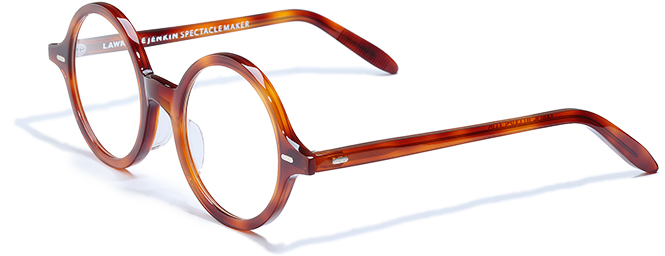
A piece by a legendary British designer
01 Lawrence Jenkin Spectacle Maker
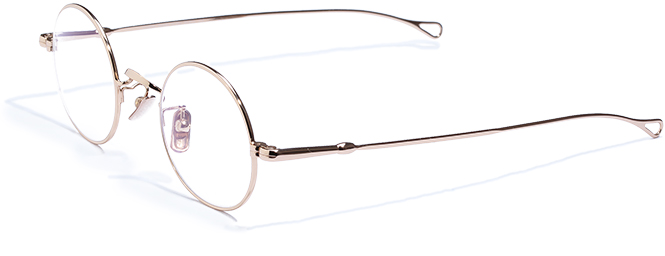
A delicate antique-style model
02 Lunor
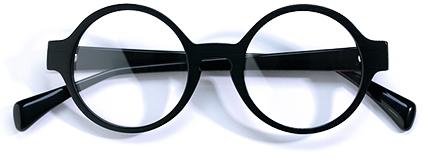
Pre-modern retro charm
03 Jacques Durand
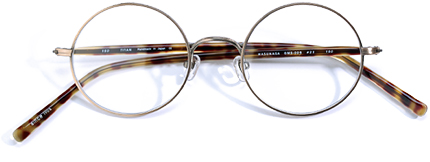
A confident creation from Japan's oldest eyewear manufacturer
04 MASUNAGA G.M.S.
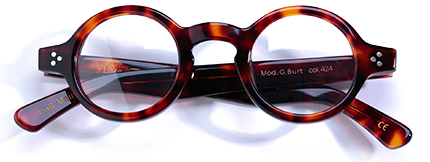
A striking round frame
05 Lesca Lunetier
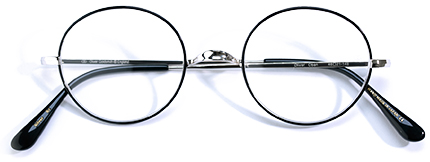
An unadorned piece from a long-established brand
06 Oliver Goldsmith
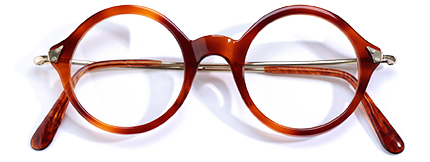
Designed with inspiration from '70s eyewear
07 Savile Row
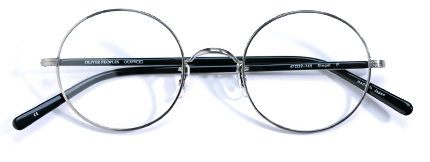
A design that complements any style
08 Oliver Peoples
