JOHN LOBB | The Making of a Perfect Pair of John Lobb Shoes (2)
JOHN LOBB | The Craftsmanship of John Lobb
A Full Report from the Expanded Factory—Preparing for Stitching—
The Making of a Masterpiece (2)
This is the second installment of a four-part series reporting on the creation of a "masterpiece" at John Lobb's factory in Northampton, England.From Leather Inspection to ClickingFollowing the first part, which covered leather inspection and the clicking process, this second installment introduces the crucial section responsible for preparing the cut leather for stitching.
JOHN LOBB | The Making of a Masterpiece (1)
Text by KAJII Makoto (OPENERS)Photographs by ARAKI Ryuji
Approximately 50 Models Crafted in the Factory
Since John Lobb began producing ready-to-wear shoes, approximately 350 models have been created. During our visit, we learned that around 50 models, including those from the "BY REQUEST" line, are currently being produced in the factory.
To ensure no errors in the detailed instructions throughout the process, specification sheets for standard models and BY REQUEST models use different colors. Each sheet clearly outlines the components required for construction.
BY REQUEST orders, being for a single pair, are handled with particular care. Unlike bespoke artisans, the specialists in each stage work diligently on the shoes according to the specifications.
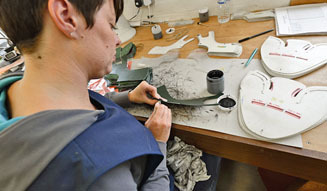
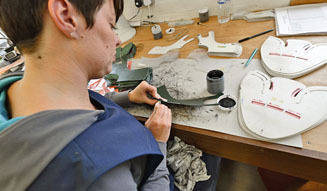
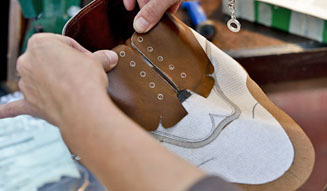
The leather, cut in the previous stage, undergoes "stitch marking" to indicate where parts will be joined and "edge staining" to color the cut edges, as preparation for stitching. Both processes are done by hand, one piece at a time. During our visit, the edges of the buckle holes for the "Philip II Double Buckle" were being colored.
Furthermore, for leather other than black used for the tongue of Oxford shoes, a preliminary coat of the final finishing cream is applied at this stage. It is these meticulous steps that imbue John Lobb shoes with their distinctive character.
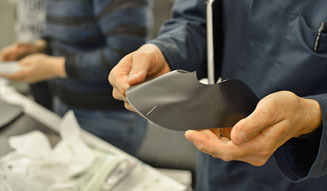
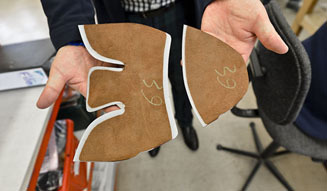
“Only John Lobb Takes Such Pains”
In this section, we were shown reinforcements for when the last is removed, referred to as "doubles" at John Lobb, as well as the dies for the saddle on the "Lopez" loafer and the patterns for the toe medallions. For all models, the dies and medallions are precisely sized using custom-made metal molds to ensure a balanced appearance. The statement, "Only John Lobb takes such pains," felt profoundly true.
The factory interior was surprisingly quiet and orderly. The next process is "skiving" the leather, a technique to thin the leather where two pieces will be joined, preventing excess thickness.
Once the Parts Are Ready, They Move to Stitching
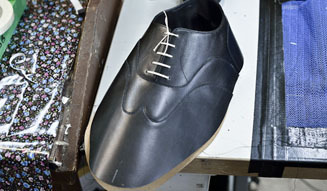
The stitching section we visited next was unique. The work is performed by a fitter who combines the leather parts and a craftsman operating a sewing machine. Through this collaborative effort, the leather components are sewn together according to the instructions to form the shoe's upper.
Particularly memorable was the eyelet work, where each pair is marked according to a setting chart before stitching begins. Although they use well-worn machines, they are said to be unmatched. We were also told an anecdote: "Old craftsmen used to finish them perfectly without any marks."
The Making of a Masterpiece (3)Continued
John Lobb Japan
Tel. 03-6267-6010
http://www.johnlobb.com/jp