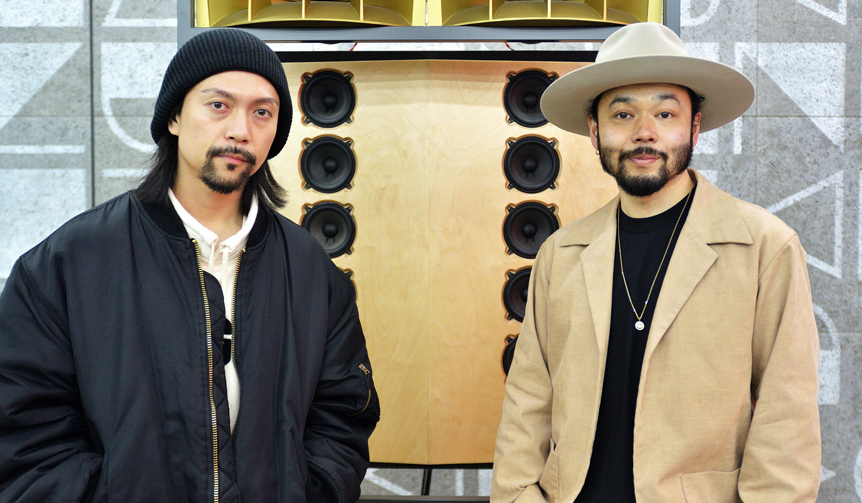
POGGY'S FILTER | vol.5 COMBO-san
Page. 1
In the fifth installment of "POGGY'S FILTER," hosted by Kōki "POGGY" Motofumi, the guest is COMBO, owner of NUBIAN, a select shop that has consistently led Tokyo's street fashion scene, primarily focusing on hip-hop fashion. NUBIAN opened in Ueno in 2005, later expanded to Harajuku, and last April, its Harajuku store relocated and reopened. It is now a noteworthy shop attracting fashion-forward individuals from around the world, including hip-hop artists, not just from Japan. COMBO, whom POGGY respects as a buyer and director, is also one of the first to pick up on luxury street style, which is now mainstream in the fashion scene. We delved into his fashion philosophy and the music, centered on hip-hop, that lies at its roots.
Interview by KOGI “Poggy” MotofumiPhotographs & Text by OMAE Kiwamu
Hip-Hop Fashion Was a Market for the Dedicated Few
POGGYCOMBO-san uses Tadanori Yokoo's LOUDNESS album cover design (from the 1992 album "LOUDNESS") as his LINE icon, and I've heard you were a guitar kid back in the day. To start, could you tell us about your musical journey?
COMBOStarting right there? (laughs) I started playing guitar in junior high and initially admired guitarists. I got into the usual suspects like LOUDNESS and Extreme, and I seriously studied guitar theory. That led me to the depth of music, which is jazz. I became obsessed with jazz guitar from there.
POGGYFrom hard rock to jazz?
COMBOLooking back, I think my desire to be a guitarist was too strong, but I didn't really have the talent. When I hit that wall, I discovered hip-hop, which sampled jazz. I was shocked, thinking, "There's a way to make music like this!" So, while still playing guitar, I started buying hip-hop records and became a DJ. After turning twenty and starting to frequent clubs, I naturally focused solely on club music. I began digging into rare groove from hip-hop, and of course, soul and jazz. Then I realized that some of the jazz guitarists I knew were being sampled, and I thought, "This is incredible."
POGGYSo you found common ground between your beloved jazz and hip-hop.
COMBOExactly. Also, I really like the hip-hop producer J Dilla. When he was still known as Jay Dee, I was blown away by the sounds produced by his team, The Ummah. That mid-90s hip-hop, along with Chicago house and Detroit techno, which I also love, forms the foundation of my current style.
POGGYSo that's how you got into hip-hop. The first time I heard of NUBIAN was around 2008, when I was working as a director for a store called Liquor,woman&tears, and we decided to carry Benjamin Bixby, a brand by Andre 3000 of Outkast. When I asked, "Are there any other stores in Japan carrying this?" I was told, "NUBIAN carries it." From around that time, I started hearing the name NUBIAN frequently from overseas brands and customers. I felt they had a strong antenna even in the US.
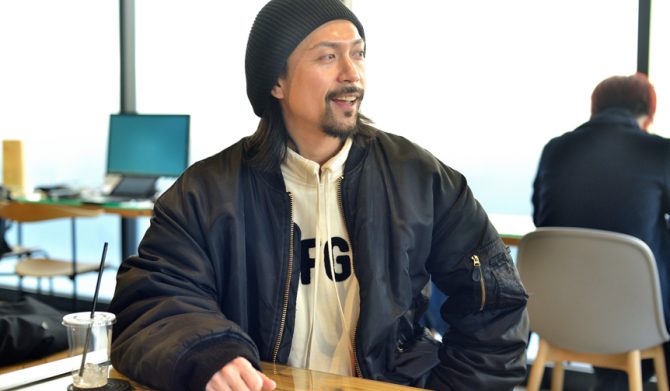
COMBOWhen we first opened, I had no knowledge of clothing and no idea about purchasing know-how. Initially, I just bought clothes from stores in New York and brought them back. I went to New York almost every month, buying about a million yen worth of items from places like Vinnies Styles in Brooklyn. That's how the people there naturally started to remember me. Then, I launched a brand called HIMMY. It started with custom caps from NEW ERA, which I then wholesaled to shops in New York. Vinnies Styles even placed orders for hundreds of them. Rappers who were Vinnies' customers started wearing them, and the brand became quite well-known. That's how I connected with overseas communities.
POGGYThe other day, when I was on RHYMESTER's Utamaru-san's radio show ("After 6 Junction"), he mentioned that in the 2000s, the Japanese hip-hop scene had become Galapagosized, evolving in a completely different direction from American hip-hop trends. I feel the same way about fashion. For example, Benjamin Bixby was featured in magazines like "GQ" in the US and prominently displayed in shops like Barney's New York, yet in Japan, only NUBIAN and Liquor carried it. How did you feel about that Galapagos-like situation at the time?
COMBORather than Galapagos, from my perspective, hip-hop fashion was a market for those who were truly passionate about it. At that time, only a limited number of shops like Liquor and NUBIAN carried hip-hop fashion, and I couldn't imagine major corporations getting involved. I even felt that hip-hop fashion itself was perhaps being looked down upon.
POGGYThere was certainly that sentiment. When I said I ran a shop selling hip-hop style clothing, some people would say things like, "So you're all about 'chekeracho,' right?" (laughs) In a way, it wasn't yet recognized as fashion.
COMBOThat's absolutely true. So, the current situation is almost surprising.
POGGYWhen you started carrying new types of brands like Benjamin Bixby, which were unlike anything before, how did you communicate that to NUBIAN's customers?
COMBOJust as I discovered various types of music through hip-hop, I feel I discovered various types of fashion through hip-hop fashion. So, I communicated that to my customers in the same way, through hip-hop. I had many friends who were into it, so I first spread the word to about ten stylish people around me, like dancers at the time, and it expanded from there. But I wasn't consciously trying to do that; it was a natural progression. I guess a community formed around NUBIAN without me even realizing it.
POGGYThat's very authentic.
Page02.Linking My Musical Sensibility with Clothing to Convey to the Next Generation
Page. 2
Linking My Musical Sensibility with Clothing to Convey to the Next Generation
POGGY Previous conversation with Chris Gibbs of UNIONI was featured in the previous installment, but brands that used to launch in New York or present at trade shows like "MAGIC" in Las Vegas, which coincide with streetwear events, have largely moved to Paris. How do you perceive these significant shifts in the fashion scene over the past few years?
COMBOI think it's changed considerably. The biggest factor is that this fashion has become mainstream. Of course, the emergence of figures like Virgil Abloh was significant, but it's also huge that NUBIAN was able to ride that wave (laughs).
POGGYAround when did you start going to Paris?
COMBOBefore the Harajuku store opened, so around 2010. Actually, the existence of Liquor, which you ran, POGGY-kun, was one of the reasons I started going to Paris. When I first saw Liquor, I thought, "Wow, that's amazing!" but at the same time, I felt, "I can't do that." At the time, I had almost no domestic suppliers, and I couldn't even imagine dealing with trading companies, let alone handling collection brands. But I realized that for NUBIAN to move forward, it had to be properly recognized as a clothing store. So, I started diligently visiting showrooms and getting accounts with brands. In that sense, Liquor was a great inspiration.
POGGYI'm very happy to hear you say that. Conversely, I wasn't originally from the authentic hip-hop scene like you, COMBO-san. I was someone who later became interested in hip-hop fashion and gravitated towards it. So, I felt I had to do what I could do in fashion to gain recognition from people like you. After you started going to Paris, how did you begin sourcing designer brands?
COMBOAt first, I went without knowing anything, and it was pretty rough. I didn't know where anything was, just heard rumors like "there are showrooms," and I went to all of them without appointments. I even went to designer brand showrooms without appointments, and frankly, we couldn't even get appointments. I thought maybe if I showed up in full outfits of that brand and expressed my passion, I could get in.
POGGYThat's incredible (laughs).
COMBOThe first major brand that opened the door was DRKSHDW, by Rick Owens. We sold the items we sourced like crazy. We sold about 100 pairs of sneakers, each costing around 100,000 yen. That made DRKSHDW notice us, thinking, "What is that store?!" They also informed their Japanese distributor about NUBIAN, and we gained recognition from the distributor. That was around 2013, and DRKSHDW really paved the way, after which things expanded rapidly.
POGGYThat was around the time A$AP Rocky started wearing Rick Owens, wasn't it? Rocky's emergence also had a significant impact.
COMBOAt that time, honestly, from a hip-hop perspective, hip-hop fashion was a bit stagnant. But it was also a period where more options were becoming available. Rocky's appearance coincided with that, and suddenly, "Street fashion is amazing!" became the sentiment. Thanks to Rocky, customers who used to come to NUBIAN started returning, and even kids chasing Korean fashion trends like G-DRAGON began visiting.
POGGYI believe there were already many stores in Japan carrying brands like Rick Owens and DRKSHDW. However, at that time, there weren't many people like you, COMBO-san, sourcing and selling from a hip-hop perspective. It was the culmination of the buying approach you'd cultivated since 2005. After that, media outlets that previously covered rock fashion started covering hip-hop fashion as well.
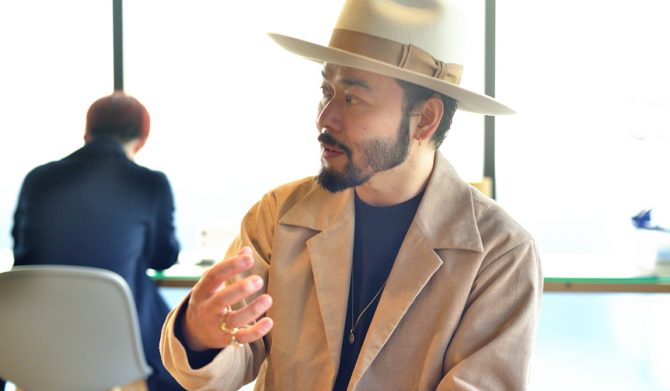
COMBOWhy do you think that is? Perhaps because (hip-hop fashion) is attractive (laughs)? Or maybe it's just become impossible to ignore. I think so.
POGGYThat might be true (laughs).
COMBOBut I truly welcome that and think it's a good thing. Even so, until about two or three years ago, there were still people who were against it (hip-hop fashion). But now, it's become impossible to ignore. Virgil, for instance, has even been recognized by Louis Vuitton.
POGGYIn a different vein, young hip-hop artists in America are now paying a lot of attention to Japanese designer brands from the 90s and early 2000s, like UNDERCOVER and NUMBER (N)INE from when Miyashita-san was designing. What do you think is the reason behind this trend?
COMBOIt's a bit difficult to explain in words, but I think it's a desire for clothing. Lately, I've been thinking that with the emergence of trap music, the way music is made has changed significantly from the past. Similarly, the way clothes are made has changed too, hasn't it? It's no longer the era of focusing on "patterns" or "fabrics." Perhaps designers who create clothes in the style of UNDERCOVER or NUMBER (N)INE from that era might not emerge. The fact that edgy rappers are interested in that suggests a backlash is occurring.
POGGYIt's a story where the worlds of music and fashion are completely linked.
COMBOI believe so. Nowadays, how many people think about chords or the resolution of samples when making music? I personally loved music that was based on logic, and I feel the same way about clothes now.
POGGY Japanese brands from that era created clothes as if they were making music, right? That's probably why hip-hop artists resonate with them.
COMBOYes, that's right. In fact, I think they were created with that concept in mind.
POGGYLastly, beyond fashion, are there any other things you'd like to do in the future, COMBO-san?
COMBOI'd like to be involved in something related to music. Of course, hip-hop, but since everyone is heading in the same direction, I want to take a different approach. For example, seeing Virgil collaborate with DJ Harvey recently is inspiring. Through NUBIAN, I want to link my musical sensibility with clothing and create something. I'm already in a generation that needs to pass things on, and I'm in that position.