POGGY’S FILTER | vol.4 Chris Gibbs
Page. 1
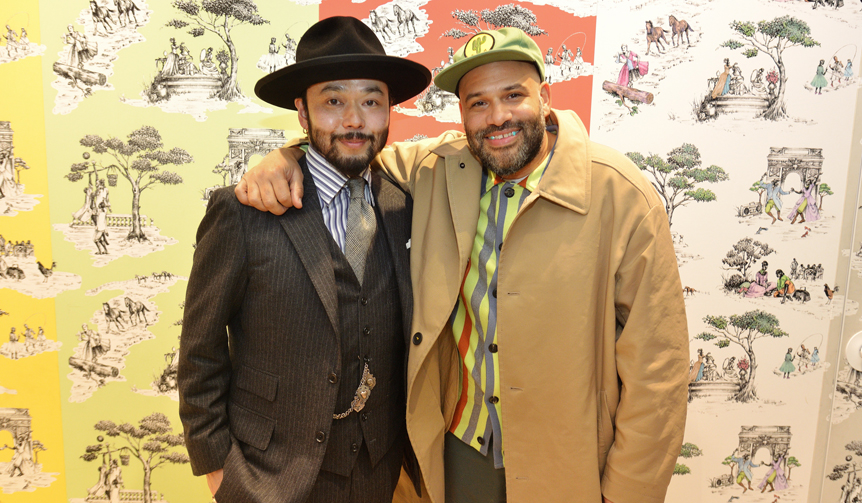
The fourth guest on "POGGY'S FILTER," hosted by Motofumi "POGGY" Kogi, is Chris Gibbs, the owner of the renowned Los Angeles-based select shop UNION, known as a pioneer in fusing streetwear and high fashion from his position as a buyer. After working at UNION's New York store, he moved to LA, rising from buyer to shop owner. Today, he is a significant influence not only in the US but also on the global fashion scene. At UNION TOKYO, which opened in Harajuku last year, we had him share his experiences with the brands he's handled as a buyer and his thoughts on the current fashion landscape.
Interview by Motofumi "Poggy" KogiPhotographs & Text by Kiwamu OMAE
Paris is a Crucible of Energy Now
POGGYThis January's Paris Fashion Week felt busier than usual. What were your thoughts, Chris?
Chris Gibbs (Chris):Yeah, it was definitely crazy.
POGGYI think it's because brands that used to show at trade shows like "MAGIC" in Las Vegas for casual wear, or during New York Fashion Week for designer collections, have increasingly shifted their presentations to Paris over the years. What do you think?
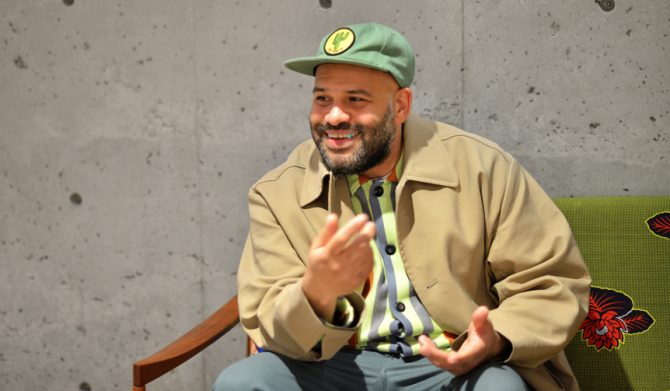
ChrisDesigners want to be where the hype is, where the energy is, and right now, that's Paris. I only really come to Paris and Tokyo for shows. I don't go to Italy, London, or New York anymore. That made things difficult for me, because so many brands wanted to show their collections to UNION, and our schedule was completely packed. I might have disappointed some designers by not being able to see them. I'm not sure what next season will bring, but I'm looking forward to it. What are your thoughts on everyone converging in Paris, Poggy?
POGGYThere are pros and cons. In the past, Paris felt quite exclusive for those of us into streetwear. But now, that barrier is disappearing, and I feel like the traditional perception of high fashion is breaking down too much.
ChrisI agree. I feel the same way, and I grapple with that myself.
POGGYUNION was one of the first to carry PYREX VISION, the precursor to Virgil Abloh's OFF-WHITE, which is essential to discussing the luxury streetwear scene. How did that come about?
ChrisInitially, I didn't know Virgil well. One day, while researching new brands online, I stumbled upon the visuals for PYREX VISION. The concept was really strong, so I think I reached out via email? I didn't even know it was Virgil's brand at the time, but I sent a message saying, "This is a very cool collection. I'm interested." He replied almost immediately, saying, "I know you and UNION well, and I'm a fan. I'm honored to hear from you." That's how we started carrying it, and UNION became the first shop in the world to stock PYREX. But when I saw the $500 flannel shirts from PYREX, I thought, "These are cool, but will they sell at UNION?" I ordered one each in medium and large, put them on the floor, and they sold out in an hour. So, I immediately placed a larger order.
POGGYBeyond American brands like PYREX, UNION also introduced Japanese brands like VISVIM to the American market. What led to that, and how did the American market react to the Japanese brands you introduced?
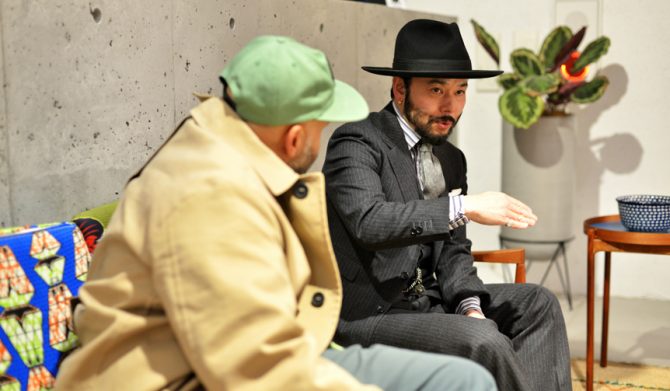
ChrisWhen I started at UNION's New York store, we didn't carry any Japanese brands. Back then, many Japanese tourists and students shopped there, taking American streetwear back to Japan. Around that time, A BATHING APE® started gaining cult popularity in certain circles in New York, but it was hard to get. NIGO® was friends with Futura and Stash, so he apparently sent them a lot of A BATHING APE® clothes, and they sold some of them in their own store. The shop's name was...
POGGYRECON!! BSF (Blue Stash Futura), that brings back memories.
ChrisExactly! In New York, you could only buy A BATHING APE® at RECON, and the quantities were limited, so it was very much an insider thing. Then, when I moved from New York to LA, UNION LA was already carrying A BATHING APE®, NEIGHBORHOOD, and WTAPS. But the quantities were very small, so I pushed to "order more." It took me about a year to convince them, but eventually, I became the buyer and started going to Tokyo for purchasing. Since becoming a buyer, I've probably ordered 100 times more Japanese brands than before. Japanese brands were expensive, so initially, only a few people understood them, but the customers loved them. It took time, but they became captivated by the "Ura-Harajuku" brands, and our fanbase grew.
Page02.UNION's Core: A Select Store for Streetwear
Page. 2
UNION's Core: A Select Store for Streetwear
POGGYDid you start carrying VISVIM even later?
ChrisThe quantities we could get for any brand were limited, so everything sold out quickly. We needed more products and brands. VISVIM initially started with footwear, so it was sold at the sneaker shop UNDEFEATED. Later, they launched a clothing line, and UNDEFEATED couldn't carry it, so they approached me. I was blown away when I saw the debut collection of VISVIM's clothing line. It was on a completely different level from any other brand. That's how we ended up carrying it at UNION. Hiroki [Nakamura, VISVIM designer] was doing things no one else was, like combining classics with contemporary technology. Jackets using GORE-TEX were common later, but at the time, he was the only one doing it. His footwear, like moccasins with sneaker soles, was also amazing. As the brand grew, Hiroki started offering more luxurious items, which helped attract new customers.
POGGYSo that's how UNION's current style, which bridges high fashion and streetwear brands, came about?
ChrisVISVIM was the catalyst for attracting a new clientele willing to spend more. Based on that, we started carrying JUNYA WATANABE COMME des GARÇONS, wanting to offer more brands we could confidently recommend to them. A friend working at COMME des GARÇONS in Chelsea, New York, asked if I wanted to carry Junya, so they introduced me to the sales representative. Later, we got approval at the Paris showroom. Junya became the gateway to high fashion for us, and then it expanded to Thom Browne, sacai, and Raf Simons.
POGGYI feel that many American brands were influenced by what were then called "Ura-Harajuku" brands from Japan in the late 90s and early 2000s. In what specific ways do you think they were influenced?
ChrisI see two aspects. First, American brands didn't prioritize quality in their clothing back then, but they learned the importance of craftsmanship, details, and materials from Japanese brands. Japanese brands reinterpreted American streetwear and elevated it, and selvedge denim is one example that Americans learned about from Japan. The second aspect is brand value control. America is capitalist; we're always expected to grow. That applies to streetwear just as it does to Coca-Cola: at the end of the year, you calculate sales and aim to double them next year. But that ultimately leads to an oversaturation of products in the market. Japanese brands, on the other hand, if 1,000 people want something, they produce 800 units, keeping supply below demand. By not giving too much, they create a sense of exclusivity and maintain brand value. This approach, influenced by Japan, is now becoming a global trend.
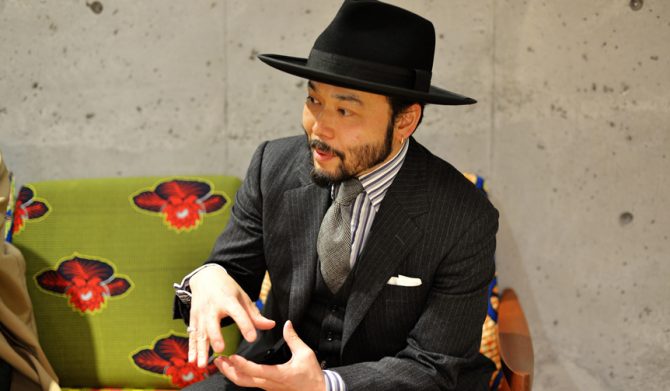
POGGYWhy do you think Japanese brands were able to adopt that sales strategy so early on?
ChrisI think it's due to differences in business practices. While America primarily uses a wholesale model, Japan mainly employs a retail model. Brands like WTAPS, NEIGHBORHOOD, A BATHING APE®, and GOODENOUGH, unlike many American brands, each have their own retail stores. In America, the only brand with shops early on was Supreme. With a retail model, designers create products for their own stores, which allows them to plan their market approach and production. In contrast, the wholesale model in America means selling to other stores, so they don't, or can't, focus on specifics like "What should we sell in the second week of September?" What American brands are learning now is the balance of supply and demand, and introducing new, limited-quantity products almost weekly to keep customers engaged. I believe these concepts originate from Japan.
POGGYI see. That makes sense. UNION Tokyo finally opened last year. A hallmark of UNION is its skillful mix of designer and luxury streetwear brands. I personally love it. What do you keep in mind when creating a store that blends these different elements?
ChrisUNION has tried many things, but at its core, it remains a select store for streetwear. That's the UNION I love, and it hasn't changed. So, I continue buying with the mindset of how a streetwear kid would mix things to elevate their style, and that's why we've carried high-fashion brands. But now, high fashion is adopting our approach, mixing streetwear into their collections. And now, streetwear is trying to create high fashion, which is kind of crazy. So, I believe I'm partly responsible for the current situation where the lines between high fashion and streetwear are blurring. It connects back to the earlier discussion about my conflict regarding what's happening in Paris – I'm proud that UNION started mixing streetwear and high fashion, and I feel a sense of responsibility for it.
POGGYJust as some people who love old-school rap can't get into trap music, people who like traditional fashion like Thom Browne might find it difficult to embrace the current trend exemplified by OFF-WHITE. What are your thoughts on the relationship between these two aspects of the current fashion scene?
ChrisThat's a great question, but it's hard to answer... I think the rise of OFF-WHITE and Fear of God created a new subgenre: luxury streetwear. This represents an evolution of fashion through the lens of young pop culture, and a competition between that and established brands with long histories, like Thom Browne. The era is in transition, and anything can happen. Louis Vuitton hired a designer like Virgil, who came from luxury streetwear. I don't know what that signifies or how it will evolve, but I think it's cool and wonderful. I'm very interested to see what happens next. Does that answer your question?
POGGYYes, it does (laughs).
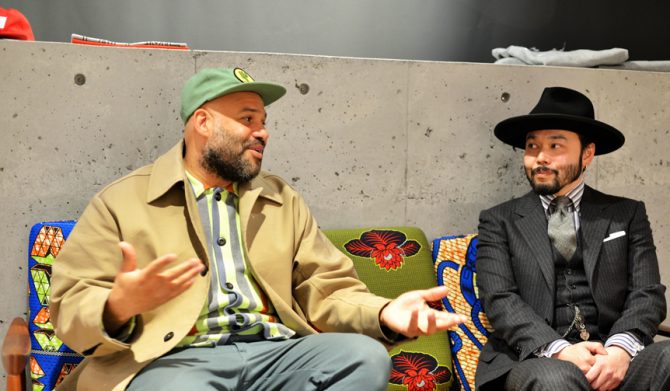
ChrisMay I add one more thing? What we need to remember now is that fashion is business. The people at the top are, above all, businessmen. The Baby Boomers (born mid-1940s to mid-1960s), who dominated the high-fashion business until recently, are aging and spending less on fashion. Demographically, Millennials (born late 1980s to early 2000s) and Baby Boomers are the largest groups. Generation X (born mid-1960s to early 1980s), my generation, is smaller in number and doesn't have the same purchasing power. However, we act as a bridge between the other two generations, so we have influence. Currently, Millennials have the most purchasing power, so brands are developing strategies targeting them, and I don't think that's a bad thing. This situation is likely to continue for some time.
POGGYBy the way, are there any young designers you're currently paying attention to?
ChrisI'm a bit slow-paced and take my time discovering new designers. Last summer in Paris, I met some young designers who caught my eye. There's a brand called BOTTER, have you heard of it? They're incredibly exciting. I saw their portfolio and student design books, and the portfolio itself was like a piece of art – truly remarkable. I'm looking forward to seeing what they do next. I'm also keeping an eye on Wales Bonner. For streetwear, I like Online Ceramics. That's about it, I think.
POGGYFinally, could you tell us about UNION's future outlook?
ChrisThere are still aspects we're figuring out, but last year was incredibly significant for us. We opened a store in Tokyo, had three major collaborations, and launched our own brand. It's challenging, but I'm excited, and we'll keep moving forward. I hope you'll continue to watch UNION grow as a collection.