New Series | POGGY’S FILTER | vol.1 VERBAL (Part 1)
Page. 1
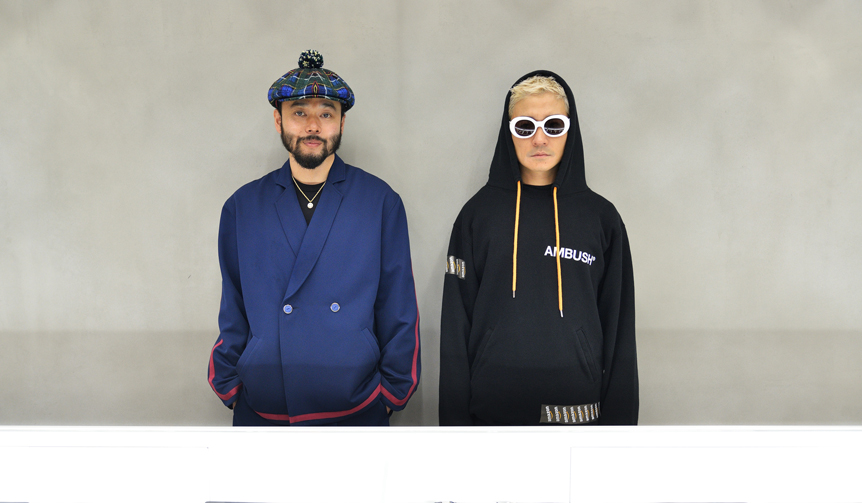
Motofumi Poggy, director of UNITED ARROWS & SONS, is a global figure who leads the international fashion scene, active not only in Japan but also in America and Europe. Last year, while continuing his duties at UNITED ARROWS & SONS, he launched his own company, embarking on a new business path. He is now starting a series of interviews with various people he finds interesting. For the first installment, he has chosen Verbal, an artist and producer active as a member of m-flo, TERIYAKI BOYZ®, PKCZ®, and HONEST BOYZ®. Simultaneously, he co-runs the brand AMBUSH® with his partner YOON, serving as CEO and Creative Director, and continues to be at the forefront of both music and fashion. He is a true pioneer.
Interview by KOGI “Poggy” MotofumiPhotographs & Text by OMAE Kiwamu
A Childhood Awakened to Hip-Hop, Fashion, and Music in Boston
POGGYThe luxury streetwear trend is now dominating the global fashion scene, but I feel the reasons behind this movement aren't widely understood. I want this series to shed light on that, and also on the significant impact that various happenings in Japan have had internationally. For this inaugural installment, I'd like to invite Verbal, whom I've known for a long time, to discuss his past experiences and his brand, AMBUSH®. Thank you for joining me.
VERBALThank you for having me.
POGGYI've always felt that you've played a crucial role as a gateway for international artists in Japan. At the same time, I believe you recognized the importance of fashion at a very early stage. When did you first become captivated by fashion and music?
VERBALIt was 1985, when I was 10 years old. I went to a summer camp in Boston, and I saw young kids breakdancing. Kids my age were carrying boomboxes on their shoulders, wearing Nike tracksuits, and adorned with chunky jewelry, all while hip-hop music played. It was a complete culture shock. Everything I found cool hit me all at once. That was the beginning of my journey into fashion and music. I went to Boston wearing basic canvas shoes, but by the time I returned to Japan, I was wearing Nike sneakers (laughs).
POGGYFrom basic canvas shoes to Nike (laughs). After the 90s, around the mid-2000s, there was a period when the Ivy League style, influenced by Thom Browne, emerged in fashion. While people in the select shop scene embraced Thom Browne, those in the street style scene were largely unaware of him. Yet, you were one of the first to adopt Thom Browne as a fashion statement. I remember you styled it in a way that was quite different from others. How did you discover brands like that?
VERBALAfter discovering hip-hop as a child, I became immersed in hip-hop and skate fashion. The hip-hop fashion of that era, exemplified by artists like Big Daddy Kane and Slick Rick, involved wearing branded suits with layers of chains. I was always drawn to that kind of look—something that was high society yet had a street edge, a kind of formal wear with a twist. Thom Browne's aesthetic, which was somewhat punk and playfully preppy, really resonated with me. I saw it as the perfect embodiment of refined yet edgy formal wear, so I adopted it.
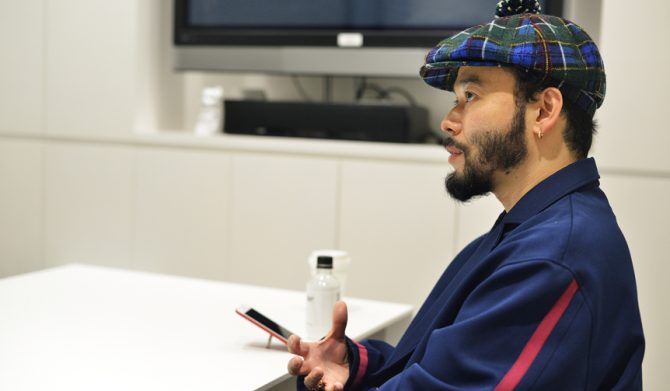
POGGYAnd you paired it with large jewelry. I don't think many people were dressing like that back then. Jewelry is clearly a very important element for you, and I believe it played a role in your international success. Could you tell us again why you decided to create such pieces, and what prompted you to start your brand?
VERBALSlick Rick and Big Daddy Kane, whom I mentioned earlier, and other hip-hop artists from the 80s wore what was called 'truck jewelry'—large pieces featuring pig-nose chains. As a child, I wondered where one could buy such items. When I started working in music, I felt that desire to own those pieces again, but there weren't many places selling them. And the ones that did often had rather uninspired designs. So, I decided to start customizing jewelry myself. Initially, I tried customizing in America, but the results were quite disappointing (laughs).
POGGY(Laughs)
VERBALAround that time, I happened to meet a craftsman in Ochanomizu who ran a jewelry shop. He was the one who inspired me to start making jewelry. When I told him, 'I want to create jewelry like this,' he offered, 'I'll help you make it.' So, I began by conveying my ideas and designs to him. The first piece we created was the Crown Ring. From there, things escalated. With the theme of 'wearable pop art,' I aimed to create pieces that felt like carrying art on oneself.
POGGYWas Antonio Murphy & Astro® established before AMBUSH® as a brand?
VERBALYes. Originally, AMBUSH® wasn't a brand; it was the name of a design team YOON and I had. When we decided to create a brand, I felt that using the name AMBUSH® would be too straightforward. So, we named the brand Antonio Murphy & Astro®. Ultimately, we returned to the AMBUSH® name.
POGGYI believe Kanye West wore a necklace designed by you around that time. Was it that necklace that led to your meeting with Kanye?
Page02.From Meeting Kanye West to Launching a Jewelry Brand
Page. 2
From Meeting Kanye West to Launching a Jewelry Brand
VERBALKanye was in Japan at the time FENDI held a party in Tokyo. We had an opportunity to dine together with Silvia Fendi and others, and that's when Kanye noticed the necklace I was wearing and showed interest. It was a Michael Jackson necklace with a Jesus piece motif. He asked, 'Where did you get that?' I replied, 'It's from my own brand; I make it myself.' He then said, 'I'm flying back the day after tomorrow, can you make me another one by then?' Of course, that was impossible, so I promised to send it later, and that's how our relationship began.
POGGYSo that's how you met Kanye, through such a timely encounter.
VERBALAfter that, we connected on a musical level as well, and I joined TERIYAKI BOYZ® to work in the studio. During that time, we talked about fashion, and he asked me many questions. Things like, 'Why can't you make something like this?' or 'Don't you have anything like that?' I also provided the sunglasses for his music video 'Stronger' (released in 2007). He said, 'If you have so many, can I borrow them?'
POGGYWere those Alain Mikli?
VERBALYes. I also lent him some Jeremy Scott sunglasses with the brand name written on the side. He ended up taking them home without returning them (laughs).
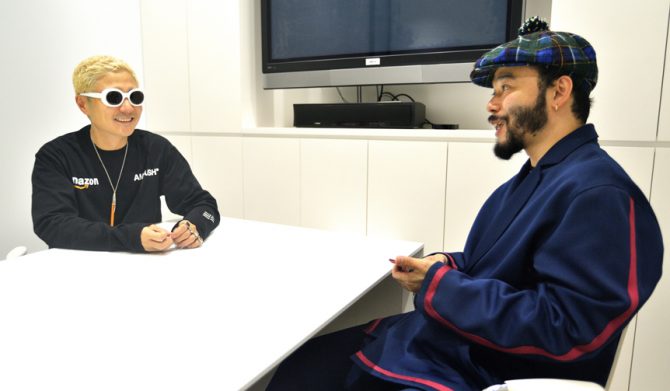
POGGYAlso, Kanye was planning to launch a brand called Pastelle and had approached various Japanese brands to create samples. For instance, PHENOMENON made samples, but they were never produced. I suspect similar situations occurred with many others. Did Kanye make similar offers to you, Verbal?
VERBALYes, he did. He made various requests regarding jewelry, asking, 'Can't you do something more like this?' Around that time, he asked me to create things for his friends. Although none of them were ultimately produced, that close communication led to the birth of many design ideas.
POGGY(Laughs)
VERBALAt the time, Kanye was painting the face of his Jesus piece jewelry in flesh tones, creating somewhat unusual pieces. Then, one day, the topic of painting the gold base metal in different colors came up. However, painting over gold would be expensive and wouldn't make anyone happy; why not use a different material? So, we created samples using alternative base metals, which led to the 'POW!®' rings.
POGGYSo that's how it happened.
VERBALAlso, Kanye requested a completely black version of the Jesus piece. I made it out of resin and gave him the sample, which he then gave to Jay-Z. When Jay-Z wore it, it was copied worldwide and essentially ended there (bitter laugh). Amidst all this, we created 'POW!®'. Kanye thought, 'This is good. Why don't you make more?' He started wearing my 'POW!®' pieces himself and giving them to other artists, and suddenly, they became a trend.
POGGYIt spread like wildfire.
Page03.AMBUSH®: Overcoming Challenges, Now Entering the Second Wave
Page. 3
AMBUSH®: Overcoming Challenges, Now Entering the Second Wave
VERBALI felt like I was just making things for friends, but then they started appearing on HYPEBEAST and other platforms. Soon after, I received contact from Sarah Andelman of Colette, and from many people in Japan, including yourself. In America, Virgil Abloh was the first to carry our pieces at RSVP Gallery in Chicago, long before OFF WHITE or PYREX VISION even began. So, in a way, the brand just came into existence before we knew it.
POGGYBack then, among Japanese brands, SWAGGER was one of the first to gain international recognition. However, most were still street brands. As far as I recall, AMBUSH® might have been the first Japanese brand with a more luxurious leaning to make its mark internationally.
VERBALThat might be true. We also found ourselves with several international accounts without actively seeking them. We had no knowledge of fashion cycles, release schedules, or the rules of men's and women's collections. We were simply making jewelry and operating on a small scale. When you were working at Liquor, woman&tears, I casually visited the store and said, 'We're doing this, what do you think?'
POGGYYou brought samples to the store! I was so surprised, thinking, 'Wow, it's Verbal!' (laughs).
VERBALI was quite informal, just showing up to sell things. It was still an extension of a hobby, but as we continued, we decided to approach it more seriously as a brand. In 2015, we held our first exhibition in Paris. That led us to present during Paris Fashion Week for menswear, and now we also do womenswear.
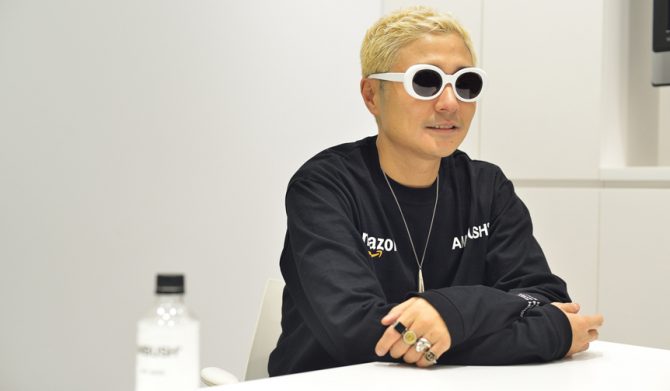
POGGYHearing your story so far, it sounds like things progressed very smoothly. In reality, jewelry, unlike clothing, requires a certain production volume. Wasn't it quite challenging to create such jewelry back then?
VERBALYes, it was.
POGGYJewelry is close to industrial products, isn't it? To consistently produce new items each season and collaborate with Japanese artisans, how was that process?
VERBALIt was challenging on multiple fronts. Artisans would ask, 'Why are you making something like that?' (laughs). Also, overseas, if people found something 'interesting' or 'good,' they would buy it without preconceived notions. In Japan, however, there were many questions like, 'What's the story behind this product?' I have a rather simple mindset, thinking, 'If it's good, isn't that enough?' But I realized anew that Japan truly values such narratives.
POGGYIndeed, that feels very Japanese.
VERBALFurthermore, at the time, we were operating self-sufficiently within my own company. When something sold, we had to produce more, so we immediately reinvested the necessary funds. On one occasion, when I went to Paris, the expenses were so high that we had to skip a subsequent collection. There were two or three times when I thought the company might go bankrupt. We went through considerable hardship. But YOON remained steadfast. Regardless of what happened, she'd say, 'Let's just do it,' and we moved forward together. I believe that's why we are where we are today.
POGGYWas there a particular turning point that helped you overcome those difficult situations?
VERBALPerhaps it was letting go of certain constraints. Previously, I felt bound by fixed ideas of 'how things should be.' There were also moments when we could have reached greater heights, but I hesitated to take risks. Reflecting on those experiences, I feel we are now experiencing a second wave within our brand. In March 2018, we held our first fashion show with Amazon, which effectively conveyed our brand's worldview. Subsequently, YOON's appointment as Jewelry Designer for Dior Homme created significant buzz. Having our own shop allows us to gauge customer reactions directly. When we bravely decide, 'This is going to be big!' and expand our product offerings, we receive genuine feedback. That process is incredibly enjoyable now.