Yoji Yoneyama x Masato Yashima: A Special Conversation on Music, Theater, and Jewelry | M・A・R・S
M·A·R·S | Mars
Yoji Yoneyama x Masato Yashima: A Special Conversation
Music, Theater, and Jewelry (1)
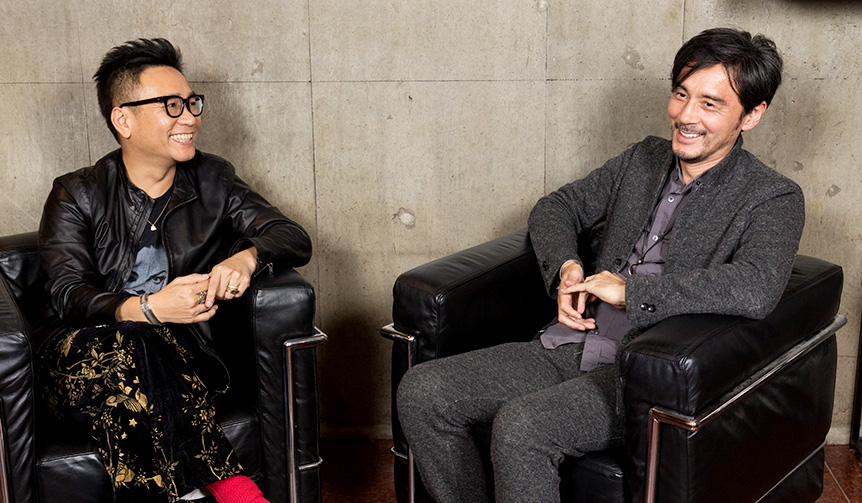
M.A.R.S. celebrated its 25th anniversary in 2016. This is a special interview series with designer Yoji Yoneyama to commemorate the occasion. Our guest this time is actor Masato Yashima. During our conversation, it was revealed that Yashima's theater troupe, "Kamukamu Minikina," which he founded with friends, was established in the same year as M·A·R·S. They also discovered a shared love for music, which led to a lively discussion.
Photographs by TANAKA TsutomuHair by HIROKI (W)Make-up by Nagisa (W)Text by TOMIYAMA Eizaburo
There are many eyeglass motifs out there, but I've yet to see one that surpasses this. (Yashima)
—How did you two first meet?
Masato Yashima (hereinafter, Yashima)I was first introduced to M·A·R·S by actor Zen Kajiwara. I had asked them to create a custom wedding ring. I expected a diligent craftsman, but was surprised to find someone as cool as Masaharu Fukuyama. I was a bit nervous at first, but I figured if he was stylish and cool, I could trust him with it (laughs).
—So that's how your relationship began.
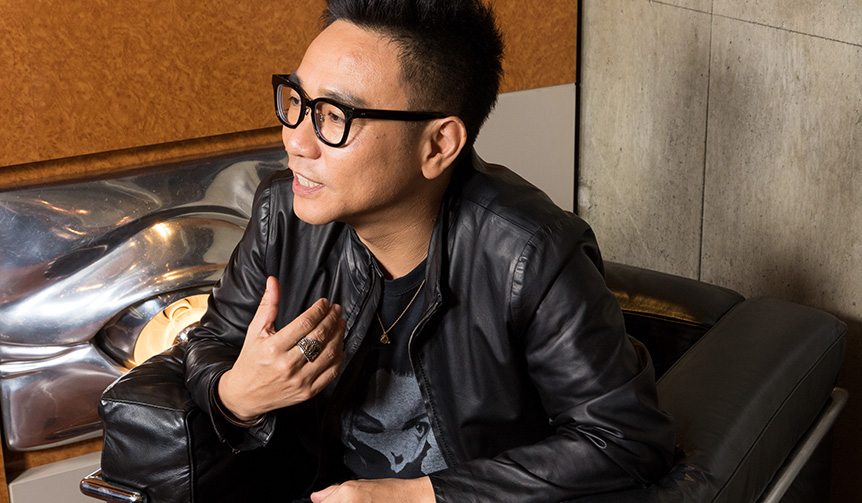
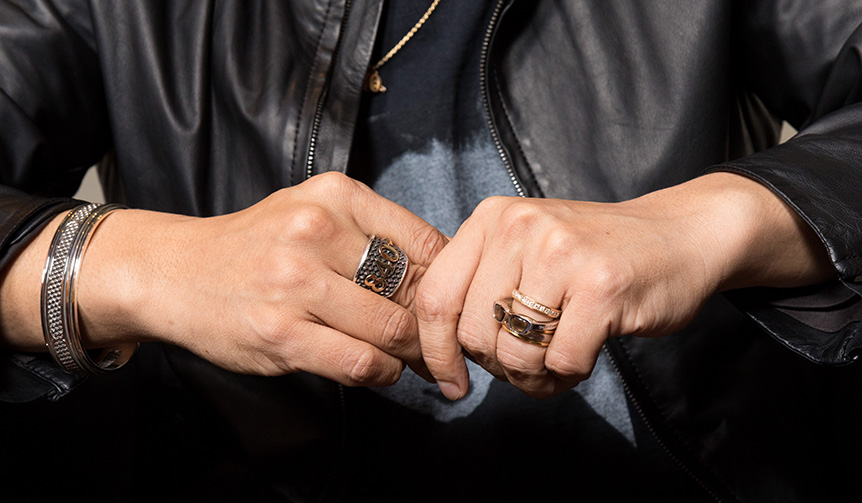
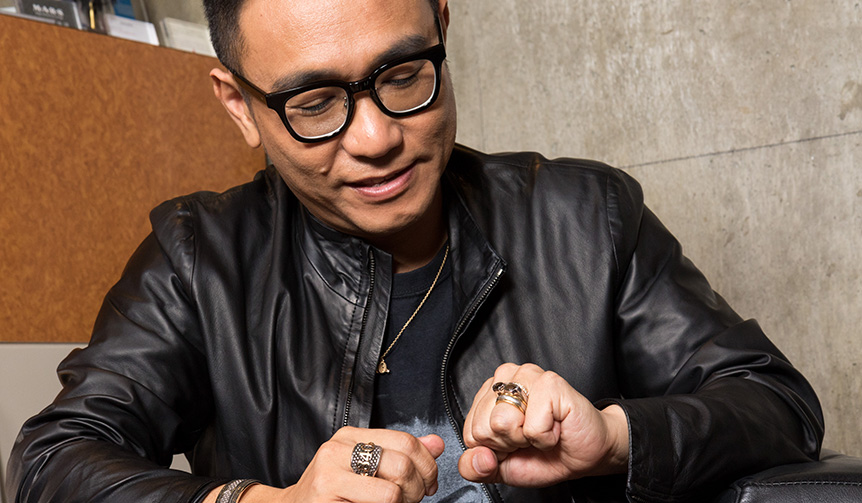
YashimaYes, when I won the Japan Best Dressed Eyewear Award in 2004, they even made a commemorative ring for me. There are many eyeglass motifs in the world, but I've yet to see one that surpasses this. If you look at the back, the temple parts are also perfectly rendered. And they even engraved a message inside the ring. I can't read small print very well these days (laughs). I was truly delighted with it; I even wore it to the awards ceremony.
Yoji Yoneyama (hereinafter, Yoneyama)I heard you were likely to win the Best Dressed Eyewear Award, so we made it in a rush. The stones set in the lens part were also custom-made for the occasion. Everything was a completely unique piece.
YashimaI'm truly grateful. Also, for our 10th wedding anniversary, I worked hard to surprise my wife with something like a "Sweet 10" gift, and I immediately consulted Yoneyama-san to convey my ideas and place an order. I also love the composite ring. I had it customized with the number 840 (Yashima) engraved on it.
YoneyamaBefore you started wearing wedding rings, did you wear any accessories in your younger days?
YashimaI wore necklaces when I was younger, but I didn't think rings were for men. Back then, I was quite unfashionable, wearing a loosely-knit V-neck summer sweater, denim with heavy embroidery, and moccasins with bare feet in the summer. I'd pair that with a thick gold necklace and a waist pouch (laughs).
YoneyamaThat changed after you met your wife, didn't it?
YashimaThat's part of it, but things also changed as I talked with Yoneyama-san. He was able to understand my preferences.
YoneyamaI'm happy to hear you say that. You founded your theater troupe in college, Yashima-san. When did you first become interested in acting?
My Teenage Hero Was Hiroto Kōmoto
YashimaI don't remember. But I always loved being in front of people. From around the third grade of elementary school, I was the MC for school events. I also have a memory of acting in a play in the fifth grade. But by the third year of junior high, I was thinking I wanted to do something like that in the future. My parents only knew about Kabuki when it came to theater, so I kept dropping hints like, "I might be a burden on you for longer than most." I always gave them that kind of jab.
YoneyamaSo, at first, it was just about wanting to stand out (laughs). That means you would have been happy being a singer or a comedian too.
YashimaExactly. I just went along with the trends. In the 80s and 90s, there was a boom in small theaters and a boom in bands. So I was in a band during high school.
YoneyamaWhat kind of band was it?
YashimaAn American hard rock cover band. We played bands like Mötley Crüe. But since I was a chubby guy with glasses, it wasn't cool for me to be the vocalist. To make up for that awkwardness, I leaned a bit towards being a comedy band. But the approach was like, "We'll play seriously."
YoneyamaWho were your idols at the time?
YashimaStrangely enough, it was Hiroto Kōmoto, whom I would later meet through M.A.R.S. Everyone in our generation felt the same way. I first discovered him in junior high and listened to him while screaming into my pillow. When I first came to Tokyo, I listened to him at full volume on the Shinkansen. It was like he was motivating me, a way to release the adolescent angst I felt. He was a presence that helped me vent those confusing feelings.
YoneyamaI think I discovered The Blue Hearts in my twenties. Kōmoto is truly cool, isn't he?
YashimaThe band's sound and melodies are cool, but I really love the lyrics. Bands whose lyrics I can't hear are no good. For me, The Blue Hearts were the first where I could actually hear the lyrics. It felt like they were picking up on the confusion I felt at 14 or 15, and I became obsessed with that. It was like they saved me. Later, I heard Kōmoto say, "I'm singing for 14-year-olds," and I thought, "So that's how it was."
YoneyamaThat feeling still resonates today, doesn't it?
YashimaIt does. When I go to a concert, there are moments when I can't help but cry. I don't understand the emotion myself. It's overwhelming. Yet, Kōmoto himself is a very calm and intelligent person in person. Perhaps he wrestles with deep thoughts in quiet moments, but I'm happy that he interacts with people like me. When we first met, he said, "We're alike, aren't we?" I was incredibly happy, but looking at us, we don't seem alike at all. Oh, I see everyone here making puzzled faces, but he said it himself (laughs).
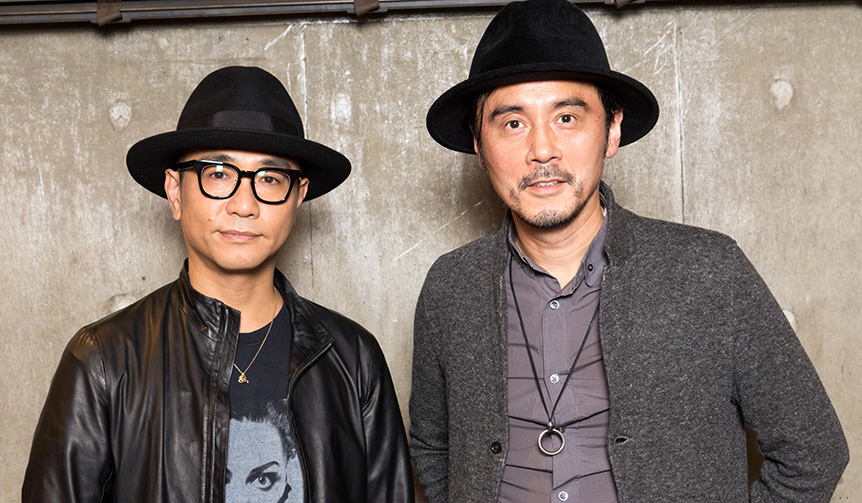
I didn't actively choose to become an actor; it was more of a process of elimination that led me here. (Yashima)
YoneyamaHahaha. You admired Kōmoto and were in a band in high school, but did you seriously start acting after moving to Tokyo?
YashimaI moved to Tokyo to act.
YoneyamaWas there anyone who inspired you to do that?
YashimaNo. I just had this strong desire to be in front of people. The reason I wanted to be in front of people was to be popular and adored. However, I wasn't good-looking, I wasn't athletic, I wasn't smart, and I had no elements that would make me popular. But in the Kansai region, being a little funny could make you popular. I gambled on that to some extent, but there's also a matter of aptitude, and I have respect for comedians, so I felt I could never become one.
YoneyamaOh, really?
YashimaFrom there, I gradually started doing whatever I could, whether it was in a band or acting. So, I didn't actively choose to become an actor; it was more of a process of elimination that led me here. Now, fortunately, I do various things besides acting, such as variety shows and hosting news programs, and those experiences have been useful.
YoneyamaYou're from Nara Prefecture, aren't you?
YashimaYes. But in my time, there were few theaters in Nara and few people involved in theater. I always felt I had to go to Tokyo. In the bubble economy era, it was like "Long live Tokyo!" So I entered a university in Tokyo and, in 1990, founded the theater troupe "Kamukamu Minikina" with my junior high and high school classmate, Takeshi Matsumura. Matsumura, the leader, was someone I roped into theater.
YoneyamaM·A·R·S also started in '90, so it's the same year.
YashimaAh, is that right? The same year. But what's clearly different between us and you, Yoneyama-san, and Kōmoto-san, is that you are people who create something from nothing – artists. I'm an actor, so I multiply or add to what has already been created. That's the fundamental difference. That's why I deeply respect artists, and sometimes I'm even jealous.
YoneyamaI feel the opposite. I feel "defeated!" and jealous of those who can fully embody a role on stage.
YashimaIt's a case of wanting what you don't have. Also, actors tend to have great respect for musicians.
YoneyamaFrom what perspective?
YashimaFirst, because they are artists, as we discussed earlier. In addition, the magnitude of the "energy" they confront is different. Between a performer on stage and the audience, there's an exchange of invisible "energy." While it's possible to manage that exchange with an audience of 100 people (1:100), when it becomes (1:1) x 100, it requires considerable toughness. Moreover, the venues musicians play in are often larger than those for theater.
YoneyamaI imagine it must be intimidating for musicians. Sometimes they're performing for tens of thousands of people.
Page02.The younger generation is increasingly intelligent and adept at handling things smoothly.
M·A·R·S | Mars
Yoji Yoneyama x Masato Yashima: A Special Conversation
Music, Theater, and Jewelry (2)
The younger generation is increasingly intelligent and adept at handling things smoothly.
YashimaRecently, I had the opportunity to appear at a Rekishi concert at the Budokan. It's exhilarating for that moment when you appear before an audience of 10,000 people. But if you were to stand in the center continuously, constantly releasing adrenaline, I think you'd fall apart the moment you realized it. Everyone is performing at their limit. That's precisely what makes it wonderful, I believe.
YoneyamaFrom my perspective, performing on stage is just as incredible.
YashimaIn terms of the exchange of "energy," I don't think it's different. However, the fact that you are not yourself when acting is a significant factor. It allows you to be somewhat irresponsible. Even if I play a terrible person, I can say, "Well, that's not me!" I think you feel this too, Yoneyama-san – a sense of responsibility for what you create. To use jewelry as an analogy, an actor is merely one component that makes up the ring.
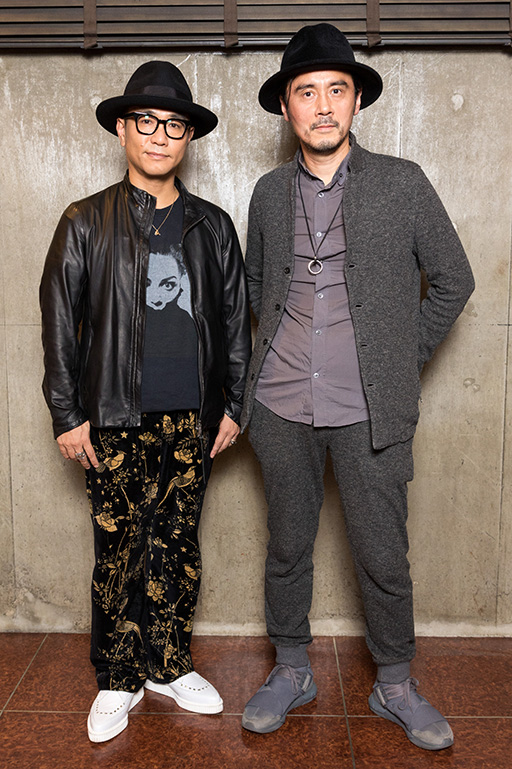
YoneyamaIn my case, the responsibility for the product naturally lies with me. However, after the purchase, it becomes the customer's time with the item. On the other hand, you, Yashima-san, have a responsibility for the time you share with the audience. People pay money for the emotions they experience. Being able to do that is amazing. Only a select few can provide that kind of experience to an audience. I could never do it.
YashimaIn your case, you have to keep the store running continuously, right? But we have a closing night. Once it starts, it ends. I can't quite imagine not having that.
YoneyamaI see, so it's natural for things to end one by one.
YashimaIt's a series of festivals. After they end, nothing remains, and you move on to the next place. The thought of continuing to create in one place for an extended period sometimes sends a shiver down my spine.
YoneyamaAround 1990, when we started our careers, there was a strong sense of "Let's create something ourselves!" Since then, society has gradually become more conservative. How is it in the world of theater?
YashimaOur troupe never achieved explosive popularity. If you become explosively popular once, you fall under the great constraint of having to maintain that specific style. In retrospect, it's fortunate that we didn't experience that. In our case, we're lucky to have a leader like you, Yoneyama-san, who creates from scratch, and we do what he wants to do.
YoneyamaWhat about the younger generation?
YashimaThey're emerging one after another. They're a completely different type from us; they're intelligent, sophisticated, and don't start with the superficialities. While they have these good qualities, there are fewer who have that "I'll just throw something completely unexpected at you, or I'll die!" kind of drive.
YoneyamaThere are more and more people who are intelligent and can handle things smoothly. In our field, craftsmen have become more understanding, and machinery has advanced, making it easier to produce things than before. While things can be made more easily, when it comes to "What is the most important thing to create?" there are increasing instances where the answer is unclear. I believe there's a significant difference between those who want to create commercially successful products and those with a strong conviction.
YashimaThis is the ultimate question in any genre. There's no single correct answer in accessories, just as there isn't in subjective preferences, tastes, or trends. While influenced by things that lack a definitive answer, you also need to align with economic flows to sustain yourself long-term. Younger people have access to a vast amount of information and possess numerous means for processing it. Consequently, they tend to look down slightly on those who are clumsy or unconventional. However, when all those filters are removed, someone extraordinary can emerge. That kind of explosive potential doesn't disappear. It's just that there were more of them in the past. I have expectations for that. But to find what you truly love, you must first make mistakes. It's a trade-off with convenience. In an era where detours are difficult, that becomes the struggle.
YoneyamaKōmoto once said, "Rock and roll can only be born in affluent countries." He says rock is about a hunger, but if it's about hunger, shouldn't it be born in Africa? Or in remote parts of Asia? But movements are created in affluent countries. There's a certain appeal in people who, after gorging themselves and consuming everything, still want to create something new, saying, "How about this!" Nowadays, there's plenty of information. But I believe that while the information is abundant, the substance isn't necessarily enriched. That's why we don't see things that make you go, "Wow!" It might be an era where it's difficult for things that create movements and become standards to emerge.
“Right now, I want to immerse myself in my work.” (Yashima)
YashimaDuring the earthquake, there was a discussion about whether theater should be performed at that time. But those who can should do it. Those who can't don't have the luxury, and those who must face life head-on will do so. Others will do what they can. We are able to do this because there is room for it.
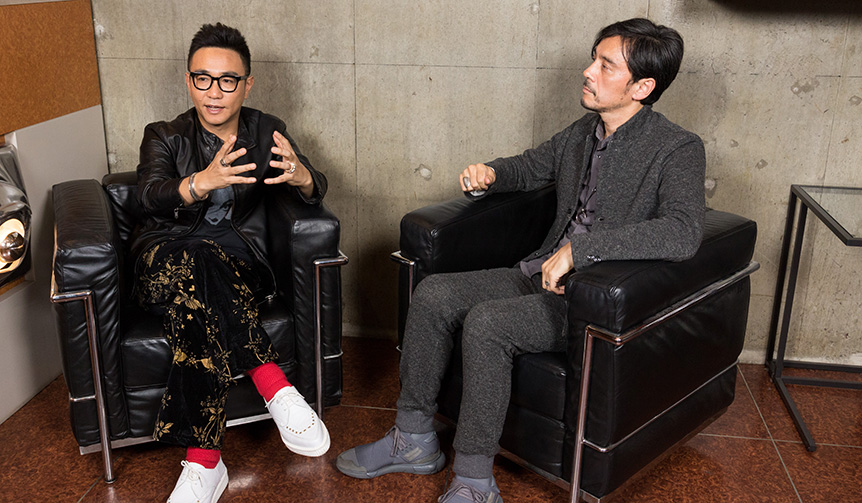
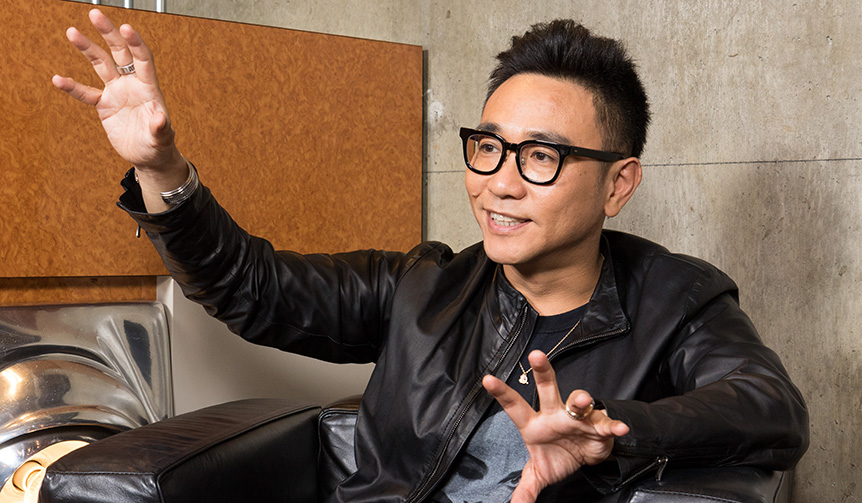
YoneyamaYou could call it a waste, couldn't you?
YashimaIt's considered unnecessary. But that's absolutely not true. That's something I want to fight against. There's a true story about a theater being built on the front lines, where soldiers were going to die the next day. The work was called "Snow Falls on a Southern Island." There's also the idea that entertainment and emotional space might be precisely what's needed in such circumstances.
YoneyamaDo you hold that kind of mindset?
YashimaOn a personal level, as I mentioned earlier, I started acting because I wanted to be popular and adored. At the same time, I've had a fear of death since I was young. I wanted to escape from it as much as possible, but knowing it's inescapable, I had a desire for my present self to be remembered by many people.
YoneyamaOh, I see.
YashimaI thought that when I was in the fourth grade of elementary school, "I want people to remember me." Even as I say it, I think, "What kind of person am I?" (laughs).
YoneyamaBut that feeling hasn't completely disappeared, has it?
YashimaNo, it hasn't.
YoneyamaWhat drives you now, Yashima-san? Besides wanting to be popular and remembered.
YashimaBefore, I was thinking about myself, so it was about the "means." Only after turning 40 did I realize I had just stepped onto the path of theater and acting. That realization, along with the fact that it's a much longer road, was quite daunting. Right now, I want to immerse myself in my work. I want to become the character rather than myself. I feel that if I don't do that, there will be no path forward.
YoneyamaI see. I'm even more interested in your work now, Yashima-san. I'll continue to watch your performances. Thank you for your time today.
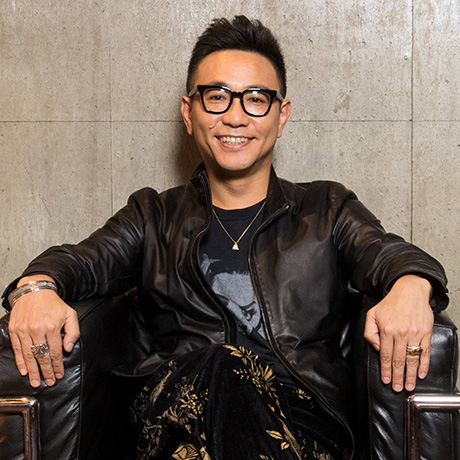
Masato Yashima | YASHIMA Norito
Born September 27, 1970, in Nara Prefecture. In 1990, he co-founded the theater troupe Kamukamu Minikina with Takeshi Matsumura, Shinichi Yoshida, and four others. Since then, he has been a leading actor in the troupe, with a wide range of activities in stage plays, dramas, variety shows, commercials, and films. Kamukamu Minikina is known for its unique style, which takes audiences on grand narratives with high-energy, fast-paced humor, and dynamic direction that emphasizes theatrical expression, with all works written and directed by the troupe's leader, Takeshi Matsumura. The troupe features distinctive actors like Masato Yashima and Shihan Yamazaki who are also active in film. Their next performance is "Rōbai ~An Obscure Ensemble Drama~," from June 17 (Sat) to 25 (Sun) at the Tokyo Metropolitan Theatre Playhouse (with performances in Osaka and Mie). He graduated from Nara University Affiliated High School and the Department of Philosophy, Faculty of Letters, Nihon University. His hobby is collecting glasses, and he received the "Japan Best Dressed Eyewear Award" in 2004. His special skill is swimming.