Feature | From Vintage to New Releases, What We Want Now Are "Classic Glasses" Vol. 03 "Brow"
Feature: The Classic Glasses You Want Now
From Vintage to New Arrivals: A Curated Selection
Part 3: The "Brow"
This feature focuses on three styles of glasses that are seeing a revival as "classic glasses":Round, Boston, and Brow. In collaboration with the vintage eyewear specialty store Solakzade, we've selected historically significant items from their collection of over 10,000 antique and vintage pieces. Under the supervision of owner Ryuin Okamoto, we delve into the roots of each style, tracing its origins and evolution.
Photographs by JAMANDFIXText by OPENERS
A Symbol of Intellect in the 1950s
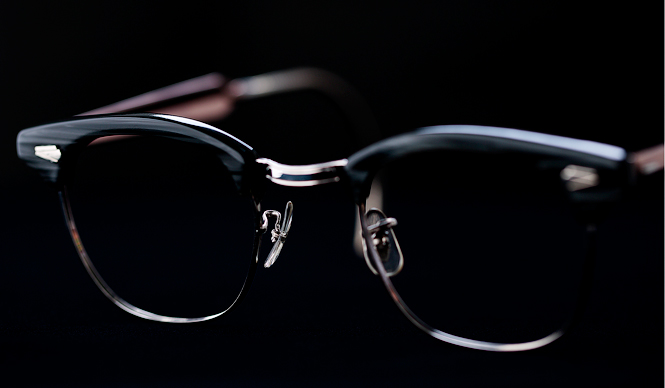
Part 3: The "Brow." Born in America after the Boston frame, it's one of the quintessential eyewear styles. As the name suggests, its distinctive brow-like frame enhances the wearer's facial features.
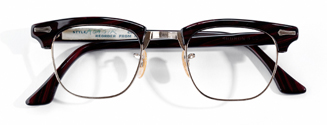
Shuron's "Ronsir" (Late 1940s)
The photo shows the "SHURON" model "RONSIR" from the late 1940s. This model, known as the Ronsir, is the prototype for the browline glasses popular today. Shuron, founded in 1865, is one of America's three major eyewear manufacturers, alongside American Optical and Bausch & Lomb. The Ronsir, in particular, was a huge hit and is known as the brand's signature model.
The design emphasizes a unique look beyond mere visual correction. The Brow, which emerged in the U.S. after the Round and Boston styles, gained popularity in the 1950s with its distinctive half-rim that conveyed an intellectual impression.
In the '50s, American Optical produced browline glasses at the request of a U.S. Army general who wanted "glasses that convey dignity." This later became known as the "Simont Brow" model and, alongside the Ronsir, stands as a landmark achievement, with brands today even releasing reissues.
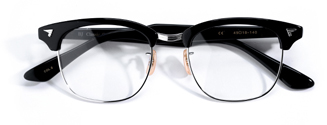
The "Simont Brow" reissued by BJ Classic (2015)
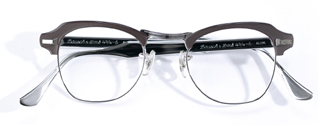
Bausch & Lomb glasses with aluminum rims (1960s)
In the '60s, design variations increased, with unique designs featuring mirrored metal parts emerging. The creation of such playful designs attests to their widespread popularity at the time. Influenced by the Ivy League boom, they were also worn by young people.
The 1970s Onward: Further Design Expansion
In the '70s, the advent of plastic lenses allowed for larger frame designs, and oversized browline glasses appeared. This also sparked a trend for browline eyewear in Japan. During the period of high economic growth, they were highly effective in projecting a sharp image for businessmen and politicians.
Following West Germany, Japan emerged as a global manufacturing hub. In the '70s and beyond, products from West Germany dominated the lineups of eyewear stores worldwide.
Among them, "RODENSTOCK," a brand symbolizing German craftsmanship, captured hearts worldwide with its robust construction, distinct from American products.
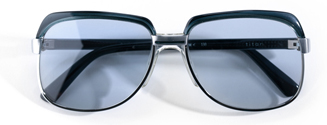
Rodenstock was also synonymous with high-end eyewear
(1970s)
In '86, Ray-Ban's "Clubmaster" sunglasses, based on the browline design, were released. This model became a huge hit at the time, reflecting the spirit of the '50s. Worn by movie stars and rock musicians, it cemented its iconic image.
Browline glasses emerged not just as vision correction tools but as fashion items for men to control their image. Today, driven by the resurgence of American traditional style, they are a popular category for both men and women as "classic glasses."
8 Browline Glasses You Should Own Now
Browline glasses are an unavoidable topic, appearing before brands. Within the common design, pay attention to how each brand expresses individuality through lens size and shape, and details of the bridge and rim. What we introduce here are all masterpieces confidently presented by each brand.
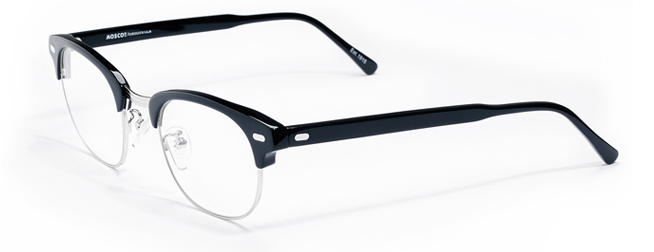
Standard model made in the 1960s
01 Moscot
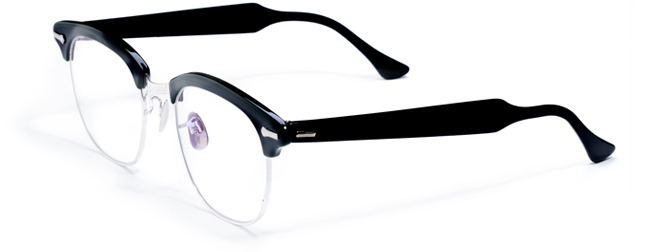
Vintage frame from Shuron
02 The Spectacle
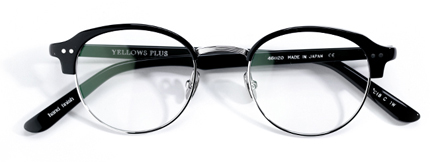
A Japanese brand highly regarded overseas
03 Yellows Plus
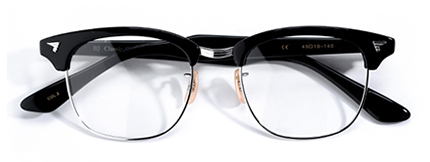
Recreation of the "Simont Brow"
04 BJ Classic
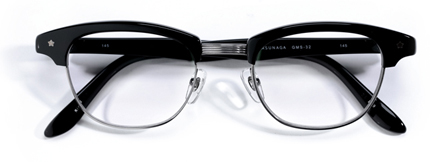
Reissued based on '70s design
05 Masunaga G.M.S.
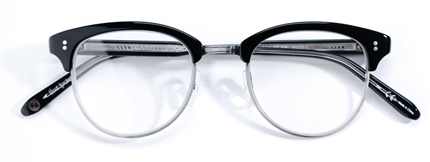
Brow model from a new brand
06 GLCO
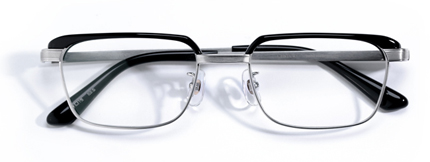
Unique square form
07 Ayame
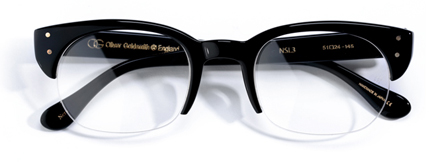
A pair suitable for formal styles
08 Oliver Goldsmith
