Feature | From Vintage to New Arrivals, What We Want Now Are "Classic Eyewear" Vol. 02 "Boston"
Feature: The Classic Glasses You Want Now
From Vintage to New Arrivals: A Curated Selection
Part 2: The Boston
This feature focuses on three classic eyewear styles experiencing a revival: theRoundBoston, and Browline. In collaboration with Solakzade, a specialist in vintage eyewear, we've selected historically significant pieces from their collection of over 10,000 antique and vintage frames. Under the guidance of owner Ryuin Okamoto, we delve into the roots of each style, tracing their origins and evolution.
Photographs by JAMANDFIXText by OPENERS
An Innovative Design That Saw Explosive Sales in the 1930s
Part 2 focuses on the Boston. Born from an evolution of the round frame, this design also falls into the classic category today. We aim to convey its simple yet innovative design and the history that led to its recognition as a staple.
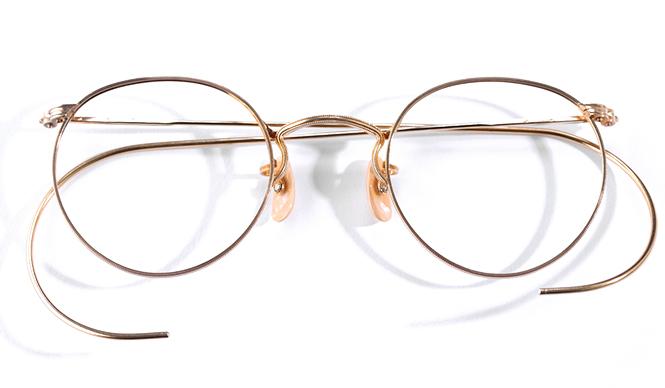
American Optical "Ful-Vue"
(1930)
The glasses commonly called "Boston" in Japan are known as "panto" overseas. This name derives from "pantoscopic spectacles," referring to their wide field of vision, measured in comparison to round glasses.
The Boston was created by modifying the design of the round frame. The key change was the repositioning of the hinge from the center of the lens to the top. This enlarged the field of vision, allowing for more comfortable vision correction.
The roots of the Boston frame lie in the "FUL-VUE" model introduced by "American Optical" in 1930. It became a bestseller, partly due to its suitability for driving the increasingly popular automobiles of the era.
Initially, Boston frames were exclusively made of metal, like the "Ful-Vue." However, from the late 1930s into the 1940s, they spread as acetate frames in both America and Europe. This marked their establishment as a basic eyewear design.
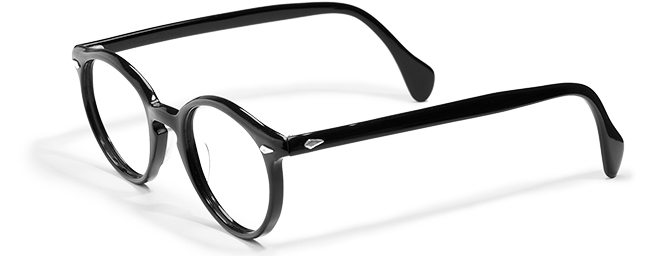
American Optical (1940s)
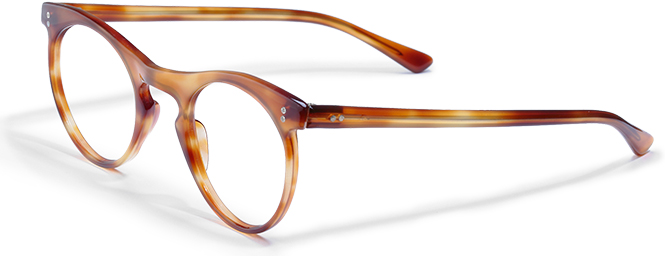
Eyeglasses made in France in the 1940s
The popularity of the Ful-Vue continued through the 1940s, and its design was adapted for sunglasses. Ray-Ban's "Aviator," introduced in 1937 with an adaptation of the Ful-Vue design, became a hit.
In the 1950s, the Wellington, characterized by its square acetate frame, and the Browline, which will be introduced in the next installment, became popular. Amidst this trend, acetate Boston frames maintained a steady popularity, favored by artists like Andy Warhol.
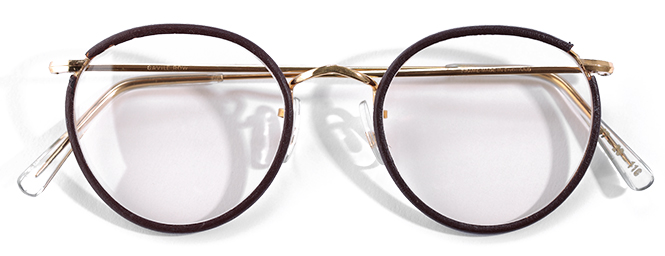
Alga Works (1970s)
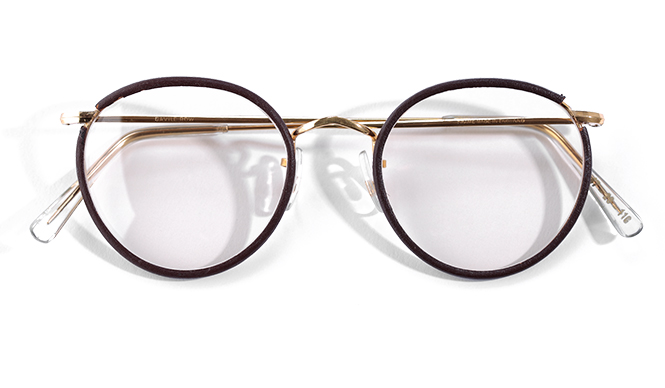
In 1967, John Lennon wore metal-frame Boston glasses for his role as a soldier in the film "How I Won the War." These were a model from "Alga Works," an eyewear workshop founded in Britain in 1932. At the time, they were available free of charge in the UK for those enrolled in the national health insurance system.
This prompted John Lennon to begin incorporating glasses into his personal style. His appearances in the media sparked a trend for metal-frame Boston glasses, reminiscent of the 1930s.
While initially launched with an innovative, forward-thinking image as an evolution from round frames, Boston glasses are now cherished as a classic design. Recognized as an icon of American vintage, the eyewear brand "Oliver Peoples," founded in LA in 1986, meticulously recreated the earliest Boston models from the 1930s, utilizing Japanese craftsmanship from Sabae to capture their essence while infusing them with a contemporary sensibility.
Concurrently, from the 1980s onwards, Boston shapes served not only as classic designs but also as a foundational silhouette for brands with a strong designer aesthetic, such as "Alain Mikli," "Cazal," and "Jean Paul Gaultier," before decorative embellishments were added, alongside round frames.
Eight Basic Yet Diverse Black "Boston" Frame Glasses
The selection below features Boston-style glasses currently available. This time, we've chosen models with black acetate frames, making it easier to compare the designs from each brand. We present a curated selection of eight pairs, ranging from basic to artistically sculpted designs.
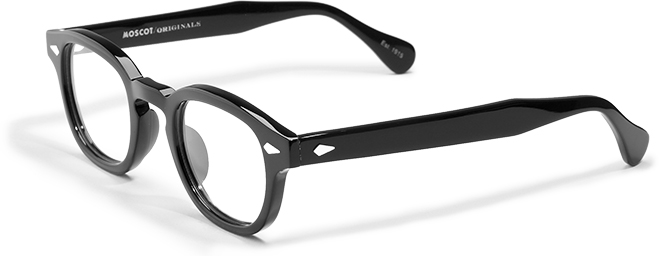
A Masterpiece Born in the 1950s
01 Moscot
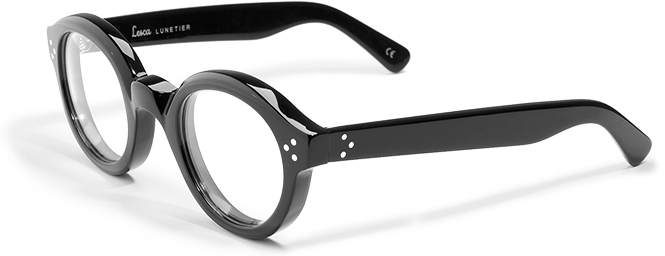
Recreating Le Corbusier's Glasses
02 Lesca Lunetier
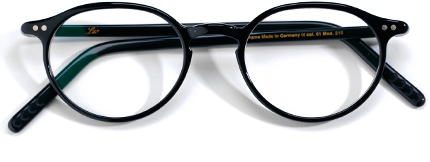
Slim Frames Made in Germany
03 Lunor
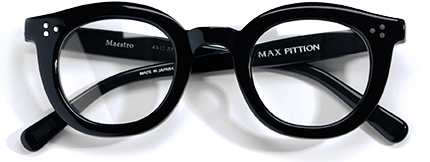
A French Legacy Revived
04 Max Pittion
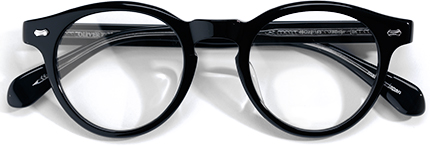
Classic Rounded Frames
05 Oliver Peoples
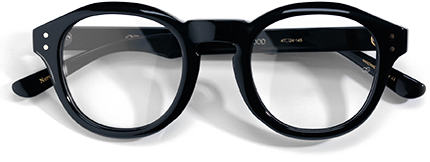
A Substantial Pair with Well-Proportioned Thickness
06 Oliver Goldsmith
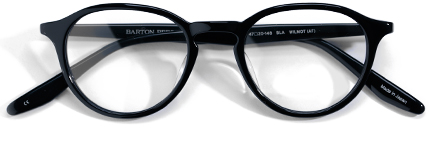
Inspired by Johnny Depp's Film Role
07 Barton Perreira
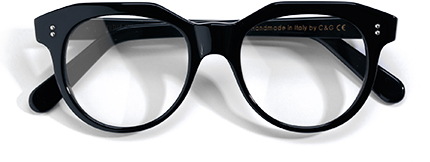
Unique Eyewear from a British Institution
08 Cutler And Gross
