Alden: The Pinnacle of Practical Dress Shoes, Explored for the Leather Shoe Aficionado
ALDEN | Alden
Short Series: Part 1 - Interview with Takamasa Chiwaki, President of Lakota, the General Importer of Alden in Japan: "Why Alden is Loved"
Alden represents American traditional shoes. Founded in 1884, it is a long-established company that has consistently produced leather shoes. Its characteristics are its timeless look, which is versatile enough for various coordinates from business to fashion, and its "overwhelming" comfort that makes them comfortable to wear for long periods. We would like to deliver its excellent details and untold anecdotes in this short series. In the first installment, we look back at the history with Takamasa Chiwaki, President of Lakota, the general importer of Alden in Japan.
Photographs by Kaku Ohtaki | Text by Yoko Koizumi | Edit by Takashi Tsuchida
Alden: Born on the East Coast of America
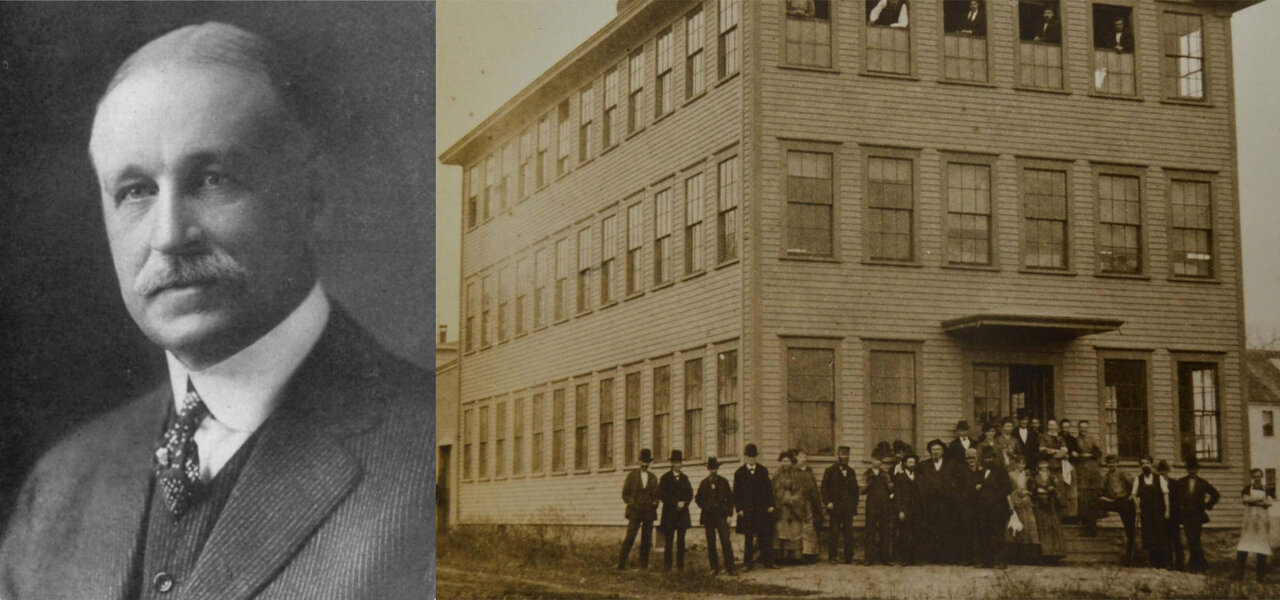
Alden was founded in 1884 in Middleborough, Massachusetts, by Charles H. Alden. At that time, America had ended the Civil War and was a period of development while accepting many immigrants.
“Unlike European gentleman's shoes, which evolved from aristocratic culture, America demanded practical shoes such as town shoes and work shoes. For example, they were made with materials and shapes suited for specific jobs like hunting, logging, and carpentry. Cowboy Western boots are a strong remnant of this. Lucchese, like Alden, has over 100 years of history, and I believe the foundation of shoemaking for manufacturers founded in the 19th century was 'practicality.'”
Alden also handmade shoes to fit each customer's feet at the beginning, but it is thought that they transitioned to mass production due to military demand during the two World Wars. In 1892, the factory was expanded and moved to North Abington, Massachusetts. In 1931, after the founder Alden retired, it moved to Brockton in the same state, and then in 1970, it returned to its founding location in Middleborough, where it has continued to make shoes ever since.
“Middleborough is about a 40-minute drive from Boston, and about 20 minutes from Plymouth, known for the Mayflower's landing. It's a place with the Ocean Spray cranberry juice factory nearby. It's a pastoral rural town that evokes the good old days of America. Although the company has moved several times since its founding, the reason for keeping its headquarters in Massachusetts was probably for convenience. There were parts wholesalers near the factory, not only domestic but also European suppliers of shoe components. It seems that factories gathered around, including these wholesalers. I've heard that 100 years ago, there were dozens of shoe factories in the vicinity – within a one to two-hour drive, which was considered nearby then.”
The East Coast developed as a major shoe production area, and the shoes made here were transported east and west on the ever-expanding railway. However, after the Great Depression and other events, Alden is now the only remaining dress shoe manufacturer from that era.
The Comfort and Design Excellence of Alden
What is the reason for its survival? It lies in the pursuit of comfort.
“Alden has always said, 'We continue to create high-quality gear for walking.' You could say that comfort is inseparable from design (laughs). In Japan, we say 'leather shoes mold to your feet,' but the president doesn't think that way. They must be 'good shoes' from the moment you put them on; they are completed only when worn.”
The key to their comfort lies in the last (shoe form) that they developed independently.
From the 1950s onwards, Alden began to seriously manufacture orthopedic shoes. Orthopedic shoes are designed to treat foot conditions or assist in motor function. They started developing lasts from an orthopedic perspective, based on corrective shoes from the 1930s. In 1963, the "Modified Last" was born, named for its "modified" design.
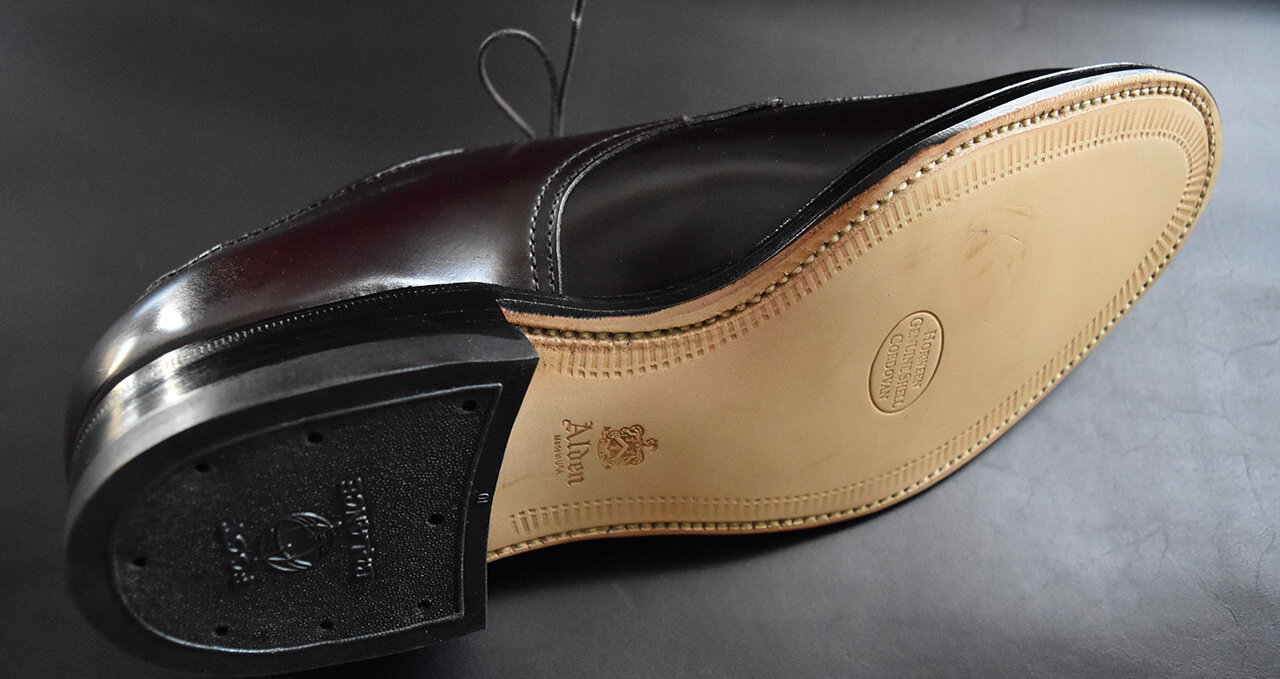
This shape was devised to accommodate people with foot problems such as high arches, hammer toes, bow legs, high insteps, and flat feet. The first sensation upon slipping them on is a snug fit that lifts the arch. Looking at the shoe from the underside, you can see that the arch area curves inward sharply, which is what lifts the arch.
“As feet are used over time, the soles, particularly around the arch, become flatter and spread out. This is one of the biggest causes of fatigue, but the Modified Last supports the arch.”
The snug fit in the arch facilitates a good push-off, making them easy to walk in. Furthermore, by keeping the foot stable in the same position, it supports the core of the body correctly, making them comfortable to stand in for long periods. Based on this orthopedic approach, Alden creates comfort by applying its accumulated technology to other lasts.
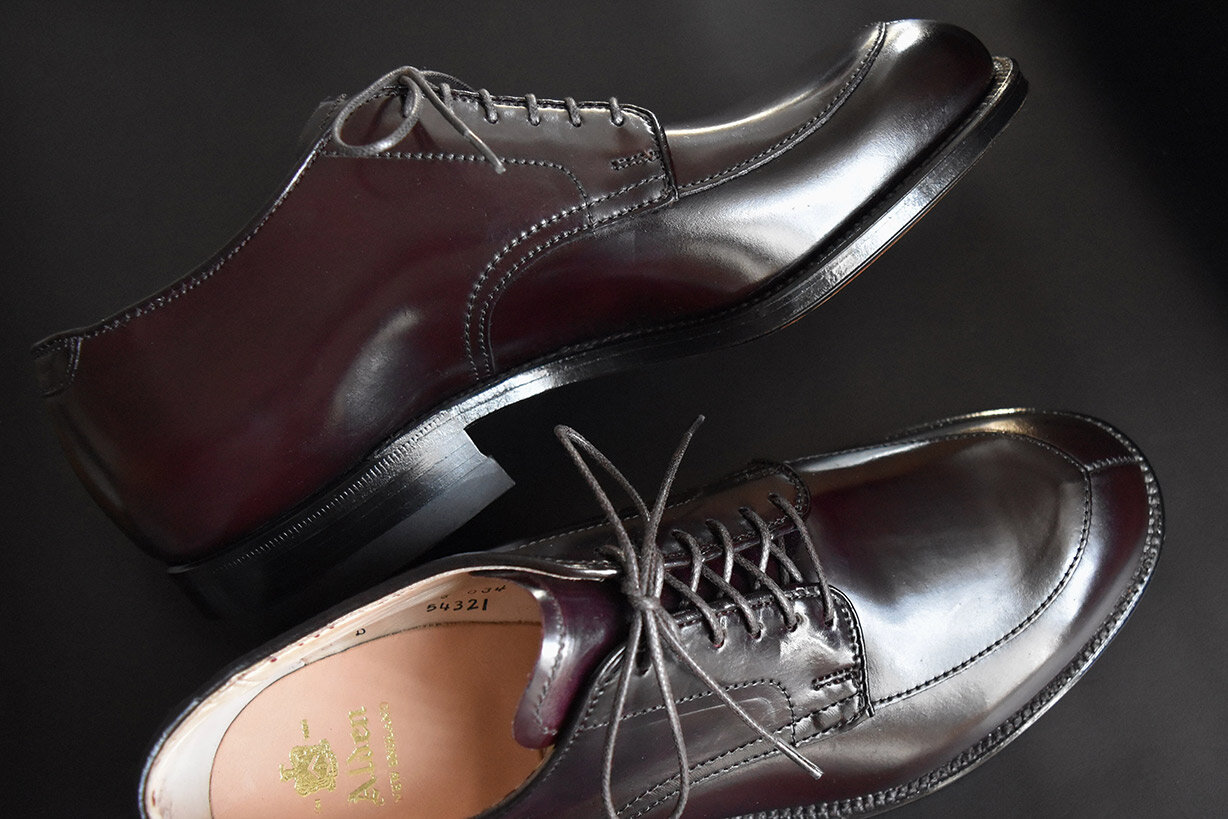
Then, the U-tip model (called "Argançon" in America), which balances the comfort of the Modified Last with aesthetic appeal, was born. This is the model now known as the "V-tip."
And it was this V-tip that became the catalyst for Alden to be recognized in the fashion scene.
Alden's Comfort Becomes World-Renowned
“I believe it was in the 1980s. At that time, the Modified Last belonged to Alden's unique "FootBalance System" category and was only handled by specialized stores for corrective purposes. One such specialty store was Jacobson's in New York, which was visited by Pierre Fournier and Jean Sébastien, who owned the select shop 'HEMISPHERES' in Paris.”
Pierre Fournier was the founder of 'GLOBE,' a pioneering select shop. The two, amazed by the comfort, immediately began stocking Alden in their own stores, and the brand became known in the global fashion industry.
In 1980, Alden also arrived in Japan. At the time, models based on the Barrie Last, which had a generous fit like sneakers, including penny loafers, were introduced, and Alden's presence gradually permeated the market, boosted by select shops.
“Buyers took them overseas, shop staff would change into Aldens in the evening – everyone was captivated by their comfort. I also have to stand all day for fairs and trunk shows, but with Alden, I don't get tired at all. When we meet, we'd say things like, 'Aldens aren't tiring, are they?' or 'They're so easy to match, I end up choosing them,' and I think that positive feedback, fueled by each staff member's passion, led them to enthusiastically recommend them to customers.”