MIHARAYASUHIRO | Interview
Post-Great East Japan Earthquake Tokyo MAP - Fashion (2)
Not Thinking Negatively
Enjoy Fashion to Aid Reconstruction!
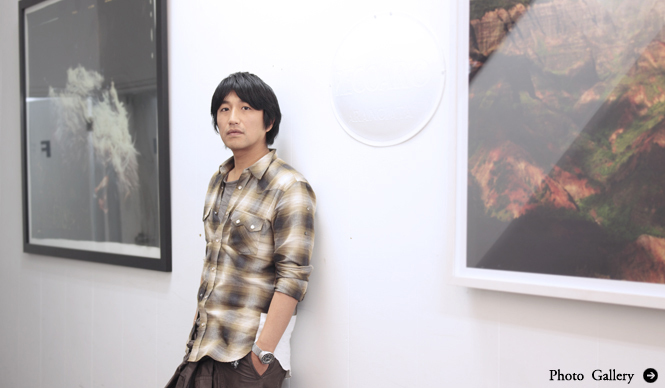
Designer Mihara Yasuhiro, who presents his collections at Paris Fashion Week and is active globally. When the Great East Japan Earthquake struck, Mihara was in Paris. He was woken up to the news that something terrible had happened in Japan. He tried calling Japan, but no one answered, so he communicated via Twitter and email. After confirming everyone was safe and learning that his office, which he thought had collapsed, was somehow intact, he traveled to London for an unavoidable engagement. It was at a friend's home in London that he first saw footage of the tsunami on TV. Unlike Japanese news, the overseas broadcasts weren't edited and conveyed the devastation directly, which was quite shocking. At first, he couldn't comprehend what had happened. What does Mihara Yasuhiro have to say about the future of fashion?
Text by OPENERSPhoto by JAMANDFIX
What Mihara Yasuhiro Believes They Can Do
──Please tell us about the situation after the earthquake from a fashion designer's perspective.
I'm not thinking about it too negatively. What happened, happened, and there's nothing to be done. I'm at a point where I don't really care about what's considered inappropriate or not. The earthquake itself was shocking, an experience unlike any other in my life. Of course, my heart aches when I think of those affected by the disaster.
We are often invited to participate in volunteer work and charity events as part of what fashion can do. However, I believe this is something that should be done habitually by everyone, at an individual, company, and staff level, rather than just as a performance. Thinking pessimistically or offering sympathy won't achieve anything and would be disrespectful to those affected. It's wonderful that the idea of people taking action for the sake of third parties, not just themselves or their families, has become more common with this earthquake. However, for me, rather than focusing on charity or fashion show events, I'm thinking about what truly matters.
──What specifically do you mean?
For me, it's the people in the factories in Tohoku and the material suppliers. Many companies are involved, directly and indirectly. Some make shoes, some are sewing factories, and some specialize in tailored jackets. Many of our partners were significantly affected by the disaster, but many are now operational again, and it's important to consider how much work we can assign to such partners. Donating relief funds is important, but it's used for public benefit and doesn't directly support the fashion industry's recovery. This industry already faces a shortage of skilled labor, leading to many businesses closing down, people unable to work due to damaged facilities, and canceled orders.
A common issue was that electricity was out for one to two weeks, so many people's mobile phones ran out of charge. Communication systems were paralyzed by the earthquake, and we couldn't get through when calling from Tokyo. It was around the ordering period, and factory workers knew orders were coming in, but they couldn't answer the phone. Due to this situation, many in the industry shifted work to factories in other regions, thinking it would be difficult for Tohoku factories to meet deadlines. This is a matter of logistics and business, and it's understandable. Fashion is a business with a large scope, and if one part fails, it's not a matter of sentiment but a necessity to assign work to other companies. However, I believe it's crucial to assign work to factories in the Tohoku region as much as possible once they are back on their feet. The current challenge is the potential disappearance of the fashion industry itself. The mission of designers going forward is to ensure the industry's seeds are not extinguished.
──What are you actually doing?
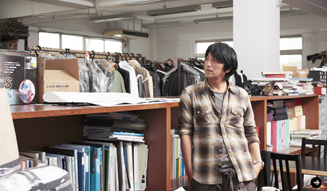
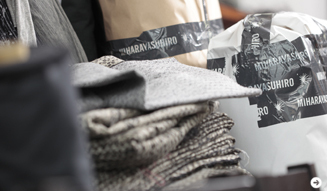
Before starting preparations for the collection, we first needed to understand the situation of factories in Tohoku, so we decided to create a list of factories that were affected and those that weren't. We aimed to find factories we hadn't worked with before. We figured those that were okay were fine. Those that were severely damaged, well, that's unfortunate. But for those that seemed like they could potentially recover with a bit more support, or those that could meet deadlines but had no work, we explored possibilities.
I simply believe we should assign more work to factories in Tohoku. In our collaborations, our individual efforts are small, and we can't move the entire industry, but we might be able to help one company improve, and I thought it would be good if we could do even a little of that. I considered asking our long-standing partners, 'I'm sorry, but we want to support factories in Tohoku affected by the disaster, so could we assign work to them for the next six months?' The factory in Okayama, for instance, understood. We have a long history of working together, but this isn't about deadlines or logistics anymore. I believe that in the fashion industry, we all thrive by making profits and creating excellent products. We need to do that properly. Given that a quarter of Japan is facing devastation, what else can we do? I heard a story from a brand I know where, despite a factory being affected by the disaster, they sent embroidery samples and worried about whether they could meet the collection deadline, even in their own difficult situation. It truly shows their strong motivation. I deeply feel that we must not let such wonderful spirit be extinguished.
──What is important for the future of fashion?
Everyone in the apparel industry seems anxious. We are anxious too; thinking about declining sales in stores or a 30% drop in company revenue can be disheartening. Take buyers, for example. They visit our showrooms. Buyers are instructed by their CEOs to reduce their budgets due to the earthquake's impact on sales. A reduction in their orders means a reduction in orders for factories. If the world doesn't prioritize purchasing goods, our existence becomes increasingly insignificant. Even if we want to place many orders with factories, if we end up with excess inventory, the companies will go bankrupt. Everything is about synergy. For those in Tokyo and Kansai who were unaffected and are interested in fashion, please buy clothes with the intention of saving the fashion industry.
Buying clothes helps save the fashion industry, which in turn leads to recovery... Yes, it's important to continue enjoying fashion positively, just as before.
MIHARA Yasuhiro
Born in Fukuoka Prefecture in 1972. Entered Tama Art University, Department of Textiles in 1993, and began making shoes self-taught the following year. In 1998, he opened his first directly managed store, "SOSU MIHARAYASUHIRO," in Aoyama, Tokyo. Established "SOSU" in 1999. In the same year, he presented his wear line at Tokyo Collection, generating significant buzz. In 2000, he launched "PUMA by MIHARAYASUHIRO" in Japan. In 2004, he debuted his original brand "MIHARAYASUHIRO" internationally, participating in Milan Collection. In 2007, he presented his work at Paris Collection. In 2010, he relocated and reopened the Omotesando flagship store "SOSU MIHARAYASUHIRO" as "MIHARAYASUHIRO TOKYO."
MIHARAYASUHIRO TOKYO
Tel. 03-5778-0675