January 26, 2015
The Glorious History of Onitsuka Tiger at the ASICS Sports Museum
The Glorious History of Onitsuka Tiger at the Asics Sports Museum
The Glorious History of Onitsuka Tiger
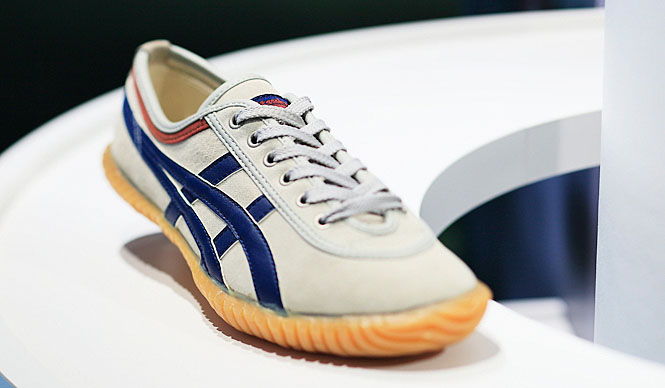
Following the path through the newly opened Asics Sports Museum, you first ascend to the second floor, where you'll find the "Theater Room" showcasing Asics' history, followed by the "Corporate History" within the History Field.
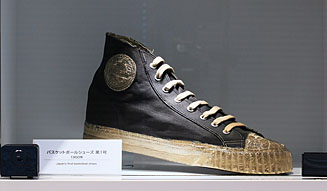
The first exhibit is a basketball shoe, released as the first Onitsuka Tiger model the year after the company's founding in 1949. Sixty years later, history and these historic shoes offer us many lessons.
Text by OPENERSPhoto by Jamandfix
The History of Onitsuka Tiger is a History of Innovation in Japanese Sports Shoes
The first basketball shoe, manufactured in 1950 and displayed at the Asics Sports Museum, reportedly faced numerous requests for improvements upon its release, as it didn't quite suit the demands of the sport.
Within the actions of running, stopping, turning, and jumping, there were many requests specifically for grip. Kihachiro Onitsuka, the founder of Onitsuka Tiger and an engineer himself, grappled daily with these improvements.
This led to the now famous anecdote of "vinegared octopus at the dinner table."
One day, observing the vinegared octopus dish served for dinner, he had a flash of inspiration: what if the sole had a shape like an octopus's suction cups, allowing for the sudden stops required in basketball? This led to the development of a suction cup-shaped sole. In 1952, shoes equipped with this sole were born. Furthermore, Mr. Onitsuka's ingenuity with soles continued, and Onitsuka Tiger reigned for a long time as the coveted shoe and brand for basketball players.
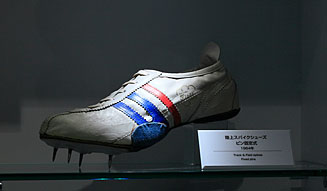
Next, in the "Corporate History" on the second floor of the Asics Sports Museum, your attention is drawn to a track spike shoe (with fixed pins) displayed from 1964, the year of the Tokyo Olympics.
Throughout the 1960s and 70s, sports companies fiercely competed in the development of track spike shoes.
In 1966, two years after the Tokyo Olympics, the "Limber Spark" was introduced. Born from a request to be able to change spike pins according to track conditions, this was Japan's first shoe with interchangeable spike pins, delighting athletes of the era.
Furthermore, with the advent of all-weather tracks at the 1968 Mexico City Olympics, track spike shoes continued to evolve.
The Legacy of Iconic Products Flowing into Today's Onitsuka Tiger
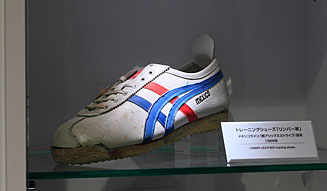
Another must-see in "Corporate History" is the "Limber Leather" training shoe, released in 1966 and featuring the now-familiar Asics stripes.
The "mexico" on the side also shines, and the deeply grooved sole design with enhanced grip improved cushioning.
Around the time of the Mexico City Olympics, athletes would warm up and prepare their bodies using these training shoes before competing in their performance footwear.
The photo on the lower right shows a training shoe that visitors can actually touch in the Athlete Field on the first floor. When placed side-by-side, the evolution is striking.
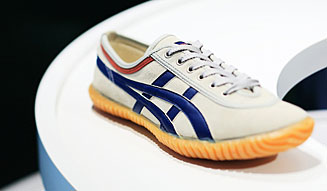
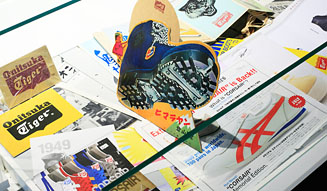
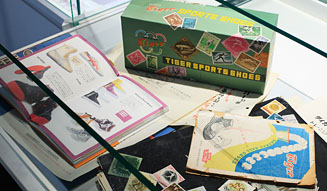
In the "Product History" within the History Field on the second floor, you'll find promotional materials, catalogs created by Onitsuka, and even shoe boxes that may evoke nostalgia for some. The stylish graphics of Onitsuka Tiger from that era are so captivating, time seems to fly by just looking at them.
Onitsuka Tiger as Told by Kazuhiko Fujita, Director of the Asics Sports Museum
I joined the company in 1970. Since I played tennis in college, after joining Asics, I was involved in events like the Davis Cup. I worked on racket development and apparel.
Furthermore, I was in charge of planning shoes for the American market as part of overseas initiatives and global product development. Since 2000, I've been involved in the revival of Onitsuka Tiger. The re-release of the "Corsair" and "Mexico 66" were personally very rewarding.
Speaking of Chairman Onitsuka, the "Summit Strategy" for developing the tennis business certainly comes to mind.
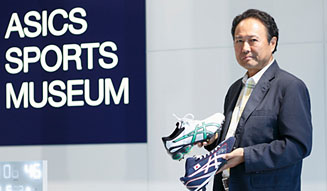
The "Summit Strategy," as conceived by the chairman, was based on the idea that if top athletes in a sport recognized and wore the shoes, they would then be adopted by innovators and the middle tier who aspired to those top athletes, leading to wider recognition and adoption.
This strategy, having not only Japanese but also world-class athletes wear Onitsuka in global competitions like the Davis Cup, was not only a pioneer in sports industry promotion but also expanded the base of competitive sports. I believe it has also conveyed the joy of enjoying sports safely and securely by providing reliable shoes and equipment.
In that sense, the Asics Sports Museum is a new field dedicated to further promoting this legacy. We invite you to visit.
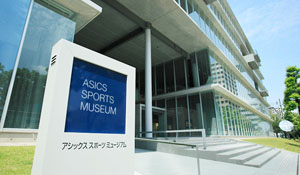
Asics Sports Museum
7-1-1 Minatojima Nakamachi, Chuo-ku, Kobe, Hyogo 650-0046
Tel. 078-303-1329
10:00–17:00 (Last admission 16:30)
Closed Sundays, Mondays, public holidays, summer holidays, and year-end/New Year holidays
Free admission. *Groups (10 or more) require advance booking.
http://www.asics.co.jp/corp/museum
