March 12, 2015
Rintaro Tanaka | "My Freedamn! Vol. 9" and the Seventies (Part 2)
My Freedamn! Vol.9 and the Seventies (Part 2)
Continuing from last time, this is the second installment of our interview with Rintaro Tanaka. The 1970s were an era where “freak out” was the keyword. On the other hand, the seventies also saw the first revival of the Fifties, which continues to have an immense influence on vintage fashion today. The conversation then turned to what Mr. Tanaka felt while creating My Freedamn!, and further, to next year’s “Inspiration,” which is already in the works.
Narration and Photography by Rintaro TanakaInterview by Toranosuke Takeuchi (City Lights)

The First Fifties Revival
──Returning to My Freedamn! Vol.9, in addition to the element of “color” you mentioned at the beginning, what makes Seventies fashion so interesting?
This book focuses on 70s rock fashion, but the seventies were also the era of the first Fifties revival. In the world of vintage clothing, that’s a fascinating aspect. The fashion of the seventies is characterized by a sense of a shift, a change in eras.
──Was it the first era where vintage clothing truly became fashion?
Yes. It was also the first time that phenomena like the reverse import of American culture occurred. For example, punk was born from rock and roll in America, crossed the ocean to England, and then returned to America. The Clash are a prime example of this. They became hugely popular in America from the late 70s to the 80s, and their fashion was very much inspired by the American Fifties. Things like this didn’t happen before the 60s. American style was strictly American.
──How did the Fifties revival of the 70s differ from the Fifties fashion boom in Japan during the 80s?
Well, they are connected, but the early Fifties revival that emerged independently in America was less about rockabilly and more about things like Aloha shirts. The neo-rockabilly of the 80s was born from the reverse import trend I mentioned, and it was entirely the world of The Stray Cats. In contrast, the 70s revival was influenced by the hippie spirit, involving wearing vintage Aloha shirts or recycling 501s into bell-bottoms.
Showing the Unvarnished Truth, Without Manipulation
──My Freedamn! has now reached its ninth volume, and the number of items featured is quite substantial again this time.
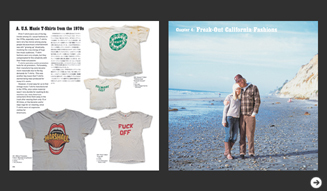
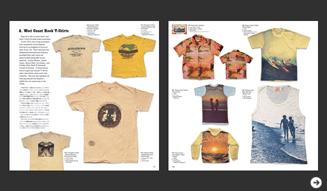
Over the past eight years of creating My Freedamn!, the most rewarding aspect has been staying true to the process without resorting to any artificial manipulation. I believed that by showing a large number of samples, some kind of truth would emerge. That’s the approach I’ve taken, and it remains unchanged for this volume.
──In other words, presenting things as they are, rather than engaging in contrived marketing.
Exactly. I never considered things like, “If we change this part, will it sell better?” There are methods where you might focus heavily on a single sample. But doing so inevitably requires some form of manipulation. I would do that if I could skillfully turn manipulation into entertainment, but I’m not good at it. So, I want to present my ideas without distorting them. As I mentioned earlier, perhaps the stance of My Freedamn! being for ‘one in ten people’ is just right.
──Perhaps enduring things are ultimately sustained by the passion of one in ten.
After all, what we call American culture is primarily the culture of white Americans. But now, white people themselves are nearing 50 percent of the population in America. So, I’m aware that My Freedamn! will never become mainstream. However, it’s precisely because it appeals to enthusiasts that it works. In that niche, borders can surprisingly easily be crossed. In that sense, we might be engaging in surprisingly international communication.
──Speaking of communication, it might be a bit early, but will the event “Inspiration” be held again next year?
Yes, we’ve already entered the preparation phase. Last time, we rented out a hangar at Santa Monica Airport. Next time, it will be by the sea. We plan to hold it on February 11th and 12th, 2011, aboard the Queen Mary in Long Beach. Before that, similar to last time, we will release the main guest’s collection book at the end of the year.
──After holding the first event, do you have any aspirations for what you’d like to do next?
What I realized after doing it is that holding it only once a year isn’t a sustainable business. Therefore, it should be a festival. That’s my feeling. I felt we needed to actively make it like a Bon Odori dance, where everyone who participates feels a sense of ownership.
──A vintage Bon Odori in America – that sounds wonderful. I’m really looking forward to it next year. Thank you very much for your time today.
Thank you as well.
