March 12, 2015
Rintaro Tanaka | "My Freedamn! Vol. 9" and the Seventies (Part 1)
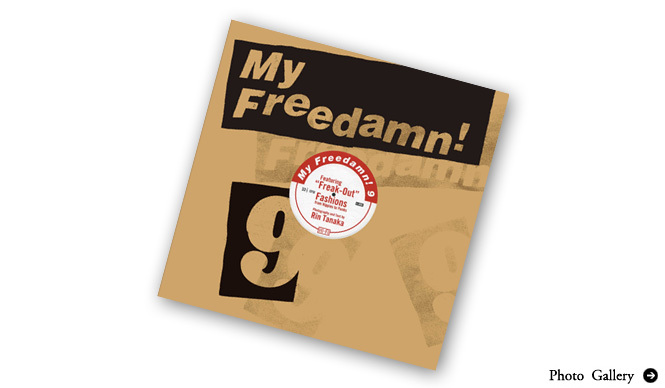
My Freedamn! Vol.9 and the Seventies (Part 1)
Rintaro Tanaka has spent 12 years in America, dedicating eight of those to his "My Freedamn!" series. This February, he organized "Inspiration," a vintage clothing event for core fans, continuing his energetic activities. Upon hearing that Tanaka had completed the latest installment, "My Freedamn!" Vol.9, OPENERS immediately conducted an interview. This volume's theme is the 70s. We asked him to share the allure of America during that era, including the new styles of rock and subcultures that strongly influenced fashion.
Narration and Photography by Rintaro TanakaInterview by Toranosuke Takeuchi (City Lights)

The Keyword is "Freak Out!"
──First, I'd like to ask about your latest work, "My Freedamn! Vol.9." The theme this time is the 70s. What are the characteristics of American fashion in the 70s?
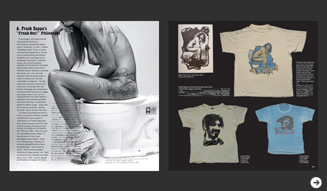
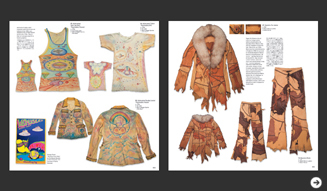
The biggest highlight is the color prints, led by T-shirts. The 70s was an era when color television became fully widespread. Fashion seemed to become instantly more pop. The quantity also expanded dramatically. So, while there were quite a few mediocre pieces, you can clearly see a more experimental attitude than in the 60s. It was a time of "freak out."
──In other words, it was about pushing boundaries?
Yes, a kind of crazy, forward-pushing spirit. After the hippie culture ended, it felt like another way of American life was presented. It was certainly out there, but I think that challenge to the limits was a way of life that neither the British nor the Japanese could imitate.
──In terms of culture, what specifically are you referring to?
In music, Frank Zappa is symbolic. He mixed essences from various genres, including classical, to create a completely new form of rock and roll. I believe America, as the birthplace of rock and roll, was able to achieve this within a fully matured music industry. In the world of entertainment, John Belushi also brilliantly "freaked out." It was an attitude of, 'If there are ten people, one person will get it.' But with 300 million people in America, even one in ten is enough to do business. I think that's what leads to the depth of American entertainment.
America: A Country That Values "One in Ten"
──That ability to compete based on "one in ten" is quite different from Japan, isn't it?
This is something I've felt living in America for 12 years: the good thing about America is that it's a country that values the 'one in ten' person. Japan, after all, tends to elevate what six out of ten people know. Of course, Japan's cultural depth has grown, but even so, the world of 'six out of ten' is still generally prioritized. I personally believe that Japanese delinquents are the 'yankii' type, while American delinquents are the rock 'n' roll type. The crucial difference between 'yankii' and rock types is whether they bully the weak. And the reason rock types don't bully the weak, I think, is because they understand that they themselves are 'one in ten' individuals.
──I see. That is indeed a good aspect of America.
Yes. I don't think everything about Japan's social structure is bad, but when it comes to the spirit of delinquents, and delinquent music and culture, I prefer the rock 'n' roll side. They don't bully, and they don't turn things into a sob story (laughs).
──And it was in the 70s that this 'one in ten' American spirit, the rock 'n' roll type, erupted all at once?
Exactly. It was somewhat superficial, but the interesting thing is that when superficiality is pursued to its extreme, it becomes entertainment. That's the charm of "freak out." However, today's America has a lot more 'normal' people. But when Americans become normal, they're not interesting (laughs). On the other hand, the superficiality now comes from the 'not one in ten' crowd, and that's not funny either. I think the interesting "freak out" period lasted from the 70s until the end of the 20th century.
