Flower Robotics | Developing "Patan," a Growing Home Robot
Flower Robotics
Developing Open-Source Interfaces to Promote the Adoption of Home Robots
Flower Robotics Develops "Patin," a Growing Home Robot
Flower Robotics has begun development of "Patin," an expandable home robot. By providing a self-propelled robot platform, the company aims to lower the barrier to entry for robot development in existing fields such as home appliances and interiors, thereby promoting the widespread adoption of home robots.
Text by KUROMIYA Yuzu
Adding the Concept of AI Robots to Existing Products
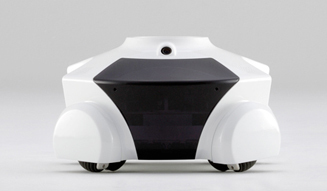
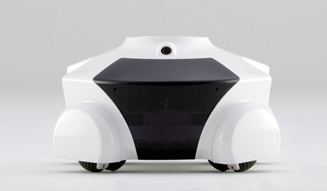
"Patin" means "skate" in French. This robot platform, equipped with AI (Artificial Intelligence) and mobility, embodies the idea: "What if we attached robotic skates to existing products like home appliances and furniture, creating new artificial objects?" It achieves smooth movements that overturn conventional perceptions.
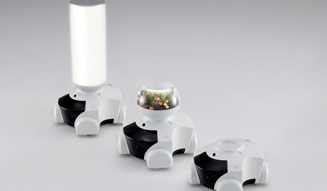
With the concept of "autonomous movement for existing functions," it consists of the main unit, a service unit that attaches to the top of the main unit, a charging and communication unit called a "pit," and the cloud. It is also equipped with spatial recognition capabilities through various sensors, including 3D cameras. By combining the main unit, capable of autonomous navigation with AI, with service units that allow for various functional expansions, it becomes possible to add new capabilities.
For example, by pairing it with a lighting service unit, it can become a "thinking light" that detects people's movements in a room and turns on the lights.
Furthermore, it digitizes human behavior patterns and accumulates information in conjunction with the cloud. By analyzing and reflecting this data to improve operational accuracy, it continuously grows into autonomous behavior that better fits users' lives. The prototype features a design that considers its role as a platform for seamless integration in various scenarios, prioritizing the compatibility between functionality and the usage environment. It utilizes omni-wheels for 360-degree rotation.


In the future, Flower Robotics plans to open-source the interface for connecting service units, positioning it as a platform for AI robot development. This will provide an environment where third-party companies can easily develop service units in their areas of expertise, lowering the hurdle for entering the robot market and promoting the adoption of home robots.
Android will be adopted for the interface, with a target release of the development kit (SDK/simulator) for third parties in 2015.
"Patin," which becomes smarter the more it is used by linking its autonomous and learning capabilities with the cloud for improved operational accuracy, will better fit users' daily lives. Imagine a future where various devices in your home, such as furniture and interior elements, become AI robots that think for themselves. That future may be closer than we think.
We look forward to its future developments as something that will dramatically transform our daily lives.
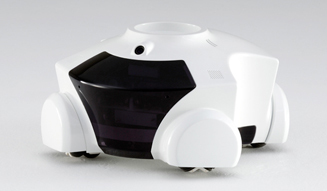
Main Specifications and Components of Patin (Prototype)
Dimensions | Height 340mm, Width 330mm, Depth 193mm
OS | Linux
Wheels | Omni-wheel
Motor | DC Motor
Battery | Lithium-ion battery
Main CPU Board | Jetson TK1
Control Board | Arduino board
Camera/Sensors | Depth camera, Thermal imaging camera, Monocular camera, Fall prevention sensor, Obstacle detection sensor, Contact sensor
Exterior Material | Glass-filled nylon (powder printing)
Other | Wi-Fi, USB, Adapter
<Patin Concept Promotion Movie>
Flower Robotics
http://www.flower-robotics.com/
Patin Special Site
http://www.flower-robotics.com/patin
FLOWER ROBOTICS
Founded in 2001, Flower Robotics is a venture company specializing in the planning, design, engineering, and development of robots. The company has undertaken numerous groundbreaking robot developments, including the humanoid robot "Posy" with the concept of a "flower girl," and the robot "Polaris," designed and developed in collaboration with KDDI Corporation's brand "iida." In 2009, they established an integrated system from mass production to sales with their self-developed AI-equipped mannequin-type robot "Palette," which received the Good Design Award (Japan) in 2009 and the iF Design Award (Germany) in 2010.