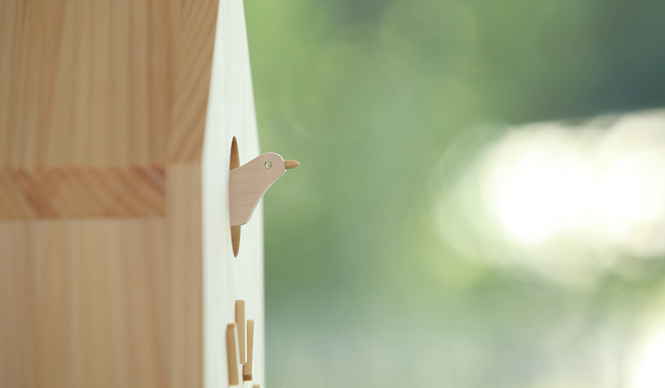
more trees | Product Designer Naoto Fukasawa Discusses the New "Cuckoo Clock" Colorway
more trees
Cuckoo Clock Color Variations Released
An Interview with Naoto Fukasawa: "Design Classics That Nurture Forests" (Part 1)
The forest conservation group "more trees",more treeshas released numerous designer products using domestic timber. Among them, the "Cuckoo Clock" designed by product designer Naoto Fukasawa has enjoyed enduring popularity since its launch in 2009. This autumn, more trees unveils a new cuckoo clock made from todomatsu fir. We attended a meeting between Mr. Fukasawa and more trees in late August to uncover the story behind its creation.
Photographs by Shinya HiroseText by HIKITA Sachiyo (Fukairi)

Pre-orders now open on the web store "rumors"!
A Cuckoo Clock Made of Conifers
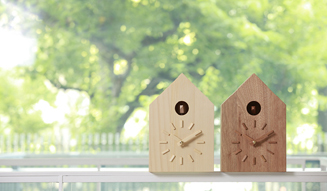
The new "Cuckoo Clock" made from todomatsu fir is on the left.
Easy to hold and gift, with a gentle bird's chirp and a warm wooden texture—There's an undeniable sense of inevitability to why the familiar cuckoo clock continues to be loved by people for so long.
The new color variation of the cuckoo clock uses todomatsu fir, also known as "Hokkaido fir," a smooth, white wood. Placed alongside the traditional walnut version, the contrast is beautifully striking.
The background for creating the todomatsu version, in addition to the existing walnut, is the fact that many of Japan's forests are composed of conifers like sugi and hinoki. In other words, the effective utilization of conifers is essential for more trees' goal of sustainable forest management. The desire of more trees to "make a cuckoo clock from conifers" has now taken shape.
Creating Enduring Masterpieces
Upon seeing the new cuckoo clock, Mr. Fukasawa meticulously checked its color and texture from various angles before smiling and saying, "It's good." Currently, the cuckoo clock is available in 40 stores and is featured as a popular item in all of them. Mr. Fukasawa himself commented, "Perhaps the distinctive and simple design, resembling a birdhouse, was a good choice."
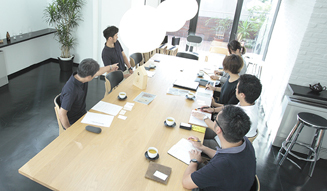
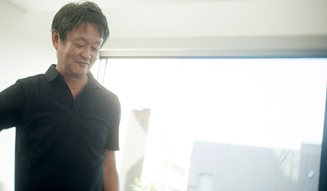
Mr. Fukasawa also designed a bench for more trees, maintaining the same simple aesthetic. Max Bill and Alvar Aalto's stools remain beloved worldwide because they combine simple construction with beautiful form. In that sense, Mr. Fukasawa states, "It is necessary to create simple, enduring masterpieces that are loved for a long time, while projecting the concept and image of more trees itself."
There are always reasons why products are desired, whether it's the price, the function, or the design. In reality, very few people buy a product simply because it's made from thinned wood; most people buy things because they find them "attractive" or "desirable."
When considered in this light, the reasons for the cuckoo clock's appeal become clear. Setting aside the background of "who made it" or "what concept it embodies," the crucial factor is whether people find it "desirable."—That is where the essence of design lies. The activities of more trees only hold meaning when a cycle of forest management and product creation is established.

In this regard, the popularity of the cuckoo clock suggests a great deal. Mr. Fukasawa's encouraging words, "I believe attractive designs only work when the thinned wood and the product are a good match," must have been a powerful endorsement for more trees' new product development.

more trees
Cuckoo Clock Color Variations Released
An Interview with Naoto Fukasawa: "Design Classics That Nurture Forests" (Part 2)
Product designer Naoto Fukasawa. He is alsomore treesa supporter and has designed benches and cuckoo clocks using domestic timber. His numerous designs, themed around "Without Thought," blend seamlessly into daily life while subtly awakening a sense of appropriateness in our subconscious. What is the design that creates a sustainable relationship between objects, forests, and society?—We asked Mr. Fukasawa about his design philosophy, starting with the newly released cuckoo clock.
Photographs by Shinya HiroseText by HIKITA Sachiyo (Fukairi)
Pre-orders now open on the web store "rumors"!
The Appeal of Wood and the Joy of Product Design
—What are your impressions of the new product?
Looking back objectively at this product, I think it's "good." Originally, I designed this cuckoo clock with the image of a "birdhouse." With forests and woods around, it's natural to use the trees that inhabit them. Thinking that way, it would be interesting to create versions with different materials, like this one, perhaps making an original cuckoo clock for each forest.
As more types of cuckoo clocks are added, more trees' activities will expand, and as those activities increase, the forests will become richer.
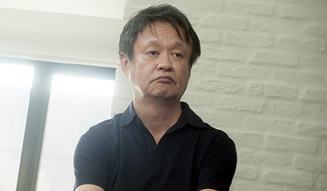
—As a product designer, could you tell us about the "fascination and appeal of working with wood"?
Even setting aside product design, humans generally have a friendly image of wood. However, when it comes to "shaping" it, wood can be a material that doesn't easily yield unless you understand its nature and character. It's crucial to know the properties of wood well and create things that suit it. In that sense, using the wood from the place where it grew is the most appropriate approach.
There's a saying, "See the tree, not the forest." When creating something, it's essential to consider the whole picture. For example, Horyuji Temple was built using an entire mountain's worth of timber. They say they even calculated how the wood would warp in the future, using wood from shaded and sunlit areas differently. The cuckoo clock is similar; even if it's finished beautifully now, in a few years, there will undoubtedly be a difference in level on some surfaces. And at the same time, these imperfections become part of its charm.
Wood also possesses a unique beauty in its grain. Specifically, there is "quartersawn" grain, where parallel straight lines are aligned, and "plain-sawn" grain, which has curved patterns like a salmon fillet. The cuckoo clock uses "quartersawn" grain. The less the pitch in the quartersawn grain, the longer and slower the growth in winter, which is considered more valuable.
—Since its release, the "Cuckoo Clock" has recorded strong sales. Does a product's value lie in its ability to "continue selling"?
Rather than value, I believe it's something that should naturally happen. It's not "made to sell," but rather "continues to sell because it's attractive." In other words, "selling" is synonymous with "not going out of style." It's not about upward momentum, but about not losing ground.
Things that continue to sell are simple and timeless in both their creation and use. The fundamental principle is that both the method of creation and the method of use are "appropriate." Even with thinned wood, if you create something that is most suited to that material, it will not go out of style.

Conversely, if you create something solely because it's thinned wood, you are deviating from the principle of suitability for purpose.
In today's homes, it's rare to see exposed light-colored wood like that used in this cuckoo clock. However, just like Kyoto's sudare blinds or shoji screens, even a single piece of wood in a space can evoke a sense of nature. I believe this cuckoo clock, by simply "being there" in a space, possesses a certain "appropriateness" that sparks the imagination.
more trees
Cuckoo Clock Color Variations Released
An Interview with Naoto Fukasawa: "Design Classics That Nurture Forests" (Part 3)
Photographs by Shinya HiroseText by HIKITA Sachiyo (Fukairi)
Pre-orders now open on the web store "rumors"!
The Relationship Between People, Objects, and the Environment
—In the past, you've said that "product design embodies a good relationship between people, objects, and the environment." What kind of "relationship" does this cuckoo clock create?
At the stage of creating the product, when I heard "cuckoo clock," I immediately felt it was something people would "want, or want to give to their children or grandchildren." From there, the idea that "wood is the best material for a cuckoo clock" naturally arose. I consider this "realization" to be paramount and inevitable. It indicates that this relationship already exists, both for me and likely for the general public. That's why people accept and buy it. The cuckoo clock continues to be accepted by people because the relationship between the object, people, and the environment is established.
—Are things whose relationships are established called "classics"?
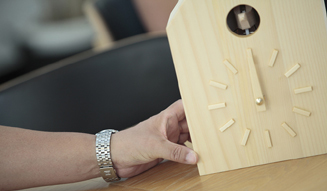
In the world of design, there's a term called "design classic." Unlike the Japanese terms "classic ballet" or "classic music," it signifies that a design has become a timeless standard or icon.
In other words, it's a "hall of fame" design. If something continues to be used for decades, even after we are gone, then it can be called a "design classic."
Whether a design becomes a design classic during the designer's lifetime is something no one can predict. In that sense, I feel I am designing and creating things that transcend my own lifespan.
And this way of thinking is similar to the mission ofmore trees. Forest management with a view to the future is a form of design. Objects themselves are destined to disappear. With current advanced technology, the act of designing "from nothing" is becoming less common. On the other hand, the things around us have likely changed drastically in the past decade.
Bulky televisions and large telephones have disappeared, replaced by flat-screen TVs and mobile phones. However, the essential functions remain unchanged. Evolving in response to environmental changes is the "inevitable rationality" of all living things.
And people unconsciously accept this, understanding that things are moving in that direction. They think, "This will disappear when I discard it," or "This will continue to be used by someone even after I discard it."
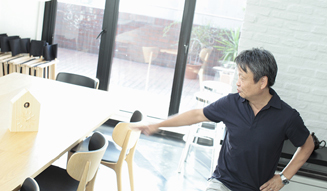
We interact with objects while being aware of this cycle. I believe that's how our world functions.
Design That Shapes the Future
—The cycle driven by "inevitable rationality" feels like the essence of a sustainable society.
Indeed. The word "sustainable" has been widely used for some time, but ultimately, good things are not discarded and are used by someone. Within such a cycle, the value of the object further increases. That is the most sustainable form and a crucial factor. I believe the underlying philosophy of the cycle remains the same for products, the environment, and society. Fundamentally, humans live by receiving energy from the entire Earth's environment.
However, in the course of human societal development, this balance has been disrupted. And now, we are trying to repair and heal that disruption. As this sentiment grows, activities will link together, inevitably moving towards resolving the issues. And perhaps, we will return to the original "inevitability."
—So, returning to "inevitability" feels like an innate human ability.
The ability to return to inevitability is less an innate power and more a result of human "reflection." We have come to understand that we are part of the environment and must protect it. We realize that we are damaging the environment.
—In our "reflection," what role does design play?
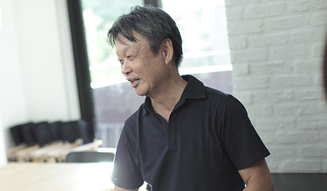
When I design, I first consider how long the object will be used, and how many people will use it. The duration might be a week, 50 years, or perhaps even 100 years. The number of users could be ten, a hundred, or even ten thousand.
This doesn't mean that longer usage time or more users are inherently better. "Design" is about discerning what is needed and creating something that is appropriate.
In that sense, while more trees may appear to be just an activity, it can be considered a "design." In the sense of creating a single, cyclical living entity that is the forest, it is "designing the Earth."
Naoto Fukasawa
Born in Yamanashi Prefecture in 1956. After graduating from Tama Art University with a degree in Product Design, he joined Seiko Epson Corporation. In 1989, he moved to the US and joined the precursor to IDEO. He developed his unique "har" (tension) theory of form and created designs by refining details. In 1996, he returned to Japan to establish IDEO Japan. He leads workshops such as "WITHOUT THOUGHT," engaging in design consulting in a way previously unseen in Japan. He became independent in 2003. His works have been released by Danese, Magis, Driade, Artemide, B&B Italia, and Vitra. In 2006, he began activities aligned with the philosophy of "Super Normal" alongside Jasper Morrison.
Cuckoo Clock
Material | Todomatsu Fir
Release Date | Scheduled for mid to late October
Price | ¥34,650
more trees
Tel. 03-5770-3969
