The Craft of Japan's Oldest Silk Jacquard Weaver, Loved Worldwide: A Century of History at Ogura Textile
DESIGN | Ogura Textile
Japan's Oldest Silk Jacquard Weaver for Wide Western Apparel: A Century of History at Ogura Textile
Komatsu, Ishikawa Prefecture, stands alongside renowned silk-weaving regions like Yonezawa in Yamagata, Ashikaga in Tochigi, Kiryu in Gunma, Fujiyoshida in Yamanashi, and Nishijin/Tango in Kyoto as a leading producer of silk textiles that Japan boasts. Here lies Ogura Textile, Japan's last remaining silk jacquard weaving factory.
Text by IJICHI Yasutake
Jacquard Weaving: Creating Unique Depth and Texture
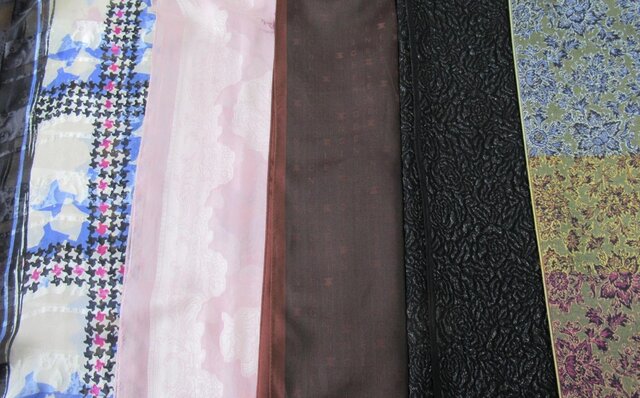
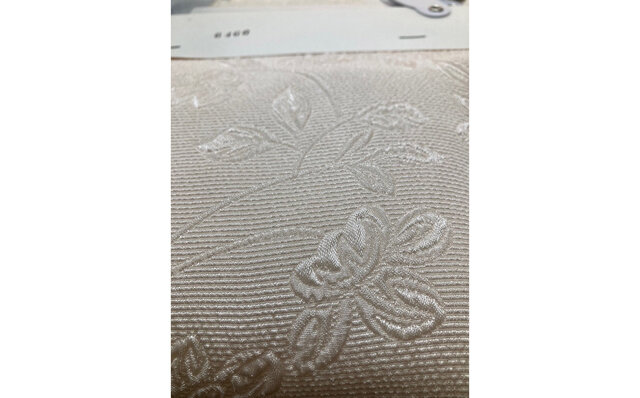
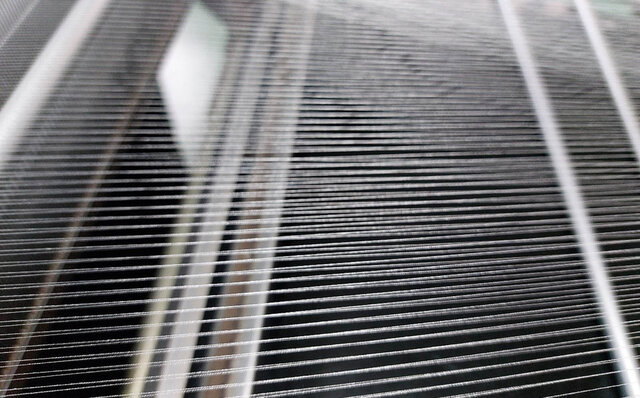
Unlike printing designs onto finished fabric, jacquard weaving involves creating the design directly into the fabric, thread by thread, from the very beginning. The freedom to design is high due to the intricate weaving of warp and weft threads, which also imparts thickness, a unique three-dimensionality, and depth not achievable with printing. The exquisite texture and presence, only truly appreciated when worn, are beyond description. Its appeal also lies in its longevity and the character it develops over time, with no worries of color fading.
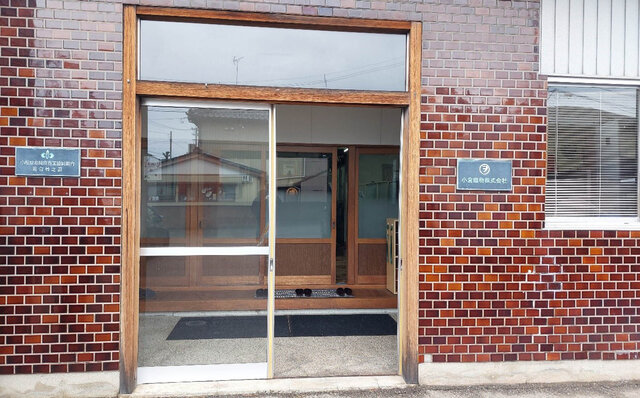
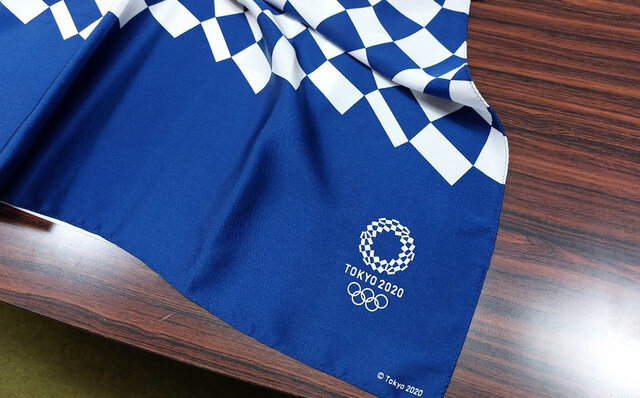
Ogura Textile was founded in 1897. It is the oldest silk jacquard weaving factory in Japan specializing in wide-width fabrics for Western apparel. While details are bound by confidentiality agreements, the company produced the fabric for the official Tokyo 2020 Olympic scarves and was recently selected for the fabric in a collaboration collection between Yohji Yamamoto and "Demon Slayer: Kimetsu no Yaiba." Even today, Ogura Textile continues to receive offers from world-renowned maison brands, upholding Japan's traditional craftsmanship. Although silk is woven in various regions worldwide, Ogura Textile's enduring appeal to global brands stems from its unwavering quality and the reasons behind its international recognition.
The Difference in Silk Fabric Quality Lies in the Water: Silk Weaving Blessed by Mt. Hakusan
While there are many silk weaving producers, the quality of the fabric often comes down to the water used. It is said that "places where delicious rice and sake are made also produce good silk," and it's no exaggeration to say that water is the deciding factor in silk fabric quality. To achieve the unique soft texture, three-dimensionality, and strength, a vast amount of water is used throughout the weaving process. Securing high-quality water is indispensable.
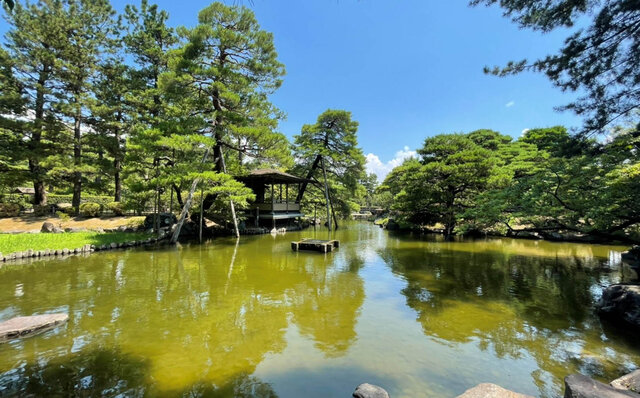
Komatsu benefits immensely from its rich natural environment, receiving abundant moisture from the seasonal winds blowing in from the Sea of Japan, along with meltwater from Mt. Hakusan, one of Japan's three most sacred mountains, alongside Mt. Fuji and Mt. Tate. The area boasts numerous famous and sacred springs, such as the "Sakurao-sui," known as a water of eternal youth and longevity, recognized in the "Top 100 Famous Waters of Heisei," and the "Kobo Daishi no Reisui," said to be blessed by Kobo Daishi. These pristine waters are what give Komatsu's silk textiles their diverse expressions and soft, melting textures.
The Silk Weaving Process
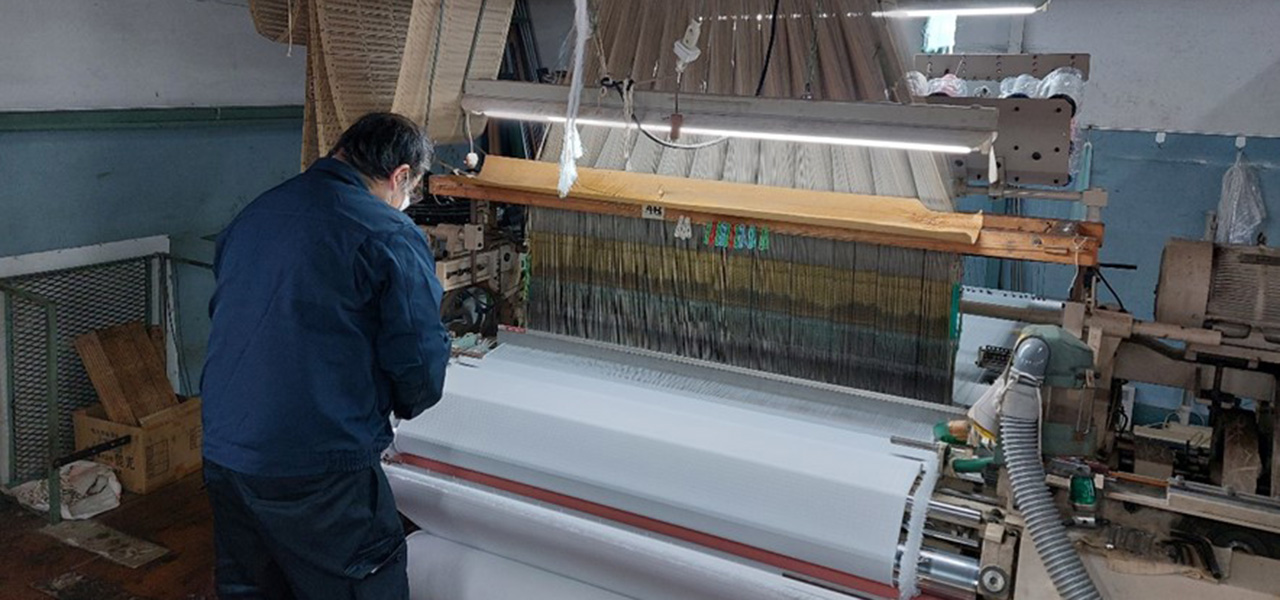
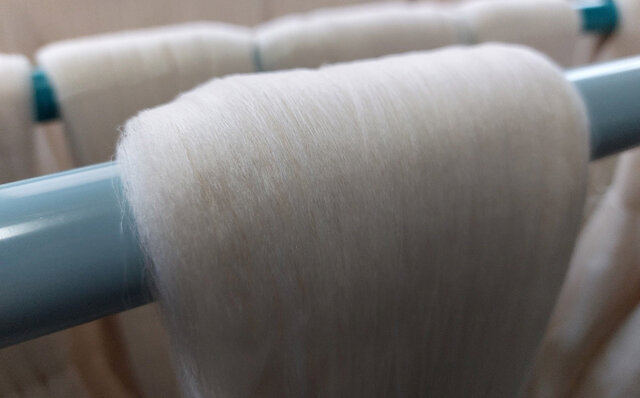
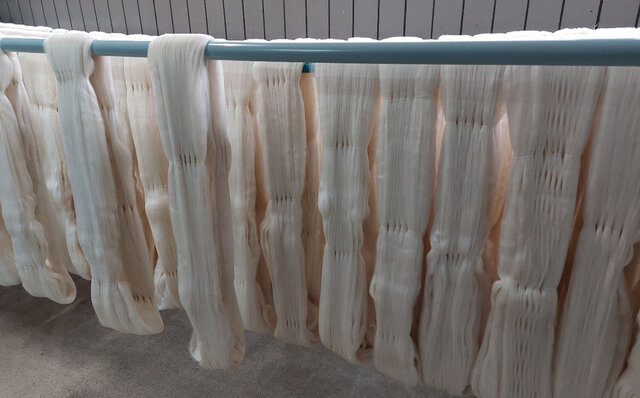
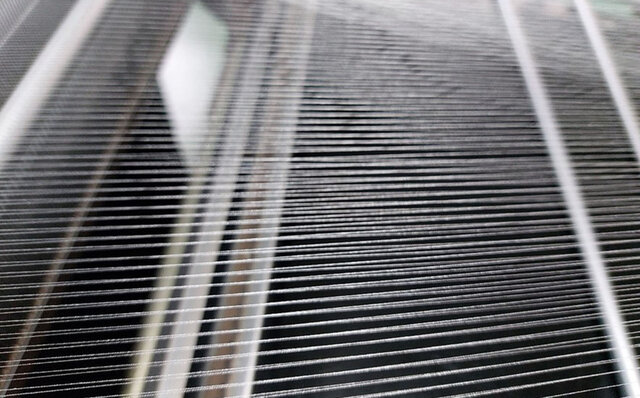
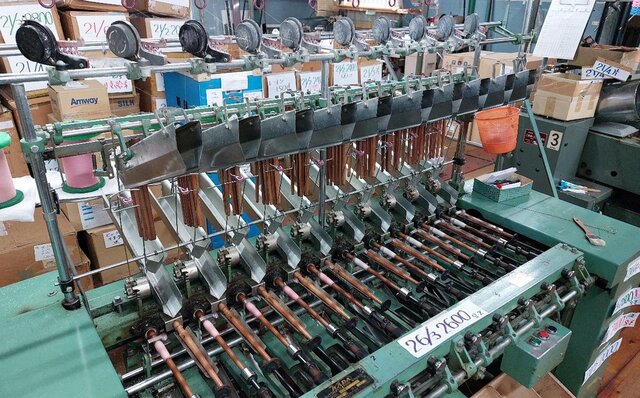
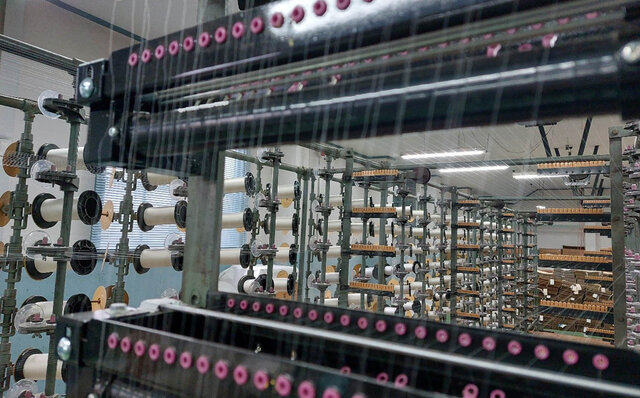
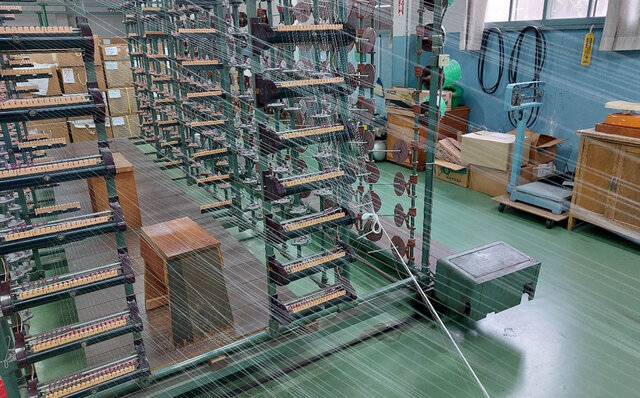
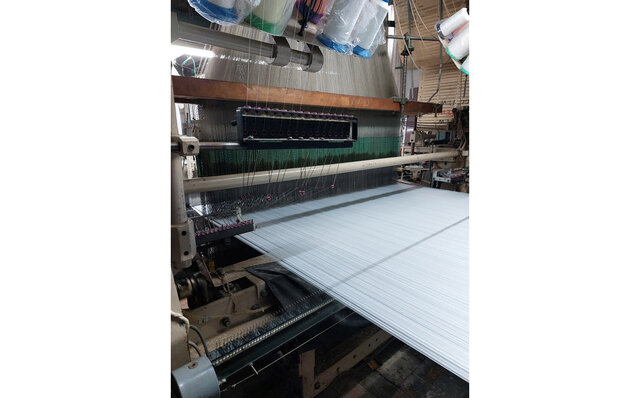
Silk fabric is shipped after undergoing processes such as thread winding, twisting, warping, beaming, scouring, dewatering, drying, and inspection. Ogura Textile is primarily responsible for the stages from thread winding to beaming. Silk yarn, the raw material for silk fabric, is derived from the cocoons spun by silkworms. While over a kilometer of silk thread can be obtained from a single cocoon, the first step is to unwind and spin the silk thread from the cocoon. This is "thread winding." The wound threads are then starched, dried in a boiler, and subsequently air-dried slowly in the sun to improve their handling. This is followed by "twisting," where the silk threads are spun together to impart strength, three-dimensionality, and texture, and then "warping," which arranges the warp threads onto the loom according to the design specifications for number, length, and width. Finally, "beaming" involves interlacing the weft threads with the warp threads.
Delicate, High-Level Manual Labor Backed by Experience
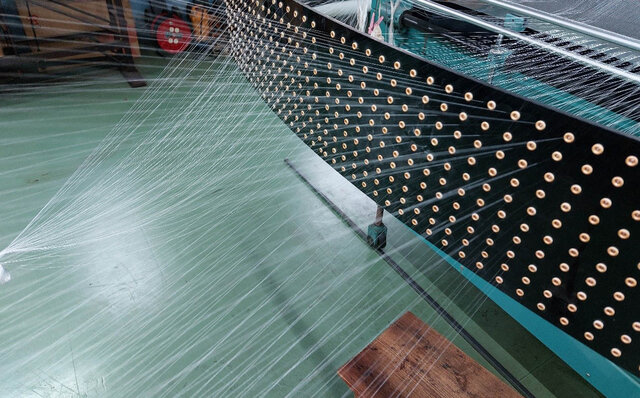
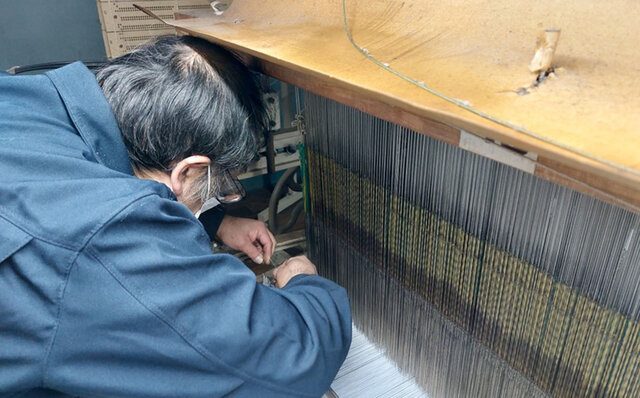
After these processes, a single bolt of silk fabric measures approximately 50 meters. It uses over 10,000 silk threads, sometimes reaching up to 30,000. Setting each individual silk thread onto the loom is entirely a manual task. Silk thread, a natural fiber from silkworms, varies in strength. If even one thread breaks, redoing the process is extremely difficult, necessitating careful inspection for potential breaks during the work. Artisans are required to perform this delicate and highly skilled task swiftly while discerning the condition of each silk thread upon touch.
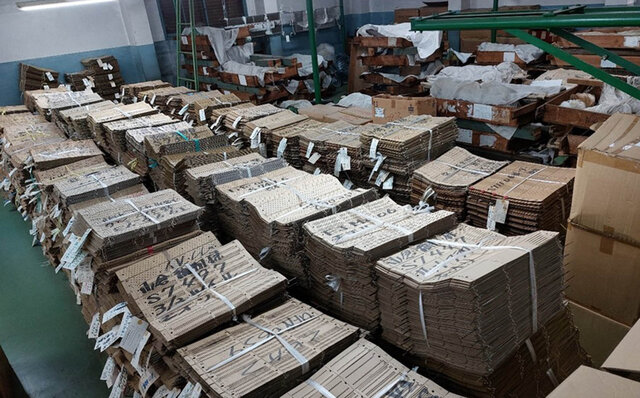
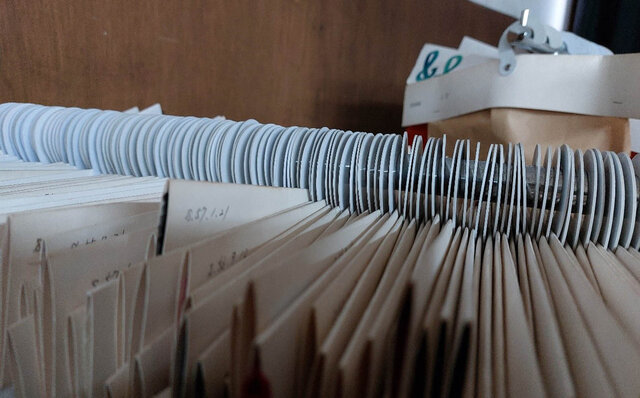
Jacquard cards stored at Ogura Textile
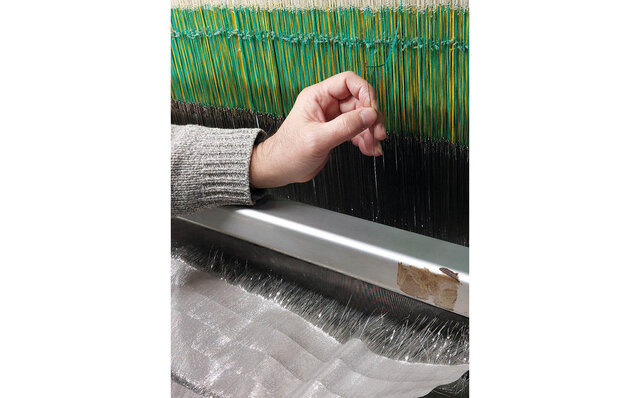
Tsujii-to (connecting thread)
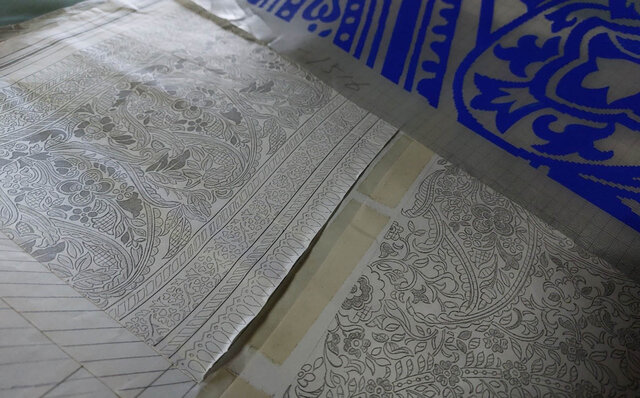
Essential for silk jacquard, which weaves designs directly into the fabric, are the "jacquard cards" (monshi), serving as the design blueprints. They are the soul of the designer creating a one-of-a-kind fabric. These cards have countless small holes called "medama" (eyelets), through which "tsujii-to" (connecting threads) are passed to link the loom and the jacquard machine. Only by connecting them with perfect precision and threading the holes in the correct positions can the design be reproduced. As the design becomes more complex, the number of jacquard cards increases, naturally extending the work time, but this too is done by hand.
However, like many traditional Japanese crafts facing succession issues, Komatsu has seen its factories dwindle from about 600 fifty years ago to around 35 today. Ogura Textile is now the sole remaining producer of wide-width silk jacquard for Western apparel, and the average age of its artisans exceeds 70. Ogura Textile possesses Japan's oldest jacquard loom, but it is no longer in production. Artisans carefully maintain it to keep it operational, as its loss would be irreversible. The connecting threads are also no longer produced; artisans maintain and continue to use the ones they have had for many years. When the looms break down and the connecting threads disappear, the artisans who use them will inevitably disappear too, making it impossible to create the Komatsu silk jacquard loved worldwide.
There is no need to preserve traditions simply because they are inefficient or customary. However, truly valuable traditions should be protected. Skills cultivated over many years, built on trust, are nearly impossible to revive once lost. In Reiwa, shifting from the mass production and consumption era of Heisei, there's a growing consciousness towards the sustainable inheritance of intrinsically good things. Komatsu is now seeking ways to pass on the heritage of its traditional techniques, nurtured alongside its history, and to create new value demanded by the world.