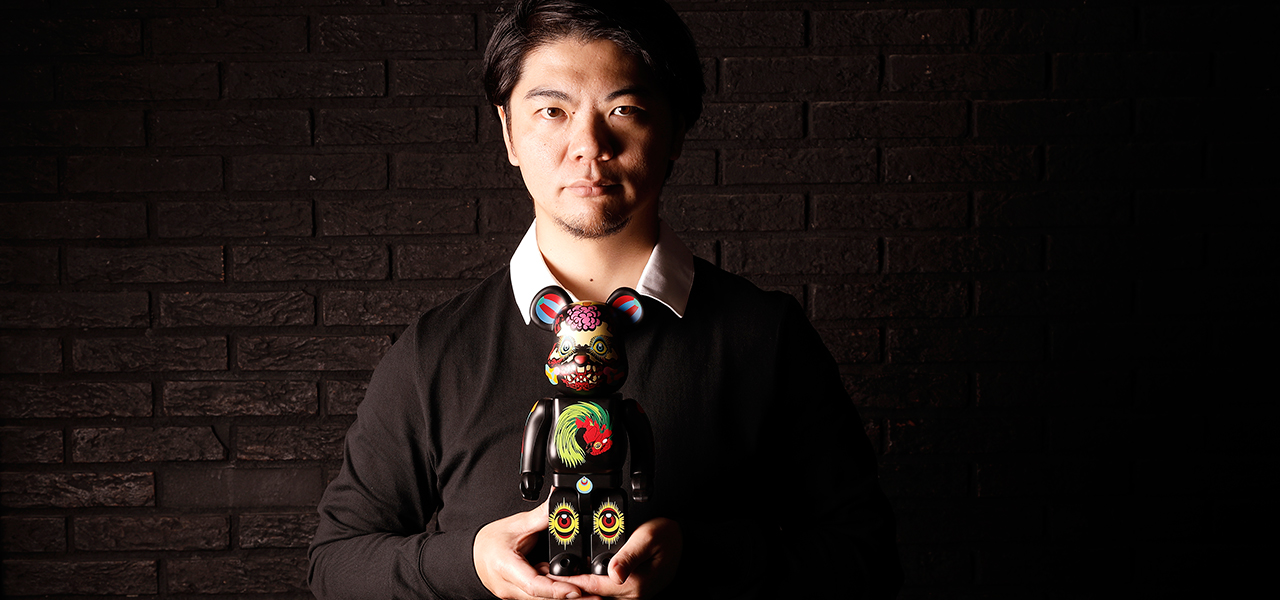
BE@RBRICK TM & © 2001-2019 MEDICOM TOY CORPORATION All rights reserved. © KEIICHI TANAAMI
Keiichi Tanaami: The First Japanese Artist to Grasp Andy Warhol | MEDICOM TOY
MEDICOM TOY
Interview with Masashi Nanuka, Owner of Gallery "NANZUKA" (Part 1)
Photographs by OHTAKI Kaku Text by SHINNO Kunihiko
I approached Mr. Tanaami directly, wanting to handle his work.
—After studying art history at Waseda University, you opened "NANZUKA," a gallery that showcases artists active across various genres. Why a gallery, may I ask?
NanukaFirst, art history itself is a branch of historical studies, meaning currently living artists are excluded from research subjects. The criteria in art history are typically demarcated by periods like 50 years after an artist's death or 100 years after their birth. I wondered, who supports living artists?
While exhibitions of contemporary art are no longer uncommon in Japan, back in the late 1990s and early 2000s when I was in university, it was a significant challenge for public museums to host exhibitions of active artists. This is because museum curators are typically individuals who have studied art history and are not well-acquainted with contemporary artists. It's no exaggeration to say that, by historical standards, contemporary art is not even considered fine art. I simply wanted to work with living artists.
Another point is that art historical research fundamentally involves interpreting documents, with primary sources—writings by artists themselves—being considered most important. What they said in interviews, what they wrote in diaries. While one shouldn't question these, I felt at the time, through my own intuition, that relying solely on written records wouldn't bring me closer to the essence of their work.
This is because, at least to my knowledge, artists don't always speak their true minds. They might even intentionally lie to be provocative. Good artists are always thinking differently from others. That's precisely why they create interesting work.
My primary motivation for starting the gallery was the desire to see the behind-the-scenes of such artists and to be involved in the process of their work's creation. The fact that Japanese galleries were beginning to make their mark on the global stage at the time also encouraged me.
—Since its opening to the present, "NANZUKA" has maintained a consistent policy.
From the perspective of the fine art world, individuals who worked in commercial art, such as graphic designers and illustrators, are not considered artists. Street art, of course, is also not art. I believe these are now mere labels, but I decided to broaden the interpretation of these categories. When looking at contemporary art neutrally, I thought that illustrators, graphic designers, and street artists could all be subjects of artistic evaluation.
If there is significant social meaning and a context that needs to be properly deciphered, then it has the potential to be a subject of study. I built the gallery with that policy and continue to adhere to it.
—As your activities became more prominent, your encounter with Keiichi Tanaami must have been significant. How did that come about?
NanukaIn 2005, I teamed up with Naohiro Ukawa, who runs the live streaming media"DOMMUNE",andMorisato aka MUSTONE,NANZUKA's first artist, who belonged to"Tashahisha", to create a space called "NANZUKA UNDERGROUND," a hybrid of a gallery and a studio named "Mixrooffice."
Mixrooffice closed in 2008, after which Ukawa launched DOMMUNE. During these three years, we engaged in activities that aimed to break down authority and rules, disregarding notions of fine art.
Ukawa considers Keiichi Tanaami his mentor, and as I had been a long-time fan, I pleaded with him to introduce me, and I visited Tanaami's studio. At the time, Mr. Tanaami was already very famous as a graphic designer and art director, but I directly proposed that I wanted to break into the international art scene, not just Japan's. Looking back, I'm amazed he accepted an offer from someone who had only opened a gallery about a year prior. I believe this was thanks to Ukawa's endorsement behind the scenes.
The gallery opened in October 2005, I was introduced to Mr. Tanaami in the spring of 2006, and our first exhibition with him was "DAYDREAM" in 2007. At that time, I asked him, "Please create new paintings. Paint on canvas." Mr. Tanaami initially said, "Why do I have to paint? Aren't prints okay?" However, I was thinking of positioning Mr. Tanaami at the very center of the global art scene, so I felt it was necessary for him to return to the fundamentals.
Mr. Tanaami has drawn many pictures since long ago, but this fact was not widely known at all. To properly explain Keiichi Tanaami's historical context, I wanted to attack with his strongest weapon first. Ultimately, Mr. Tanaami was convinced, and we presented two new canvas paintings at Art Fair Tokyo in the spring of 2007. That was the start.
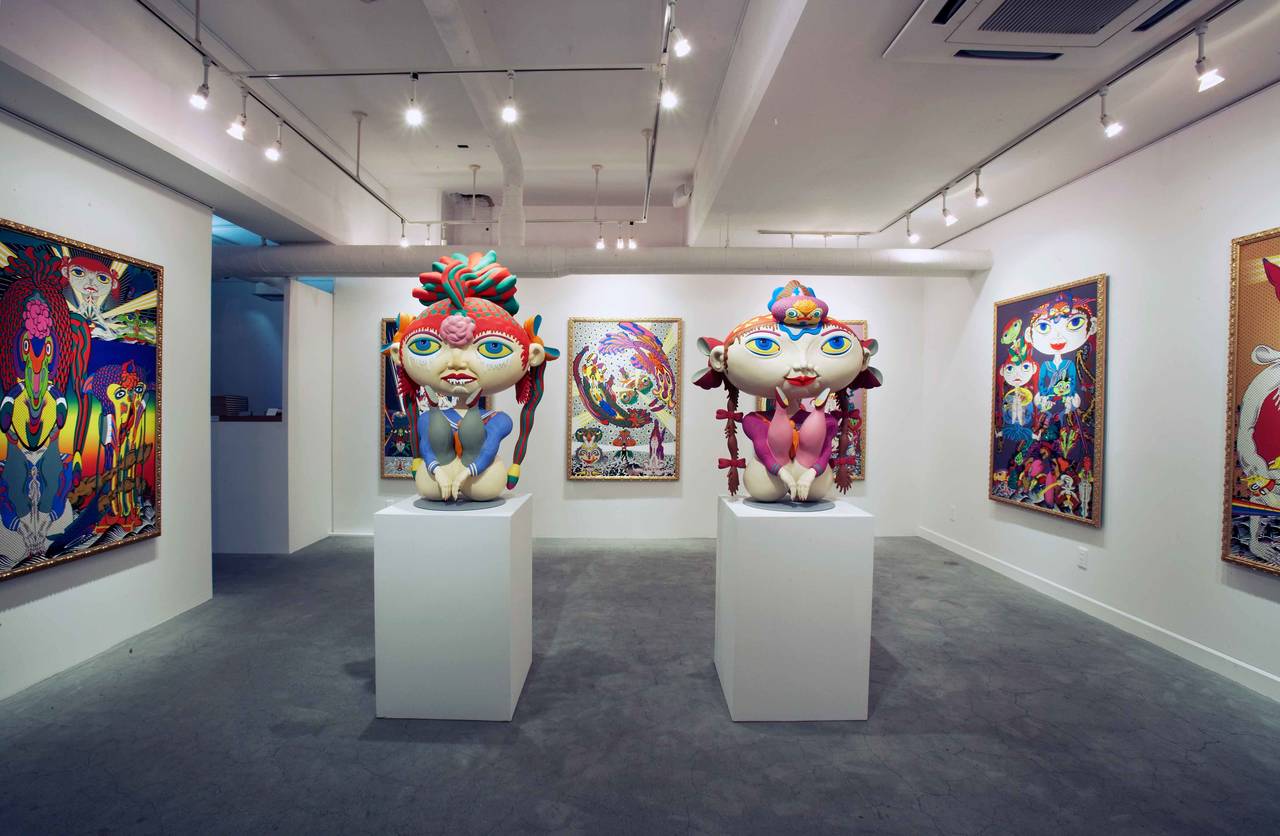
NanukaAs I mentioned earlier, I felt that for the legendary artist Keiichi Tanaami to be properly recognized within the global art scene, we had no choice but to go overseas. I knew that in Japan, we would only receive evaluations like, "He's just a designer, isn't he?" or "It's a gallery run by young people doing street art." So, I was determined to go abroad. By going out and gaining recognition there, we could achieve a reverse import, and Japanese people would eventually follow. I approached it with this clear-cut, thoroughly overseas-oriented mindset.
The initial opportunity came in April 2007, when I exhibited at"Art Fair Tokyo 2007."A Swiss director from "ShContemporary," an art fair held in Shanghai that was in the process of being established, noticed my booth, finding it interesting. As a result, I ended up participating in the fair that September. In Shanghai, I was approached about ART HK, the predecessor to the current Art Basel Hong Kong, and I joined that fair as well, leading to a chain of opportunities. Overseas fairs involve high costs, so I was desperate to sell works, but at the same time, I focused on building connections with overseas galleries to promote my artists.
NanukaI believe very few people have a comprehensive overview and understanding of Keiichi Tanaami's entire body of work.
His career began in 1958, while he was a student at Musashino Art University, he started working professionally in magazine art direction. Simultaneously, he began interacting with artists likeChohhei Kanbayashi,,Shusaku Arakawa,and others,forming theNeo-Dadaism Organizersand beginning to associate withYuji Ueno.
Furthermore, Warhol engaged in strategic promotion, something an advertising agency would conceive. By mass-producing portraits of celebrities and images of everyday products, he tapped into the context of art for the masses. Keiichi Tanaami, precisely because he came from the world of commercial art, understood this strategy and methodology faster and more accurately than anyone else. Influenced by Warhol, Mr. Tanaami made a statement in 1965 about transcending the boundaries between art and design, and because he lacked a suitable term to describe his role, he also called himself an "Image Director."
Mr. Tanaami became prominent as a graphic designer embodying the counterculture from the 1960s to the 1970s. In the 1980s, he produced numerous mystical works. He created more artistic pieces, including paintings, sculptures, and films, and actively held exhibitions, but he never referred to himself as an artist. This was to uphold his principle that art and design are not in a hierarchical relationship but exist in parallel.
In the 2000s, the speed and freshness of information disseminated through internet media brought attention to and led to the rediscovery of Keiichi Tanaami. Today, Mr. Tanaami is supported by young people worldwide.
NanukaIt is because he received tutelage from Andy Warhol that artist Keiichi Tanaami has remained in his position. Regardless of what title he is called, he has continued to create works he believes in, with great versatility. By not shifting his own position and remaining authentic, he has garnered the respect and empathy of young people.
MEDICOM TOY
Interview with Masashi Nanuka, Owner of Gallery "NANZUKA" (Part 2)
An Artist Based on Graphic Design, Distinct from an Art Director
NanukaMr. Tanaami keeps a dream diary. When he wakes up in the morning, he writes down the dreams he had while sleeping. In the past, he did this so much that he developed insomnia and was told by a doctor to stop, so he says he only does it now for particularly interesting dreams. However, these records are an important source for his work.
Furthermore, Mr. Tanaami experienced war in his childhood. Motifs such as people fleeing air raids, memories from air-raid shelters, and the tragic scenes he witnessed after the raids are depicted in Tanaami's seemingly cheerful works. Mr. Tanaami's art is a complex amalgamation of traumatic experiences, dream memories, and real-life encounters. Its depths cannot be fully grasped by anyone else peering into it.
As an artist, Mr. Tanaami pours all his accumulated experiences into his work. His stoic approach has reached a level that, as far as I know, no one else can replicate. He is truly a giant.
NanukaI have a friend named Kase who is in charge of PR for adidas, and he had been suggesting, "Let's do something with Mr. Tanaami," for about five or six years.
While adidas has achieved great success with collaborations with Kanye West and Pharrell, I believe that previously, companies did not see much value in collaborating with artists. However, with the spread of social media, society has become increasingly conservative, and while aggressive opinions from marginalized groups tend to be amplified, the creative work of artists is paradoxically valued as a symbol of freedom in a sacred space. Big brands are, of course, sensitive to these societal shifts, and this collaboration between adidas and TANAAMI is likely in line with this context.
The leader of this project was a Japanese man named Junsei Nakahama, who is one of the six vice presidents at adidas's headquarters in Germany. I heard that Junsei-san championed this project, stating, "There is a wonderful artist in Japan named Keiichi Tanaami. We should collaborate with him, and I will take responsibility." Because the project started with the love of its top leader, Mr. Tanaami was also happy to proceed. A second collaboration with adidas is already planned, so please look forward to it.
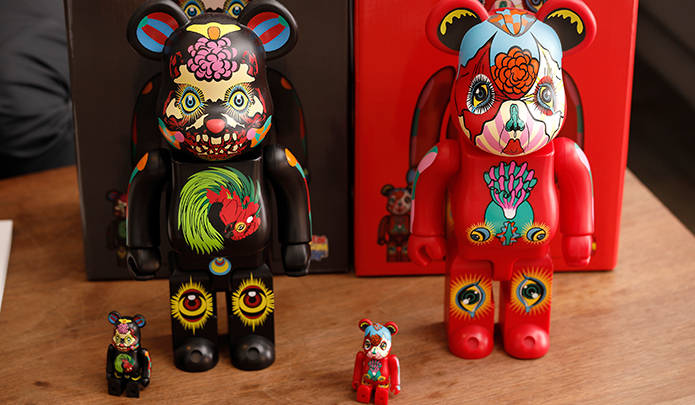
NanukaActually, this is quite toned down compared to the initial proposal (laughs). Initially, Mr. Tanaami submitted much more incredible designs, with more colors and extremely intricate details. However, there were technical difficulties with the printing process. Despite this, MEDICOM TOY worked incredibly hard to bring it to this point. I suspect there aren't many BE@RBRICKs that use this many colors; the number of printing plates must be immense.
NanukaRather than a theme, we incorporated characters that Mr. Tanaami routinely draws into the BE@RBRICK. The chicken, the goldfish, the depiction of eyes—these are typical of Tanaami's work. In fact, Mr. Tanaami is very fond of toys.
NanukaHe has always kept his own collections and past creations archived and displayed in his studio. He enjoys seeing them all gathered and arranged together. In fact, at the exhibition held at Ginza Graphic Gallery (July 5th (Fri) - August 21st (Wed), 2019, "Keiichi Tanaami Great Journey"), we displayed a large collection from his studio.
NanukaPresident Akashi once mentioned that BE@RBRICK was developed as a toy version of a T-shirt. The concept is a movable toy that can incorporate any graphic. T-shirts are often called wearable art pieces, and I believe BE@RBRICK's versatility is its great appeal. Even with the same shape, it can convey entirely different images. I think it's a very well-made item for enjoying creativity in an accessible way. I can certainly understand why it's a hit product.
In fact, the foundation created by BE@RBRICK has a significant influence on the current art scene. It goes without saying that KAWS's rise to such prominence is partly due to his collaboration with MEDICOM TOY.
Many of the young, wealthy individuals worldwide who are now buying art started with toy collections. By collecting limited editions, they eventually desire original, one-of-a-kind pieces—many people become art collectors after going through that stage. In that sense, BE@RBRICK's contribution is immense, and while it may be indirect, I feel I have benefited from it.
NanukaIn September, there will be a solo exhibition of new works at the legendary galleryJeffrey Deitchin New York. It will include seven large-scale paintings, the largest being 4x2 meters, along with six canvas collage works, sculptures, and drawings. It will be quite a substantial exhibition.
Jeffrey Deitch is a gallery that truly pioneered what I do at "NANZUKA." The owner, Jeffrey Deitch, is a gallerist who elevated street culture to a high-end level and recontextualized it within the art world.
Since the 1990s, he has reinterpreted American street art and pop art, including artists like Basquiat and Warhol. In the early 2000s, he became a leading gallerist in NY. In 2010, he served as the director of the financially struggling MOCA (Museum of Contemporary Art, Los Angeles). After his term ended, he revived his gallery and is now curating a new program.
The most legendary exhibition curated by Jeffrey was "Street Market" held in New York in 2000.Barry McGee,,and Steve Powers,,and Todd James created a magnificent installation that recreated the graffiti-filled back alleys of New York.Today, KAWS is recognized as a leading pop street artist in America, and the context that "American art is pop and street" established by Jeffrey forms the foundation for this recognition.
NanukaI felt it was a perfect match and proposed the exhibition. Additionally, as has already been announced, we are currently working on the artwork for the dome tour of the young groupGENERATIONS from EXILE TRIBE,withtheir dome tour artwork.
NanukaThe logo and title designed by Mr. Tanaami are featured on the GENERATIONS from EXILE TRIBE website, so please take a look. HIRO-san gave us the brief of wanting graphics in the style of "Weekly Shonen Jump," and Mr. Tanaami's immediate response to that request showcases his strength as a designer. What's terrifying about Mr. Tanaami is his versatility in responding to any request and the fact that the finished image always becomes a Tanaami work. This is what sets him apart from ordinary designers. He is not an art director; he is truly the ultimate contemporary artist, achieved through his foundation in graphic design.
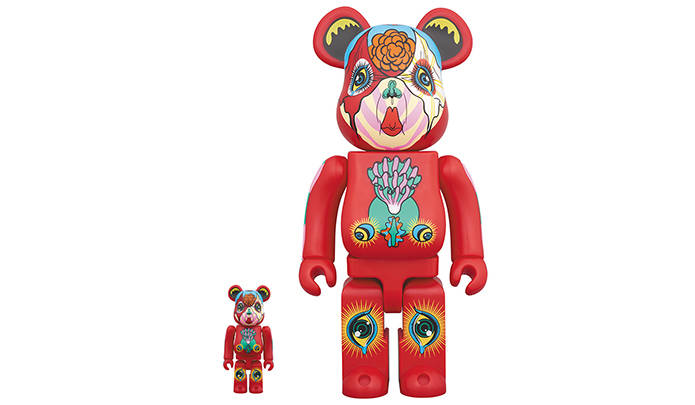
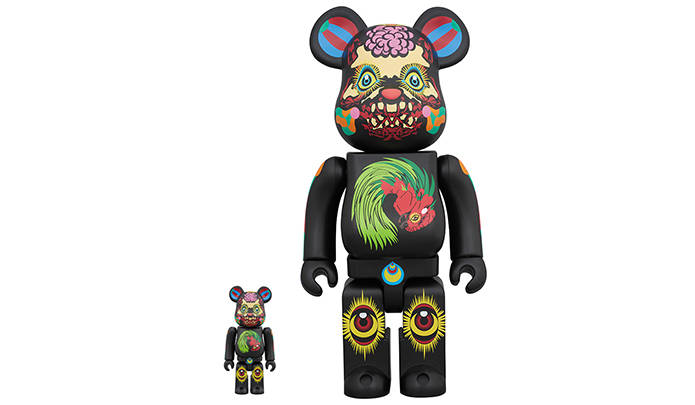
BE@RBRICK TM & © 2001-2019 MEDICOM TOY CORPORATION. All rights reserved.
MEDICOM TOY User Support
Tel. 03-3460-7555