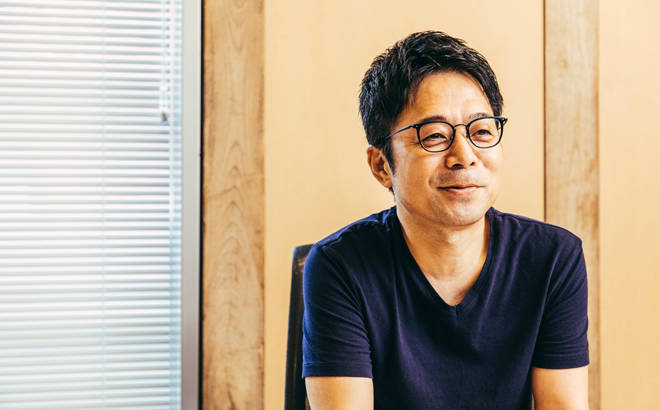
Tokujin Yoshioka: A Long Interview on “Designing Thoughts into Form”
Tokujin Yoshioka: An Interview with the Designer of the Tokyo 2020 Olympic Torch
With the Tokyo 2020 Olympic and Paralympic Games just one year away, anticipation is building. In March, the torch that will carry the Olympic flame across Japan was unveiled to great acclaim. Currently, the actual torch is on display at the Tokyo Metropolitan Government Building, where visitors can even hold it themselves, further fueling the buzz (the exhibition runs until August 25th). The designer behind this highly anticipated torch is Tokujin Yoshioka, one of Japan’s leading internationally renowned designers. He shares the story behind its creation, stating, “What I wanted to express through the Olympic torch relay is neither ‘beautiful design’ nor ‘cutting-edge technology.’”
Photographs by NAGAO Masashi | Interview & Text by MAKIGUCHI June
A Wish for Spiritual Recovery and Peace Through Design
The Tokyo 2020 Olympic and Paralympic torch, a modest yet exquisite Sakura Gold, gleams brilliantly in the light. Its form and radiance seem to embody the very essence of Japanese aesthetics.
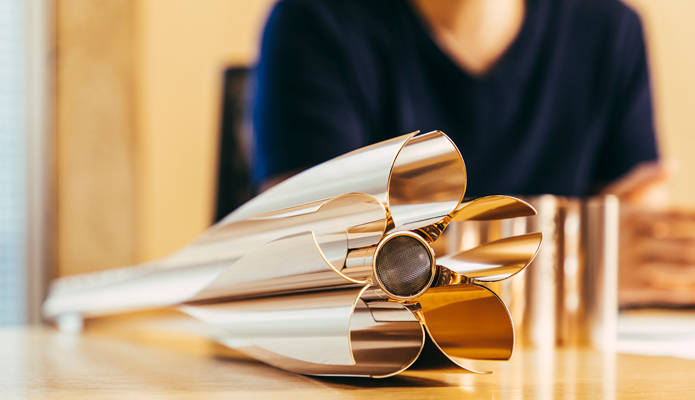
On March 26th next year, the Olympic flame will be lit in this torch at J-Village in Fukushima Prefecture. From there, runners will carry it across all prefectures for 121 days, under the concept, “Hope Lights Our Way.” How did this torch, destined to play such a crucial role alongside the runners, come into being?
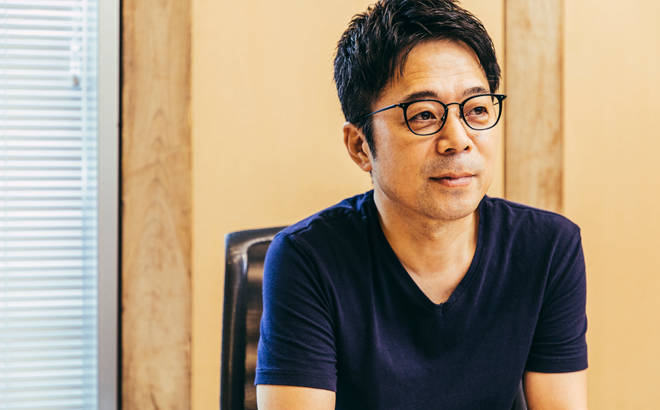
“It all began the moment Tokyo was chosen as the host city for the 2020 Olympic and Paralympic Games in 2013. The Games are a meaningful event, carrying the hopes of many people. I thought, could design be a way to express our thoughts for those affected by the disaster to the world?”
Japanese traditions and technology are often highlighted as design elements. However, Yoshioka explains that these were not his primary focus from the outset.
“What I wanted to express through the Olympic torch relay is neither ‘beautiful design’ nor ‘cutting-edge technology.’ It is the ‘spiritual recovery’ of those affected by the disaster and a wish for peace. Rather than pursuing visually appealing objects, my intention this time was to create something that would bring joy to the people in the disaster-stricken areas. It started with the idea of creating something that could give form to everyone’s feelings. Japan has experienced many natural disasters, but amidst the hardships, the compassion and mutual support that overflowed made me deeply appreciate the kindness and sincerity of the Japanese people. I believe people around the world could feel this too. I wanted to embody that spirit in the form of the torch, believing that if I could express that, it would truly symbolize Japanese culture.”
For this, Yoshioka chose the cherry blossom as his motif.
“It is a flower that symbolizes Japan, and one loved by people worldwide. The inspiration for choosing this natural form came in 2015 when I drew a ‘cherry blossom emblem’ with children in Fukushima, whom I visited to support after the disaster. The cherry blossoms the children drew were incredibly powerful. I wanted to convey to the world the resilience of those affected by the disaster, their strength in rising from suffering, just like those cherry blossoms.”
“It is a flower that symbolizes Japan, and one loved by people worldwide. The inspiration for choosing this natural form came in 2015 when I drew a ‘cherry blossom emblem’ with children in Fukushima, whom I visited to support after the disaster. The cherry blossoms the children drew were incredibly powerful. I wanted to convey to the world the resilience of those affected by the disaster, their strength in rising from suffering, just like those cherry blossoms.”
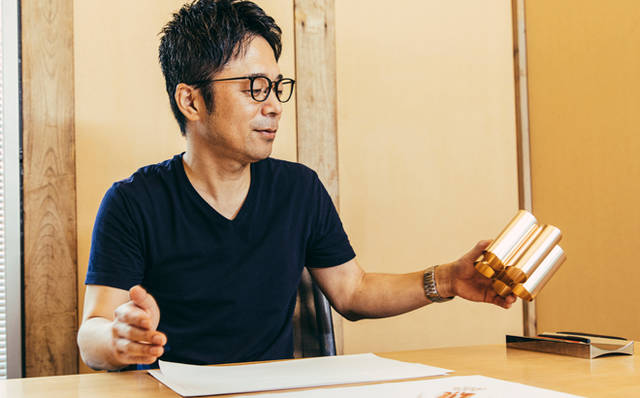
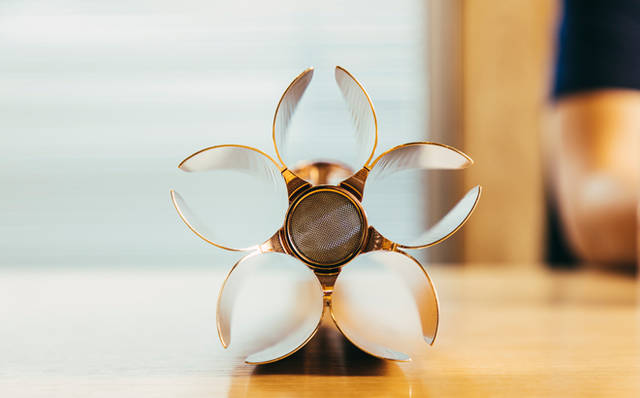
In the aftermath of March 11th, how many Japanese people must have found solace in the sight of cherry blossoms in full bloom? What Yoshioka sought to express was the powerful life force that blooms every spring, no matter what, and hope itself.
“The blooming of the cherry blossoms, signaling the arrival of spring, is something everyone in Japan eagerly awaits, and the way they envelop everyone in warmth is, I believe, hope itself.”
Designing the Flame of Hope Itself
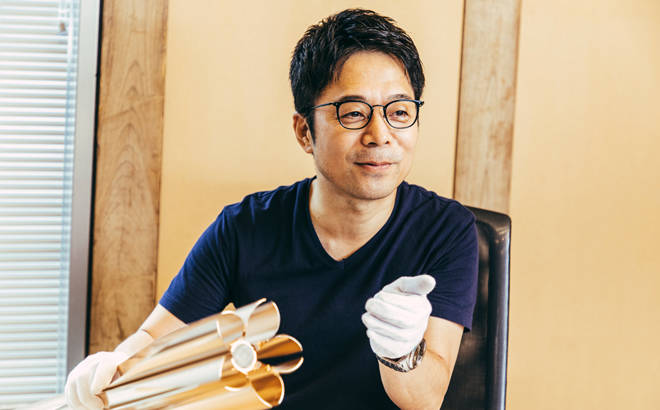
Just as the cherry blossom front moves across Japan, bringing flowers to bloom, he wished for the torch relay to traverse the country, connecting people’s hopes with the flame of hope.
“Actually, this time, I wasn’t designing the torch itself, but rather something that connects hope – the form of the ‘flame of hope.’ Normally, one might start designing a torch from its exterior. But what I considered was designing a flame that burns in the shape of a cherry blossom. Rather than the shape of the torch, I wanted to create the flame of the cherry blossom, to design the sacred flame itself. Ultimately, I began by considering what shape the torch should be to create five flames that would come together as one.”
He is expressing the Olympic spirit further through the sacred flame, which itself symbolizes that spirit.
He is expressing the Olympic spirit further through the sacred flame, which itself symbolizes that spirit.
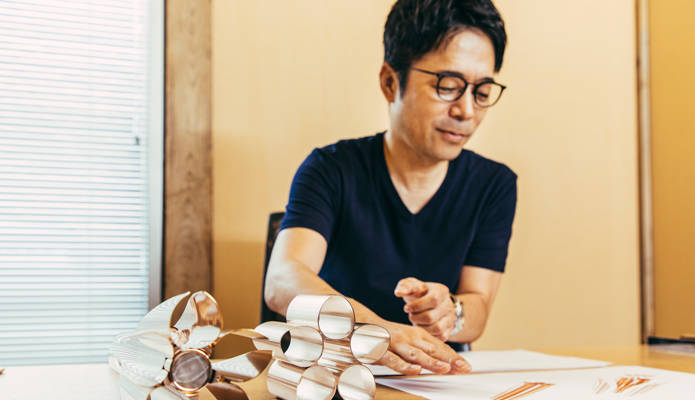
Even so, the idea of designing the sacred flame itself is a perspective unique to Yoshioka, who has consistently surprised us with his innovative designs that overturn convention. He has previously challenged himself with designs that stimulate human senses using unexpected materials, and this is his first attempt at using flame as a ‘material.’
“I want to design things that are considered undesignable. However, I am not an expert in flames, so I first researched the different types of flames that exist. There are various kinds, from large boilers and burners to candles. I researched what could be achieved with different technologies, and the idea for this torch emerged from that process.”
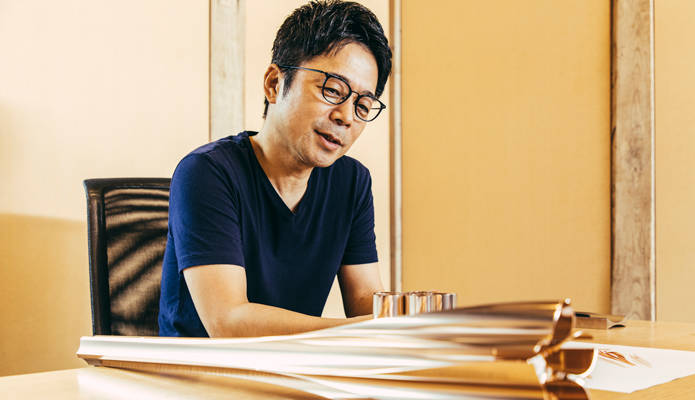
The goal was a powerful and dynamic flame. Instead of emerging from the center of the torch, the flame issues from five spaces shaped like petals that encircle the core. A flame emerges from a tiny gap of just about 1 millimeter, created next to the flame-holding mechanism (the part that keeps the sacred flame burning) at the center of the flower’s pistil, and burns within the petals. Outdoors, where the torch is used, the wind cut by the runners enters through the notches in the petals, creating a swirling airflow. The flame, carried by this flow, swirls within the petals while being protected, eventually uniting into a single flame at the top center.
“Many torches in the past have had a single, large flame-holding mechanism in the center, burning the flame there. But for this torch, I wanted five spaces from which five flames would emerge, so each combustion mechanism had to be small. This was a point of great difficulty for the engineers. Honestly, there were moments when I thought it was impossible, but I believed that if even one part, even a little, was compromised, this torch could not be realized. After much trial and error, what I envisioned was completed. This torch is the result of intense effort.”
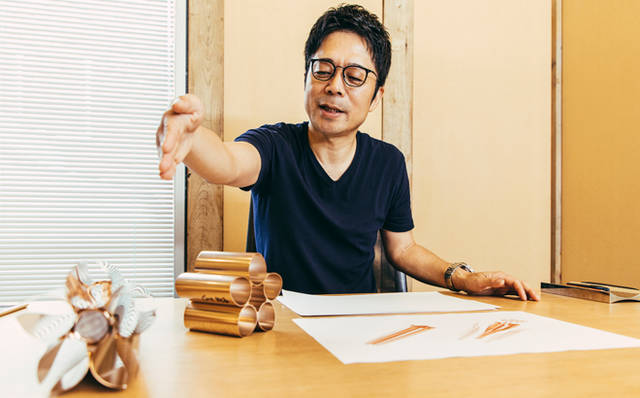
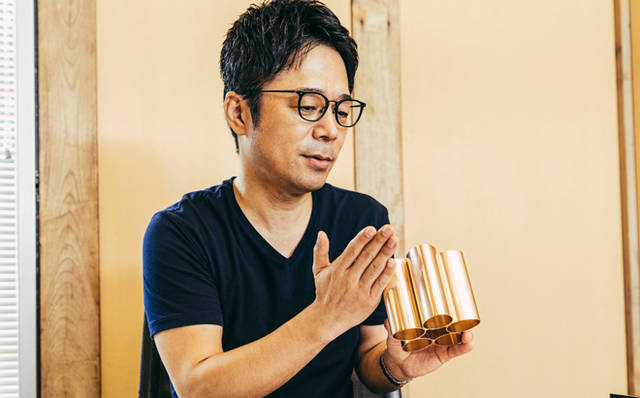
While hinting at a sense of accomplishment, he laughs, “It’s always down to the wire.”
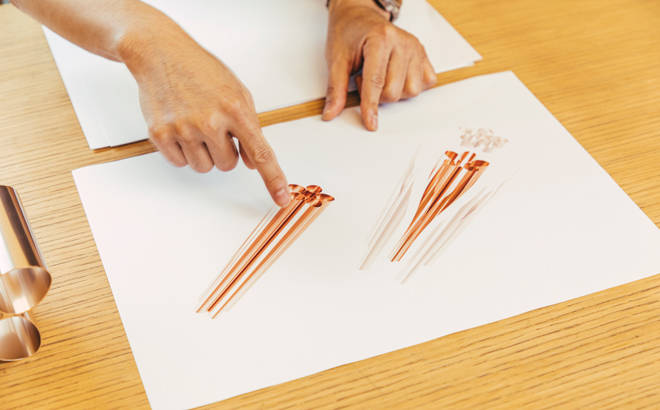
“It’s the same with all my past projects. First, an image comes to mind. But often, there are significant technical hurdles, so I gather expertise from around the world to see if it’s truly feasible. Then, I create various prototypes. However, this time, I was determined to focus on Japanese technology. Since we started from the premise that it was theoretically possible, I haven’t changed the design at all from the beginning.”
He never compromises. This spirit, poured into the creation of the torch, resonates with the spirit of the Olympic and Paralympic Games, and with the spirit of people who rise again and again in their efforts to recover.
Aiming for the Timeless, Not the "Cutting-Edge"
“I wanted to take on new challenges in every aspect. An Olympic torch is something that will remain in history. Therefore, I wanted to use unprecedented design, manufacturing methods, and technology. Normally, to achieve this design, the cylindrical parts would be fastened with screws or welded. But from the start, I had the image of creating it through simple, three-dimensional molding. Using aluminum extrusion, a technique also employed in the manufacturing of Shinkansen bullet trains and aircraft, the torch is formed as a single piece, enhancing its structural integrity while reducing its weight. By extruding and then carving the aluminum into a cherry blossom shape, a seamless, sculpted form is created. By integrating manufacturing into the design process, we have realized an innovative Olympic torch that symbolizes Japanese technology.”
In the world of design, which is directly linked to practical manufacturing, many forms cannot be realized without technology, unlike fine art.
“It’s not cutting-edge technology, but rather a technique that borders on masterful craftsmanship. Cutting-edge technology loses its novelty within a few years. This torch, however, reflects Japan’s meticulous techniques and the spirit of careful craftsmanship. Japanese artisans are incredibly precise.”
“It’s not cutting-edge technology, but rather a technique that borders on masterful craftsmanship. Cutting-edge technology loses its novelty within a few years. This torch, however, reflects Japan’s meticulous techniques and the spirit of careful craftsmanship. Japanese artisans are incredibly precise.”
A Torch That Illuminates the Sacred Flame Runners
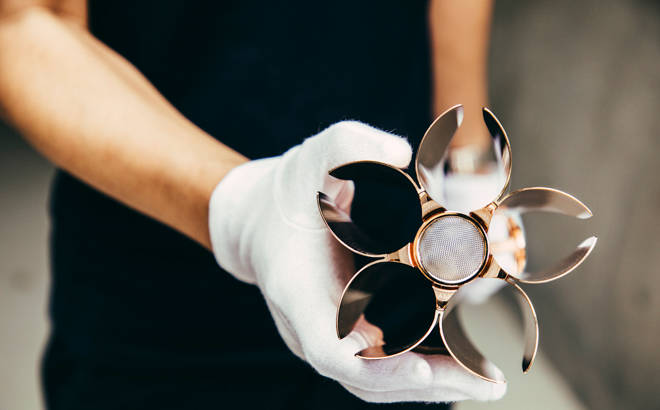
Nevertheless, Yoshioka emphasizes that the beautiful form and technical prowess are by no means the main focus. They are merely elements that enhance the torch’s inherent role to the fullest.
“This radiant torch is designed to reflect sunlight through its multi-faceted, cherry blossom-shaped form, thereby illuminating the sacred flame runners. Since runners are constantly in motion, the torch sparkles with light at every turn, casting its radiance onto the spectators as well. I designed it while envisioning that scene. We tested hundreds of petal shapes, as the shape itself alters the lines of the main body. We created many candidates and selected from them, but after a week, we might decide, ‘This isn’t quite right.’ Even the way it’s carved – changing a slight line can drastically alter the design. We proceeded by repeatedly confirming whether this was the right form.”
As if drawn by Yoshioka’s passion, a serendipitous event occurred.
“We are producing this torch collaboratively with various companies and engineers. During our discussions, one of the participating companies revealed that they had supplied aluminum sashes for temporary housing in the aftermath of the Great East Japan Earthquake. At the time, the temporary housing, having served its purpose, was being dismantled, and they suggested that perhaps the aluminum from those units could be used. I thought that was wonderful and decided to incorporate it.”
“We are producing this torch collaboratively with various companies and engineers. During our discussions, one of the participating companies revealed that they had supplied aluminum sashes for temporary housing in the aftermath of the Great East Japan Earthquake. At the time, the temporary housing, having served its purpose, was being dismantled, and they suggested that perhaps the aluminum from those units could be used. I thought that was wonderful and decided to incorporate it.”
The aluminum from the temporary housing constitutes about 30% of the torch. It is more than just sustainable; it is profoundly dramatic that the feelings of people have transformed into a symbol of peace, carrying the Olympic flame across Japan.
“The temporary housing, which watched over people’s lives, also served as a place to connect to the future. I hope that the transformation of temporary housing into the Olympic torch will symbolize the resilience of those affected by the disaster and serve as an inspiration of courage and hope to people worldwide.”
“The temporary housing, which watched over people’s lives, also served as a place to connect to the future. I hope that the transformation of temporary housing into the Olympic torch will symbolize the resilience of those affected by the disaster and serve as an inspiration of courage and hope to people worldwide.”
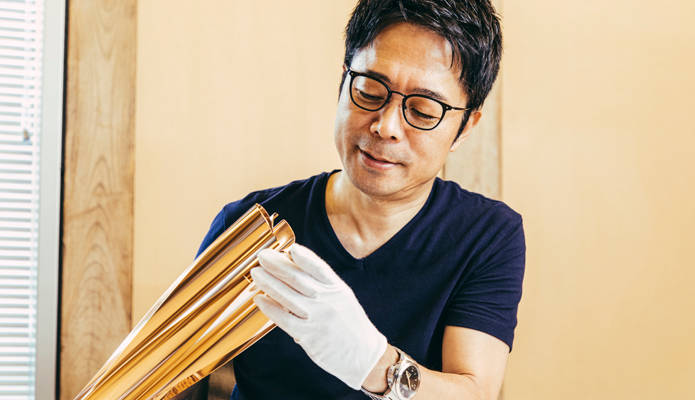
Ideas Taking Form
There is another untold story behind the creation of the torch.
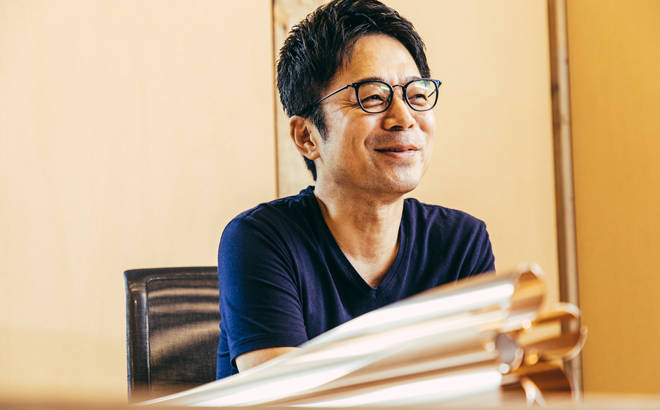
“I began experimenting with the main body long before the call for torch designs was even announced. I didn’t know if it would be selected, but the image came to me the moment Tokyo succeeded in its bid (laughs). Regardless of whether it would be chosen, I was simply driven by the urge to create a torch, and I immediately set to work.”
It was a state of overflowing ideas, he recalls.
“It’s always like that when I create my own works. I make it first. In a typical design job, there’s a client, a request, and then the design is realized. But this was closer to creating a piece of art. At first, my office staff must have wondered why I was doing this (laughs). It took a very long time until it was officially decided.”
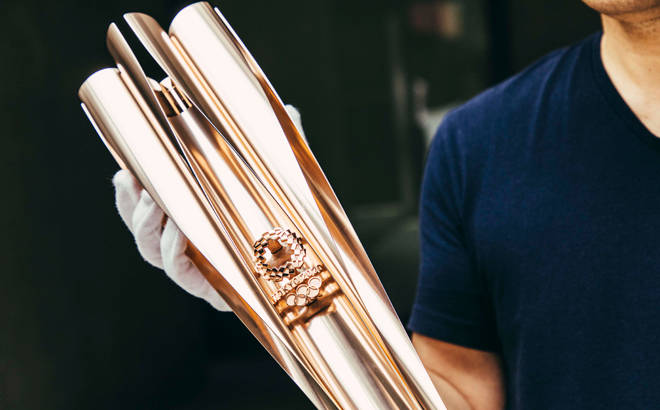
Including the conceptualization phase, a full five years had passed before the torch's unveiling on March 20th of this year.
“I’m already looking forward to seeing what kind of scenes will unfold. I’m also curious about who the final runner will be. It’s certain to be a special Olympics for me. When I see the countdown to the Olympics on TV, my heart races. The Olympic and Paralympic Games are events that symbolize peace, bringing together people from all over the world. Despite the many events happening globally, I hope that by showcasing the resilience of those in the disaster-stricken areas, not only will they be uplifted, but everyone will also receive a sense of courage.”