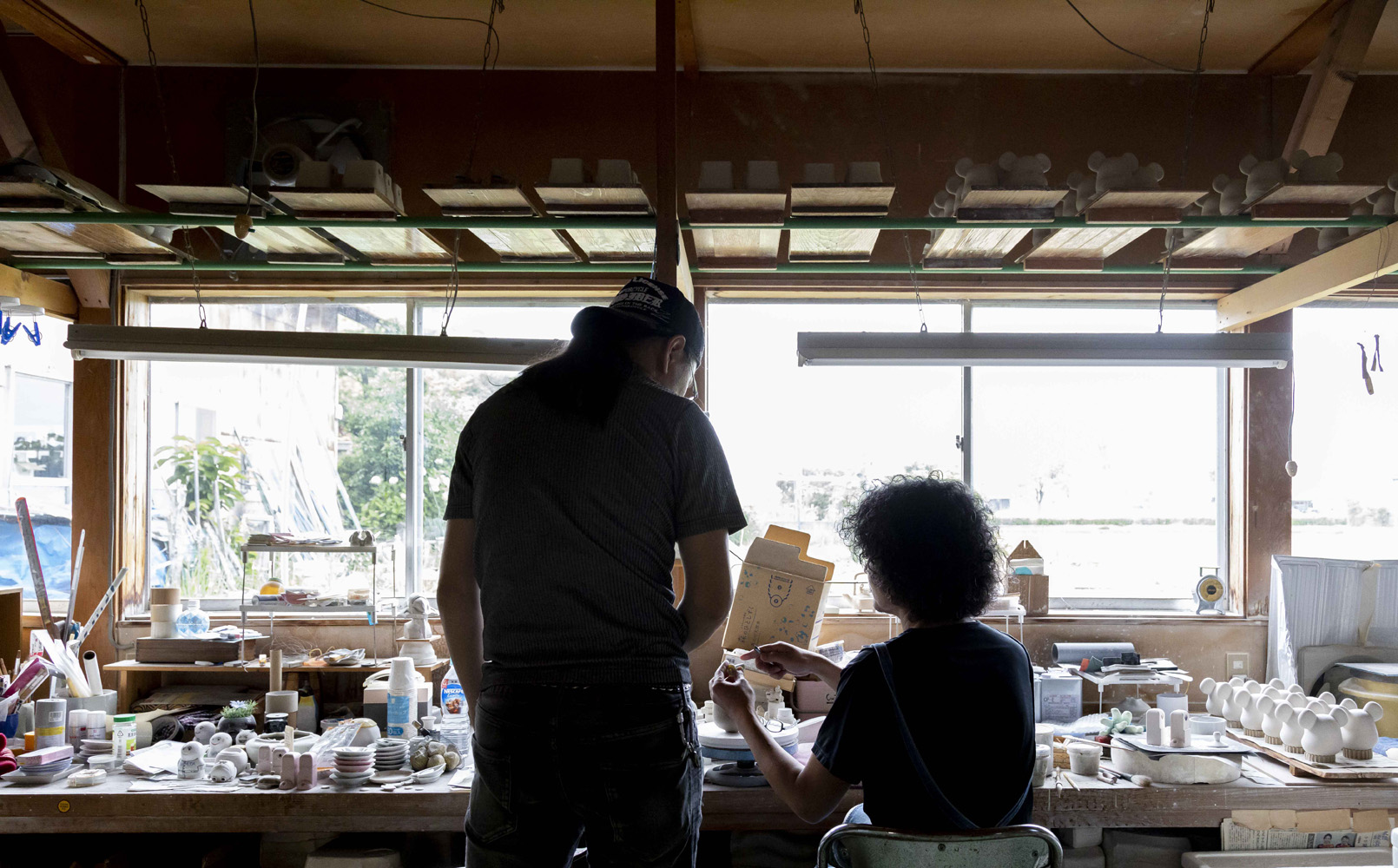
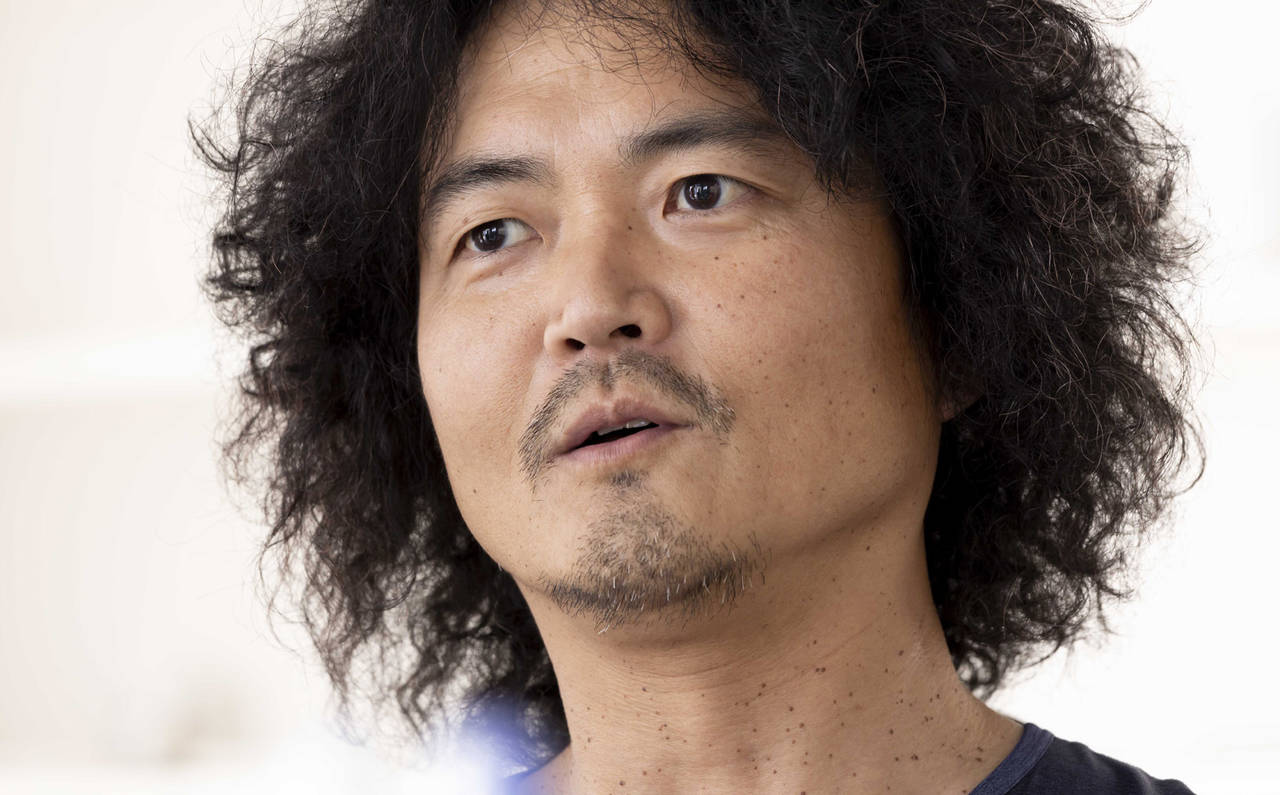
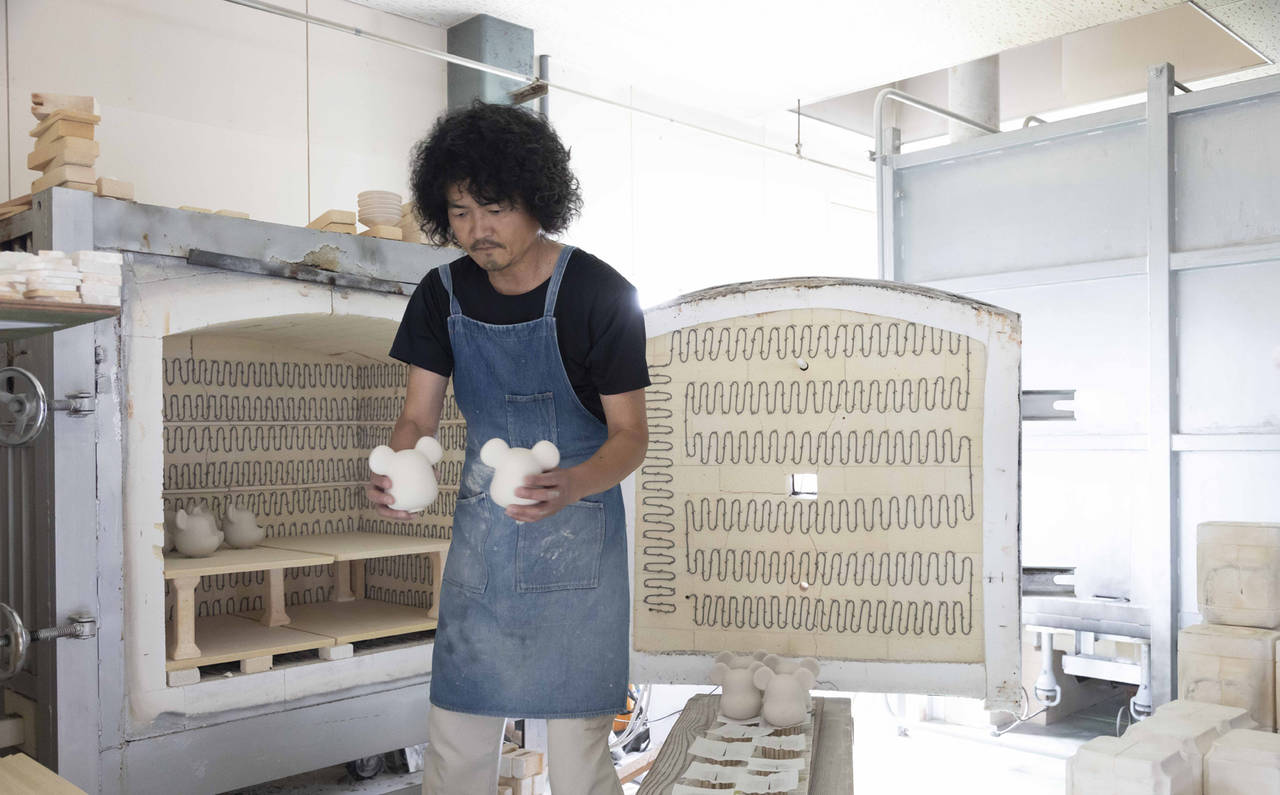
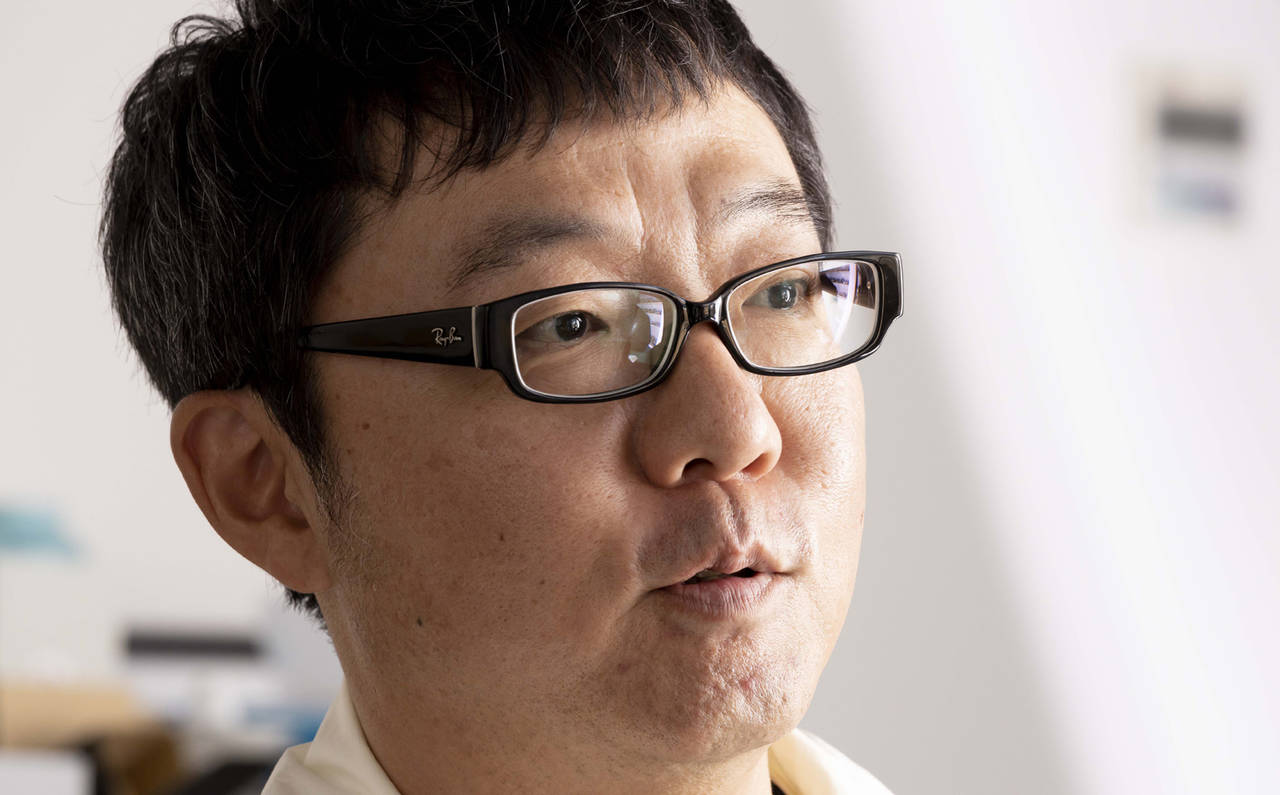
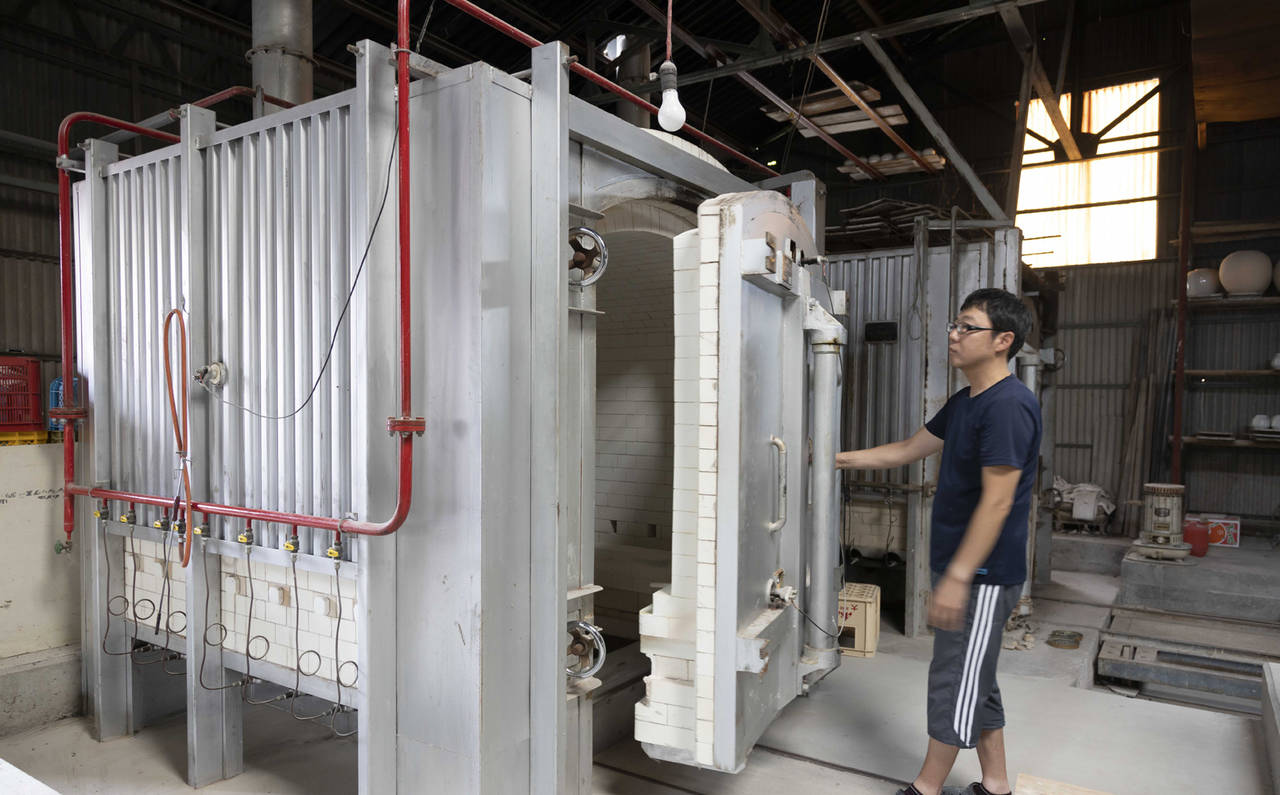
At Kida Pottery. Shohito Naka (President of Midland Creation, left) and Tatsu Kida (right).
The Creation of fragmentdesign's First Painted Kutani BE@RBRICK Model (Part 1) | MEDICOM TOY
MEDICOM TOY
Reporting from Komatsu City, Ishikawa Prefecture, on the creation of the fragmentdesign Kutani BE@RBRICK
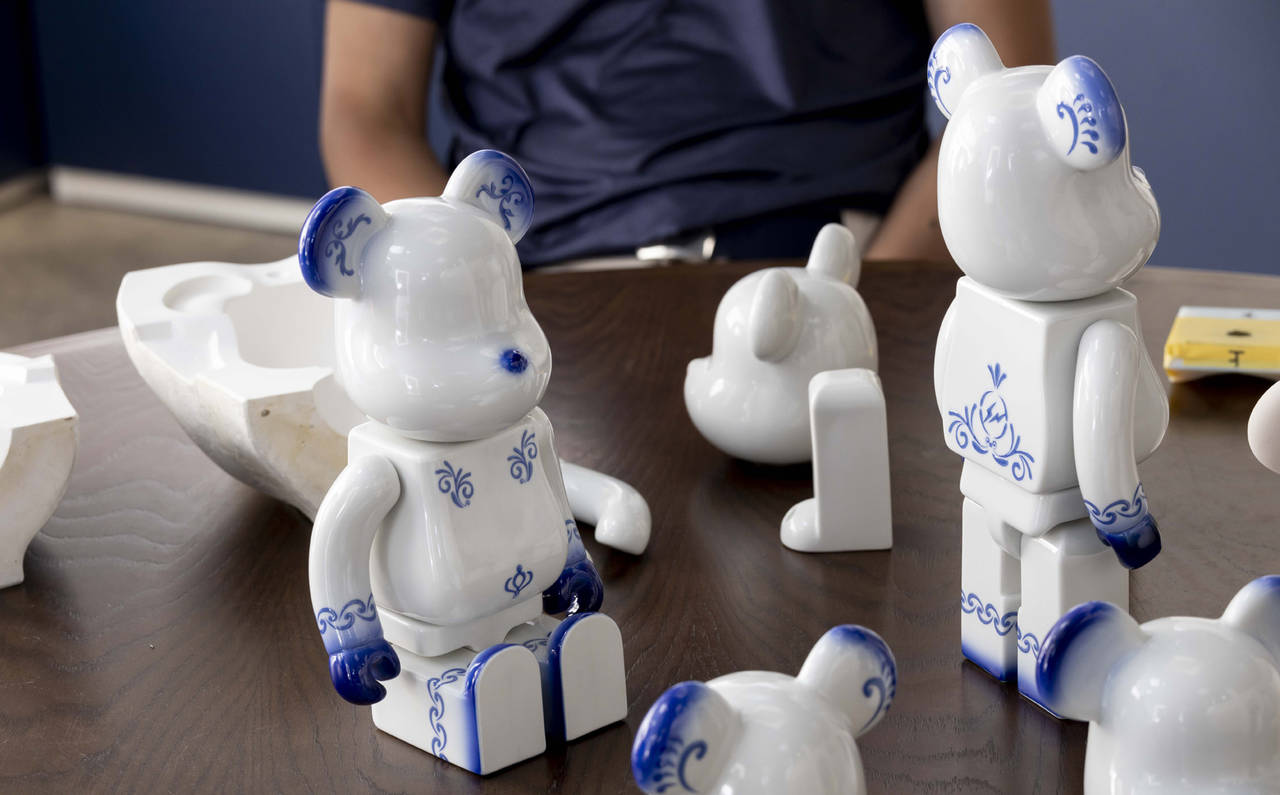
A highly anticipated new release from Medicom Toy and Midland Creation: a 400% BE@RBRICK, integrating movable joints with Kutani-ware. This first painted model of the Kutani BE@RBRICK, designed by fragmentdesign (a design project by Hiroshi Fujiwara, a key figure in fashion and culture), appears at first glance to be a simple design of indigo blue on white porcelain. However, it is the result of numerous prototypes and diverse processes. For this report, we are joined by Shohito Naka, representative of Midland Creation, as our guide. We visit Kida Seitosho and Higashi Seitosho in Komatsu City, Ishikawa Prefecture, and Seikoh in Nomi City. Over two parts, we will explore how this BE@RBRICK came to be.
Photograph by OHTAKI Kaku | Text by SHINNO Kunihiko | Edit by TSUCHIDA Takashi
Body Production and Bisque Firing (Kida Seitosho) → Underglaze Painting and Firing for Gradation (Higashi Seitosho)
The first kiln we visited, Kida Seitosho, has been involved in the production of the Kutani BE@RBRICK for seven years.
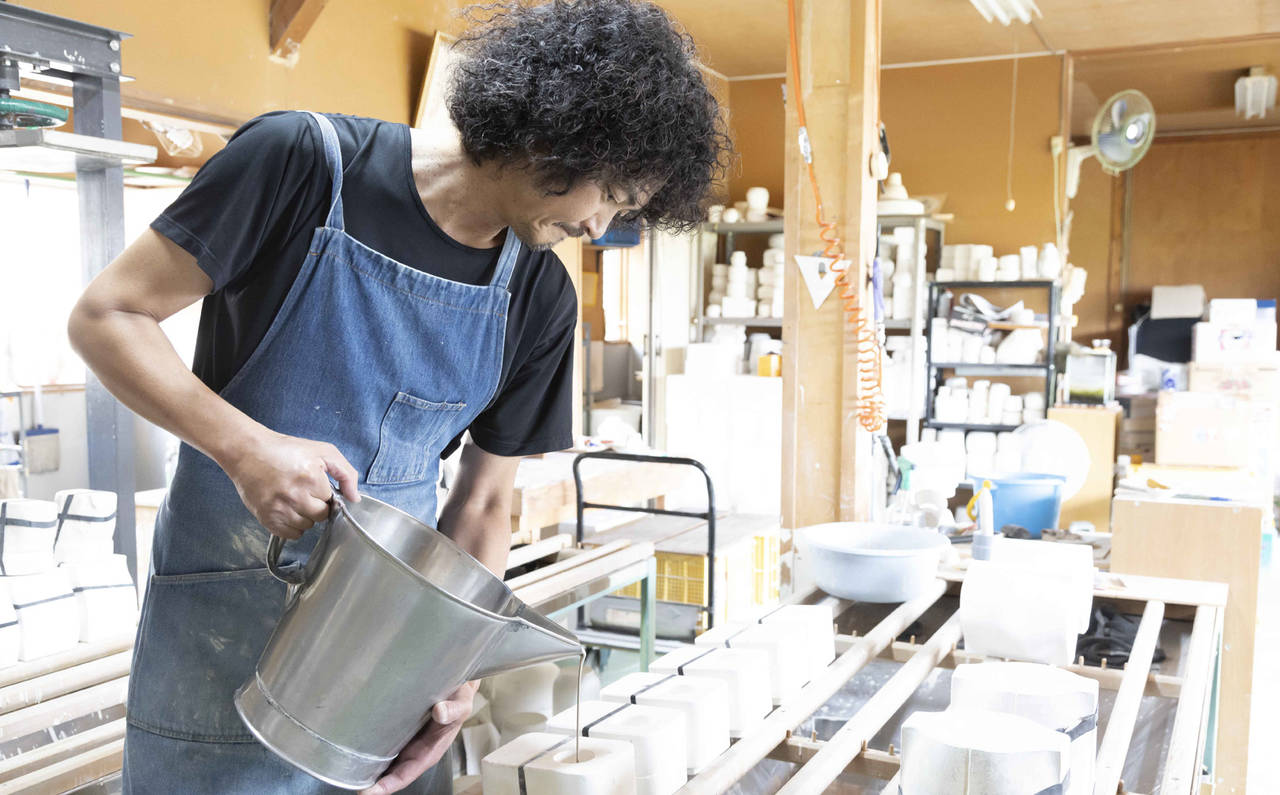
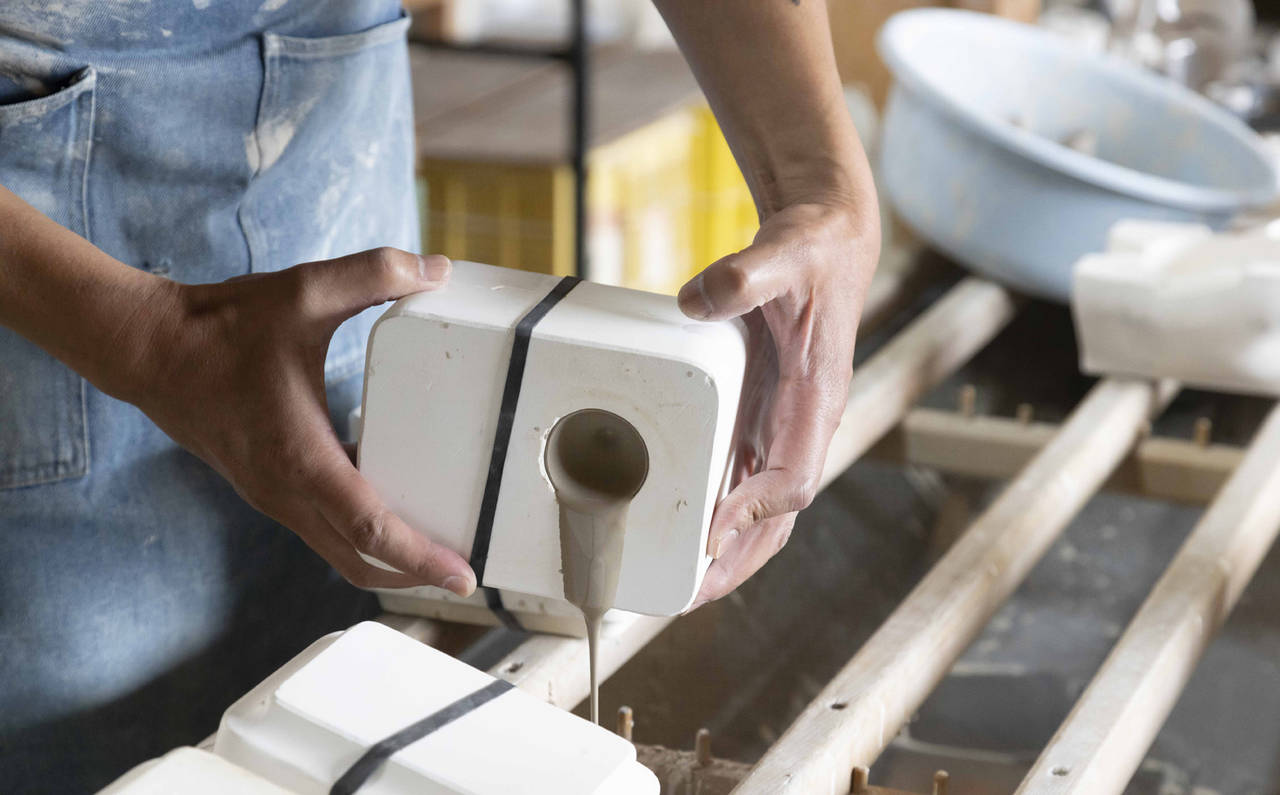
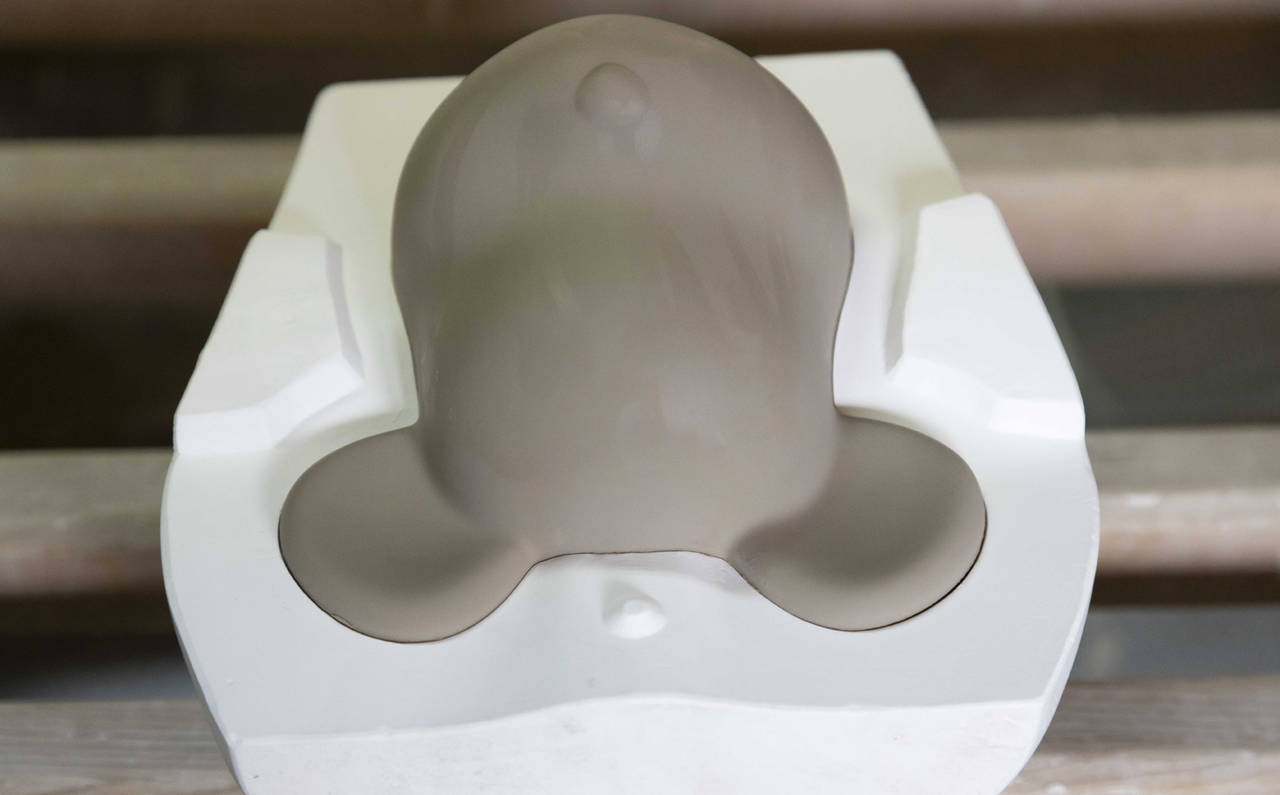
Tatsuru Kida, a master craftsman of Kutani ware bases, meticulously crafts a few pieces of pottery and ornaments per day, adhering to the motto, "With all my heart, one by one." He is known for his precision. Mr. Naka, originally from Komatsu City, Ishikawa Prefecture, was introduced to Mr. Kida through a relative who is a Kutani ware artist, and they have been indispensable partners ever since.
"When I was first approached, I had no idea what a BE@RBRICK was. Those around me were also like, 'A bear doll?' not really getting it. But when I heard that each model sells out instantly, I was surprised, thinking, 'Oh, I see.' Regarding the production, the first thing I found difficult was the size of the holes. They specified the diameter and position for attaching joint parts. It was the first time I'd encountered such precise requirements. Then there was the matter of the joint parts themselves. I think it's amazing that it can stand on its own, and it feels quite surreal," says Tatsuru Kida.
Mr. Kida also produced the bases for previous Medicom Toy releases of the Kutani BE@RBRICK: "Awata-yu," "Sakurairo Hanaten-yu," and "Kouten-yu." After bisque firing, applying glaze (a chemical that creates a glassy layer to prevent the base from absorbing water and dirt) and then firing it again produces a beautiful, glossy surface. And now, this "Kutani BE@RBRICK fragmentdesign." Unlike previous models, this is a painted version. Mr. Naka considered that if they used the technique of carefully applying transfer decals with printed designs—a method used for decorative plates from "Saint Seiya" (Masami Kurumada), "The Five Star Stories" (Mamoru Nagano), and "Cobra" (Buichi Terasawa) previously released by Midland Creation—mass production might be possible.
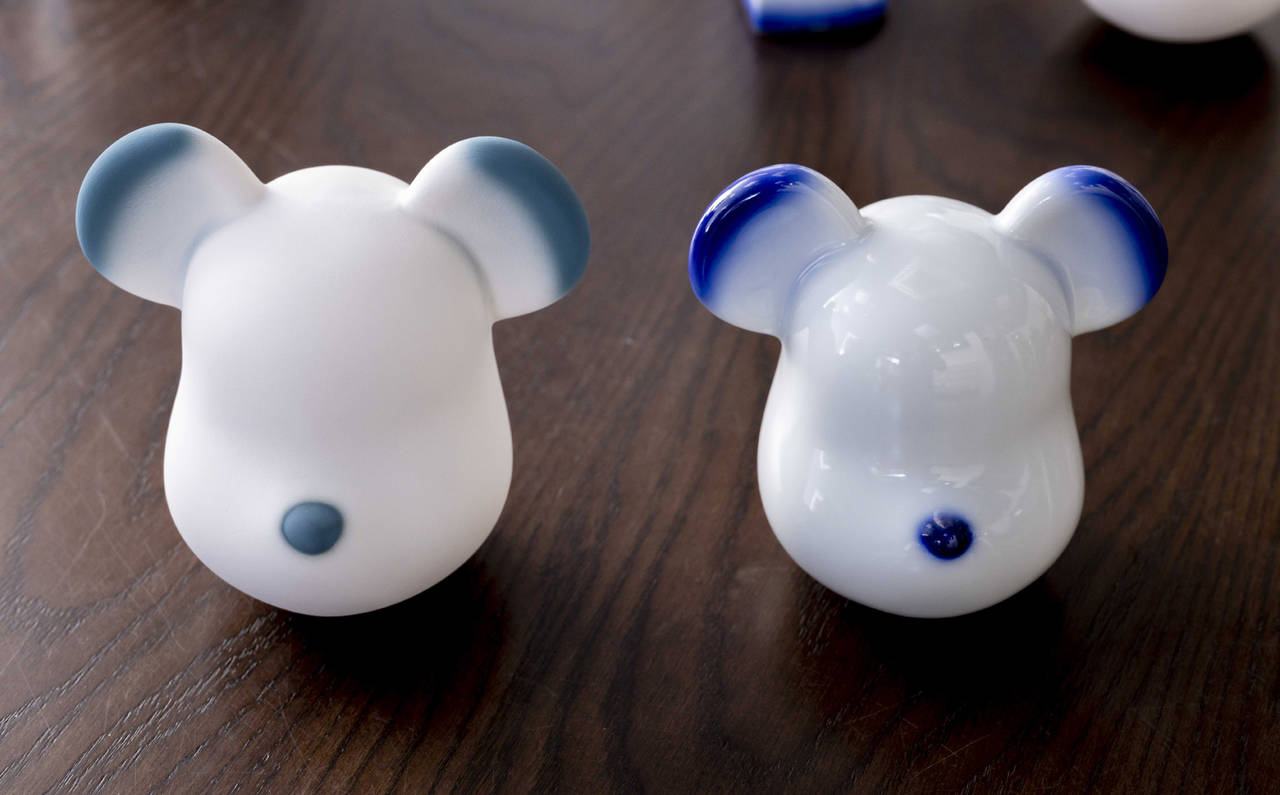
"However, the design provided by fragmentdesign could not accommodate the application of silk-printed decals. This applies to the ears, nose, and fists. For this model, the gradient on the ears, wrists, and feet is crucial. After much deliberation, we decided that the gradient sections would be best rendered using the traditional 'sometsuke' (underglaze painting) technique to achieve both beauty and depth. For the graphical patterns, we aimed to maintain a consistent quality using transfer decal technology," explains Shohito Naka.
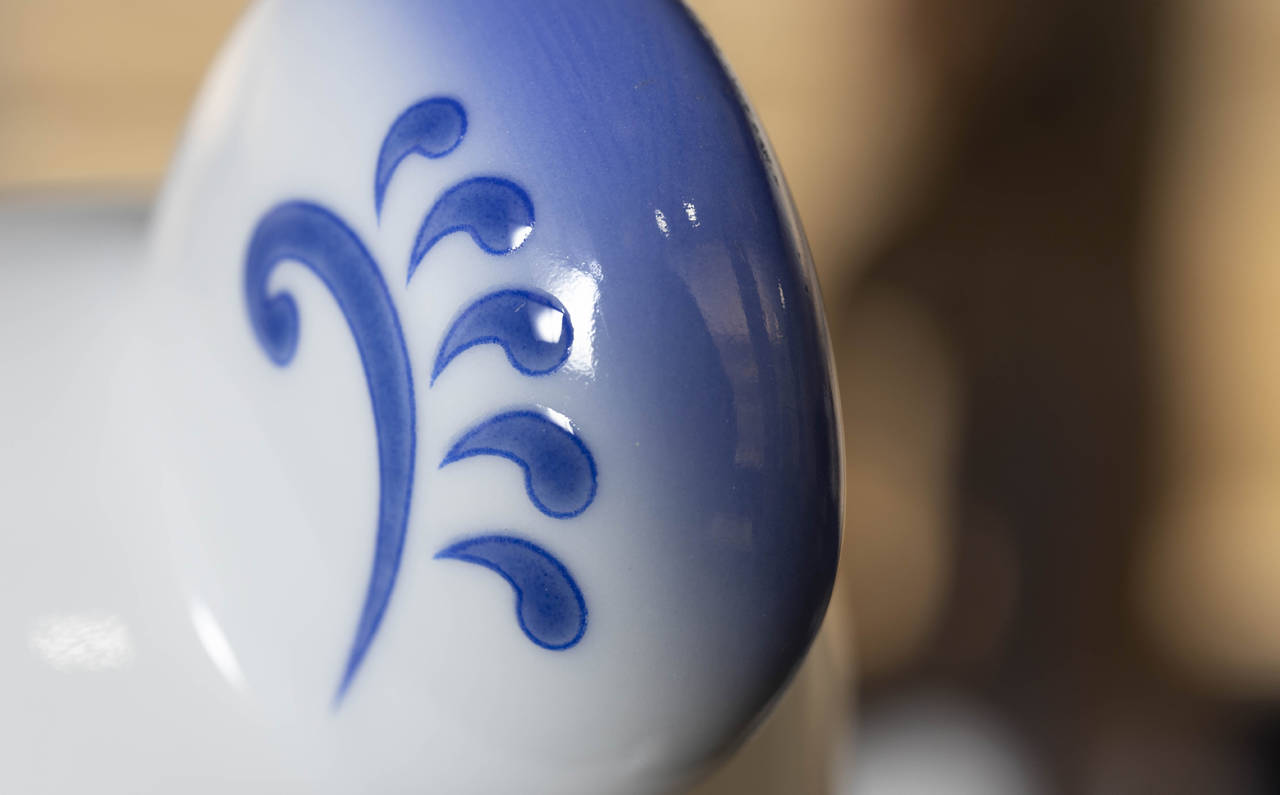
'Sometsuke' is the process of applying color with 'gosu' (cobalt pigment) to the bisque-fired base before applying glaze; it is also known as underglaze painting. After sometsuke, applying glaze and firing again transforms the gosu into a beautiful indigo blue. It is one of the Kutani ware techniques, distinct in its aesthetic from iro-e (colored glazes).
Who could be entrusted with this challenging task? Mr. Naka's choice fell upon Shigeharu Higashi of Higashi Seitosho, a craftsman who creates pieces by hand from base production to finishing. Mr. Higashi is also an exceptionally skilled artisan in sometsuke techniques.
"There was a high probability that no one would take on the job. It was then that I was introduced to Mr. Higashi. Coincidentally, my maternal family home was directly across from Mr. Higashi's workshop. My mother's maiden name is also Higashi, making him a distant cousin. I feel incredibly fortunate to have connected with such a skilled individual," says Shohito Naka.
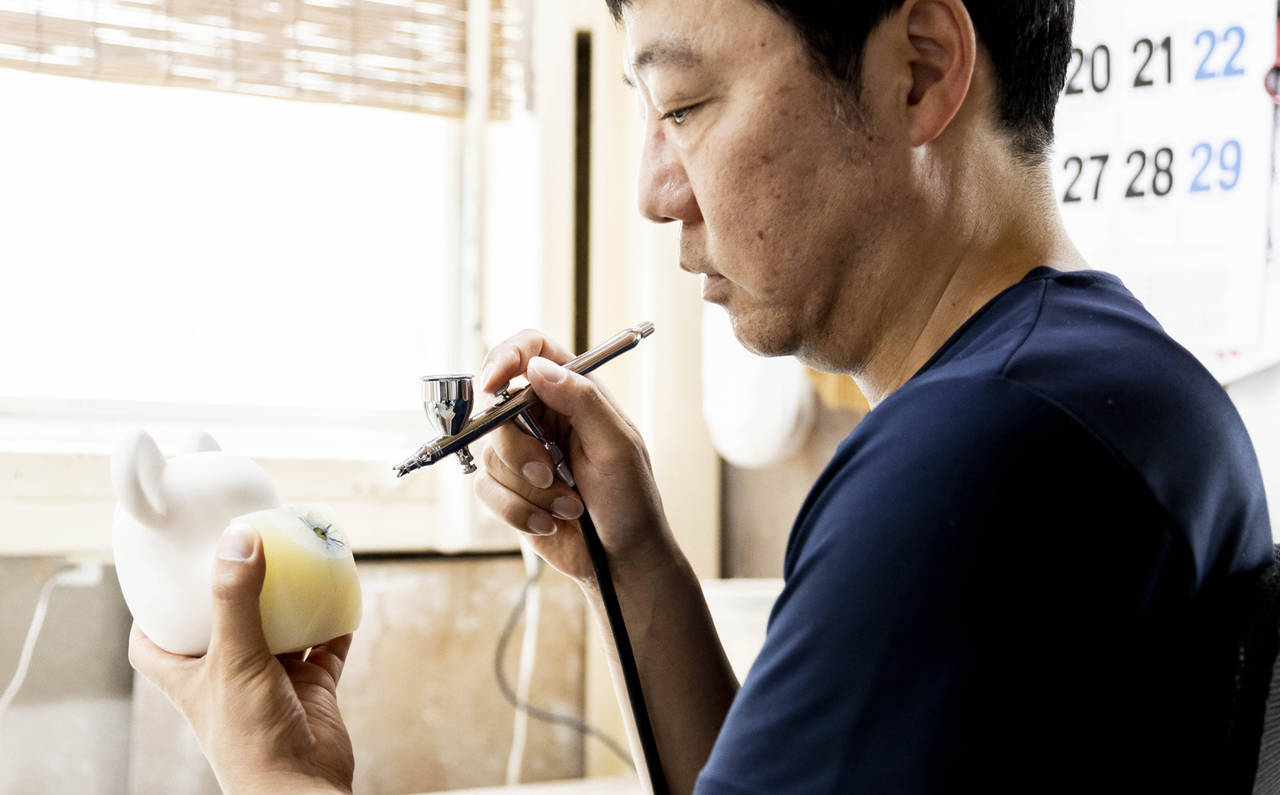
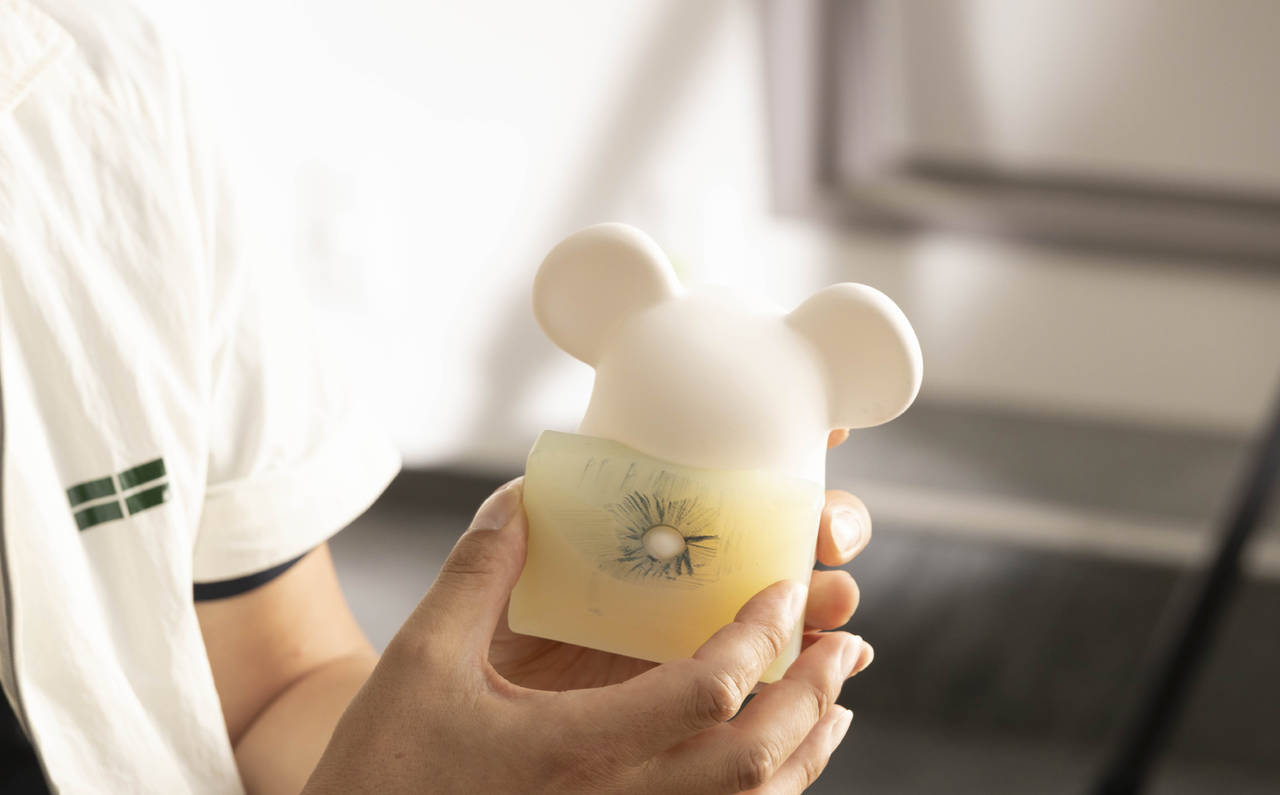
"When I first saw the design with the color application areas specified, I thought it might be impossible, as I had never applied color with an airbrush to such complex shapes. The nose was particularly challenging. The request was to have a clear outline for the nose while softly blurring the surrounding area. However, if I applied too much color, it would cause 'chijire' (wrinkling) or 'pinholes' after glazing. I considered freehand application, but achieving consistent quality for mass production was simply not feasible," says Shigeharu Higashi.
At this point, Mr. Naka's idea proved successful.
"I was in the art club in high school and used an airbrush, so I knew how difficult it was to apply it precisely without overspray," says Shohito Naka.
"What greatly contributed to the success was that, instead of my usual air gun, Mr. Naka prepared a specialized handpiece for fine work on the nose and a masking part to cover the face," says Shigeharu Higashi.
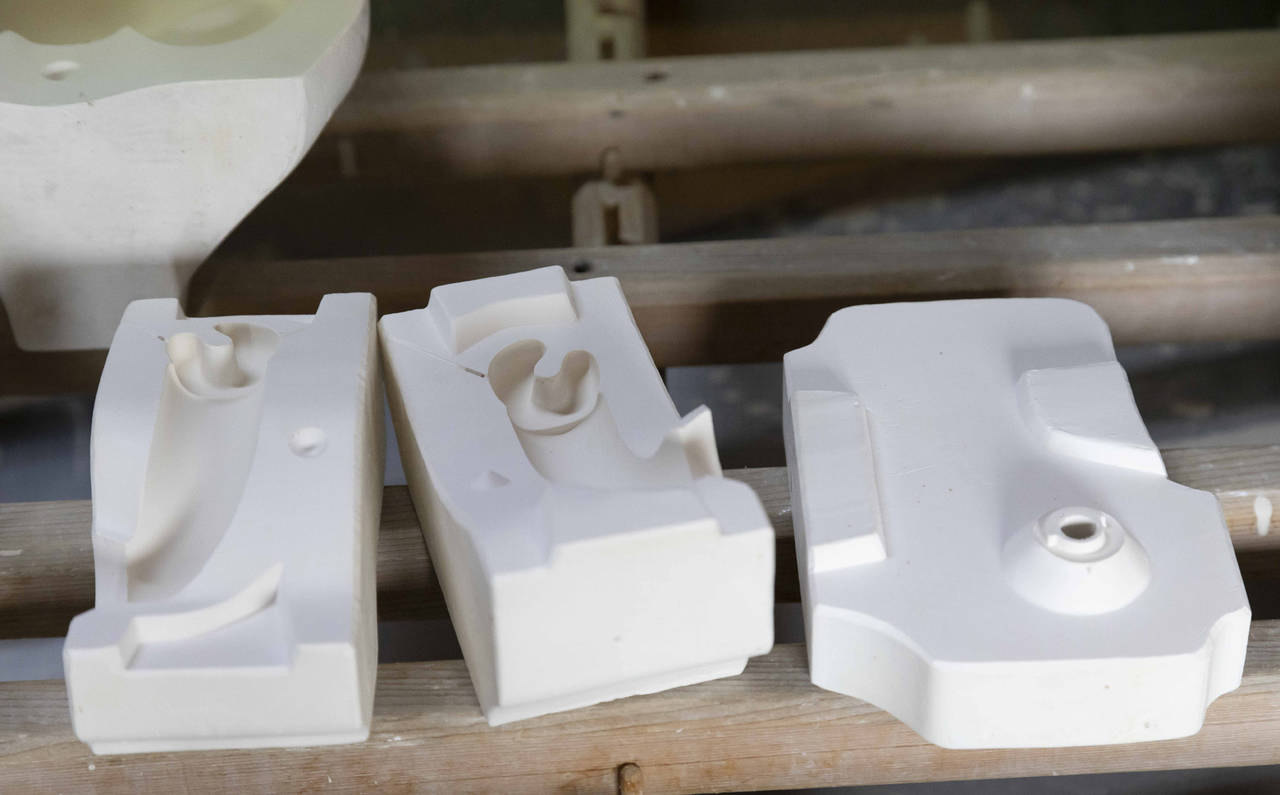
"Those masking parts were designed using digital molding by Swany, who also helped with the joint parts. Since all the BE@RBRICK part data was digitized during the plaster mold creation, they were able to create them from that," explains Shohito Naka.
"There were two types of masking parts: one for creating a sharp outline of the nose, and another with a slightly raised structure for creating the blurred effect around it. I had never used such tools before, so it was a novel experience," says Shigeharu Higashi.
By the way, what was the inspiration behind fragmentdesign's Kutani BE@RBRICK?
"It is said to be inspired by Royal Copenhagen (a Danish ceramics manufacturer known for its cobalt blue patterns, hand-painted). I found the idea of Copenhagen-inspired Kutani ware to be surprisingly interesting," says Shohito Naka.
"Sometsuke in Kutani ware is a traditional technique. Nowadays, we use airbrushes for blurring, but originally it was hand-painted with brushes. The brush strokes themselves add character. I haven't seen many Kutani ware sometsuke pieces with arabesque patterns like these, so it's quite fresh," says Shigeharu Higashi.
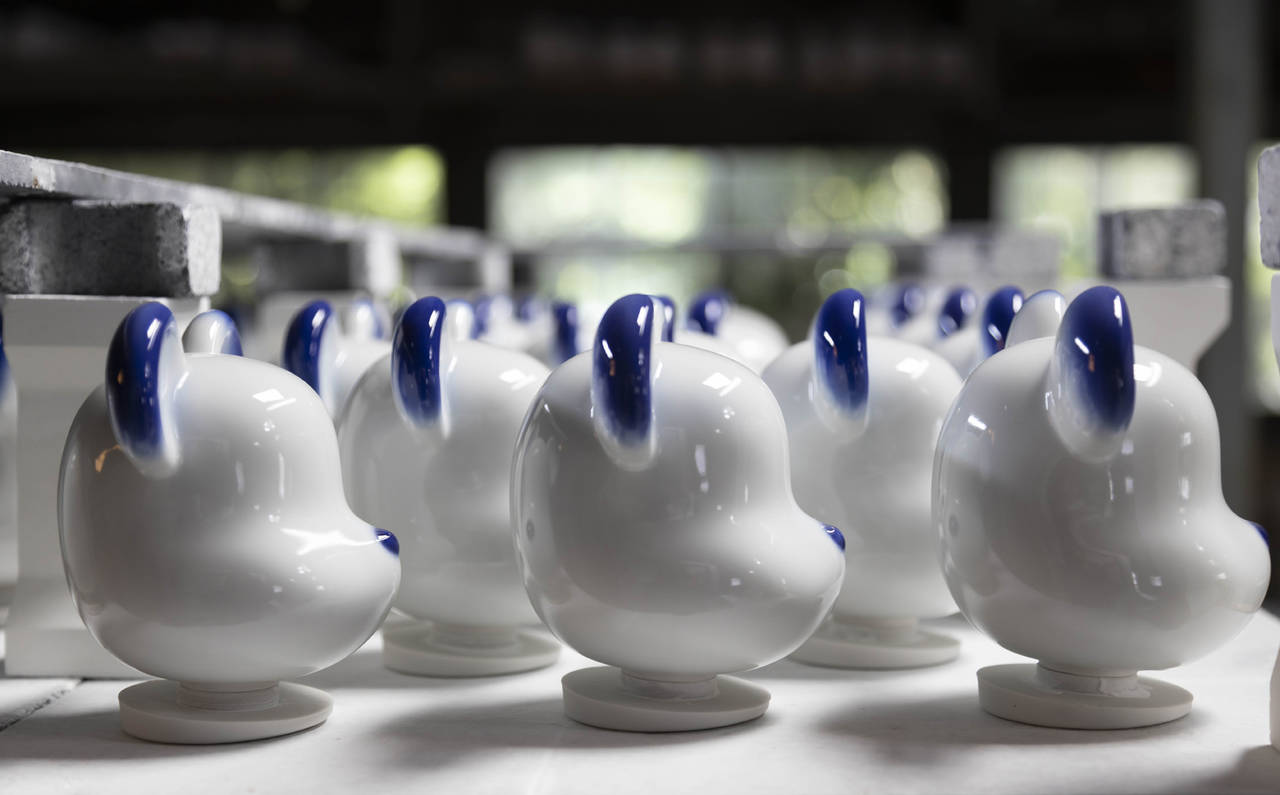
After Mr. Higashi's underglaze painting, the BE@RBRICK is glazed and enters the firing process again.
"Mr. Higashi bears the most risk in this process. The colors only appear after firing, so if any pigment has scattered elsewhere, it will show. Anything that appears must be discarded, so I imagine the management was quite challenging," says Shohito Naka.
"Before firing, the shades are difficult to discern, so I adjust the application based on intuition—where to apply heavily and where thinly. During this process, small pigment particles inevitably scatter. I remove any visible particles with a needle, but some issues only become apparent after firing. Mr. Kida provided a lot of advice on the firing methods, which was a great help," says Shigeharu Higashi.
"For example, if the head is fired as is, it will sag under its own weight. So, firing it with the center of gravity shifted forward usually works well. Normally, we deliver to customers after full firing, but this time I handed it over to Mr. Higashi in a bisque-fired state, so there were aspects that required extra care," says Tatsuru Kida.
"As mentioned at the beginning, the dimensions of the BE@RBRICK are fixed, so controlling how the shape changes during firing was also a concern. One might easily assume that the flat back of the torso could be placed downwards for firing, but then the glaze couldn't be applied there. Areas without glaze would remain unglazed porcelain, so we had to devise ways to ensure that the unglazed parts were in contact with the firing surface as much as possible," explains Shohito Naka.
"The inner part of the arm remains unglazed and white because we didn't apply glaze there to prevent it from sticking to the kiln shelf during final firing," says Tatsuru Kida.
"When I consulted with Mr. Akashi, President and CEO of Medicom Toy, about this, he said, 'No, leaving this part unpainted gives it a more Kutani-like feel and character, so let's keep it as is.' I agreed that leaving unglazed areas would allow people to appreciate the texture of the porcelain," says Shohito Naka.
The shape itself, as well as the process involving multiple ceramic studios, is a rare case even within the long history of Kutani ware.
"Actually, the planning for this model began at the end of 2017. Mr. Higashi delivered the first prototype in May 2018, and we went through numerous revisions from there. I am well aware that it's unusual for different kilns to take over the process from bisque to final firing for base production, so I am grateful to everyone who has worked on this. The BE@RBRICK itself truly wouldn't exist without Mr. Kida's skills, and this time, it would have been impossible without Mr. Higashi's sometsuke techniques as well," says Shohito Naka.