A Conversation with Photographer and Artist Joy Kawakubo on Photographic Expression (Part 1) | Makoto Tanijiri Talks
Makoto Tanijiri x Joy Kawakubo: A Conversation
In Conversation with Photographer and Artist Joy Kawakubo (Part 1)
Why I Shoot with Large Format 8x10 Film Cameras
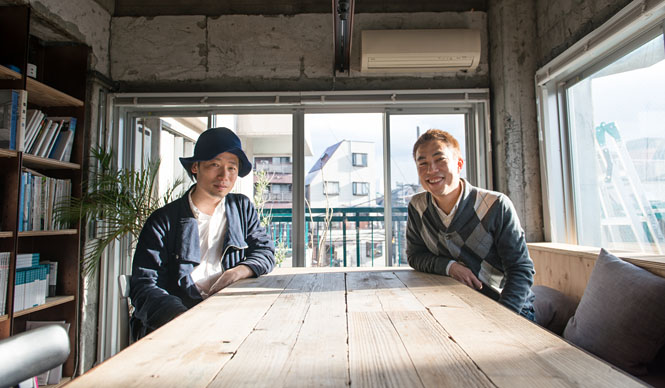
When interviewing Makoto Tanijiri and Ai Yoshida about Suppose Design Office's new Tokyo headquarters, which they had renovated, I asked Tanijiri, "Is there anyone you'd like to have a conversation with right now?" He mentioned Joy Kawakubo, a photographer and artist whose work he admired and wanted to see in person. Kawakubo then visited Suppose Design Office with some of his own pieces.
Photographs by SUZUKI ShimpeiText by KAJII Makoto (OPENERS)
From Solitude to Photography
Makoto TanijiriIt's a pleasure to meet you. I've been wanting to speak with you after seeing your work.
Joy KawakuboThank you.
TanijiriCould you start by telling us about your background?
KawakuboCertainly. I was born in Spain in 1979 and lived there until I was 18. Both my parents are Japanese. I came to Tsukuba University, where I studied psychology, philosophy of language, and neuropsychology. I married a senior researcher in my lab. While my wife continued her research career at the university, I was a stay-at-home dad at first.
Living in Tokyo for the first time, I didn't know anyone and had no children, so I had a lot of free time. It was then that I thought, "I'd like to study photography abroad." I decided I wanted to apprentice with Kevin Westenberg, a London-based photographer who primarily shoots musicians. I emailed him, and he replied, "I'll be in Japan for work soon, let's meet." I ended up assisting him on a few jobs in Japan.
TanijiriThat sounds like quite an interesting twenties.
KawakuboThen, to save money for going abroad, I consulted a classmate who suggested, "Futures trading is profitable, why not try it?" So I joined a company in Kayabacho and worked as an assistant for six months. I then moved to another company and became a trader, but I quit after the Lehman shock.
TanijiriWhat was futures trading like?
KawakuboFutures trading is fascinating but incredibly draining. There were monthly quotas, and dealing with large sums of money created immense pressure. The market hours were clearly defined, from 9 AM to 3:30 PM. In 2008, I left that job and decided to go to London to study art, which had piqued my interest during my time as a futures trader.
TanijiriFrom futures trading to art, quite a shift.
KawakuboIn art and science, mistakes don't negate your abilities as a person. But as a trader, losses are a serious problem. In the market, if you win, you're right; if you lose, you're completely wrong.

What Do I Want to Photograph?
KawakuboFrom 2008 to 2009, I focused on selling my work, consciously trying to create "photographs that sell." I researched what sold in department stores and explored how to make my work commercially viable while retaining my own style.
TanijiriBut that wasn't satisfying for you?
KawakuboAround 2010, a friend in New York invited me to do an exhibition. I went to New York and visited Dia Beacon, a contemporary art museum located a bit outside Manhattan. I was profoundly struck by it.
TanijiriDid that experience influence your photographic style?
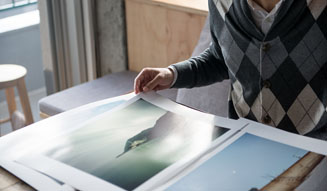
KawakuboYes. Around that time, as I pursued what I wanted to photograph, my cameras gradually became larger. For instance, when you enlarge a 4x5 inch negative, it depicts things invisible to the naked eye, surpassing the resolution of human vision. It expresses both the microscopic and the macroscopic. I could spend hours at Dia Beacon without getting bored.
Now, I primarily use even larger 8x10 inch film cameras. With 8x10, the shooting process becomes a kind of ritual, and the physical act of taking a photograph influences me.

Finding Locations by Shutting Out External Stimuli
TanijiriCould you describe your current photographic process?
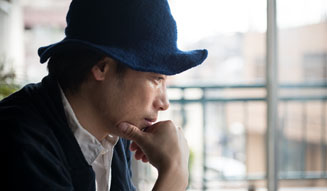
KawakuboWith the 8x10, I first go out alone, wearing earplugs to shut out external stimuli, and search for a location. Then I decide on the angle, wait for the right time, and shoot with a long exposure. This style began around 2010. Until about 2009, I also did magazine work, but now my focus is on my artistic practice.
TanijiriWhat's the purpose of the earplugs?
KawakuboIt's probably to fully absorb the atmosphere of the place.
Extinct Landscapes and Spectacular Views
TanijiriYou photograph nuclear power plants, don't you?
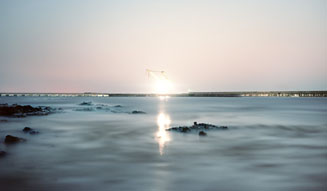
KawakuboYes. Although I didn't release them immediately after March 11th, I've photographed about a third of the nuclear power plants nationwide. I've started a crowdfunding campaign to photograph the remaining two-thirds. This project, "The New Clear Age," aims to document this period in Japan for my children when they become adults, serving as proof that it existed, captured on film. I photograph them as neutral, beautiful landscapes.
I've also visited Fukushima several times. In areas with high radiation levels, around 34 microsieverts, I buried negative film in the ground, retrieved it after three months, and then developed and printed the images for exhibition.
TanijiriWhat drives that work?
KawakuboPerhaps it's the exploration of the intersection between my photography and social issues. Makoto, what are your thoughts on March 11th?
TanijiriI'm based in Hiroshima, so I'm thinking about how to convey the impact of March 11th to people in the western part of the country.
Joy Kawakubo's Photographic Project: "The New Clear Age"
What Should Be Left for Japan's Future?—Crowdfunding
Joy Kawakubo, a photographer and artist, has been working on the project "The New Clear Age" since 2011. It documents Japan's existing nuclear power plants using large format (8x10 inch) film cameras.
Kawakubo states, "As someone living in Japan during this era, I want to record the facts about Japan's current energy situation, the nuclear power that underlies it, and the ethical considerations and justice surrounding the use of nuclear power, preserving them through methods and perspectives different from the media." He continues to photograph with the hope that Japan's future will be a little brighter.
The target amount for the expedition (shooting) costs for this project was reached within the first three days. Support is being accepted until June 15th (Monday) for the remaining four locations nationwide.
Crowdfunding
https://greenfunding.jp/micromecenat/projects/1043