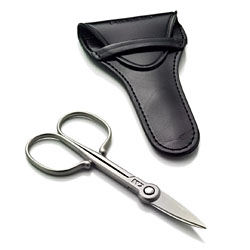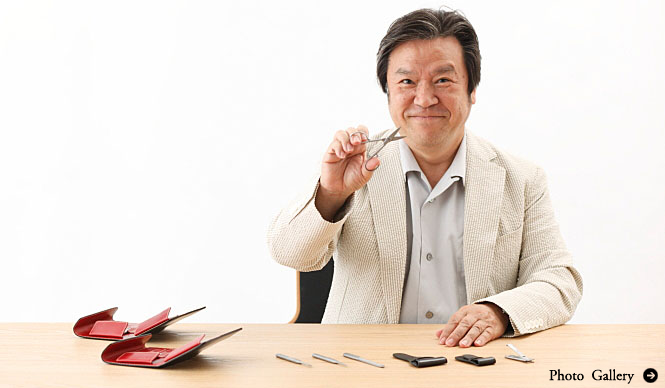
Nail Care Tool "MIMUNO" Product Designer Toshiyuki Kita Interview (2)
The Originality of the New Nail Care Tool "MIMUNO"
An Interview with Product Designer Toshiyuki Kita (Part 2)
This is the second interview with Toshiyuki Kita, the product designer behind the luxurious and much-talked-about new nail care tool, MIMUNO. The conversation shifts to Japanese manufacturing, a topic Kita feels strongly about, delving into the crucial mindset of the artisan.
Text by Yasuhiro Takeishi (City Lights)Photos by jamandfix

There's a Place for Japanese Luxury Goods in the Global Market
—Indeed, we haven't seen many high-end, comprehensive nail care tools before. Nail care often brings to mind women, but MIMUNO gives the impression that men can also feel comfortable using it.
This time, I designed it to be unisex, without consciously targeting men or women. After all, grooming, including nail care, is common to both.
—Shifting topics slightly, Japanese manufacturing is currently facing strong competition from countries like China and Vietnam. What are your thoughts on this situation, Mr. Kita?
I feel that many Asian countries are currently following the path that Japan once took. Japan will need to do things it hasn't done before.
Japan is said to be poor in natural resources, but in the future, wisdom, sensibility, and technology will become its greatest resources. I hope that developing technologies like those used in MIMUNO, shaping them through design, and presenting them to the global market not as mass-produced items but as luxury goods, will become an established business model.
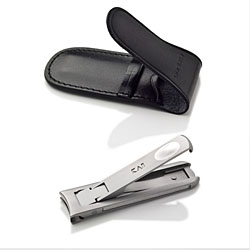
MIMUNO Nail Clipper (with leather case)
Japanese companies no longer have a place in the world market except for making top-tier products. In that sense, I didn't want MIMUNO to be a half-hearted product. I designed it to target the upper echelons of the global market, not just Japan. While a leather case of this quality might not have been necessary solely for the Japanese market, I felt it was essential when looking at the world stage, especially for a product utilizing new technology.
Design, in this context, is the process of integrating technology, functionality, and safety for such a target audience.
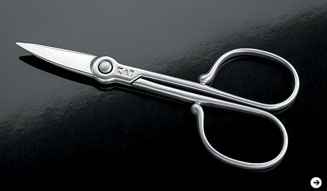
MIMUNO Nail Scissors (with leather case)
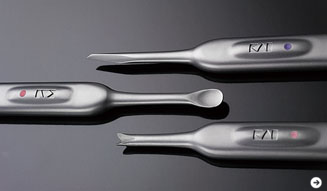
Various MIMUNO Cuticle Items
The Most Important Thing is the Artisan's Mindset Towards Manufacturing
—So, what are the conditions for a top-tier product in your opinion?
First, originality is essential. Second, I strived for elegant design. And finally, a design that doesn't become tiresome over time. It needs to have timeless elements that don't feel dated.
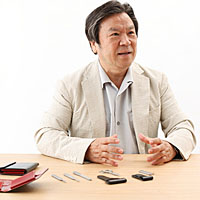
Toshiyuki Kita
—You are also involved in activities to revitalize local industries in Japan. Does design play a significant role in that as well?
I believe it plays a very significant role. Most of Japan's local industries, especially traditional ones, are world-class. However, they need to capture the sensibilities of each era. It's crucial to synthesize long-standing tradition, world-class craftsmanship, and contemporary sensibilities through design. The answer to how to utilize the techniques of traditional industries in the future remains elusive, and they are gradually declining. One issue is indeed price, but just because something is handmade doesn't automatically mean it's superior.
For example, very few luxury brand products from Italy or France are 100% handmade. Most incorporate machine assistance, but the most important element is the artisan's mindset towards manufacturing, and in that regard, they are first-class. Therefore, Japan's future top-tier products can also be made using high-tech equipment.
However, one must maintain a traditional, first-class artisan's mindset and imbue that spirit into the manufacturing process. If Japan continues with only traditional handmade methods, its traditional industries will likely disappear.
While MIMUNO utilizes the latest technology, its spirit is that of an artisan. This kind of manufacturing is what will support Japan's industries.
MIMUNO Nail Care Tools
An Interview with Product Designer Toshiyuki Kita (Part 3)To be continued
An Interview with Product Designer Toshiyuki Kita (Part 3)To be continued
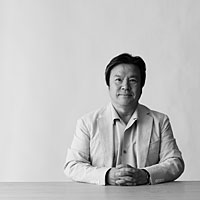
KITA Toshiyuki
Since 1969, he has worked as a product designer, active in Italy and other European countries. His work spans a wide range of categories, from furniture and interior products to home appliances, daily necessities, and robots, resulting in numerous hit items. His works are housed in museums worldwide, including the Museum of Modern Art in New York, the Centre Pompidou in Paris, and the Neue Sammlung in Munich. He is dedicated to Japanese traditional crafts as his life's work and actively contributes to the revitalization of local industries in Japan.
Toshiyuki Kita Official Website
http://www.toshiyukikita.com/