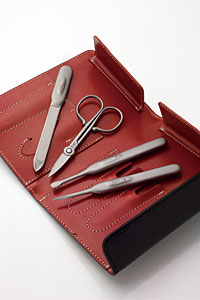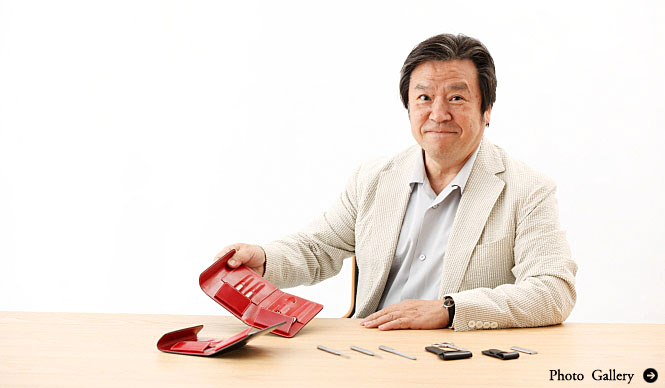
Nail Care Tool "MIMUNO" Product Designer Toshiyuki Kita Interview (3)
The Future of Design Seen in the New Nail Care Tool “MIMUNO”
Interview with Product Designer Toshiyuki Kita (Part 3)
This is the latter half of our interview with Toshiyuki Kita, the product designer behind the luxurious and talked-about new nail care tool, “MIMUNO.” Kita, who has worked globally, shares his vision for the future of Japanese manufacturing. This new product also points towards the direction Japan should be heading.
Text by Yasuhiro Takeishi (City Lights)Photos by jamandfix

The Japanese Spirit of “Mastery”
—Japanese industrial products have long been recognized globally for their quality, but their design has often received mediocre reviews. Has this global perception changed?
Currently, in China, it's said, “Japan for technology, Korea for design,” with South Korea rising in the design world. They are producing excellent products, from mobile phones to automobiles. Furthermore, China is now aiming to become a design-focused nation, establishing 500 design schools. Asia is moving dynamically like this, and Japanese manufacturing stands at a crossroads amidst this change. It's a crossroads between cheap and high-end products, and I believe we cannot afford to go down the path of cheap goods.
However, simply aiming for high-end products without a clear strategy will lead to the same result. Therefore, we should once again consider, “What truly constitutes a high-end product, and what kind of design possesses elegance?”
Fortunately, Japan has wonderful traditional industries with high quality and excellent taste. It might be beneficial to return to these roots. By then creating new tools and industrial products, I believe Japan can overcome the current challenges. I am personally optimistic about Japan's manufacturing future, but various efforts will undoubtedly be necessary.
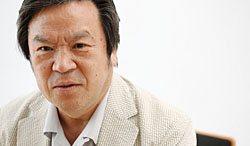
Toshiyuki Kita
—So, by making the most of what we have, we can overcome these challenges?
Yes. The most important thing is the mindset when creating something. Where are we heading, and what are we making?
For example, Japanese sweets have very beautiful packaging, don't they? Some people overseas even keep the Japanese packaging after they've eaten the sweets. Japan has this tradition of “mastery,” and I believe this will be useful in the future.
It's not just about handmade craftsmanship; it's about perfecting things using computers, cutting-edge technology, and high-tech materials. I believe this is the future of Japanese manufacturing. This time, I had the opportunity to encounter advanced technology, so I approached it with that same spirit of mastery.
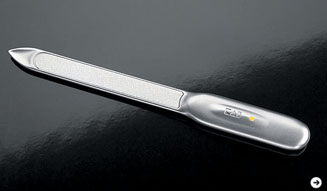
“MIMUNO” Nail File
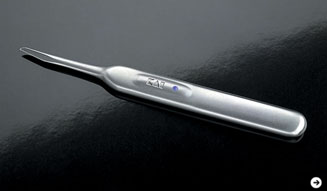
“MIMUNO” Cuticle Knife
Sustainable, Timeless Design
—I see. Regarding the concept of “mastery,” what qualities do you think Japanese designers will need in the future?
When global companies hire designers, they rarely choose them based solely on their nationality. The criteria are the individual and their character. Japanese designers must cultivate a character that resonates globally. The same applies to manufacturers; products don't sell just because they are from a particular country. In the future, unique and excellent products will be essential for sales. The global market is waiting for such designers and manufacturers.
—When you design a product, Mr. Kita, what do you prioritize?
Well, I suppose I want it to sell (laughs). In reality, designs that don't sell are problematic. And it's important for them to be sustainable. The word “sustainable” is used frequently these days, but I believe design must also have longevity. Without continuity, a brand cannot be established. In that sense, designs that don't age or become tiresome may become increasingly important. However, it's also necessary to incorporate new technologies.
—Timeless design is an eternal theme for designers, but what are the conditions for creating such a design?
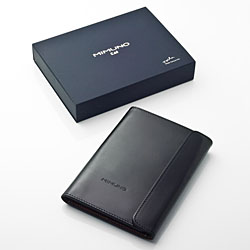
One is to possess inherent necessity. Human bodies and movements are largely the same, so a design that is necessary for them naturally takes shape. However, even with these similarities, there's a subtle difference in the final details, and that's where a story becomes important. For instance, we deliberately created a luxurious case for “MIMUNO” to convey its unique story. We chose a chic color and added subtle highlights. I also filtered this through my own perspective, considering how it would be in 10 or 20 years.
—Finally, do you have a message for OPENERS readers?
I hope you will consider a life surrounded by things you truly love in your daily life. I often tell myself this: designers who create things for people tend to focus on others and rarely reflect on themselves. In your daily life, I hope you will take time to reflect and choose things that you genuinely love.
—Thank you very much.
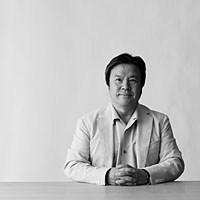
TOSHIYUKI KITA
Began his career as a product designer in 1969 and has been active in Italy and other European countries. He has designed a wide range of products, from furniture and interior goods to home appliances, daily necessities, and robots, creating numerous hit items. His works are housed in museums worldwide, including the Museum of Modern Art in New York, the Centre Pompidou in Paris, and the Neue Sammlung in Munich. His lifelong pursuit of engaging with Japan's traditional crafts also drives his daily efforts to revitalize local industries within Japan.
Toshiyuki Kita Official Website
http://www.toshiyukikita.com/