Nail Care Tools "MIMUNO" Product Designer Toshiyuki Kita Interview (1)
The Design Challenge Behind MIMUNO, a New Nail Care Tool
An Interview with Product Designer Toshiyuki Kita (Part 1)
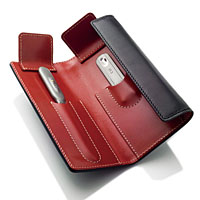
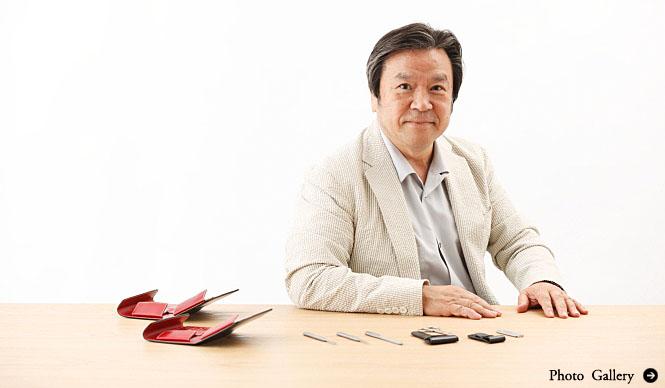
MIMUNO, a nail care tool from Kai Corporation—a long-established manufacturer of beauty care tools such as razors—and Toshiyuki Kita, a world-renowned product designer, has garnered attention for its unprecedented luxury. The tool features an organic yet precise design utilizing cutting-edge MIM (Metal Injection Molding) technology, along with an exquisite dedicated case made of high-quality cowhide.
We spoke with Kita, who designed the product, about this project and about Japanese manufacturing.
Text by Yasuhiro Takeishi (City Lights)Photo by jamandfix

Aiming for Luxury Goods That Resonate Globally—
—First, could you tell us about your initial thoughts when you were asked to design MIMUNO?
I had always been aware of nails, but I had never really taken care of them comprehensively. So when Kai Corporation approached me, I wondered what I should do (laughs). Then, as I researched further, I realized the widespread interest in nail care. They had also developed a new technology using metal powder, which presented an exciting new opportunity to create something truly excellent.
—So, this was your first time designing nail care products, Mr. Kita?
Completely. I had designed things close to the wrist, like watches, but never nail care items.

Toshiyuki Kita
Safety was fundamental, of course, but I also wanted to create something that users would grow fond of over time.
I thought most about where that affection would come from.
—Creating products that foster affection implies aiming for longevity, doesn't it?
Precisely. Also, I was told this would be a global product for the world market, so I aimed for a luxury item that would be well-received in any shop worldwide. I wanted to create a new Japanese product that would gain international recognition.
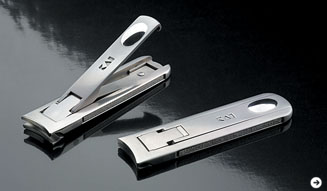
MIMUNO Nail Clipper (with leather case)
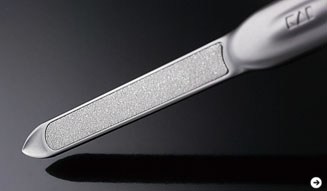
MIMUNO Nail File
A New Challenge for the Designer
—You mentioned the new MIM technology earlier. What kind of design did you pursue to leverage this technology?
I felt that organic, soft shapes would be more suitable than rigid forms. Since it was a completely new technology, I approached the design by first setting aside conventional ideas.
For instance, the parts where the fingers rest are slightly curved. This kind of molding is actually quite difficult with conventional techniques; typically, such parts would be made from flat materials. MIM technology allows for these subtle accents. Furthermore, the fine finish of the nail file surface and the joining of parts are also unique to this technology.
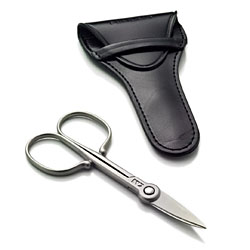
MIMUNO Nail Scissors (with leather case)
Yes. Even seemingly complex parts can be manufactured relatively easily with this technology.
—As a designer, does encountering new technologies like this provide inspiration?
Absolutely. It was enjoyable work. It felt like I could take on new challenges, do things I hadn't done before. This is also a challenge for the manufacturer, and new technologies inspire that kind of feeling in us designers as well.
—So, MIMUNO embodies your new challenges, Mr. Kita?
Yes. Since this is something that hasn't existed in the market before, I focused not only on usability but also on making it impressively luxurious, perhaps even a bit ostentatious. I also designed the case, which took considerable time.
An Interview with Product Designer Toshiyuki Kita (Part 2)To be continued
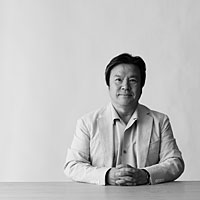
Began his career as a product designer in 1969 and has been active in Italy and other European countries. He has designed a wide range of products, from furniture and interior goods to home appliances, daily necessities, and robots, creating numerous hit items. His works are housed in museums worldwide, including the Museum of Modern Art in New York, the Centre Pompidou in Paris, and the Neue Sammlung in Munich. He is dedicated to Japanese traditional crafts as a lifelong pursuit and actively works to revitalize local industries in Japan.
Toshiyuki Kita Official Website
http://www.toshiyukikita.com/