A Pure Desire to Reward Those Who Want and Buy Our Products | MEDICOM TOY
MEDICOM TOY | Medicom Toy
Karimoku x BE@RBRICK: Behind the Scenes Report - Part 2 (1)
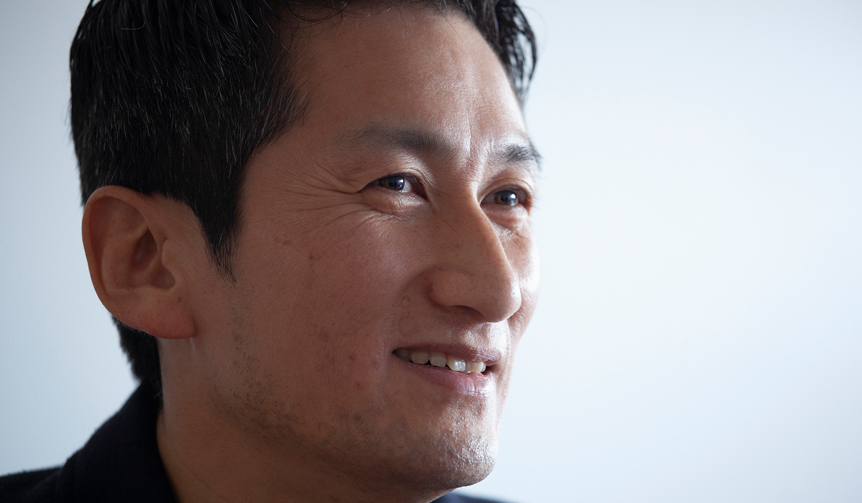
After witnessing the manufacturing process of the "BE@RBRICK Karimoku," perhaps your affection for BE@RBRICK has grown even stronger? It's a handmade art form born from the warmth of natural wood and the masterful skill of experienced artisans. For the final chapter of our report, we asked Reiwa Ikeda from the Marketing Center's New Business Development Department at Karimoku Furniture Inc. about the challenges they've faced and what they hope to achieve with Medicom Toy in the future.
Photographs by Kaku Ohtaki Text by Kunihiko Shinno
Small Yet Valuable
—After the tour, I really understood what you meant by "subtractive design." The manufacturing process is fundamentally different from that of resin products, isn't it?
IkedaI'm not an expert on resin, but based on my knowledge, resin materials are formed by injecting heated and melted material into a mold, then cooling and solidifying it. This allows for continuous production, making it suitable for mass production, and any missing parts can be added later through "additive design." The timing and thickness of peeling don't change much even if the material color changes, which makes it easy to control.
—That's how the regular ABS resin BE@RBRICKs are made.
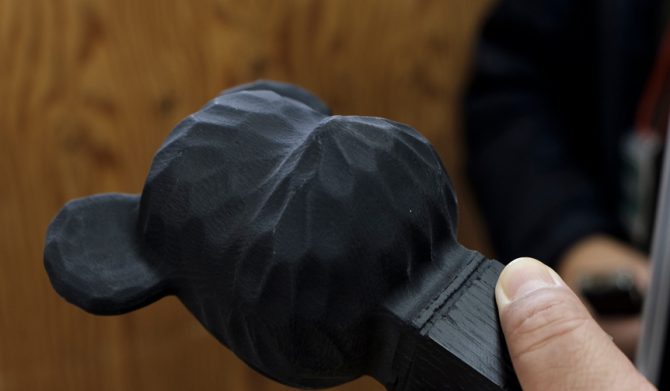
IkedaWood products are made using "subtractive design," where we carve away from a block of wood. There are many ways to approach shaping it. For example, if you were to make a plastic bottle shape out of wood, some might start with a rectangular block and then carve it, while others might rotate it and carve from the spout. Our design team's job is to figure out the most efficient and rational way to produce it. I learned from my seniors that "the value of a wooden product is determined by how much you carve away," and BE@RBRICK is exactly like that.
—Does the manufacturing method change depending on the type of wood?
IkedaYes. Even with the same data, we change the rotational speed of the cutting tools. For example, "Paolosa," a wood used in our precious wood series, is too hard to carve directly without damaging the blades. Also, wood grain has a direction, like fur, and if you carve against the grain, the blade can dig into the wood fibers, resulting in a rough finish. Selecting the right material is also a crucial part of the process.
—Objects with complex 3D curves like BE@RBRICK are a bit different from furniture, aren't they?
IkedaThey are. When we firstKAWSwere mass-producing BE@RBRICKs, I went to explain to the workshop, "We're going to make a bear figure called BE@RBRICK." Everyone looked puzzled and asked, "We're Karimoku Furniture, right? A figure? A bear?" (laughs). I had to visit many times, and they'd say, "You're here again?" It took a very long time to get them to understand.
—So, to mass-produce them, you needed the on-site artisans to understand the project?
IkedaAt the time, the people at the factory didn't have much knowledge about art or contemporary art. They were almost ignorant about art, so I kept explaining patiently, and after many discussions, we finally managed to launch the product. Then, we started hearing external voices saying, "Karimoku, what are you doing! That's KAWS, amazing!!" That's when everyone gradually got on board, but it took a considerable amount of time.
—It must have stimulated their pride as artisans.
IkedaHowever, because their pride as artisans meant they poured their lives into quality, they didn't know how far to go with a figure, and initially, they tended to overdo it a bit. I had to explain over and over again, "No, this is what we're aiming for." Since it was their first time, it was quite challenging, but as they worked through the difficulties, the artisans on-site were also charmed by BE@RBRICK's cuteness and gradually became engrossed. They started referring to them as "BE@RBRICK" instead of just "bears."
Now they enjoy it quite a bit and ask, "What's next?" Even though I've caused them a lot of trouble, they say things like, "That last one was tough," or "You're going to bring something weird again, aren't you?" with a wry smile, and then go along with it, saying, "Well, we have no choice."
—It must have been rewarding to see tangible results.
IkedaAbsolutely. In the furniture industry, there was a concept that larger, more labor-intensive items would sell for more. But this is a small item with significant value. We also had a sense that we were creating something without compromise, which boosted the artisans' pride.
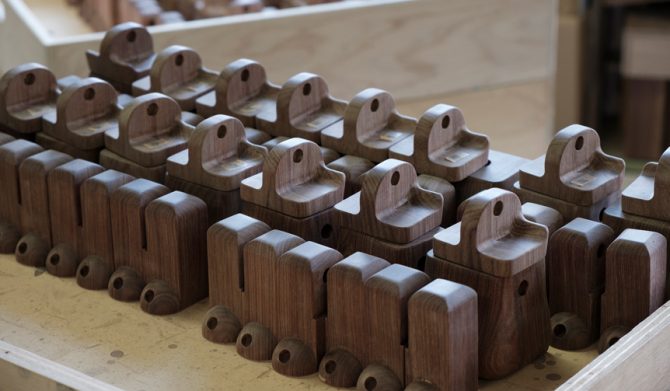
Page 02.Karimoku's Stance: Nothing is Impossible in Woodworking
MEDICOM TOY | Medicom Toy
Karimoku x BE@RBRICK: Behind the Scenes Report - Part 2 (2)
Karimoku's Stance: Nothing is Impossible in Woodworking
—Among the lineup so far, which models were the most challenging to produce?
IkedaThere have been many. For the first KAWS model, creating the base was difficult, and then there was the branding iron. To create the cross mark on the eyes, we invested hundreds of thousands of yen to create and use a 3D branding iron mold for the first time. I felt it was our mission since KAWS requested it.
However, 3D branding irons don't work well on curved surfaces unless the woodworking precision is perfect. The first sample was successful, but when we started production, perhaps the machining data was slightly different, and the eye branding didn't come out properly. We tried adjusting it many times, but it wouldn't align correctly. In the end, we had to remake the branding iron, and only then did the eye cross mark come out properly. That was the first thing that made the artisans on-site struggle.
—So, such fine precision was required.
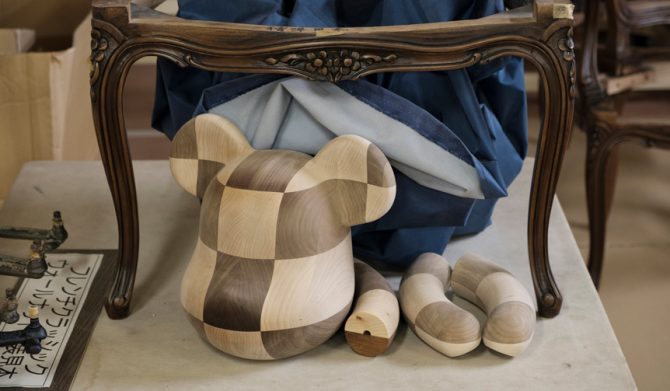
IkedaAlso, for the "Chess" and "Brick" models, we carve them from a block made by arranging and gluing small pieces of wood. The process of joining the wood itself was challenging. Naturally, the glued seams must not come apart, so we started by carefully selecting the adhesive. We even added a slight brown tint to the white adhesive so it wouldn't be noticeable when dry. Furthermore, each part required different processing, and we had to ensure the patterns aligned as much as possible when assembled. These models were truly a headache for the artisans who had to ensure material precision and find clever ways to bond the pieces.
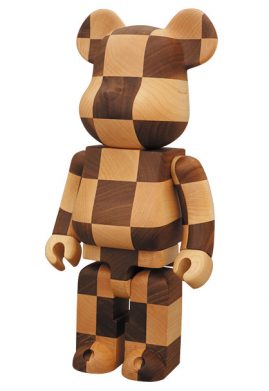
BE@RBRICK 400% Karimoku Chess
Released June 2010
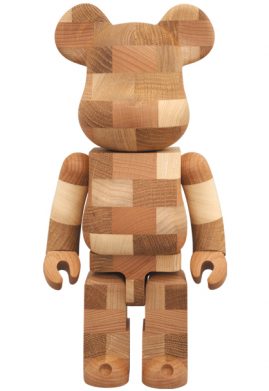
BE@RBRICK Karimoku BRICK-STYLE TILES 400%
Released June 2014
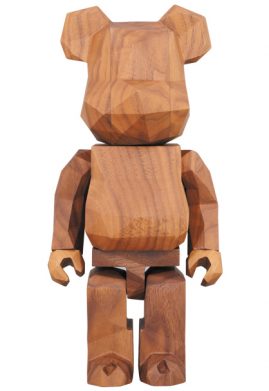
BE@RBRICK Karimoku
fragmentdesign 400%
Released July 2017
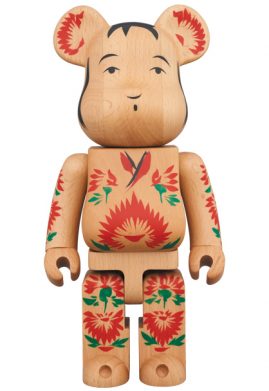
BE@RBRICK Karimoku
KOKEBRIQ 400%
Released December 2018
—What about the fragmentdesign polygon model?
IkedaThe polygon model is exceptionally difficult. Until now, we could rely on our sense of touch, but for this model, we had to create custom jigs and polish each face meticulously to ensure alignment. It requires incomparably more effort than a regular BE@RBRICK.
When I go to explain these kinds of projects, I start feeling apprehensive halfway there. When I say, "This is what we'd like to ask you to do this time," they look at it and immediately go, "Huh...?" (laughs). It takes weeks of explanation and discussion. To accomplish this, a regular team wouldn't suffice, so we formed a specialized project team with members dedicated to 3D data, jigs, and painting.
—Were there any projects that took a long time from conception to release?
IkedaThe "KOKEBRIQ," released at the end of last year, actually has a very long development history. Medicom Toy approached us with the idea in 2008, and it was finally realized in 2018.
—So, it was a project that spanned over a decade?
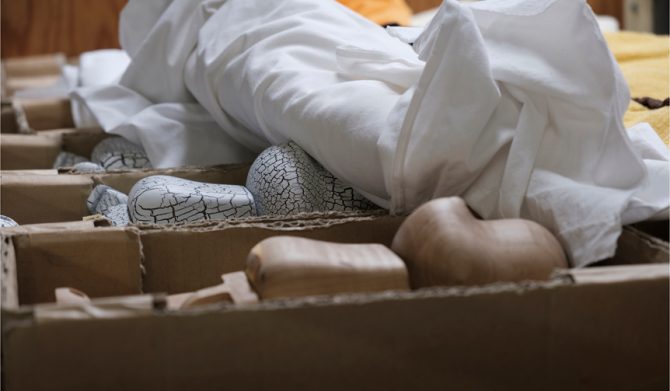
IkedaOriginally, "KOKEBRIQ" was a plastic product
sold by Medicom Toy, which depicted Kokeshi doll paintings using printing. Then came the request, "Can we make this out of wood?" We tried experimenting with applying decal sheets once. However, the sheets inevitably wrinkled on the curved surfaces, making it look unappealing. We concluded that it would have to be hand-painted, and that's when my long journey of searching for Kokeshi artisans began.
—Did you personally search for Kokeshi artisans?
IkedaYes. I called the Kokeshi Association and asked, "Could you please make a Kokeshi doll with hands and feet that looks like a bear?" They refused with the perfectly reasonable explanation, "A bear is not a Kokeshi doll" (laughs).
A long time passed, and then a mutual acquaintance introduced me to someone who might be willing to take on the challenge. That person was Takatoshi Hayashi, a Kokeshi artist living in Ishinomaki City. I contacted him immediately and explained the concept. It turned out Hayashi-san subscribed to "Figure King" magazine every month and had a good understanding of figures. He said, "Ah, BE@RBRICK? Let's do it."
—It was through "KOKEBRIQ" that I first learned about "Ishinomaki Kokeshi."
IkedaThere wasn't originally a Kokeshi tradition in Ishinomaki. However, around the time of the Great East Japan Earthquake recovery, he decided to start making Kokeshi dolls as a way to give back to the local community.
The main reason we insisted on working with a Kokeshi artisan was the meticulous brushwork. With Kokeshi dolls, the brush is applied to a rotating body, allowing for straight lines to be drawn in one rotation. However, BE@RBRICK is not a rotating shape, so straight lines cannot be drawn. Therefore, we asked, "Instead of lines, could you draw original patterns?" And so, he added the patterns.
We also suggested adding his handwritten name, "Ishinomaki Hayashi," on the back of the right leg. He was very pleased with that. KOKEBRIQ has received high praise from various perspectives. Although it took 10 years to commercialize, I'm truly glad that everyone involved ended up happy.
—Looking back, Karimoku's BE@RBRICKs come in a truly diverse range of models.
IkedaInitially, we released about one model per year, but in recent years, the variety has increased. In fiscal year 2018, we released 12 models, which is almost one per month. To accommodate this, we coordinate production across our group companies. We don't just receive requests from Medicom Toy like, "Can you do this?" but we also proactively propose ideas like, "We can do this." For example, we might say, "We have this rare wood species," and after creating prototypes, a model might be decided. I believe Karimoku handles the widest variety of wood materials in Japan. We also partner with other companies, which allows us to stably source wood from around the world, making it easier to introduce new ideas to Medicom Toy.
—I believe your technical expertise at Karimoku allows you to meet even the most challenging requests.
IkedaWhen asked, "Can Karimoku do this?" I don't want to say no. It's a matter of craftsmanship. Even if it takes time, Karimoku's stance is that nothing is impossible in woodworking. Our former factory manager once told me, "In work, there's basically no 'no.' If something can be done, even if it takes time, tackle it positively. Operate with the policy that nothing is physically impossible." I also adhere to the principle of not saying no, but I only begin a project after carefully considering whether it will contribute to raising the overall level of Karimoku's manufacturing.
—I imagine there are more surprising creations in the pipeline?
IkedaWe've received many requests that seem quite challenging (laughs). But thankfully, tackling difficult requests significantly improves the artisans' skill level. They are becoming more proactive, saying things like, "This isn't working, this way is better."
—It seems both the artisans' engagement and their skill level will increase.
IkedaTheir mindset has greatly improved. Artisans who had only focused on furniture making have come to realize the significance of BE@RBRICK, and they feel a sense of pride when they see the customers who buy them. After all, BE@RBRICK has an incredible fanbase worldwide.
Hearing reports that items sold out in seconds online makes me feel like we're involved in something amazing. Through BE@RBRICK, I hope people will discover Karimoku and also feel our passion for woodworking.
—Since they are crafted with such care by artisans, I'm sure buyers will cherish them for a long time.
IkedaWhen I look at Instagram and other platforms, I see people who collect many of them, and it's truly impressive. Regarding maintenance, wood can be repaired. For example, if someone accidentally drops it and causes a dent, we first strip the paint, then apply water to swell the wood. Once it swells to the maximum extent, we smooth the entire surface again and reapply the finish. It can be restored to a level that most people wouldn't even notice. Even if a special coating is used and the original paint is no longer available, we can still repair it using a similar method.
For instance, the indigo dye used in "Indigo" changes color over time due to oxidation. Recently, a customer inquired about it. Since the original paint is no longer available, we offered to touch up the color to match the current shade. If you require repairs and are facing difficulties, please contact Medicom Toy, and we can provide paid repair services (※ services may be limited depending on the extent and nature of the damage).
—We look forward to future developments. Lastly, could you tell us what you would like to do in future collaborations with Medicom Toy?
IkedaI want to create things that make people think, "Wow, they really went for it!" I consider BE@RBRICK to be art, and I believe those who want it will desperately want it. Art has no goal or correct answer; its limitless nature allows us to pursue woodworking to its fullest with new perspectives and ideas. Furthermore, given the many people who highly appreciate our past collaborations, not only at Medicom Toy but worldwide, I want to challenge ourselves with something even more special that exceeds everyone's expectations.
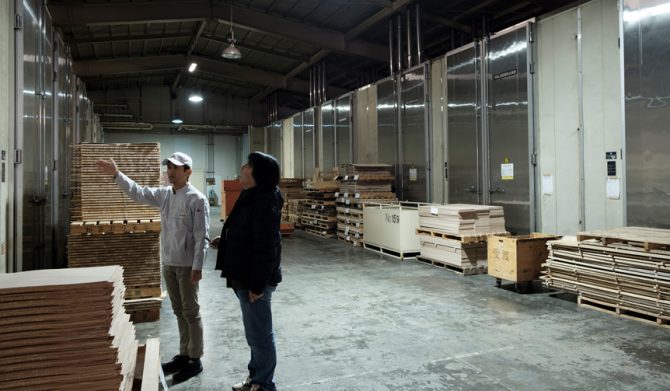
"Karimoku, you surprised us!"
Medicom Toy also expresses a desire to do new things, and I believe there are many possibilities that we can realize with our skills and ingenuity. I truly hope you will look forward to our challenges.
BE@RBRICK TM & © 2001-2019
MEDICOM TOY CORPORATION. All rights reserved.
Contact
MEDICOM TOY PLUS
Tel. 03-3479-5555