Merging Machine and Hand Craftsmanship: The Keyword is "High-Tech & High-Touch" | MEDICOM TOY
MEDICOM TOY | Medicom Toy
Karimoku x BE@RBRICK Report: Part 2 (1)
OPENERS visited Karimoku Furniture Inc. in Higashiura-cho, Chita-gun, Aichi Prefecture, to tour the factory where the "Karimoku BE@RBRICK" was born from the collaboration between Medicom Toy and Karimoku. This time, we finally get to see the manufacturing process. Here, from the raw wood stage, various processes are carried out by skilled artisans, followed by painting, assembly, and packaging. The model being produced on this day was the latest in the BE@RBRICK x Karimoku Rare Wood Series, "BE@RBRICK Karimoku OVANGKOL 400%," scheduled for release in April 2019. How exactly is it brought to life as a BE@RBRICK?
Photographs by Kaku OhtakiText by Kunihiko Shinno
We continue our tour with Reiwa Ikeda from the Marketing Center, New Business Department at Karimoku Furniture Inc. We were first taken to the process of shaping the torso and legs. The keyword for the production line, which merges machine work and human craftsmanship, is "High-Tech & High-Touch."
※ ※ ※ ※ ※ ※ ※ ※
Ikeda:Please, let us show you the actual production process. Our facility is equipped with machines for processing various wooden furniture parts, and we divide the process to work most efficiently according to the shape of each BE@RBRICK part. The work process is the same as furniture making, but smaller items are more difficult to finish.
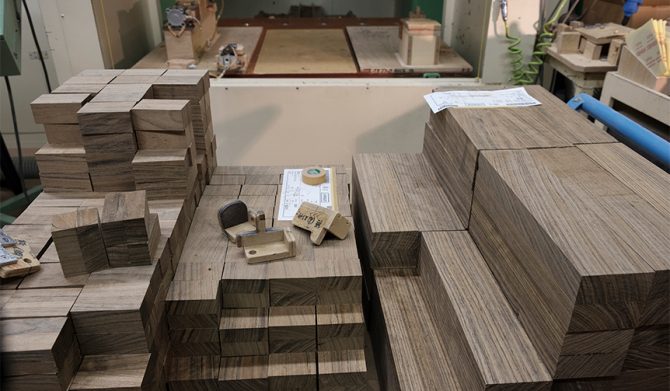
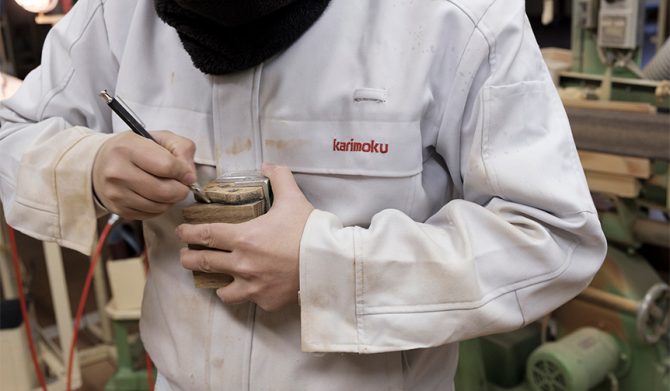
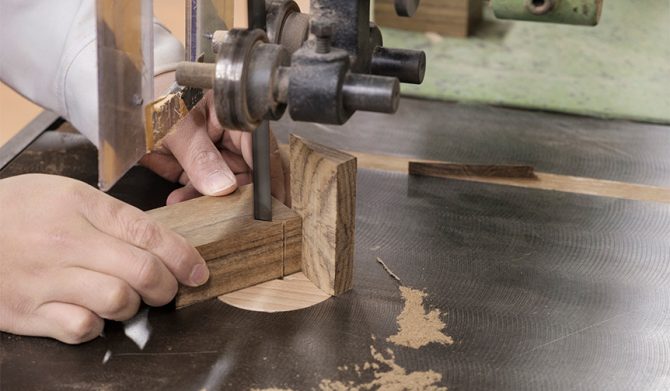
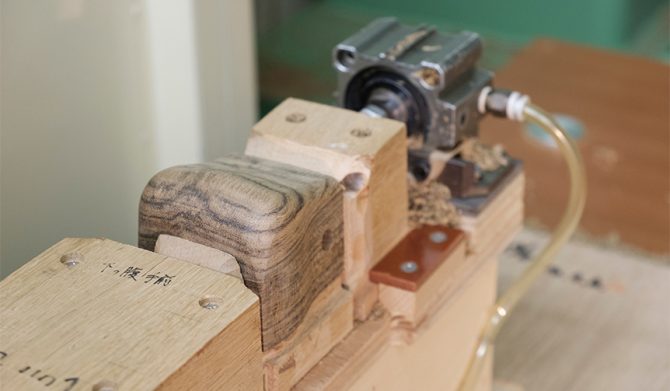
This is where the torso and leg parts are processed. First, we use machines to create the rough shape. The work of specifying how to cut the material is called "scribing," but in the preceding step, we rough-cut and remove excess parts before feeding them into the machine.
For the waist and leg parts, we use wood from the same area as much as possible to align the grain.
What's crucial in this process is deciding which wood grain will appear on the front and back surfaces. It is up to the discretion of the artisan in charge of this step to determine which grain looks more beautiful, so it requires a great deal of sensibility. This is the first branching point that determines the artistic value of the BE@RBRICK.
※ ※ ※ ※ ※ ※ ※ ※
If, at the time of processing, knots appear or holes are present, and the piece does not meet internal standards, it is not moved to the next step but is exchanged for stock lumber. The ability to make instantaneous judgments based solely on visible information is a testament to the artisan's experience.
※ ※ ※ ※ ※ ※ ※ ※
Ikeda:When the artisan presses the start button, the machine begins to shape the parts with its blades. Even for parts that require a lot of cutting, they are temporarily secured with wood screws, so they won't fly off even when the blades apply pressure.
The holes from the screws are in areas that will be hidden once assembled. Our philosophy is to employ any necessary ingenuity to enhance the quality of the product.
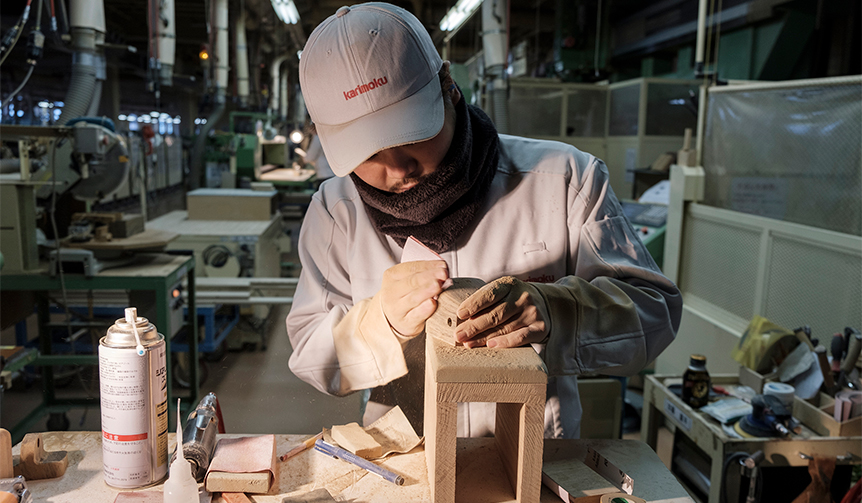
When the parts come out of the processing machine, they still have sharp edges. Smoothing these edges uniformly with sandpaper or creating the "r" (rounded, arc-shaped edges) as instructed by Medicom Toy is all done by the artisan's hand.
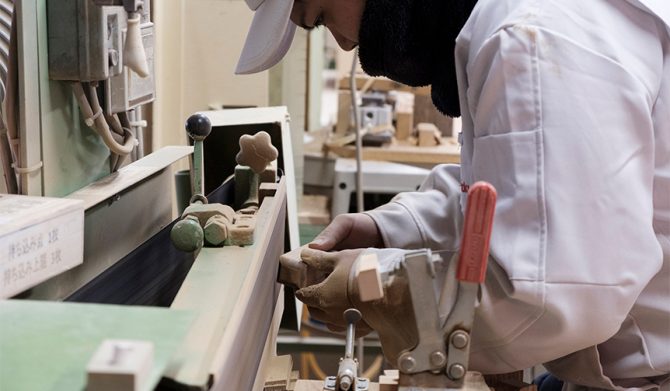
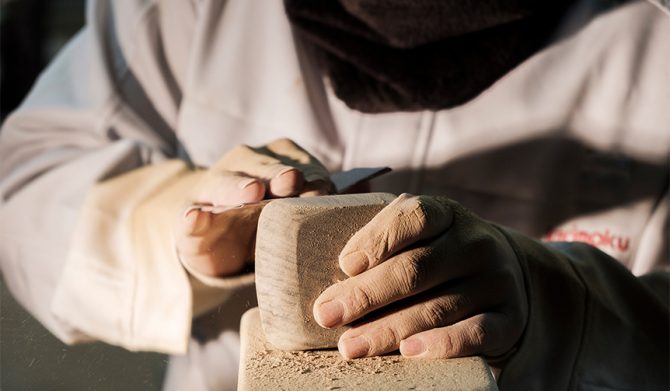
We call the optimal hybrid of machine and human labor "High-Tech & High-Touch."
This is a term we use when making furniture, and we apply it directly to making BE@RBRICK. We leave the precise dimensioning to the machines, but for other aspects—like the finishing of curves for the BE@RBRICK's face, hands, and feet—it is human eyes and hands that achieve a flawless and beautiful result.
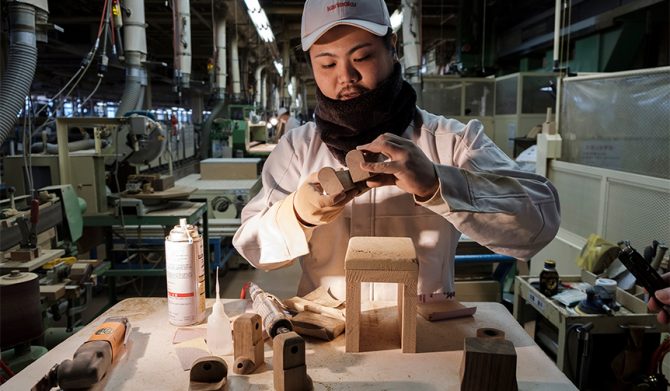
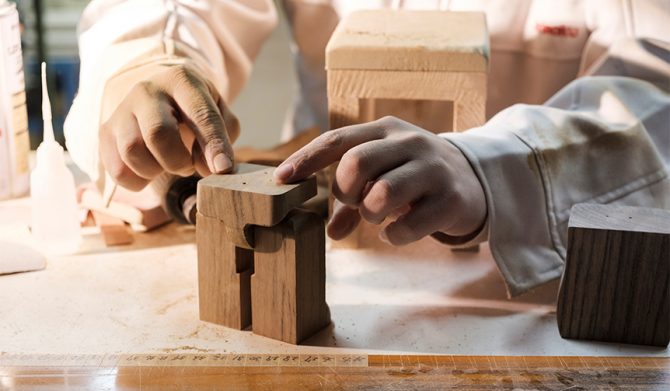
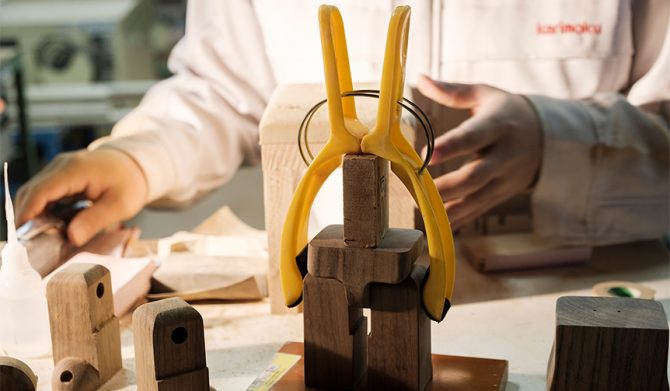
Furthermore, if the parts are combined directly as they come out of the machine, the height of the left and right legs will inevitably be slightly uneven when the BE@RBRICK is stood up. This is called "wobble." Eliminating this wobble is also part of his job. If this is not done before the painting process, it becomes irreparable, so a high degree of precision is required at this stage.
On the waist and leg parts, there are numbers on the areas that will not be visible to the customer. Since these are connected to subsequent processes, if there is no wobble here, there will be no wobble in the final product.
Artisans use various tools they devise themselves, called "jigs," to shape each BE@RBRICK part, check balance, and
perform checks.
When an operator expresses dissatisfaction or suggests a more efficient method, the person in charge of developing new jigs makes improvements. In this way, the process is continuously refined.
※ ※ ※ ※ ※ ※ ※ ※
According to the artisans, only about 15 units can be finished per day. This illustrates the meticulous care taken in their creation. After one process is completed, they move on to the next task. The layout, arranged for the most efficient workflow, also reflects the artisans' individuality.
Page02.We Do Not Release Anything That Doesn't Meet Furniture Quality Standards
MEDICOM TOY | Medicom Toy
Karimoku x BE@RBRICK Report: Part 2 (2)
We Do Not Release Anything That Doesn't Meet Furniture Quality Standards
Next, we moved to the area where the head parts are processed. Here, a large machine, different from the one used previously, awaited us.
※ ※ ※ ※ ※ ※ ※ ※
Ikeda:The head is particularly difficult to process because it is a 3D curved surface with no flat planes.
First, we perform "rough cutting" to shape the wood close to the head, and then feed it into the machine. This is a carving machine, which can create three-dimensional objects by rotating the gripped wood against a blade from various angles. Similar to contour lines on a mountain, we gradually shave it down to form the shape.
An interesting feature of this machine is that if you set, for example, a cola bottle in the foremost of the four grips and trace its edge, all the others will move in sync. This means that four
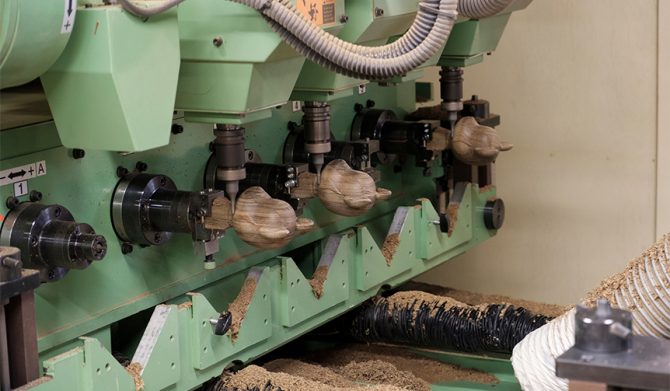
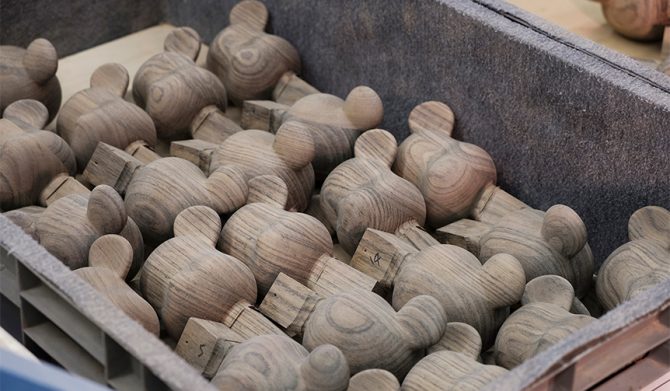
pieces can be carved into the exact same shape simultaneously. Since we have already programmed the data, we can process four BE@RBRICK heads at once just by outputting.
This machine was originally introduced to process the complex leg designs for dining chairs, but we discovered that by leaving the neck area intact and gripping it, we could mass-produce multiple heads simultaneously.
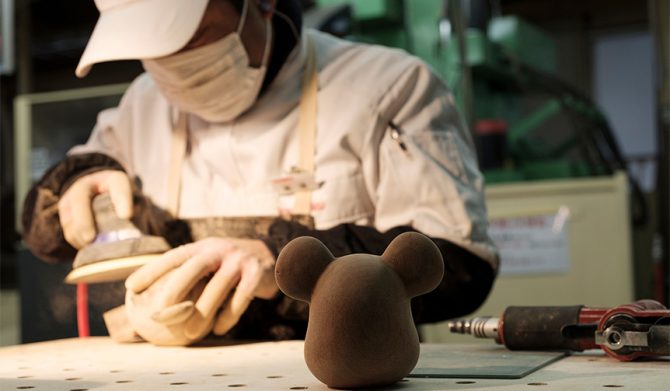
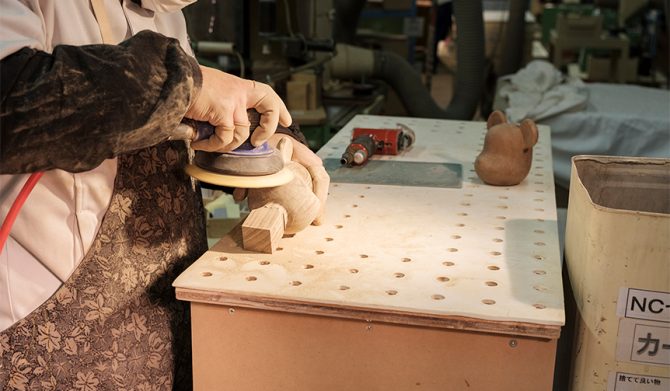
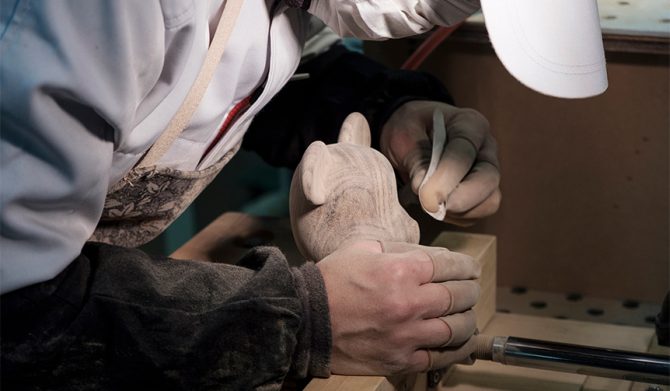
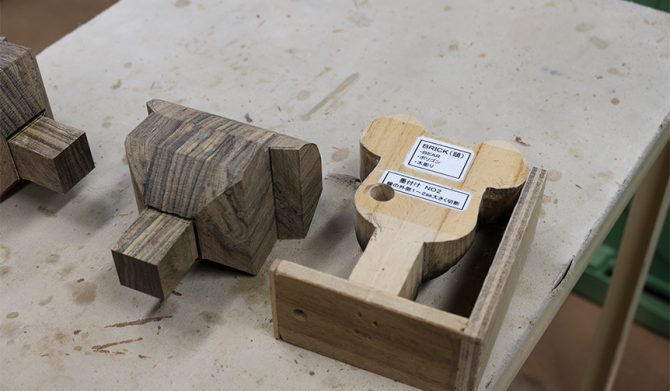
You might be surprised, but during the manufacturing stage, the BE@RBRICK has a neck. Essentially, we leave a part for the machine to grip, and then remove it at the end to connect it to the body.
The material coming out of the machine still has a rim, but this is also entirely removed by tracing it by hand. From here on, it is all about human craftsmanship, focusing on how to create the most beautiful curves.
Please try touching the cheeks. The parts straight from the machine are rough, but when an artisan adjusts them, they become smooth. We bring it close to the desired state with high-tech, and
then achieve this level of finish with high-touch. This is the quality Karimoku always strives for.
※ ※ ※ ※ ※ ※ ※ ※
According to the artisan in charge, although there are slight differences depending on the wood species, it takes about 30 minutes of continuous polishing per piece from the state it comes out of the machine to achieve the quality required for a product. I understood when he mentioned that softer woods are more prone to losing their shape, making harder woods easier to work with. The most nerve-wracking part is the "nose." We are told to pay special attention to the nose, so it is finished with extra care to prevent its shape from being compromised. Once the parts are complete, they move on to the painting process. The wood grain's texture is preserved, and the finish meets furniture quality standards.
※ ※ ※ ※ ※ ※ ※ ※
Ikeda:The painting process and parts assembly are consolidated here. First, the Karimoku logo is applied to the inside of the left leg before painting. In the past, we used branding irons, but since we introduced laser machines at the end of 2016, we now use lasers for engraving.
Many BE@RBRICK models are not colored to allow enjoyment of the wood's natural texture, but we apply a transparent urethane coating, similar to furniture, as a protective layer. While Karimoku uses approximately nine steps for furniture finishing, BE@RBRICK undergoes five to six of these crucial steps, meaning the quality and process are almost identical to furniture, excluding the coloring.
Under normal living conditions, spills will not leave stains.
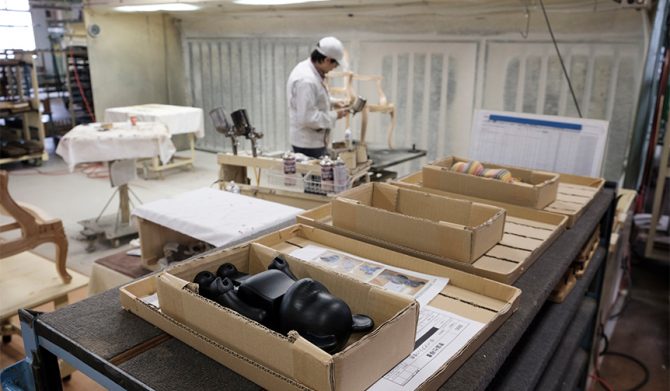
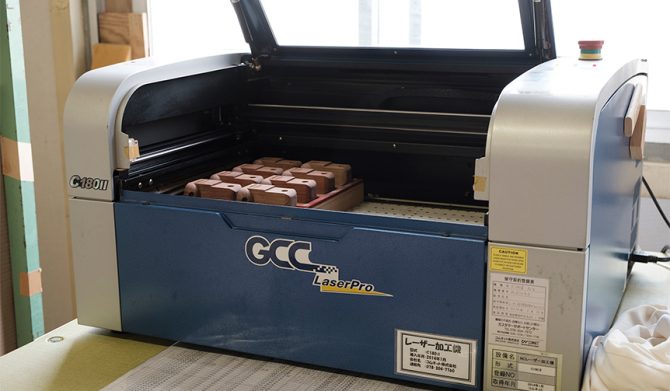
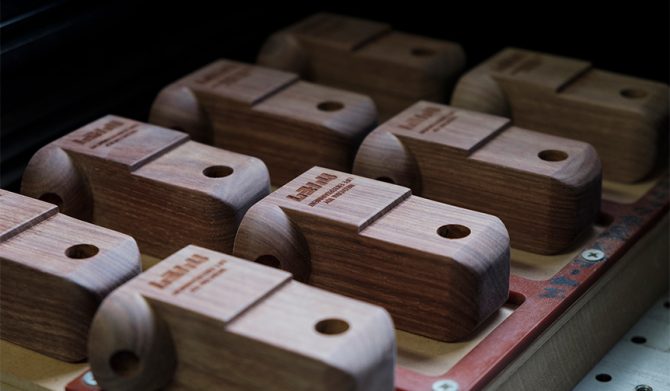
The protective coating also makes it less likely to crack due to moisture absorption. Some might say this level of finishing is unnecessary, but Karimoku has decided not to release anything that doesn't meet the same quality standards as our furniture, and we strictly adhere to this principle.
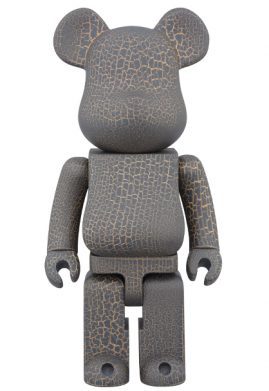
Some models feature special finishes. For example, there's one with indigo dye, similar to that used for jeans. We also have a unique finish called crack paint, which creates a cracked appearance on the surface.
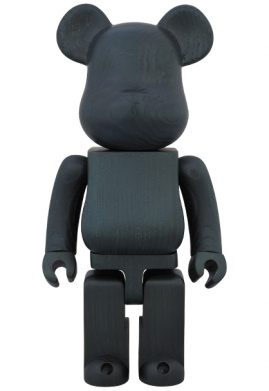
BE@RBRICK Karimoku
INDIGO PAINT 400%
Released September 2014
BE@RBRICK Karimoku
CRACK PAINT 400%
Released September 2016
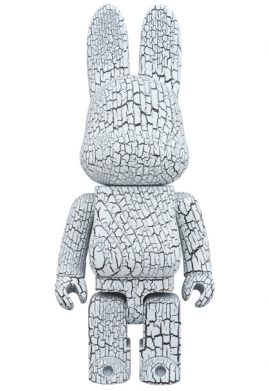
R@BBRICK
Karimoku Birch-like Paint 400%
Released September 2018
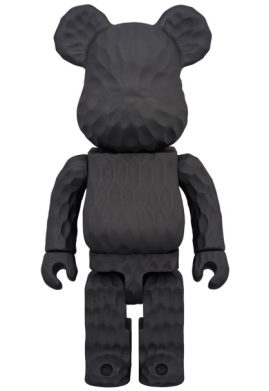
BE@RBRICK Karimoku
fragmentdesign 400% carved wooden
Released July 2017
For the crack paint, we first apply a base color, and then coat it with a paint that shrinks as it dries, creating the cracks.
The way the cracks form varies depending on humidity, temperature, and paint quantity, inevitably leading to individual differences. However, to ensure uniformity when assembled, we match larger cracks with larger cracks and smaller cracks with smaller cracks.
We also created a birch-like paint model, an arrangement of the crack paint.
Medicom Toy initially proposed making it from birch wood. However, since birch is not a wood species we typically handle, we suggested, "We can probably achieve a birch-like finish," and they agreed. For the fragmentdesign model, the request was for a color resembling the deep black ink of a carved wooden bear, so we conducted numerous experiments until we achieved a satisfactory color.
For colors not used in standard furniture, we create them from scratch by adjusting the paint mixture and concentration. We paint test swatches, discuss "How about this color?" or "Does it need more depth?" and repeat color development tests until the final paint specifications are determined.
※ ※ ※ ※ ※ ※ ※ ※
Once the product is complete, it undergoes inspection before moving to the packaging process. To ensure that BE@RBRICKs of furniture-grade quality are safely delivered to customers, the latest technology has been employed here as well.
※ ※ ※ ※ ※ ※ ※ ※
Ikeda:Until two years ago, we used blister packs made of plastic. However, if the product was dropped during transport, it could break. Currently, we secure the individual units by sandwiching them between a special film that cannot be pierced even by a ballpoint pen. Since we started using this film, transport accidents have almost entirely disappeared.
※ ※ ※ ※ ※ ※ ※ ※
This concludes our factory tour. Finally, Mr. Ikeda explained the features of the "BE@RBRICK Karimoku OVANGKOL 400%," the new model in the Karimoku Rare Wood Series whose manufacturing process we observed. The Rare Wood Series is a limited edition featuring scarce wood types that are difficult to obtain. Understanding the origin and appeal of each wood species will undoubtedly deepen your affection for the BE@RBRICK.
※ ※ ※ ※ ※ ※ ※ ※
Ikeda:Ovankol is a hardwood from the legume family, native to West Africa. Its hardness and durability make it a rare wood used in high-end furniture. Its grain features beautiful, greenish-brown stripes, and besides furniture, it is also used as the side and back material for acoustic guitars. Therefore, those who enjoy guitars might be interested, thinking, "This is the same wood used in my guitar! And in such a solid piece!" We hope you will have the chance to hold and feel it.
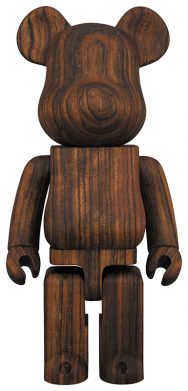
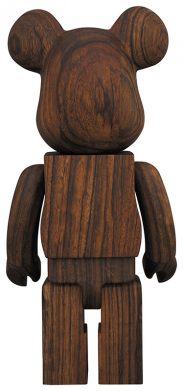
BE@RBRICK Karimoku OVANGKOL 400%
The latest hit in the BE@RBRICK x Karimoku Rare Wood Series is a model made from Ovankol, a rare wood used in luxury furniture and high-end guitars. Approximately 280mm in height. Limited quantity sale at MEDICOM TOY PLUS. Scheduled for release on Saturday, April 20, 2019. Price: ¥138,240 (tax included).
Manufacturer: Medicom Toy
Distributor: Medicom Toy
BE@RBRICK TM & © 2001-2019 MEDICOM TOY CORPORATION. All rights reserved.
Inquiries
MEDICOM TOY PLUS
Tel. 03-3479-5555