Applying the sensibility of Japanese painting to translate '80s motifs into graffiti | MEDICOM TOY
MEDICOM TOY | MEDICOM TOY
A Graphic Artist from Fukuoka
An Interview with KYNE (Part 1)
KYNE, a graphic artist based in Fukuoka, has garnered attention for his distinctive style of drawing women in monochrome and with simple lines. His works, influenced by 1980s culture, leave a strong impression after just one viewing. He commands overwhelming support from young people, and it's still fresh in our memory how items from Medicom Toy's textile brand "FABRICK" sold out in an instant last year. To commemorate the受注販売 (made-to-order sale) of the BE@RBRICK KYNE 400% / 1000%, we delved into his roots and asked him about the process behind the creation of his unique artwork.
Photographs by OHTAKI KakuText by SHINNO Kunihiko
In a city overflowing with text, motifs like those faces really stand out
—Did you enjoy drawing from a young age?
KYNEI did. I wasn't very good at sports, and while I liked listening to music, I wasn't suited for playing it. Drawing was what I enjoyed most, so I enrolled in a high school with a design department and began my specialized studies. It was a department that taught all aspects of art, like oil painting and ceramics. Since I liked drawing people, I focused on figure drawing.
—You studied Japanese painting at university, is that correct?
KYNEI realized that the expressive method of layering paint to create depth, like in oil painting, didn't suit me. In Japanese painting, you use special pigments called iwagumi (pigments made from crushed minerals) mixed with nikawa (animal glue) and apply them to Japanese paper. However, the color changes between when it's mixed with glue and when it dries, making it difficult to depict three-dimensionally. Therefore, traditional Japanese painting is characterized by flat, shadowless expressions. But as I looked at various works, such as those exhibited at the Nitten and Nika exhibitions, and the works of Ikuo Hirayama, I noticed the beauty of the lines.
—Did you start graffiti art around the same time?
KYNEI was interested in street culture alongside art from the beginning. I used to go to take photos of paintings under overpasses and look for graffiti photo books in stores that handled imported books. I actually started painting with spray cans around the age of 18. Initially, I drew letters and realistic portraits, but at some point, I began to wonder how I could express my own unique individuality.
Within that context, there's a culture in graffiti of pasting stickers and posters around the city.
—These are the monochrome stickers of women, which can be seen as the starting point of your current activities, KYNE.
KYNEIn a city that's always full of text, motifs like those faces really stand out. Moreover, I came to realize that flat images with strong contrast have more impact than three-dimensional ones. Until then, I had considered them completely separate things, but I consciously began to create works that incorporated graffiti-like designs with the sensibility of Japanese painting.
—Listening to you, and looking at your work again, I can indeed feel the influence of Japanese painting. At the same time, the women you draw are reminiscent of '80s idols.
KYNEI like '80s music. The idol record jackets from that era were often cropped into squares, so they had impactful compositions. And I really liked the fact that the backgrounds were often monochrome. The record covers of female jazz singers from the '70s and '80s, with their stylish and cool typography, are also great.
—You were born in '88, so what sparked your interest in '80s culture?
KYNEA significant moment was when my sister borrowed the pre-major debut mini-album "Boso Yotaro Rokurouro" by Kishidan when I was in junior high school. Sho Ayanokoji is very knowledgeable about '80s culture, and he pays homage to past works in his lyrics, titles, and even the composition of his jacket photos. Knowing the original sources makes it even more interesting. Through Kishidan, I delved into punk, Showa-era pop music, manga, movies... I absorbed a lot. Back then, the internet wasn't as readily available for research as it is now, so I used to go to used CD stores and secondhand bookstores, thinking, 'Maybe this song title comes from this?' and searching that way.
—There are many illustrators influenced by '80s culture, but your strong background in both Japanese painting and graffiti art is a significant asset. When did you feel you had established your own style?
KYNEHmm... I'm always thinking about how I can express myself more, so I don't feel I've fully established it yet. When people say, 'It looks like X's work,' I feel like, 'Oh, that's how it appears.' Among the artists you mention, there are many I love and respect, but rather than having gone through them, it feels like my output has become similar as a result of absorbing from various sources.
—Your range of activities has expanded to include collaborations with companies, magazine covers, and CD artwork. Personally, the jacket for 5lack's "Feelin29 feat. Kojoe" left a strong impression.
KYNEI've known 5lack since before I started drawing. I used to make music with a Fukuoka-based track maker named Olive Oil, and he would often visit Fukuoka. We'd run into each other in town...
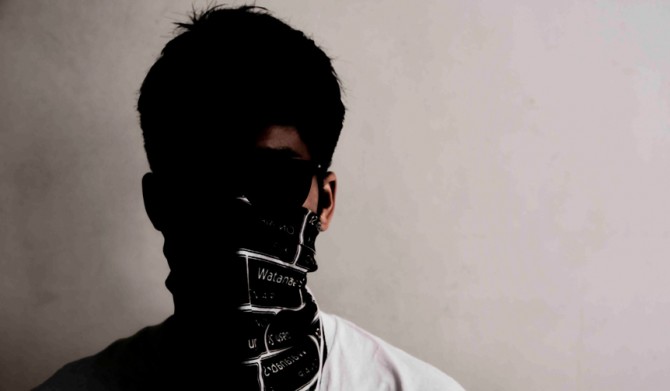
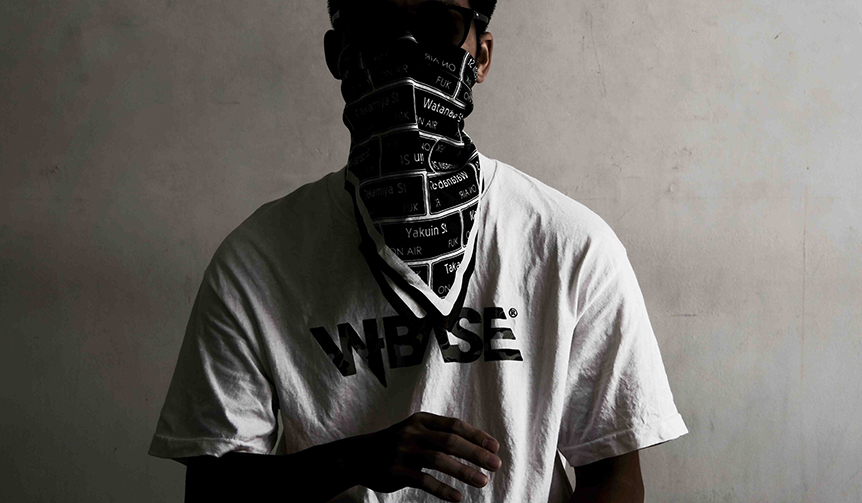
KYNE
Kine. Born in 1988. From Fukuoka Prefecture. Began his career as a graffiti artist based in Fukuoka around 2006. Influenced by the manga and record jackets of the 1980s, the era in which he was born and raised, he has garnered attention for his unique style that crosses over street and idol culture. He also creates collaborative works with apparel brands and illustrations for CD jackets.
http://kyne.jp/
...and while we kept running into each other, he said, 'I'm releasing a song soon, and I'd like you to do the jacket.'
—5lack is currently based in Fukuoka, right? And last year, you also opened "ON AIR," a studio and gallery space, in collaboration with illustrator NONCHELEEE. Fukuoka seems to be a place where various cultures intersect and are broadcast nationwide.
KYNEThat's right. Fukuoka is small, so it feels like Harajuku has Shibuya and Shinjuku all packed into it.
Page02.I want to keep making my work larger and larger
MEDICOM TOY | MEDICOM TOY
A Graphic Artist from Fukuoka
An Interview with KYNE (Part 2)
I want to keep making my work larger and larger
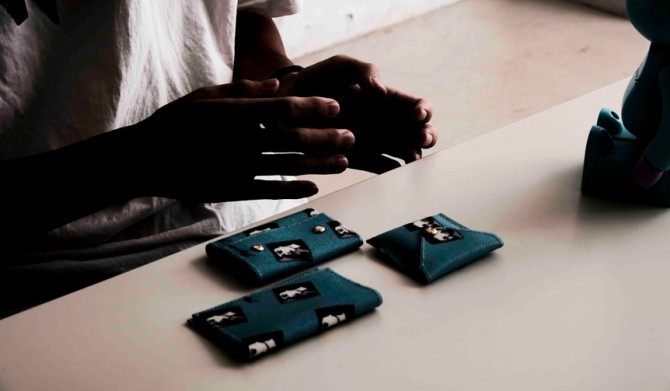
—Last year, Medicom Toy's textile brand, FABRICK, released a variety of items, including original bags and caps by KYNE.
KYNEBy chance, through a mutual acquaintance, I was connected with a staff member from Medicom Toy. They saw my work and said, 'Wouldn't it be interesting to release it through FABRICK?' and contacted the person in charge on the spot.
—Were you familiar with Medicom Toy before that?
KYNEOf course. The first one I bought was a Jerry Brlly BE@RBRICK, which was sold at convenience stores when I was in junior high school. Around the same time, there was a campaign for 'Calpis Water' that included small BE@RBRICKs (Original Natsukoi BE@RBRICK with Calpis Water), and I remember collecting those with my friends. Later, I would look at photos of KAWS figures and STASH's KUBRICK in fashion magazines and think how cool they were.
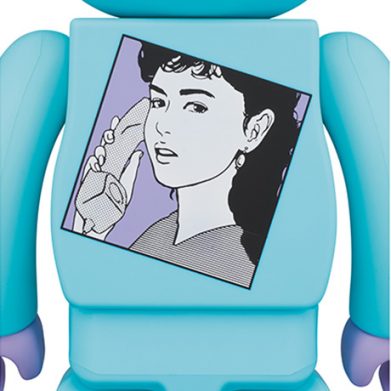
—Your FABRICK series uses artwork of a woman on the phone. What's the background behind this piece?
KYNEI occasionally do DJ events featuring Japanese music in Fukuoka, and I originally drew that for promotional purposes. In '80s commercials for companies like Shiseido, there were surprisingly many scenes of women making phone calls. I suspect holding a receiver was a way to evoke the idea of the person on the other end. I'm quite fond of that piece myself, so for 'FABRICK,' I used a slightly modified version.
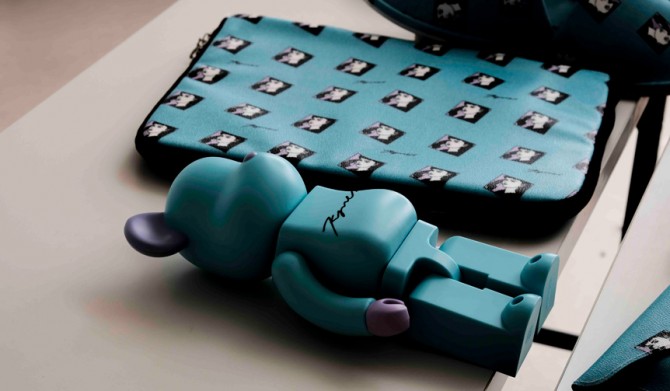
—The BE@RBRICKs being released by Medicom Toy this time are the 400% Ver. and 1000% Ver. of the model that generated buzz as a secret in the BE@RBRICK SERIES 35 released last December. Your artwork is printed on them as if it were a sticker on the back.
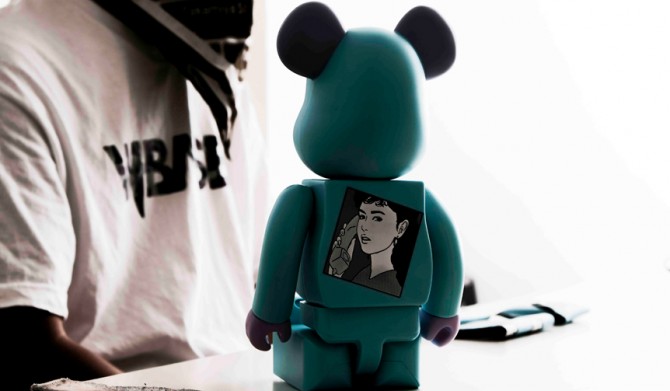
KYNEI wasn't sure myself how to best express my art on this body. After much trial and error, it ended up like this, following the direction from FABRICK.
I also used colors like purple and mint, which I often use as intermediate tones when I create things, for the body color. That's why I chose this color scheme.
—Is this use of pastel-like colors related to...
...your background in Japanese painting?
KYNEOn the contrary, even though I'd like to use colors like these in Japanese painting, it's often difficult. The price of iwagumi pigments varies greatly; natural blues and greens are very expensive. For a work by Ikuo Hirayama that is a brilliant blue, the pigments alone must have cost an enormous amount. For that reason, many Japanese paintings by young students tend to be brownish – because they're cheaper (laughs). Perhaps I've used these colors abundantly in FABRICK and BE@RBRICK precisely because I couldn't use them as much in Japanese painting.
—Like the FABRICK items that sold out instantly, many people will likely apply for these BE@RBRICKs as well.
KYNEI would be happy if that were the case.
—What kind of people are your fans?
KYNEMany are in their 20s to early 30s, and also quite a few in their late 30s. This is because actor Jun Murakami was one of the first to introduce my work in various places. So, the generation that likes Murakami-san started to become interested.
—How did you first meet Jun Murakami?
KYNEMurakami-san used to come to Fukuoka every six months for his DJ work, and he apparently became interested after seeing my stickers pasted around town. They were also on a skateboard belonging to a staff member at the club where he was performing, so he asked, 'I've been curious about this for a while, who draws these pictures? I'd love to be introduced.'
At that time, I was still purely enjoying pasting stickers around the city, and I was a bit intimidated because he's famous, so I asked them to decline. But even after about a year, I heard through various people that he was still asking to meet me. Eventually, even my graffiti artist friends started mentioning it, so when I realized he was serious, I agreed to meet him. That was about five years ago.
—He really wanted to meet you, didn't he?
KYNEAt first, I was a bit apprehensive, but on the day we met, he immediately gave me a CD, saying, 'Please listen to this CD in your studio.' I thought he was a really cool person. He then came to my home and bought three of my paintings. He took photos of those paintings and introduced them in various places, and even suggested we collaborate on a T-shirt. Murakami-san was the one who opened the door for my activities in the mainstream art world.
—It must have been a very intense five years since then.
KYNEYes, it really has been.
—What do you hope to do in the future?
KYNESince we've established this connection, I'd like to do something else with Medicom Toy. I recently bought the VCD ANDRE SARAIVA MR. A BALL (released March 2018), and I can't create three-dimensional pieces like that on my own.
Also, I want to keep making my work larger and larger. Until now, even if I wanted to create large paintings, I couldn't really take the challenge without knowing if they would sell, but I finally have the situation where I can. Last year, I painted a 100-gou size (1620 x 1300mm) piece, so I want to try painting something even larger. It will probably take time, though.
—Finally, is there anyone you'd like to collaborate with?
KYNEIt would have to be Sho Ayanokoji of Kishidan, who was the reason I became interested in '80s culture. I want to work hard so that the day we can collaborate will come.
—We look forward to that day becoming a reality!
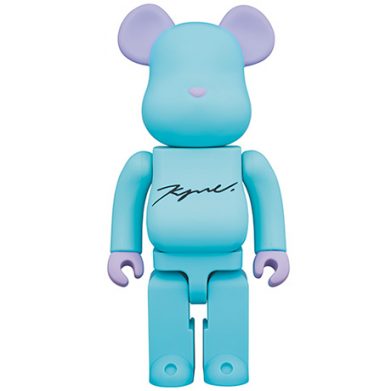
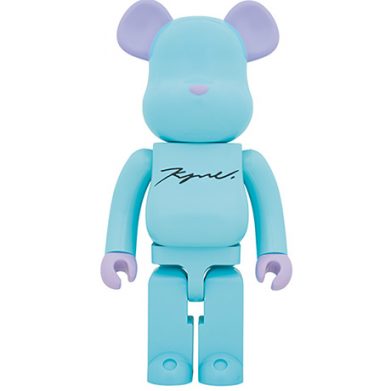
BE@RBRICK KYNE 400% / 1000%
Total height approx. 280mm (400%), 700mm (1000%). Orders accepted from October 24, 2018 (Wed) 00:00 to November 10, 2018 (Sat) 23:59 at Medicom Toy's directly managed stores, Medicom Toy's online stores, and other select retailers. 400% is ¥10,260 (tax included). 1000% is ¥39,960 (tax included). Scheduled for release and shipping in January 2019.
Photos are of a sample under supervision and may differ slightly from the final product.
BE@RBRICK TM & ©︎ 2001-2018 MEDICOM TOY CORPORATION. All rights reserved.
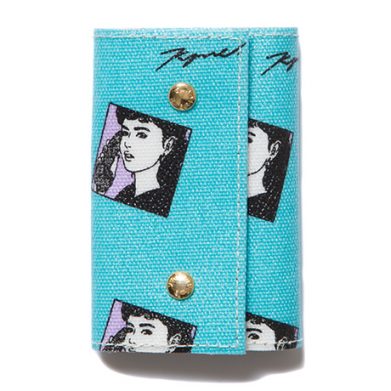
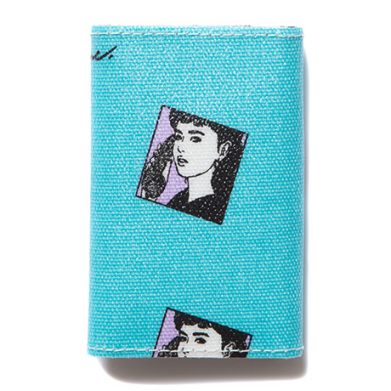
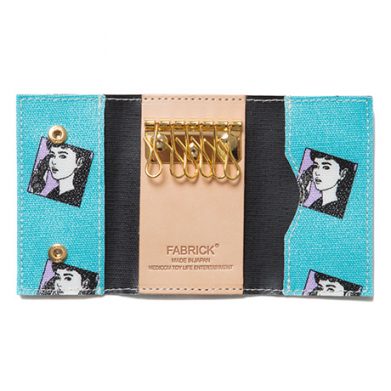
FABRICK [KYNE] KEY CASE
¥4,104 (tax included) / W130mm x H70mm
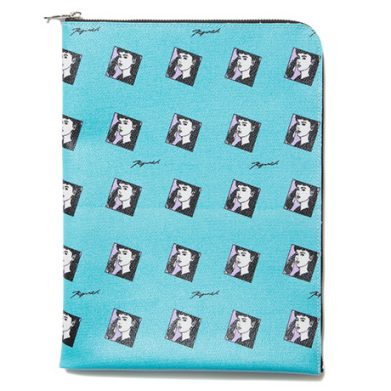
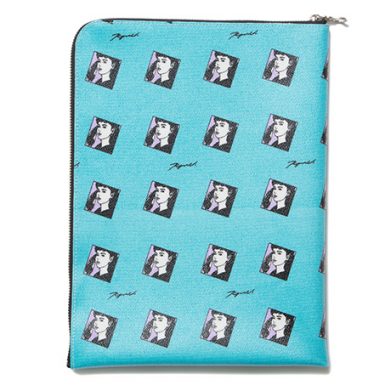
FABRICK [KYNE] DOCUMENT CASE A4
¥4,104 (tax included) / W230mm x H330mm
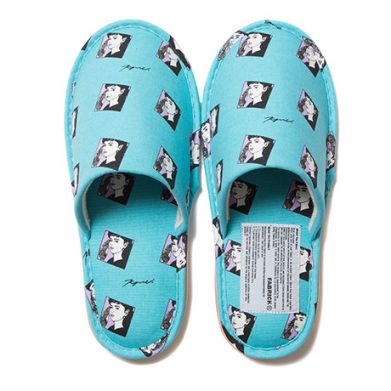
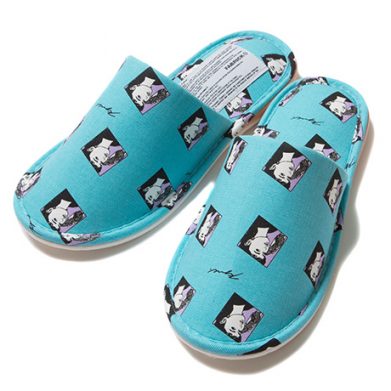
FABRICK [KYNE] SLIPPERS
¥4,104 (tax included) / 25.0–26.5cm
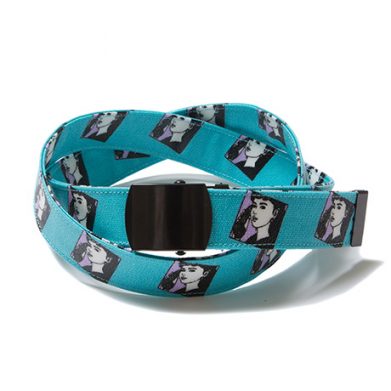
FABRICK [KYNE] BELT
¥4,104 (tax included) / W1100mm x H35mm
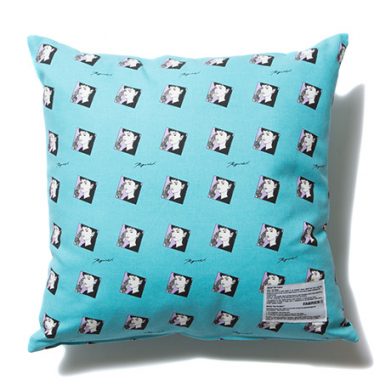
FABRICK [KYNE] SQUARE CUSHION COVER+PILLOW
¥6,264 (tax included) / W450mm x H450mm
Purchase method: Available now on the Medicom Toy online store (ZOZOTOWN)!
http://zozo.jp/shop/medicomtoy/
Please note that this is a limited quantity item, and sales will end once stock is depleted.
Medicom Toy User Support
Tel. 03-3460-7555 Hours: 11:00 AM - 6:00 PM (excluding Saturdays, Sundays, and holidays)