Medicom Toy Interview Series: Part 2 with Mikio Ariga | MEDICOM TOY
MEDICOM TOY
Medicom Toy Interview Series
Part 2: Photographer Mikio Ariga (1)
Photographs by Kaku OhtakiText by Kunihiko Shinnno
Celebrating the Success of "Amplifier": Re-evaluating '80s Japanese Rock Through Photo T-shirts
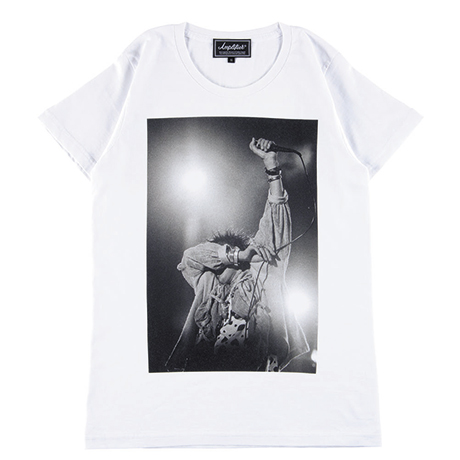
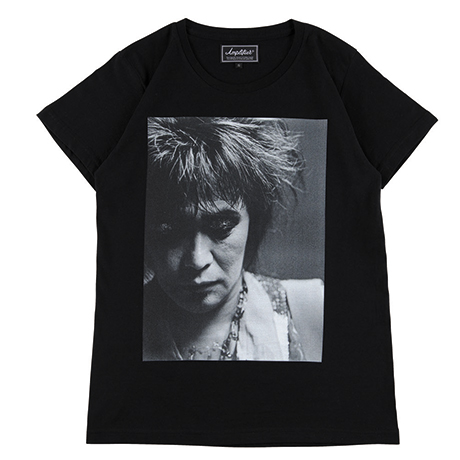
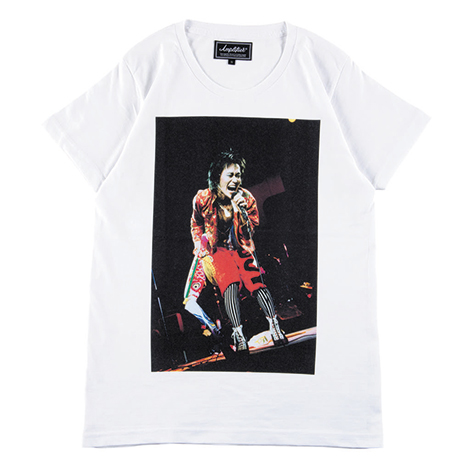
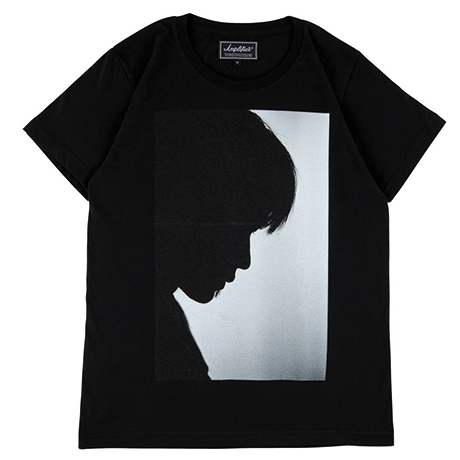
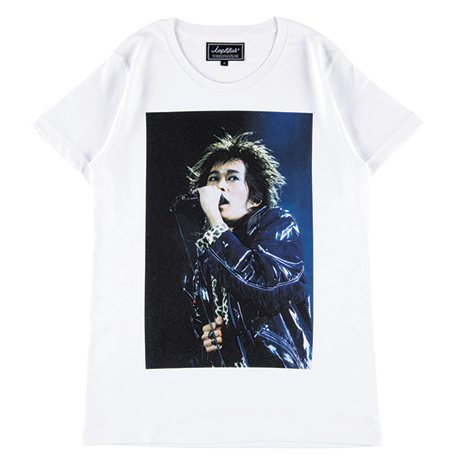
All "Amplifier" Vol. 1 Kiyoshiro Imawano © MIKIO ARIGA
—The first "Amplifier" release was a portrait T-shirt of Kiyoshiro Imawano, photographed by you. Could you start by sharing your memories of Kiyoshiro?
ArigaActually, my inspiration to become a photographer was Kiyoshiro. I always wanted to photograph RC Succession. So, when I was officially commissioned by the record label to shoot their stage at Hibiya Open-Air Concert Hall in '86 (for "4 SUMMER NITES" held on August 16-17 and 23-24, later released as the live album "the TEARS OF a CLOWN" in October), it felt like a dream come true.
After that, I was allowed to photograph the recording sessions for "COVERS" (released in '88). Since various guests like Tomokazu Miura and Shigeru Izumiya participated on different days, I was asked to shoot what I could.
—It must have been a precious experience to be so close to the production of "COVERS."
ArigaYes. While I could photograph live performances, being able to capture RC's recording sessions was a once-in-a-lifetime opportunity. I've cherished those photos as my own treasure.
When Kiyoshiro passed away in May 2009, I felt compelled to do something. I printed the photos I had taken and sent them to relevant parties. Then, something significant happened.
In mid-May, I received a request from Rockin'on, who were creating a tribute issue ("Kiyoshiro Imawano 1951-2009 ROCKIN’ON JAPAN Special Issue"), asking to use some of my past photographs.
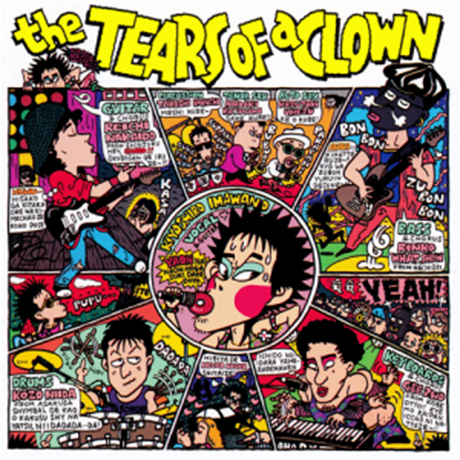
"the TEARS OF a CLOWN"
(Universal Music)
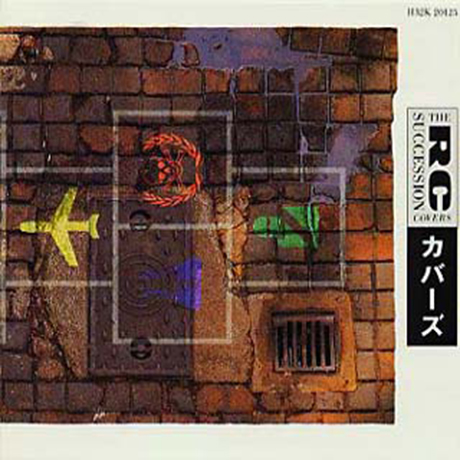
"COVERS"
(Universal Music)
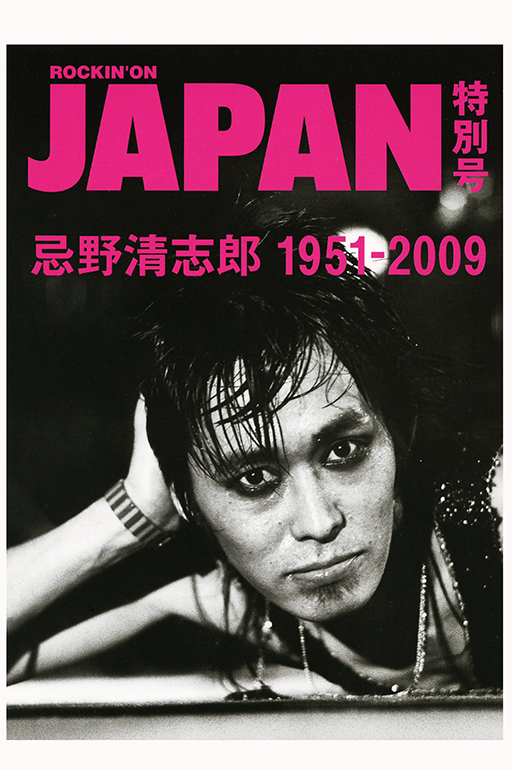
"Kiyoshiro Imawano 1951-2009
ROCKIN’ON JAPAN Special Issue"
(Rockin'on)
I then remembered I had one unused photo: a photo of Kiyoshiro with Mick Jagger taken in 1990 (※Top left of the linked page).It wasn't officially released, but I asked if they were interested. The editorial team was greatly surprised.
—This is a photo only you, as the sole official photographer for The Rolling Stones in Japan, could have captured.
ArigaHowever, publishing it required permission from both Kiyoshiro's and Mick's sides. Kiyoshiro's side readily agreed. When I emailed Mick's personal assistant at the time, I received a reply saying he would check with Mick himself and asked for some time. Given how strict The Stones are about rights, including photography, I thought this was a polite refusal. Also, the tribute issue was due out in early June, so it might not meet the deadline. But miraculously, two days later, I got an 'okay' reply, and I got goosebumps.
Although I've worked officially with The Stones, I rarely have occasion to contact them through irregular channels. It felt as if Kiyoshiro was pushing me forward. Like he was saying, "Hey, let's release that photo with Mick, shall we?"
—I had no idea there was such a behind-the-scenes story to the release of that precious two-shot photo.
ArigaSince something happened that even moved Mick Jagger, I felt I had to do something. I consulted my friend Jun Moriuchi, a writer (who was an external staff member handling Kiyoshiro's promotion), asking, "What do you think about holding a photo exhibition?" We held it nationwide for a year, starting in March 2010 ( "Kiyoshiro Imawano + Mikio Ariga Photo Exhibition NAUGHTY BOY KING OF ROCK'N ROLL"). At that time, we produced photo T-shirts exclusively for sale at the venue. Even long after the exhibition ended, we continuously received requests asking, "Can't we get them anymore?" That's when Medicom Toy's President Akashi and designer Rentaro Hirakawa were planning a line to re-evaluate '80s Japanese rock through photo T-shirts, and my own desire to re-release items from Kiyoshiro's photo exhibition, which concluded six years prior, converged.
Page 02.Pass it on
MEDICOM TOY
Medicom Toy Interview Series
Part 2: Photographer Mikio Ariga (2)
Pass it on
ArigaI first met President Akashi and Hirakawa through a mutual acquaintance, writer Jun Moriuchi, in June last year. Just a month later, samples were already ready. Medicom Toy had been in communication with Kiyoshiro's agency (BE@RBRICK Kiyoshiro Imawano/ZERRY was released in September '14), and by combining forces with me, who had built a relationship of trust through holding the photo exhibition for a year, things moved very quickly.
—What are your thoughts on the finished T-shirts?
ArigaWhen making photo T-shirts, I often find myself dissatisfied with the body of the shirt. I'm quite particular about that, so I was very vocal about it during our initial meetings. I think Hirakawa looked a bit troubled. But if I'm entrusting my photos, I have to assert my own standards, don't I?
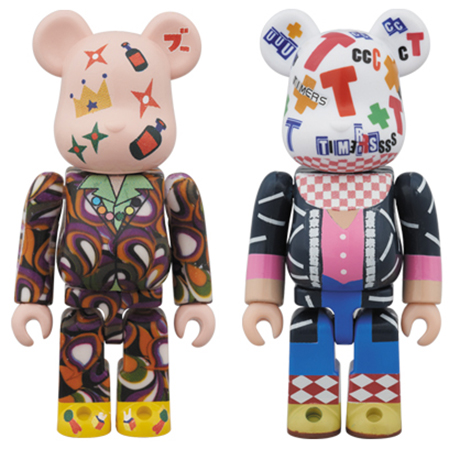
BE@RBRICK Kiyoshiro Imawano/ZERRY © Babys
BE@RBRICK TM & © 2001-2017 MEDICOM TOY CORPORATION. All rights reserved.
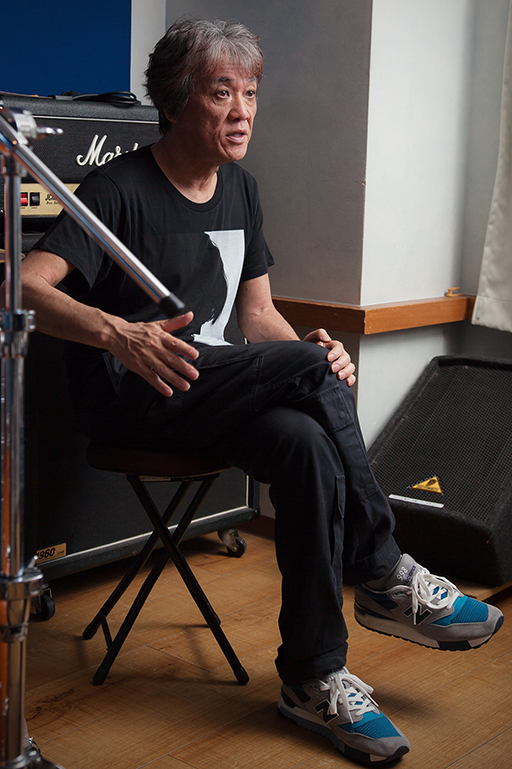
But the finished product exceeded my expectations. The length is just right, and the material and print quality are excellent. Cheaper prints tend to have a thick, layered ink application. I was impressed; they are true professionals. I have absolutely no complaints.
—Kiyoshiro's expression also comes through so vividly.
ArigaI believe in the power of photography. In Japan, the photographer's position can sometimes be weak compared to the artist's. However, overseas, photo T-shirts are considered works of art and have become a cultural staple. For instance, at a photo exhibition by Dennis Morris, who photographed the Sex Pistols, they sell photo T-shirts of Johnny Rotten from the Pistols era. I personally like photo T-shirts and buy them when I see them at exhibitions.
— On the "Amplifier" official websitewe can see young musicians wearing them.
ArigaHirakawa directs that aspect, and it truly makes me happy. There's a quote from Keith Richards: "Pass it on." His philosophy is that we inherit music from the previous generation of blues musicians and pass it on to the next. That's how music is passed down. It's exactly like that. I feel like I'm passing on something I photographed 30 years ago to the next generation. Having people wear them is the greatest reward, and if it leads them to listen to Kiyoshiro, that would be ideal.
—And the "Kiyoshiro Imawano Series 3 Photographers Select," released in September 2017, features prints selected by seven photographers themselves (Takayuki Abe, Mikio Ariga, Naoto Ohkawa, Hisako Okubo, Masayoshi Sukita, Yoshiaki Sugiyama, Taishi Hirokawa; listed in Japanese alphabetical order).
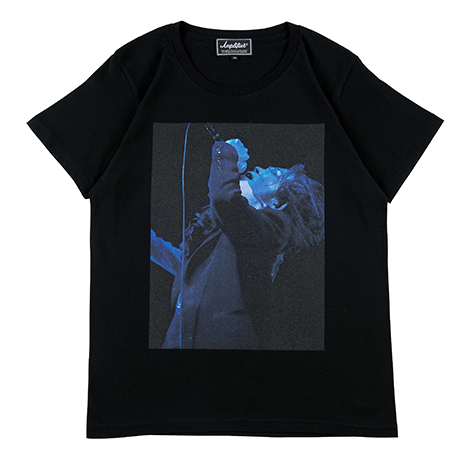
© TAKAYUKI ABE
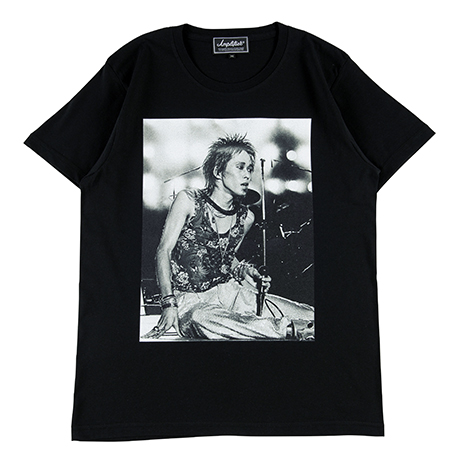
© MIKIO ARIGA
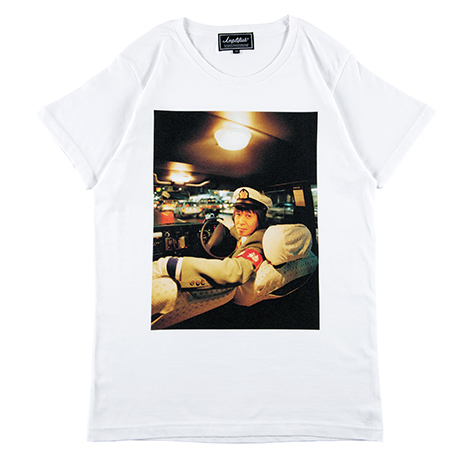
© NAOTO OHKAWA
ArigaIt's truly wonderful that Hisako Okubo participated this time. Her photograph of Kiyoshiro taking a Polaroid, which graced the cover of "THE RC SUCCESSION" ('83, Rockin'on).
That photo, along with the historical photos of The Stones and the photography book "Before & After" by Penny Smith of The Clash, inspired me to want to become a photographer of rock bands.
So, I almost want to withdraw my own photos. Like, "Is it okay for me to be here?" (laughs).
However, I believe that because the first volume I worked on was successful, Okubo-sensei felt comfortable agreeing. This is all thanks to Medicom Toy, a company with a great sense of playfulness and immense success.
—These are invaluable archives that could only be realized through "Amplifier." What are your thoughts on future developments?
ArigaRegarding Kiyoshiro, I feel I've fulfilled my role. In the future, I'd be happy to participate by providing a single design each, similar to how we created one photo T-shirt each for Hiroto and Mercy (Kōmoto Hiroto, Mashima Masatoshi).
Seeing "Amplifier" gain momentum with photo T-shirts from other photographers featuring artists like Mods and The Roosters makes me feel good. This is all thanks to Medicom Toy's foundation and Hirakawa's production prowess, so I believe any endeavor would have been successful.
—Finally, what are your hopes for the "Amplifier" series?
ArigaIn the mid-'70s, when I started listening to rock music, Japan had incredible bands like Murai Saburo, Carol, and Sadistic Mika Band. However, the market for rock music wasn't fully established yet.
Then came RC Succession, who proved that rock bands could also produce hit songs. Japanese rock flourished in many ways thanks to the pioneering spirit of those who came before, and it was a rich era both commercially and genre-wise. I hope "Amplifier" helps rediscover the elements that connect to today's rock scene.
This is not about nostalgia; good things possess an absolute, unchanging quality.—That's precisely the core message President Akashi and Hirakawa want to convey with "Amplifier."
Both are individuals who deeply love music.
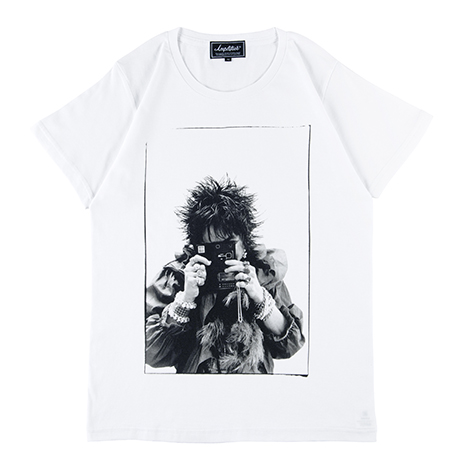
© HISAKO OHKUBO
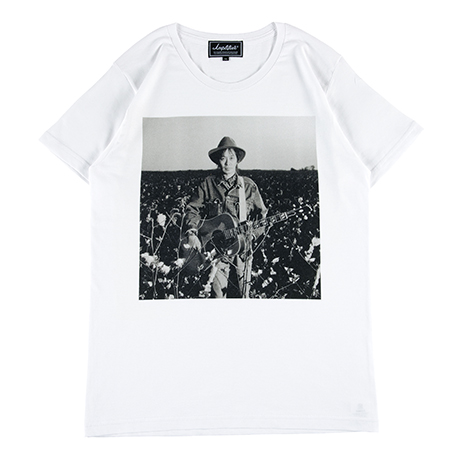
© Sukita
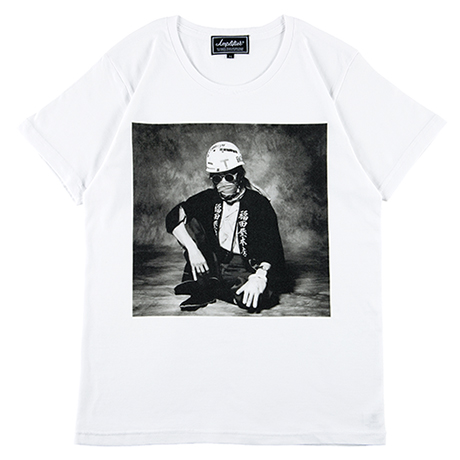
© YOSHIHIRO SUGIYAMA
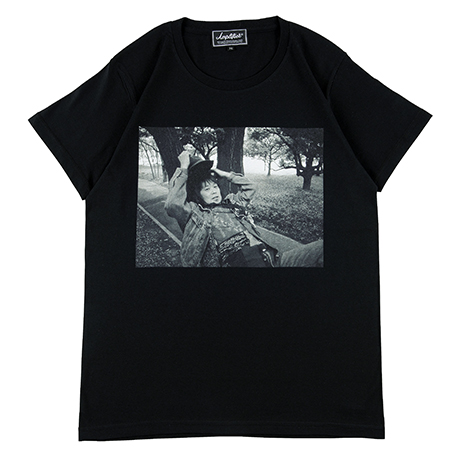
© TAISHI HIROKAWA