Leica | Architect Atsushi Kitagawara Enjoys the Leica M9-P
Leica
Special Interview
A Modern Masterpiece That Inspires Photographers
The Leica M9-P is a high-end digital camera equipped with Leica's traditional M system. To explore its appeal, we asked internationally acclaimed architect Atsushi Kitagawara to take photographs at Tokyo University of the Arts, where he teaches. What did Mr. Kitagawara find so captivating about the Leica M9-P?
Text by OGAWA FumioPhotos by JAMANDFIX (Atsushi Kitagawara portrait, Leica M9-P)
Like Architecture, Cameras Excel When the Designer's Philosophy Shines Through
Leica is a German camera brand cherished by countless professionals. In Japan, the master of snapshot photography, Ihei Kimura (1901-1974), is well-known for his use of Leica. Many may have heard of the "Ihei Kimura Award," given to emerging talents who achieve outstanding results in photography. Of course, Leica holds immense appeal for the general public as well.
Leica's excellence lies in the high quality of photographs produced by its products, including the lenses. Furthermore, its functionalist design, which emphasizes the tactile feel of materials and imparts a substantial, metallic weight, makes it a compelling object in its own right. A camera you want to hold, a camera you want to show off to everyone... there is no other camera quite like Leica in these respects.
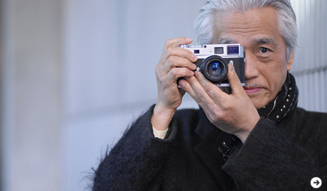
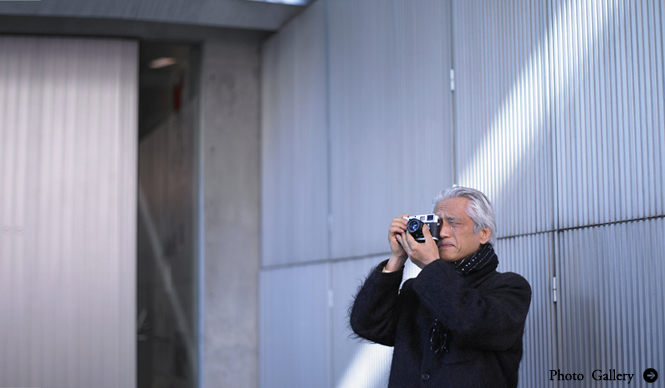
Atsushi Kitagawara, known for projects such as "Big Palette Fukushima" (1998) and the "Ken Nakamura Keith Haring Museum" (2007), is also a Leica enthusiast. Mr. Kitagawara once traveled the world with his camera, documenting remarkable architecture. What emerges from the combination of an architect and a camera today? We handed him the latest Leica M9-P.
—Do you enjoy photography?
I do. In my twenties, I was particularly engrossed in photography, even traveling to the Red Sea, between Northeast Africa and the Arabian Peninsula, to photograph architecture. I explored mountain villages and took countless pictures of their dwellings. These were tower-like houses built with rammed earth, reaching up to eight stories. They were magnificent structures with a strictly established architectural style, but by the time I visited, they were on the verge of disappearing.
—So, recording images is important?
However, I feel that relying on a camera can diminish the impression of a place, and in my specialized field of architecture, it makes it harder to remember the crucial details. I believe it's far more enjoyable to approach photography as a means of expression. Some say architecture and cameras have similarities. Excellent architecture often incorporates elements of philosophy and literature. Cameras are similar; you can sense the designer's philosophy in them. Embracing this changes the photographs you take. I think it's enjoyable to experience this kind of chemical reaction.
—Is the Leica a camera that inspires you to express something?
Because it conveys the background of its creators. With the Leica M9-P, I imagine the designers pursued something beyond mere specifications. When you hold it, it's quite heavy. The fact that it's this heavy for a digital camera instantly communicates the maker's passion. You can tell it's not just a camera for taking snapshots and accumulating records.
Special Interview
A Modern Masterpiece That Inspires Photographers
The Emotion Beyond Specifications is What Matters
—The body is full metal, made of magnesium alloy, with the top cover and base plate milled from solid brass. For the Leica M9-P, the LCD monitor uses sapphire glass. It's a camera lauded for its quality. And you used it to photograph people?
Yes. I photographed a series of portraits of students and alumni from Tokyo University of the Arts, titled "Sparkle. the hopeful young." As I mentioned earlier, when you view photography as expression rather than mere documentation, it becomes enjoyable to consider your distance from the subject and how to convey your own ideas. That's why I chose people. The fundamental question of "How do I want to express this person?" arises from within me.

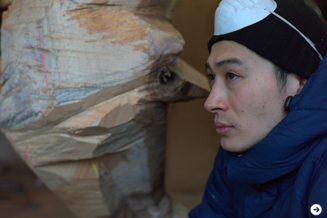
—So, the tool's ability to motivate the user is important.
That is precisely the emotion that goes beyond specifications. Architecture, too, has minimum specifications to meet, but if it stops there, it won't move people's hearts. Cameras are the same.
—From the photographer's perspective, there's the joy of use and the pleasure of expression. Then, from the viewer's perspective, what is the appeal?
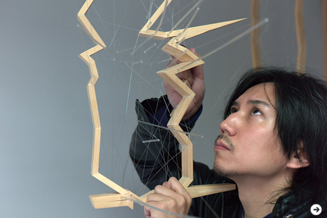
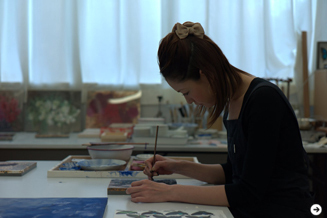
Perhaps the texture, the materiality. It's not just image data; it's that the photographer's intention comes through clearly. Originally, photography had a wide range of expression depending not only on the subject but also on the type of photographic paper used or the printing material. While this aspect seemed to have diminished with digital cameras, looking at the images from the Leica M9-P, I felt a sense of materiality. I was impressed by the depth of expression.
—How was its usability?
With the Leica M9-P, I could quickly adjust settings like ISO sensitivity, aperture, and shutter speed. It was enjoyable. Those who remember manual operation will find pleasure in mastering it. While the 'P' in Leica M9-P supposedly stands for 'Professional,' it can of course be used by amateurs, and it allowed me to rediscover the charm of cameras.
Atsushi KITAGawara
Born in 1951. Known for his unique concepts and original designs inspired by poetry, music, and contemporary art, he has received numerous awards, including the Gold Prize of the Good Design Award, the Kenneth F. Brown Asia Pacific Culture Award, the Architectural Institute of Japan Prize, and the Japan Art Academy Prize. In 2007, he opened a European office in Berlin. At the Kitagawara Lab in the Graduate School of Architecture at Tokyo University of the Arts, he collaborates with experts in fields such as science, music, and new performing arts to conduct research and creative activities related to architecture, urban planning, and space.
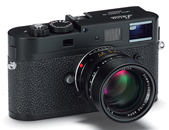
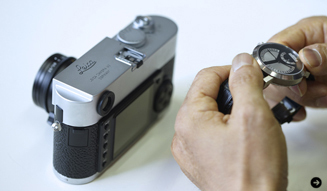
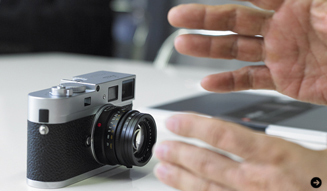
Leica M9-P
This model retains the functionality of the Leica M, while incorporating design changes such as a discreet logo and a monitor made of highly durable, scratch-resistant sapphire glass. It is available in two finishes: silver chrome and black paint.
Image Sensor | 24x36mm Full-Frame Sensor
Resolution | 18.0 Megapixels
Price | ¥819,000 (Body Only)
Leica Camera Japan
http://www.leica-camera.co.jp