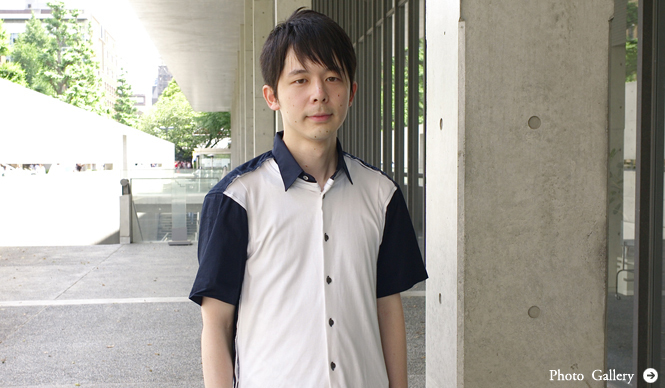
Feature: Yoshikazu Nangou, Part II of OPENERS' Young Architects of Japan, Vol. 4
Vol. 4: Yoshikazu Nango Interview (Part 1)
On the Architect We Need Today
Architecture envelops our cities, permeating every corner of our lives like the very blood and flesh that flows within us. Yet, how many have systematically studied and comprehensively considered the role of architecture in society, or the image of the architect as its creator? Sociologist Yoshikazu Nango examines both cities and architecture from his unique perspective, grounded in history. What is needed now, he suggests, is a broad perspective that transcends time and place, an entity that bridges society and architecture. We spoke with sociologist Yoshikazu Nango about the image of the architect that is called for today.
Interviewer and Summary: Takashi Kato
A Perspective That Is Both Personal and Transcends the Individual
──We wanted to ask you about your contemporary perspective on architects and architecture as a sociologist. I believe sociology deals with history, people, economics, and so on, but why architecture and architects for you?
I didn't set out to study architecture or architects from the beginning. I was broadly interested in mass media and cities, which led me to sociology. I was interested in collective phenomena that are both personal and transcend the individual.
As you say, sociology covers a vast range of subjects. There are various fields within sociology, such as urban sociology, sociology of law, sociology of education, and medical sociology. Just as architecture has masters like Le Corbusier, Mies, and Wright, sociology has its giants like Émile Durkheim, Max Weber, and Georg Simmel. In my undergraduate classes, we were made to read only their classical works. Looking back, it was a valuable experience that I appreciate, but at the time, I didn't find it very interesting (laughs).
However, for my graduation thesis, I was free to choose any topic. So, I wrote a historiographical thesis exploring the influence of the urban and spatial theories of the French thinker Henri Lefebvre on urban sociology, geography, and media studies, as I was interested in cities and the Japanese translation of his book 'The Production of Space' had just been released.
From Urban Theory to Architecture
Traditionally, urban sociology refers to the Chicago School, which was formed around the University of Chicago in the 1920s. Simply put, the characteristic of Chicago School urban sociology is to observe and investigate phenomena such as race, ethnicity, social disorganization, and deviant behavior within a specific geographical area, like Tokyo or Bunkyo Ward, primarily through fieldwork. In contrast, a trend called new urban sociology emerged in France in the late 1960s, attempting to critically overcome the urban sociology of the time. While the Chicago School tended to treat the city as a container for events, new urban sociology criticized this and viewed the city as a process of collective consumption—housing, transportation, education, welfare, etc.—seeking to reveal the various contradictions inherent in urban planning. It questioned the very framework of urban space itself. Lefebvre was a major influence on this transition from Chicago School urban sociology to new urban sociology.
I happened to see and buy 'The Production of Space' at a bookstore, and for me, encountering it became a catalyst for entering architecture from urban theory. Since I entered architecture with a background in sociological urban theory, when I first started discussing with people in the architectural field, I found it strange that they seemed to think only about architecture, or to separate architecture from the city. Just as new urban sociology questioned the framework of urban space, I felt that the framework of architectural space was not self-evident.
──Has sociology focusing on individual buildings not yet been established?
Urban sociology is already institutionalized, but the field of 'architectural sociology' is not yet established.
Sociology tends to deal with groups and collectives rather than individuals. Therefore, when sociology has dealt with architecture, it has focused on clusters of 'buildings,' such as those by house builders, rather than 'architecture' as individual works. In reality, most of what stands in our streets are anonymous buildings; architecture designed by architects is rare. This rarity has been valued.
──When we look around us, most of the buildings that make up the familiar streetscape are apartment buildings or detached houses, and the designers are often anonymous.
Over 90% of the buildings in our cities are anonymous. For those knowledgeable about architecture, 'architecture' as a work is the figure and anonymous 'buildings' are the ground. But for the general public, the relationship between figure and ground is flat, or rather, the latter, 'buildings,' are the 'reality' for society. Therefore, even when sociology deals with architecture, the sociology of housing, focusing on the evolution of floor plans and changes in family structures within homes, whether detached or collective, has been mainstream.
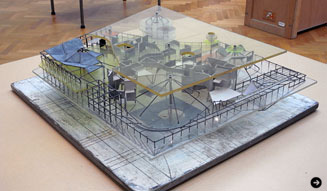
Constant Nieuwenhuys “New Babylon” (Gemeentemuseum Den Haag) Photo by Yoshikazu Nango
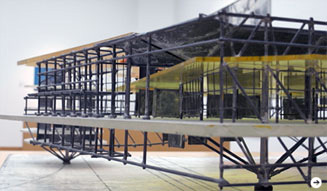
Constant Nieuwenhuys “New Babylon” (Gemeentemuseum Den Haag) Photo by Yoshikazu Nango
Why Am I Interested in That Subject?
──You mentioned entering architecture from urban theory. Specifically, how did you become interested in architecture?
I've always enjoyed looking at architecture since I was a student. Around 2000, when I was an undergraduate, guidebooks like 'Casa Brutus' and 'Architecture MAP Tokyo' started appearing, making architecture accessible and giving the feeling of understanding it, even for amateurs. I was a model reader of those.
Meanwhile, as a sociology major, I was studying the history of urban sociology theories. Urban sociology tends to be interested in 'architecture without architects' and often views architects as subjects of criticism. For example, in the 1980s, there was postmodern architecture, but from a sociological perspective, it was criticized as merely creating 'box-like buildings' that were difficult to use, despite being presented with abstruse theories and lofty ideas.
Sociologists hold a view opposite to that of architects, who believe that space dictates the state of society. Instead, they find interest in how architects' intentions are betrayed, leading to unintended uses and outcomes. Therefore, there was a lot of 'wrestling' criticism exchanged between sociologists and architects.
In general, I have a peculiar habit of being interested in why I am interested in a particular subject. Even if I'm not initially interested in something, I become curious about 'why that person is interested in that.'
This is not unrelated to changes in the media environment. This, too, can be seen as an example of my interest in collective phenomena that include myself and transcend the individual. I came to think that 'architecture' consumed as cultural capital, the image of architecture consumed through media, or the distinction between architecture and buildings, are all 'realities' of society and thus valid subjects for sociological research.
──That's precisely a sociological approach. I also find architecture fascinating because, whether as an individual entity or on an urban scale, it possesses a scale different from human scale.
One characteristic of sociology is its approach of viewing our everyday lives within a layered structure of various scales, akin to a bird's-eye view versus a worm's-eye view, or micro versus macro. Another characteristic of sociology is 'common sense debunking'—questioning whether what is considered common sense or obvious in the world is truly so.
The distinction between a building and architecture, or between an architectural designer and an architect, is circulated ambiguously in society. Rather than leaving this ambiguity as is, I want to consider the boundaries. As I mentioned earlier, the framework of architecture, as discussed in the architectural world, tends to be taken for granted, but I am motivated to deconstruct it from various angles.
──Is sociology approached in your way becoming mainstream?
No, from the perspective of a traditional sociologist, I am considered rather heretical. The Graduate School of Interdisciplinary Information Studies where I am now is not exactly the mainstream of sociology; rather, it's a place where researchers and students engaged in interdisciplinary research gather. I spent my student years seriously embracing interdisciplinarity, unlike the previous generation, for whom interdisciplinarity became a default after years of research in a specific field.
While I want to conduct experimental work that traditional sociologists cannot, I also aim to contribute to the academic lineage of sociology. Furthermore, I must constantly endure my own frameworks being relativized in relation to other fields, and it requires stamina as there is no place of rest. However, I believe I can only move forward and continue to think. I see interdisciplinary fields not as places to settle down, but as horizons open to possibilities, always in progress.
When I began studying sociology around 2000, fields like Cultural Studies were emerging, and there were several individuals who, drawing on knowledge from sociology, geography, media studies, and cultural studies of representation, were working on urban theory in an interdisciplinary manner.
──So, at that time, was architecture and sociology naturally connected within the humanities culture?
In terms of magazines, '10+1' was a typical platform for such people to contribute. I was greatly inspired by the work of those who contributed to the journal, including my supervisor, Professor Jun Tanaka, as well as Mikio Wakabayashi and Toshiya Yoshiumi.
I've always gravitated towards what I call the 'margins'—boundary areas—rather than the core of sociology. In architecture too, rather than architecture itself, I've approached it through sociology as a discipline of relationships, such as the relationship between architecture and media, or considering architecture in relation to magazines and photographs.
This involves a layered perspective, considering relationships on scales ranging from the local site to Tokyo, Japan, or even more globally and multi-dimensionally.
──I understand what you mean by transcending genres. I feel a contemporary sense of urgency in that, especially in the information age.
Although I am neither an architect nor a sociologist myself, when I think about the city in my own way, I find reality in the way consciousness and space expand gradually, from the intimate scale of homes and families to towns, and then to the aggregation of those into cities, depending on the scale and their relationships.
I am very interested in how you reinterpret cities and architecture, which are self-evident to everyone and yet ambiguous because of it. What led you to become interested in cities?
I grew up in a new town in the suburbs of Osaka. Like cities, there's a significant difference between how 'new towns' are perceived from the outside and by those who live there. There's a typical image of 'suburban new town criticism,' isn't there?
──Yes, there was. The image was that of a newly developed residential area, lacking historical depth, leading to weak interpersonal relationships, an inorganic atmosphere, and a high incidence of juvenile delinquency. I believe this criticism stems from the unique, uniform landscape of new towns, with their sprawling streetscapes.
However, it's not entirely accurate. Fundamentally, new towns are cities developed on newly opened land, and residents move in all at once during a certain period when the new town is completed. Where I grew up was a new town with three train stations, the second largest in Osaka. The parents of my neighbors and their children were almost all of the same generation. This led to children's associations and festivals where local children gathered, fostering close relationships among parents and building strong neighborhood communities.
Living in such a dense social environment, when I went to the city from my new town, the atmosphere was clearly different from where I lived. I was accustomed to living within a context of 'known' relationships, using the terms 'anonymous/known,' but in the city, despite being surrounded by anonymous people, vibrant activities were taking place. I wondered why I felt exhilarated by communication occurring between strangers. Here again, I was interested in why I was drawn to the city itself.
──Did you have any feelings about the unique topography and geography of new towns?
Many new towns are developed around train stations connecting the city center and the suburbs. In my teens, I found it interesting how cities are formed by the coexistence of elements from different eras and backgrounds, such as factory districts and the tombs of Emperor Nintoku, visible from the train window.
──Normally, such historical layers would be visible like strata, but because new towns are developed slightly away from the city center, they become apparent like textures each time one travels between areas using transportation, don't they?
Yes, that's right.
──I felt that those physical experiences connect to your practical thinking as a sociologist. There's a sense of reality in that.
Vol. 4: Yoshikazu Nango Interview (Part 2)
On the Architect We Need Today
Nature as the 'Second Nature' of the Web Generation
──Listening to your story so far, I found it surprising that the stereotype of downtown areas having close-knit communities and neighborly relations, while new towns are perceived as lacking these, still persists.
In downtown areas, there are relationships among peers, but also hierarchical, age-based connections that can be burdensome for some generations. In new towns, this vertical connection appears weak, which I envied.
As you mentioned earlier, Nango-san, that new towns have many people of the same generation and communities, I also had a similar image of the suburbs. For me, new towns were places where new cultures, centered around skater and graffiti culture in the 1990s, were constantly emerging.
Certainly, compared to places like Asakusa, new towns have many places suitable for skateboarding, such as promenades, parks, benches in plazas, handrails, stairs, and slopes. However, skaters have a remarkable ability to discover and reinterpret places regardless of the area, so I don't think their connection to the suburbs is necessarily strong.
──Skater culture, for instance, seems to extend the city physically. In terms of new culture, in the 90s, Takashi Homma's photographs focusing on the suburbs gained attention, and Kyoko Okazaki's manga also emerged. I think for those who knew them, the suburbs served as a backdrop for the creation of new things.
That's right. The areas surrounding new towns are still rural. Since they are developed on plateaus cleared from farmland, many new towns have place names ending in 'dai' (plateau). The towns are built along the natural undulations of slopes and valleys, but between moving from one plateau to another, there are mountains and fields.
──Is that so?
For me, the expansion of the living space in new towns spans both natural and artificial domains. Both the wooded areas and fields, as well as the streetscapes lined with mass-produced houses, felt like 'nature' to me.
If we consider untouched nature as the 'first nature,' then our environment is full of 'second nature,' such as artificial objects. The internet environment can also be considered our nature now. Furthermore, the sense of inhabiting the artificial spaces of new towns as natural, without affirmation or negation, might be connected to the reality of new towns depicted in Homma's photographs.
──Personally, when I go to Osaka and take a train to the suburbs, the towns are built by cutting into slopes, so the entire town seems to press towards the railway, and you can see almost all of it. I found that unique as a landscape.
Moreover, each area has its own psychological geography, with more delinquents in elementary and middle schools near stations with commercial areas, and each district within the same new town has its own characteristics.
──So, there's a psychological hierarchy even within the same new town?
Exactly. In terms of being a newly developed residential area, it might seem flat, but for example, the atmosphere of schools differs depending on their distance from the station, there's a hierarchy between detached houses and public housing complexes, and there are cool back hills that people don't approach much. Psychologically and geographically, it's far from flat.
Photo by Takashi Kato
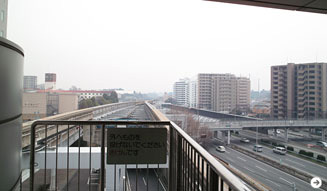
“Suburbs of Osaka” Photo by Takashi Kato
On Anonymity and Fame
──In that sense, what do you think defines a city, distinguishing it from the suburbs?
From the perspective of urban sociology, it would be high density, high concentration of capital, high mobility of people, goods, and information, and a place where heterogeneous others communicate with each other. In suburbs and new towns, there's a gentle mutual surveillance, an environment where neighbors are watching, creating ties that can be both good and bad. In the city, one is freed from those ties. In a word, 'freedom.' However, there are also many dangers and crimes due to anonymity. I believe this duality is one of the conditions of a city. That said, I also think the boundaries between city and suburb are blurring.
──Do you mean this is particularly evident now?
Yes. For example, in Tokyo, places like Yamada Denki and Aoyama have appeared in Shibuya. Even Roppongi Hills had a suburban feel from its opening. On the other hand, Shibuya-like elements have appeared in front of the station in Kashiwa City, Chiba Prefecture, allowing people to enjoy consumption spaces that were previously considered urban, even without going to Shibuya. Since the 1990s, with the spread of the internet and mobile phones, these boundaries have been increasingly eroding.
──I can relate to that as someone who lived in Asakusa, which is relatively close to the city center. Before the 1990s, people said family restaurants wouldn't open in Asakusa, but they started appearing around the late 90s. Conversely, Starbucks Coffee, once a symbol of the city, became commonplace in the suburbs in the late 2000s. From a market perspective, there's a sense of urban and non-urban elements mixing. Tokyo is such a vast city that it seems to be encroaching on the foothills of Mt. Fuji, and the adjacent areas can be considered part of the city. It's true that the boundary between Tokyo and other cities is becoming less distinct. I feel that something is emerging that cannot be described solely in terms of city and suburb.
As we've been discussing anonymity, including in cities, one of your recent activities involves referencing the city in relation to your interactions with architects of your generation. Cities are highly anonymous, while architects are famous. What does the existence of architects represent to a sociologist?
My initial research subject was Constant Nieuwenhuys, a Dutch member of the Situationist International in the 1960s, who was not an architect in the conventional sense of designing buildings. In the 1960s counterculture, movements emerged that engaged with cities and architecture from the user's perspective, rather than the dominant perspective of the creator. For Constant, architects were figures to be 'dismantled,' or rather, they were entities to be dismantled.
Regarding space, philosophers like Descartes and Kant, as well as mathematicians and physicists, have discussed space. Sociologists have also shown interest in space as a concept, but they have been too uninterested in physical space and individual architectural works, and have hardly attempted to interpret them until now.
──Your interest in individual buildings and the question of 'why?' has led you into areas that were previously unexplored. As you mentioned earlier, Nango-san, it's strange that despite the abundance of buildings in our daily lives, which could be considered a 'second nature,' individual buildings have not been analyzed extensively.
(※1) An avant-garde group that aimed to unify art and politics, seeking to overcome the theoretical and practical limitations of modern urban planning.
Vol. 4: Yoshikazu Nango Interview (Part 3)
On the Architect We Need Today
Space as Lived Experience
Henri Lefebvre proposed that space has three dimensions. The first is 'spatial practice,' the physically perceived space. The second is 'representations of space,' abstract spaces conceived in the minds of architects and philosophers, or depicted on maps. The third is 'representational spaces,' which are the spaces that residents concretely live through their bodies.
Many people in sociology discuss the second dimension, 'representations of space,' and semiotics and phenomenology have primarily dealt with 'representational spaces.' However, I believe there has been a lack of perspective that considers all three—'spatial practice,' 'representations of space,' and 'representational spaces'—as interconnected and analyzes them comprehensively.
Until now, there seemed to be a division of labor between architects and sociologists: architects were responsible for building, and sociologists were interested in how the building is received in society after completion. I want to view these not merely as separate domains, but as continuous, even with their differences.
──Lefebvre, too, argued that space does not belong solely to architects. While this is self-evident, regarding the three ways of perceiving space you mentioned, don't all humans unconsciously perceive and practice it physically? It's surprising that this has not been explicitly articulated in sociology or architecture, even though they can be in conflict but are continuous. Have there been examples of this being practiced in other fields?
Koji Taki, though not a sociologist or architect, had a significant impact on the architectural world through his discussions with contemporary architects like Arata Isozaki and Toyo Ito in his book 'Lived-in House.' What's remarkable about Taki's work is that, in Lefebvre's terms, he meticulously described the dynamic connections between the three dimensions while delving into the diversity of spatial experiences through the body, which corresponds to 'representational spaces.'
While I appreciate and build upon Taki's work, I also aspire to analyze the network surrounding architects and their works, not just the relationship between architects and works, or buildings and users, but also how clients, media, and competitions have interacted with architecture.
For example, Kenzo Tange, a representative architect of post-war Japan, designed only a few houses in his lifetime and often worked for government clients. Kisho Kurokawa, on the other hand, had many corporate clients from his thirties. Many young architects today start by building relationships with individual clients. While it may seem obvious, the relationship between architects and clients is entirely different now compared to Tange's era.
By tracing the historical evolution of clients and their image of architects, I believe we can understand how society has perceived architects and what future relationships might be possible.
──Thinking about it that way, simply unraveling the connections between things that were previously taken for granted but not articulated, there seems to be ample potential for research themes.
Nango-san, you are researching architects and contemporary architects, drawing on Situationist urban theory from the 1960s. Could you tell us a little about the Situationists' relationship with architecture and Constant Nieuwenhuys's 'New Babylon,' as they were members of the Situationists? This is because the Situationists' engagement with cities seemed to stem from a bottom-up approach rather than a top-down one.
Considering Japan after 3/11, when taken-for-granted things became uncertain, I thought that the Situationist approach, with its emphasis on bottom-up thinking, might offer some clues for thinking about the future of cities.
The Situationists, centered around the French thinker and filmmaker Guy Debord, were an interdisciplinary avant-garde group that attempted a unified practice of art and politics in various fields such as architecture, painting, sculpture, and film. Constant, an early member, was influenced by Henri Lefebvre in his thinking.
Constant's 'New Babylon' is currently being serialized in the magazine 'SITE ZERO/ZERO SITE.' New Babylon is an ephemeral collective settlement formed by the 'construction of situations' by nomads living playful lives, structurally featuring mobility and flexibility in its internal layout.
What was fresh about Lefebvre's and Constant's approach to space, as I mentioned earlier, was their assertion that the creators of space are not just architects, but users as well. The Situationists sought to devise systems where space is generated from the bottom up. As one manifestation of this, they practiced 'détournement'—using existing spaces in ways different from their original purpose or customizing them—which connects to a DIY-like way of thinking. They envisioned plastic architecture and cities that could be engaged with not just by those with special literacy, and they were thinking about how to feed 'collective intelligence' into the process of shaping architecture and cities today.
──Constant considered the users of space alongside its creation, didn't he?
The Situationist discussion dates back to the 1960s, but what remains important today is that architecture is not unrelated to politics. Moreover, even if not overt politics, institutions like museums, exhibitions, and media filters are never transparent, and architects are inevitably confined by these systems. The Situationists were people who resisted these institutions surrounding art.
Furthermore, the Situationists questioned the linear progression of time in capitalism, and 'détournement' was an attempt to disrupt it. Of course, 'anti-X' might be a 1960s way of thinking. For example, Rem Koolhaas, rather than being anti-, intervenes in the global situation by leveraging the mechanisms of capitalism and critically overcoming them. In that sense, he is 'appropriating' the Situationists.
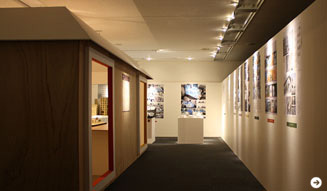
Exhibition “Past, Present, and Future of Designer Apartment Buildings” (2010) Photo by Yuki Hyakuda
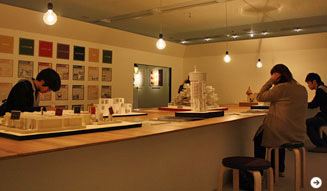
Exhibition “Past, Present, and Future of Designer Apartment Buildings” (2010) Photo by Yuki Hyakuda
An Interface Connecting Architecture and Society
──Since the Lehman Shock, absolute values have disappeared, and the value of things has become more fluid. I feel that the Great East Japan Earthquake has further accelerated the resulting changes in values. What interests me about you, Nango-san, is your role as someone who connects architecture and society across government, industry, academia, and the public. From that standpoint, what do you predict for the future of architecture and media?
Architectural journalism, whether it functions or not, feels like a very small world. For example, in magazines and symposia, the same architects always appear. While this has the advantage of allowing for deeper discussions and development, it's hard to avoid insularity. Furthermore, even if critical comments about buildings after their completion are published in magazines, there is almost no practical evaluation that includes users. I believe architectural journalism from the perspective of users and society should exist.
What I find promising about architecture is its ability to relate to everything—not just politics, but also the environment, economy, welfare, and so on. The strength of architecture lies in its capacity to integrate these diverse relationships. If there were journalism that involved government and industry, involving both writers and readers, multiple evaluation criteria would emerge. Looking ahead, regarding collaboration between government, industry, academia, and the public, I want to expand the scope of architectural journalism.
External perspectives are important in this regard. Diversifying the criteria for evaluating architecture should not be the sole responsibility of architects. When I visited London this spring, I spoke with Ricky Burdett, a sociologist from LSE who has served as director of the 2006 Venice Biennale, architectural advisor for the London Olympics 2012, and a judge for numerous architectural competitions. He is, in a broad sense, 'designing' the interface between architecture and society, a type of person not found in Japan.
──In that sense, are you working on anything at the moment?
There is a distinct lack of entities in Japan that serve as contact points or connectors between architecture and society. I would like to take on that role myself. For that purpose, I am interested in devices such as exhibition curation and archiving, and in the future, I want to engage in exhibitions as an output of humanities and social sciences knowledge.
──The exhibition 'Past, Present, and Future of Designer Apartment Buildings' held at Misawa Homes A Project in 2010 was one such practical endeavor, wasn't it?
This exhibition was planned at the request of Misawa Homes. It's unusual for a sociologist to curate an architectural exhibition, but the framework of introducing Misawa Homes' A Project was given. In the future, I want to present such frameworks myself.
From a research perspective, I question how architectural exhibitions and competitions function socially. Until now, architecture has largely been 'architecture by architects, for architects.' I see potential in what architects think and their architectural thinking, so I want to focus on how to communicate and integrate that into society. I believe I can serve as a mediator in that regard.
──Do you have any plans for future activities?
For example, I want to conduct fieldwork on architectural cultural policies and cultural industry organizations in London, such as the Design Council, RIBA, the Architecture Foundation, and museums and galleries, and re-examine architecture from the perspective of cultural economics.
In London, media that evaluate and analyze plans before construction and after completion, such as competition juries and design reviews, are institutionalized. Reports issued by architectural cultural industry organizations also play a role in architectural journalism, and their content is covered in mass media articles. Therefore, as research, I aim to present a comprehensive framework for architectural journalism concerning the reception of architecture in society by conducting research across these publications, architectural journals, general media, and television.
While pursuing research on 'Sociology of Architecture' centered on architectural cultural policy, cultural industry, and architectural journalism, I hope to see similar movements in Japan. I need to compile my previous work, including my doctoral dissertation on the fame of architects, so it might be some time in the future.
Vol. 4: Yoshikazu Nango Interview (Part 4)
On the Architect We Need Today
What Changes and What Remains
──Your global perspective, which spans architecture, society, and history, as you've discussed, will become increasingly necessary. In Japan, we are at a major turning point in energy and economic policies following 3/11. Considering the post-3/11 era, what are your thoughts from a sociological perspective?
I believe it's crucial to fundamentally rethink the existing ways of cities and architecture, asking not just 'how to build' but 'where to build.' However, to put it abstractly, there are 'things that change' and 'things that remain.' Many people tend to focus on what needs to change. But I am interested in the boundary between them. The boundary between the everyday and the extraordinary, the visible and the invisible, what should be preserved and what should not—how these are positioned within our society.
──Indeed, the perspective of considering what remains, amidst the focus on change, is refreshing.
During the Great Hanshin-Awaji Earthquake, I witnessed a scene where young people were enjoying dates in Osaka, just a few kilometers across Osaka Bay, while Kobe was devastated. There was a significant temperature difference between the two sides, but I believe that temperature difference is a reality of society. In that sense, it's difficult for everyone living in Tokyo to feel that they must take action regarding the earthquake or that everyone must do something different. Rather, the idea of radical change is frightening. Of course, I don't think the current situation is fine, and there are many things that need to be reconsidered.
However, while wanting to change, the reality is that we are unable to change, or we drag along our unchanging selves. Or, why can't we change, or make changes? I want to pay attention to that as well.
I tend to feel more reality in gradual, incremental changes that lead to a different state, like a gradient, rather than revolutionary changes from A to B. I believe my values were significantly shaken by 3/11.
But, with self-reflection, I want to be cautious about casually using the term 'post-3/11.' As I briefly wrote in the commentary for the upcoming paperback edition of Lefebvre's 'The Right to the City' from Chikuma Gakugei Bunko, many issues with technology and infrastructure were latent even before the earthquake. These constituted our daily lives as 'taken for granted,' and problems that were previously latent became recognized as crises. If that's the case, rather than crises arriving suddenly and then ending, it might be more difficult, but perhaps more important, to consider that crises are pervasive in modern times and are intertwined with the activities of daily life.
Also, triggered by 3/11, though it has only become more visible, there is a growing demand for new urban relationships that differ from what have been considered urban relationships until now.
In sociology, there are the terms Gemeinschaft and Gesellschaft. Gemeinschaft refers to a highly intimate and low-mobility group formed primarily by kinship and local ties, such as in rural communities, where one is born, educated, employed, marries, and raises children. On the other hand, Gesellschaft refers to a group in large cities like Tokyo, New York, or Paris, where people who have moved from other regions live as anonymous others, not knowing much about each other.
In cities until now, people could live without much interaction, even as anonymous others. However, I believe there is a growing number of people who feel the need for Gemeinschaft-like relationships even in cities. At the same time, being bound by neighborhood associations where everything must be done together can be bothersome. The challenge is how to incorporate spaces for community connection into the city while guaranteeing individual independence.
(※) Gemeinschaft and Gesellschaft. A type of social typology proposed by the German sociologist Ferdinand Tönnies. Gemeinschaft refers to a tightly knit group with intimate human relationships centered on kinship, local ties, and friendship within a community. Gesellschaft refers to a social group based on rational human relationships, such as in cities, states, or companies.
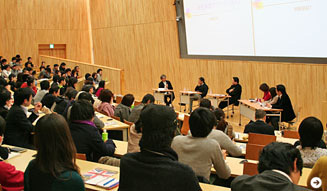
Architecture's Edge, 4th Session: “The Edge of Behavior” (2009) Riken Yamamoto x Hideki Noda x Yuhei Yamauchi
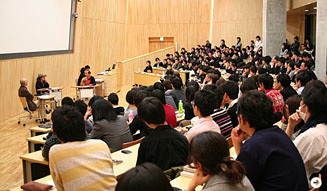
Architecture's Edge, 3rd Session: “The Edge of Form” (2009) Jun Aoki x Naruyoshi Kikuchi x Takeshi Okada
What Can Be Done Now
──Indeed, rural villages in the Tohoku region, which were affected by the disaster, are in a sense communities close to pre-modern society. Even in the current temporary housing situations in the disaster-stricken areas, as is often said, it seems important to consider how to address the existing community ties.
Recently, temples in Tokyo are also gaining attention as new public spaces. On the other hand, there are online 'connections' through platforms like Mixi and Twitter. How can these be given spatial form? When viewed as something that transcends both the city and the information space, the challenge is how architects can be involved.
──As you say, with the advancement of the internet, virtual connections within the internet, much like a second nature, are no longer unrelated to the real world. Although there are things that should change after the earthquake, it seems necessary to fundamentally determine what and how to change, even when making changes.
In the past, questions like 'what architecture should be' or 'what the ideal architect is' were considered in terms of 'shoulds,' or norms and ethics. Now, I think we can set those aside for a moment and consider more about 'what is possible with architecture,' 'what can be done.' As in the title of Hiroshi Hara's book 'What Can Be Done in Architecture?' (1967), it might be similar to the situation in the 1960s.
I believe the way architecture is approached will naturally change in that context. While considering what can be done, I also want to reconsider the fundamental question of 'what is architecture?'
──I see.
As an activity to re-examine 'what is architecture,' we hold a series of symposia called 'Architecture's Edge' at the University of Tokyo's Fukutake Hall in the Graduate School of Interdisciplinary Information Studies. This is a project I started as a graduate student, featuring three guests: an architect, someone from a different field such as music, theater, mathematics, biology, or film, and a University of Tokyo faculty member. It's a bottom-up project where graduate students handle everything: selecting guests, deciding themes, posing questions and moderating on the day, and writing report articles.
The aim of 'Architecture's Edge' is to edit areas not previously recognized as architecture around the axis of architecture, and to focus on architecture's inherent interdisciplinarity, thereby approaching the essence and strengths of architecture that might be overlooked in discussions confined to specialists. We hope for discoveries for both the insiders—experts—in architecture and other fields.
The word 'edge' has multiple meanings, translating to 'border,' 'edge,' or 'frontier' in English. If 'frontier' implies the cutting edge of architecture, then we aim not just to confirm the commonalities and differences between architecture and other fields, but to derive a third path from them. 'Architecture's Edge' is ongoing, and next month in October, as part of the 'Todai Forum' held in Paris and Lyon, we plan to collaborate with French experts and students.
──It feels like all of Japan is currently facing a state of 'edge,' standing at a precipice where the future will change dramatically depending on which way we turn.
As you say, the current period is a crucial one, serving as a crisis that tests us, but also as an opportunity to transform the state of things.
It might be interesting to compare 'edge' with Arata Isozaki's concept of 'Ma' (a word that became the origin of the Japanese words for time and space, where 'time' and 'space' were considered similar concepts). Isozaki's 'Ma' is more aesthetic and static, whereas 'edge' has an image of constant movement and the premonition of something being generated from it.
──Like 'edge,' I believe it would be meaningful if the knowledge from different fields, which were once thought to be incompatible, could gain a common platform to share their specialized knowledge and information.
Yes. In addition to 'what is architecture,' I also see potential in the breadth of the architect's profession. Some have an editor's perspective, some have producer capabilities, some can do marketing, and some can present future visions.
Following 3/11, as the vast amount of information circulating online became crucial, the emphasis shifted to who is disseminating the information, and 'trust capital' in the source of information increased. This highlights the growing importance of 'people.' Architects work by involving many people, so the re-evaluation of architects as individuals will likely increase. For example, outstanding architects like Tadao Ando possess the ability to bring together and lead many people.
──In simple terms, human capital?
Ryo Yamazaki, who is gaining attention as a community designer, also owes much of his work to his personal appeal. Ryuji Fujimura also has an incredible ability to involve people regardless of age or field. The fundamental aspects of an architect's behavior in integrating collective production are being re-evaluated.
──Your talk today about architecture from a sociological perspective was very insightful. I gained insight into the underlying factors connecting various elements such as architects and clients, and cities and suburbs. I hope we can continue to think together in the future. Thank you very much for your time today.
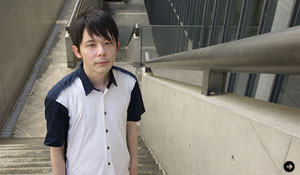
Photo by Takashi Kato
Yoshikazu Nango
Born in Osaka, 1979
Completed Master's program at the Graduate School of Interdisciplinary Information Studies, The University of Tokyo, 2004
Completed Doctoral Program (credits obtained), 2008
Assistant Professor, Graduate School of Interdisciplinary Information Studies, The University of Tokyo, 2008–2011
Project Lecturer, same institution, 2011–