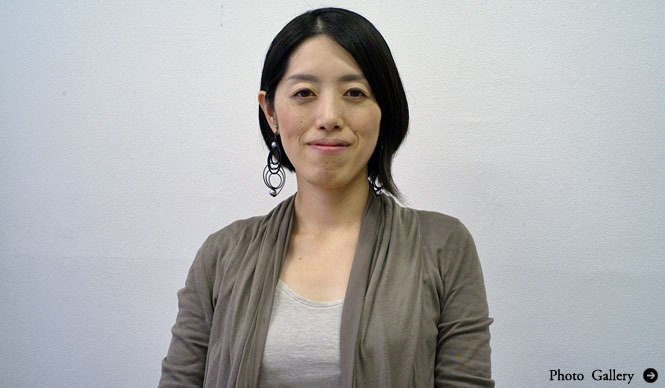
Feature: OPENERS' Guide to Japan's Women Architects Vol. 4 – An Interview with Yuri Naruse
Vol. 4 Yuri Naruse Interview (1)
How to Live in Future Cities
In an era of contraction, with a shrinking economy and fewer new buildings being constructed, young architects are observing society from fresh perspectives, tackling urban life and architecture with approaches unique to our times. Yuri Naruse of Naruse • Inomkuma Architects is a female architect committed to communal living and sharing, pursuing various initiatives through a proposal-driven approach. We spoke with her in depth about what lies beyond her insightful perspective as she navigates society with exquisite balance.
Interviewer and Editing: Takashi Kato
Becoming an Architect
──What inspired you to pursue architecture?
When I was little, I imagined building construction meant the workers on site; I wasn't aware of the profession of an architect. However, my mother used to take me to art museums about once a month, and I enjoyed looking at paintings and sculptures. I was a child who loved making things with my own hands, whether it was playing in the mud, drawing, sewing, or cooking.
──So, you had the seeds of an architect within you from childhood.
I'm from Aichi Prefecture, but I lived in an area between Nagoya and Gifu, neither fully urban nor rural. When I was in high school, I desperately wanted to leave my hometown and live alone, so I came to Tokyo. But walking through the city was a series of shocks. Tokyo has so many slopes and stairs; the terrain is very undulating. Coming from the Nobi Plain, I found it novel and fascinating that a place like Shibuya could be so full of hills, even in the middle of the city. I could walk around all day without getting bored; Tokyo was just so much fun.
However, I was always troubled about what I wanted to do. I enjoyed making things with my hands, but I didn't have the confidence or training to make a living by drawing or sculpting. At that time, a close senior advised me that there was an architecture department, which seemed interesting because you could make all sorts of things. I visited the department, saw models and drawings, and although I didn't understand the details, I felt excited and decided to enroll in architecture.
Then, there was another strong catalyst. When I was in high school, I visited the Hiroshima Peace Memorial Museum on a school trip, and I was overwhelmed by the power of architecture. Later, when I came to Tokyo, I saw the Yoyogi National Gymnasium and St. Mary's Cathedral in Setagaya, and learned they were designed by the same architect, Kenzo Tange. I was deeply moved to discover that such incredible creations were possible through this profession.
──That was your encounter with modern architecture, then.
It was a shocking encounter.
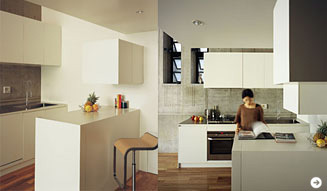
ROOM101 (2006)
──Was it not the form of shrines and temples, but rather the realization that humans could still create something sublime, a place of prayer like Hiroshima, that astonished you?
Yes, the mere presence of the architecture could make the surrounding atmosphere tense, or I would feel as if the space itself was moving even without a breeze. I had experienced this when looking at old buildings in Nara and Kyoto, but it was my first time experiencing such a sensation with what is called modern architecture.
──I think many people find buildings beautiful, but not many consider who created them, let alone decide to study architecture based on that. Perhaps your unique sensibility led you to think in that direction?
I was always attached to creating things. However, when I first started studying architecture, my interest was focused on forms and spaces, and I'm not sure if I could realistically imagine actually building architecture or the people who would use it. It took me quite some time to decide to truly engage with architecture as a profession.
──Were the things you were creating around that time closer to fashion?
Rather, I simply found designing and making models incredibly enjoyable. But after about two years of studying architecture, I started to wonder if I was being too self-indulgent. What is the purpose of creating architecture? I became lost. Since I couldn't resolve these doubts by just staying in university, I started visiting architects' offices for open desk sessions and part-time jobs to experience the field.
I was greatly influenced by SANAA (the architectural unit of Kazuyo Sejima and Ryue Nishizawa). There, I learned about the immense amount of time they spent contemplating a single building and the vast number of study models they created. Seeing world-renowned figures like Ms. Sejima and Mr. Nishizawa working so diligently and patiently filled me with respect and, in a way, a sense of calm. It made me realize that the time I had spent agonizing over my own designs was laughably short, and that it was through such struggle and dedication that wonderful architecture was born. It was then that I felt I was finally ready to truly face architecture.
──That was about six years ago.
Yes. After graduating, I pursued master's and doctoral degrees. Around that time, a friend introduced me to an interior design project for an apartment. Seeing the client inhabit the finished space in ways that exceeded my imagination solidified my decision to pursue architecture as a career.
Vol. 4 Yuri Naruse Interview (2)
How to Live in Future Cities
Bridging Architecture and Daily Life
──There was a studio apartment project called "Hitohiya no Mori" (A Forest for One Room) in 2008, which left a strong impression on me. I thought it was an excellent project.
This was a proposal for a competition themed "New Studio Apartments." I felt that by fitting essential elements like an entrance, kitchen, unit bath, and storage into typical 20-30 square meter apartments, the range of possible layouts had been exhausted. So, I wanted to re-examine the issues inherent in studio apartments.
In studio apartments, daily necessities tend to clutter the entire space. Instead of hiding them, I wanted to create a room where it would still be comfortable even with things out in the open.
In "Hitohiya no Mori," instead of dividing the space with walls, I placed several tree-like objects, disproportionately large for the room, within it. By hanging daily necessities on the branches or placing them at the roots, I hoped to create a space that reflected the inhabitant's life.
──Sometimes, a space doesn't feel spacious just by being large; it's only when objects are placed within it that its true scale becomes apparent.
In the case of "Hitohiya no Mori," I was thinking about how to make an unavoidably small space feel larger. Before placing the tree-like objects, it was a very cramped room, but once the trees were in place and items were arranged, the space suddenly felt much wider. It's interesting how the addition of objects can make a space feel larger.
──Given the current economic climate, building new structures is challenging. Therefore, I believe that exploring new relationships between interior design and existing architecture, focusing on how to utilize what's already there, is one of the roles architects should play today. How do you view the balance of an architect's work in this regard?
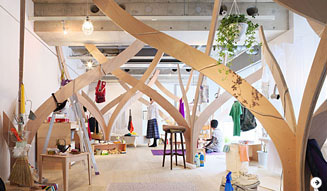
Hitohiya no Mori (2008)
Interior design is a highly requested aspect of an architect's work today. In "Hitohiya no Mori," I created something larger than furniture but smaller than architecture.
This "tree" is quite large relative to the room's scale, but it's designed with overlapping branches to fit. Simply placing an disproportionately large tree in a space can make the room feel cluttered. Therefore, through numerous studies, I found a size that would expand the room's scale.
Even in interior design, I strive to create a sense of openness, as if one is outdoors, a sense of expansion that connects to the outside. Perhaps this is unique to architects.
──With both architecture and interior design, the moment of completion is often the most beautiful, but once daily life enters, it can quickly become chaotic. Perhaps this is what separates the creator's intention from the user's experience. Even with a perfect container, life cannot be lived without the tools of daily living. When I first saw "Hitohiya no Mori," I felt it was designed with an awareness of the objects that naturally accumulate and become visible in daily life.
Yes. I want to embrace the things that naturally emerge in daily life. I am currently designing a multi-unit residential building, and the client also has a lot of belongings. My hope is to create an architecture that serves as a backdrop, making the space vibrant and lively, rather than cluttered and messy, even when items of various colors and styles are placed together.
──Your ideas seem to coexist with the elements of daily life, creating a sense of co-creation. You mentioned a multi-unit residential project; could you tell us more about it?
It's a project that has just begun. It's a five-unit residential complex totaling about 200 square meters, comprising the client's residence and rental units. The basic space is finished with flooring and white walls, but we're incorporating quite large built-in furniture from the start. For now, I'm considering using wood textures for the furniture, rather than the same white, to avoid the space becoming a mere white cube. I hope these built-in furniture pieces, in terms of scale and material, will serve as a link between the architecture and the client's existing furniture and belongings.
Vol. 4 Yuri Naruse Interview (3)
How to Live in Future Cities
Rethinking Communal Living Today
──Recently, Naruse • Inokuma Architects held an exhibition titled "Rethinking Communal Living" (September 2010), which addressed the issue of sharing from an architectural perspective.
The keyword "sharing" is prevalent in society today. Broadly speaking, we share urban spaces with many people, but we are not particularly conscious of it. In the downtown area of Tokyo where I live, many large apartment buildings have been constructed, and the sense of shared living and play spaces that existed in the past is largely gone. It's true that the sense of sharing, which most people once had, has diminished. What is the significance of architects like yourselves, from the younger generation, "rethinking communal living" now?
I believe attitudes towards ownership are changing, with more young people feeling they don't need to own a car, for example, as seen in car-sharing services. While the baby boomer generation might have aspired to stylish studio apartments and luxury cars, I think our generation is different. Instead of a desire for ownership of cars or homes, I feel that more people are finding value in human connections, viewing them as a form of wealth.
Sensing this societal shift, we organized the exhibition "Rethinking Communal Living."
This exhibition was about a share house project, but its basis was a general multi-unit residential project. We proposed a residential complex of about 1,000 square meters. However, purchasing the land and building a new rental property proved unfeasible due to the very high land prices. So, we redesigned the project to lower costs and re-evaluated the financial projections. Even then, it didn't balance, which led us to consider proposing it as a share house.
Share houses share kitchens, toilets, and showers, reducing the number of these facilities compared to individual studio apartments. This lowers construction costs for new builds. We could set the rent at a similar level to surrounding studio apartments, and by reducing the size of individual rooms, we could increase the number of units, thereby boosting rental income. When we tested this by designing a share house and calculating the financial projections, the return on investment was viable, and the project moved forward.
──What are the advantages of share houses?
Initially, I thought building new share houses would be interesting from an economic standpoint, but the lifestyle also differs significantly from conventional studio apartments. Instead of living in a situation where you don't even know your neighbors, you can have casual, relaxed interactions in common areas. I've heard that some share houses have waiting lists due to their popularity. This suggests that people are not just seeking affordability but also stimulation from contact with others.
Considering the current societal context, I believe that share houses have emerged as an alternative for those who don't fit into the traditional "nLDK" housing format, offering a new option for how to live, beyond the studio apartment.
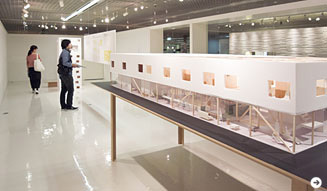
"Rethinking Communal Living" (2010)
──Who are the people who need this?
The age range is typically from mid-20s to early 30s. A significant portion are young women living alone, as they feel safer living with others. There are also those who experienced sharing while studying abroad and wish to continue living that way upon returning to Japan. Some move directly into share houses after relocating from rural areas, while others live alone for a few years before seeking a more stimulating lifestyle in a share house. With the trend of later marriages, this tendency is likely to increase.
──Share houses are becoming more prominent, particularly in urban areas. Regarding cities, despite the high density of adjacent houses and office buildings, are the people living there truly sharing space in the same way as the buildings? I often ponder this. Share houses, I now realize, might be a visible manifestation of this dynamic, both in relation to the city and to people.
Yes.
──This might touch upon the issue of private ownership that we have maintained for generations. In contemporary times, alongside the option of purchasing necessities individually, the choice of sharing with others has expanded. I believe this is evidence of our consciousness becoming more diverse in all aspects.
When I think of things to share, cars come to mind. Are there other examples?
──Book rentals are gaining popularity again recently. There are places where knowledge is shared openly, like at the front of bookstores. In share houses, if there are common spaces, people might start sharing books and tools there. It would be interesting if this could lead to the sharing of knowledge and wisdom among those who share their living space.
I believe the possibilities are expanding. In fact, since various professionals live together in share houses, the lounge areas often function as spaces for interdisciplinary exchange and information sharing.
Vol. 4 Yuri Naruse Interview (4)
How to Live in Future Cities
Proposing from the Premise of What to Build
──This connects to the exploration of contemporary housing, architecture, and lifestyles within them, doesn't it?
Yes. If asked to "design a multi-unit residential building," we would naturally design one. If the financial projections didn't work out, we might give up. However, we believe it's important for architects to return to the "fundamental premise" and propose solutions from the very beginning. We consider this a crucial aspect of our profession.
──That's why the exhibition, while focusing on share houses, also delved into financial projections, wasn't it?
Traditionally, architects have focused on maximizing floor area and creating a certain number of units of a specific size. However, when proposing from the fundamental premise, a proposal is only meaningful if it includes financial considerations. I feel that such projects are increasing.
──There's a perceived dichotomy: individual architects, often called "atelier" designers, excel in design, while larger firms and general contractors excel in financial calculations, scale, and speed. However, I sense a strong drive from you and your colleagues to engage in the economic aspects, even as individual designers.
That's true. As a firm, we aim to be proposal-driven, so it's crucial to figure out how to supplement our knowledge and skills. Also, by collaborating with individuals who excel in areas where we are lacking, we can broaden our scope of work. Even if we can't achieve something on our own, we don't give up.
Vol. 4 Yuri Naruse Interview (5)
How to Live in Future Cities
Considering the Premise of Design
──Could you tell us about "Ie-tag," which you recently unveiled?
Last spring, at an exhibition called "Global Material Summit" held at the National Museum of Nature and Science, we exhibited paper made from the waste wood of wooden buildings. "Ie-tag" is made from this paper.
We propose the entire process: taking waste materials from demolished wooden buildings, not discarding them or converting them into energy through burning, but regenerating them as paper, and then transforming that paper into a product. It's a slightly whimsical piece where what was once a house takes the form of a house again. When several are lined up, they resemble a town. If you place a few in a book or notebook, a cityscape emerges. It's the smallest work we've created to date. Here too, we are engaged in creating from entirely new concepts.
──What are you interested in lately, outside of architecture?
Besides architectural design, I'm interested in writing. I'm currently writing a series called "Housing Stories" for the magazine "Housing Special," which I'm taking very seriously, but also enjoying immensely.
──So, writing is a way for you to think.
It's a rather unique project where I visit houses designed by architects and write stories based on interviews with the families living there, aiming to capture the atmosphere and how the architecture has been used.
──I've read a few of them, and they are very engaging.
Thank you. I try to keep my own "self" out of it as much as possible. I imagine myself as a camera, capturing the daily life within the architecture. As I'm not a professional writer, I can't compete with novelists in terms of skill. Therefore, I aim to translate architecture into words from a perspective only someone in the field of architecture can offer.
For example, when I covered a house with many objects in a very small space, I tried to convey the density of the place by listing the names of the objects and the sounds I heard. In another interview, the ceiling was particularly striking, so I alternated descriptions of the changing ceiling bathed in sunlight with the daily lives unfolding beneath it. I'm surprised and find it very enjoyable how the structure of my writing changes depending on the architecture I'm covering.
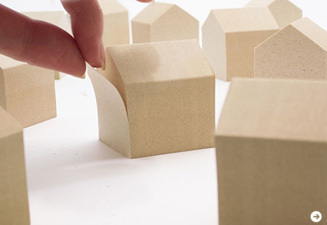
Ie-tag (2010)
──How does your writing reflect in your architectural work?
Whether it directly connects to architectural design, I honestly don't know yet. However, like share houses and "Ie-tag," "writing" is one of many possibilities.
It may seem obvious, but through this series, I've come to deeply appreciate that architecture is not just about the moment of design, but that its long-term use and affection hold great value. I aspire to create such architecture.
──Given that there are already more than enough buildings in our cities, and considering issues of durability, architecture will continue to be in demand socially. In this era, architects will be increasingly called upon not just to build rapidly, but to adopt a contemporary stance that aligns with societal needs. How do you envision your architectural practice moving forward?
I want our firm to continue proposing architecture that meets the needs of the times and society, whether through renovations or new constructions.
Furthermore, I believe it's crucial to consider issues beyond Tokyo and address regional challenges. In fact, my partner, Mr. Inokuma, is collaborating with Mr. Satoru Yamashiro of Building Landscape on the restoration of an old sake brewery in Izumo.
For any project, regardless of its nature, we want to approach the fundamental conditions of design with sincerity, even if it requires significant time and effort. I believe that truly necessary and joy-bringing creations emerge from such dedication.
──I look forward to your future endeavors. Thank you very much for your time today.
(October 19, 2010, at Naruse • Inokuma Architects' office in Hatagaya)
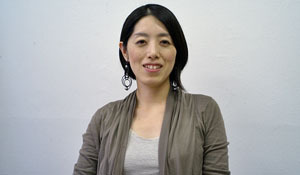
Photo by Takashi Kato
YURI NARUSE
Born in Aichi Prefecture in 1979. Completed doctoral program coursework at the University of Tokyo Graduate School in 2007. Established Yuri Naruse Architects in 2005. Since 2007, has been with Naruse • Inokuma Architects with Jun Inokuma. Assistant Professor at the University of Tokyo from 2009. Major works include ROOM101 (2006) and Hitohiya no Mori (2008). Major exhibitions include "Hiroshima 2020 Design Charrette" (2010) and "Rethinking Communal Living" (2010). Awards include Good Design Award (2007), WORLD Space Creators Awards Grand Prize (2007), and INTERNATIONAL ARCHITECTURE AWARDS (2009), among others.
http://www.narukuma.com