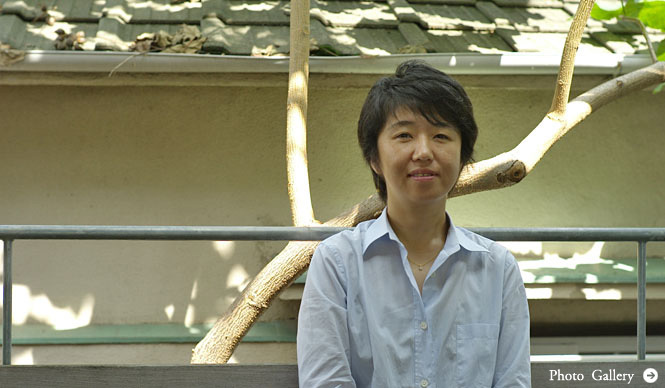
Feature: OPENERS' Young Japanese Women Architects – Vol. 3: Momoyo Kaijima Interview
Vol. 3: Momoyo Kajima Interview (1)
A Few Notes on Houses, Residences, Towns, and Architecture
Cities are composed of buildings of various scales: office blocks, towers, and houses. When we speak of the 'house' as an element that constitutes a city, what do people imagine? Momoyo Kajima of Atelier Bow-Wow, who directly approaches architecture and urbanism through designing 'houses' of a relatively small scale compared to the city's scale. Through her own reflections on her recent book and various projects related to towns and architecture, we consider Tokyo and its urban landscape as seen from the perspective of the 'house'.
Interviewer and Summary: Takashi Kato
Viewing Residences as 'Architecture'
──You recently published a book titled 'A Scenario for Towns, Houses, and Buildings from an Architectural Perspective.' Could you tell us about its origins?
Architecture involves parallel processes of thinking in words and creating physical forms. I wanted to convey this fascinating aspect that I experience daily, and so I compiled this book.
──I've read your writings in magazines for a long time, so reading this collection felt like enjoying a volume of short stories. It was very engaging.
This book contains essays written over approximately 19 years, from my university graduation to the present. The postscript is the oldest text, written for a prize essay competition in the magazine 'Kenchiku Bunka.' Rereading it now, I realized my core thoughts haven't changed much since then.
──How was the table of contents for this book decided?
About half of the essays in this book were previously published in magazines, and the other half were newly written. By compiling this book, I feel I've gained a clearer understanding of what I'm trying to achieve.
The book is structured into three chapters, as the title suggests: Houses, Towns, and Buildings. Initially, I chose 'Houses' because I studied architecture in the Department of Housing at Japan Women's University. I felt 'house' is a familiar concept for everyone, making it a suitable introduction. 'Towns' are my major area of interest.
The final category is 'Buildings.' You might find it strange that the specialized field of architecture comes last, but that was actually the order in which I learned. While I gained knowledge about housing in university, I only began to grasp the fascination of architecture around the time of my graduation. Driven by a desire to study architecture more seriously, I pursued graduate studies at the Tokyo Institute of Technology. There, I learned that 'architecture' is a concept, and discussing it requires abstract thinking and frameworks. In our lab discussions, I truly enjoyed the freedom to move between these abstract concepts and everyday concerns.
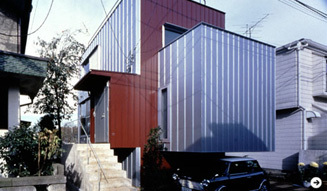
Mini House (1999)
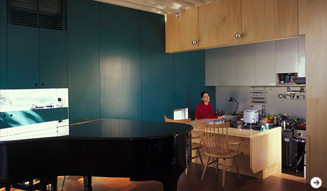
Mini House (1999)
──I felt this book could be read as a kind of autobiography, triggered by architecture, detailing the moments you began to contemplate architecture, your thoughts on it, and how you connected them to actual buildings.
I believe thinking about architecture offers a perspective for considering society. Simply discussing society can lead to a deadlock, but introducing a medium can sometimes lead to dynamic developments. This medium can be anything, but architecture, while conceptual, is also a unique medium that everyone can experience. In that sense, architecture is an open entity. Furthermore, if one wishes to delve deeper, it reveals intricate layers, much like books, encompassing technology, economics, and history, offering profound insights the more one explores.
──Architecture can be considered a field of study in itself.
I find the enduring nature of architectural discourse and the diverse dialogues that emerge when people of different ages and nationalities engage with it to be incredibly fascinating.
──Cityscapes and Tokyo, in particular, are constantly changing, and people from different regions and generations perceive and interpret them differently. In a way, the absence of a single definitive answer makes it a subject of interest for everyone.
Indeed. The discrepancy between words and built forms is also one of the intriguing aspects of architecture.
Vol. 3: Momoyo Kajima Interview (2)
A Few Notes on Houses, Residences, Towns, and Architecture
About Atelier Bow-Wow
──You work as Momoyo Kajima, and also as Atelier Bow-Wow. This is likely a common question, but how do you and your partner, Yoshiharu Tsukamoto, divide your roles?
We share similar personalities and ways of thinking, and since we work together as Atelier Bow-Wow, there isn't a specific division of roles.
──Could you tell us about the origin of the name 'Atelier Bow-Wow'?
We wanted our work to be perceived as a unified entity, so we decided to adopt a team name. The name itself originates from a dog I had at my parents' home at the time. In English-speaking countries, dogs bark 'bow-wow.' While dogs bark 'wan' in Japan, they bark 'bow-wow' in English. It's interesting how the same sound changes depending on the language.
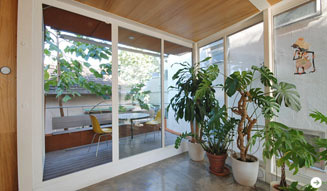
House & Atelier Bow-Wow (2005)
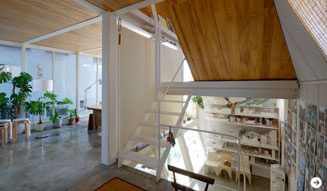
House & Atelier Bow-Wow (2005)
──Atelier Bow-Wow is well-known for its residential projects from the 1990s and 2000s, following the collapse of the bubble economy. Which project holds the most memorable place for you?
That's a difficult question. In terms of the project I've spent the most time with, it would have to be 'House & Atelier Bow-Wow,' which serves as both our home and workplace.
──As it's your own home and also a work of art, it must hold a special place in your heart.
Because it's our own home, the relationship between people and the house is somewhat rough and unrefined.
──Perhaps because it's your own home, the purpose and function are clearly defined, which is appealing?
Yes. Perhaps it's because it's our home, but it really expresses our feeling that 'this much is enough' for architecture (laughs). A feature I particularly like about this house is that it's built on a flag-shaped lot, so its exterior is almost invisible from the street. I also appreciate the comfortable thermal environment and the varied play of light, which allow one to sense the passage of time.
Vol. 3: Momoyo Kajima Interview (3)
'Made in Tokyo'
──You were born and raised in central Tokyo. Does the environment you grew up in form the basis of your architectural thinking?
Tokyo itself has many different areas. Even in the area around Gaien Higashi-dori, where I grew up, some parts were rebuilt after being devastated by the war through urban planning, while others, spared from wartime destruction, retain their Edo-period street layouts.
──The war aside, in our generation's experience, the economic boom of the bubble era led to the replacement of old buildings with new ones, renewing the city dramatically, for better or worse. What you and Atelier Bow-Wow presented in 'Made in Tokyo' captured buildings with peculiar uses and constructions that were scarcely conceivable within Western architectural theories. In a way, these seemed to be the result of pursuing the functionality and rationality championed by Western modernism, representing an ultimate Japanese interpretation of modernism. What prompted you to begin surveying cities?
The collapse of the bubble economy coincided precisely with the start of our architectural careers. It was around that time that we began to contemplate concepts like 'Made in Tokyo.' Around 1991, I started collecting buildings that caught my eye as interesting within the city. This research was compiled and exhibited in 1996 at an exhibition on architectural history called 'Museum of Obscure Architecture or Revolutionary Architecture,' produced by Arata Isozaki. As someone who is not a specialist in architectural history, I proposed a hypothesis for this historical exhibition: the current Tokyo landscape is itself a result of Japan's post-war high-growth period, creating a globally unique environment. I aimed to present this not through the form of buildings, but as an ecosystem viewed through their usage.
──Your book 'Made in Tokyo' (published in 2001) compiles this research. In the introduction, you meticulously explain the background behind the diversity and uniqueness of Tokyo's contemporary urban appearance. Subsequently, each building is presented concisely, without lengthy explanations, in a parallel, flat format across double-page spreads with photographs and illustrations. How was this format decided?
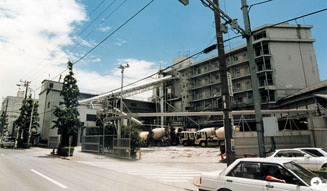
MIT Concrete Apartment
I found these buildings in Tokyo to possess bold conceptual power and spatial sensibility from an architectural design perspective, so I illustrated them to present them as a guidebook. I also wanted to disseminate urban theories about Tokyo. In the postmodern era, figures like Rem Koolhaas proposed 'Delirious New York,' and Robert Venturi presented 'Learning from Las Vegas,' offering architectural proposals based on various urban theories. I wanted to see if something similar could be done for Tokyo.
──Around the year 2000, as I wasn't in the architecture field, I learned about 'Made in Tokyo' through the subculture trends of art and fashion at the time. I believe such interdisciplinary connections still exist today. The uniqueness of 'Made in Tokyo' lies in its connection with the counterculture of that era, including photographer Takashi Homma, who shot the photographs in the book, making it an urban theory specific to that time. And it continues to be an alternative even today, more than a decade later. How did your collaboration with Takashi Homma come about?
I met Homma in 1997 when I wrote a review for 'Asahi Camera' about his photobook 'Hyperbalanced,' which featured landscapes in rural Iceland. I heard that he became interested in my research on 'Made in Hong Kong,' which was published in 'SD (Space Design)' and consisted of photographs, illustrations, and text. In my review of 'Hyperbalanced,' I connected the landscapes and architecture depicted in the photographs to the urban theories I was interested in at the time.
──Could you tell us about Pet Architecture and Micro Public Spaces?
Pet Architecture is one example within 'Made in Tokyo.' I discussed how the utilization of small 'gaps' and their relationship with infrastructure introduce new challenges for architecture.
The 'Pet Architecture Guidebook' is a collection of these small buildings, and the response to this book unexpectedly led to participation in art exhibitions. We began receiving commissions to create Pet Architecture pieces for museum exhibitions. The first was 'Manga Pod,' a break space for escaping into manga, proposed for an art exhibition at the Gwangju Biennale in South Korea. This was partly due to the exhibition's theme of 'pause,' or resting. Subsequently, I exhibited in several art shows, where I continuously experimented with creating 'Micro Public Spaces'—minimal gathering places for small groups within the city.
──Your recent exhibition 'Machiawase' at The National Museum of Modern Art, Tokyo, was similar. Typically, architectural exhibitions display models and sketches of the architects' own work or ideas. However, Pet Architecture and Micro Public Spaces are experiential. Considering that architecture is something to be experienced, this seems like a fundamentally rooted approach to installation. Does this connect with Atelier Bow-Wow's concept of 'vibrant spatial practice'?
As a result of various exhibition experiences, while many art exhibitions feature the artworks themselves, architectural displays of secondary information like models, photographs, and drawings can be abstract and require specialized knowledge or interest to comprehend.
──Indeed, viewing architectural models with interest seems limited to those with specialized knowledge of architecture or clients.
Therefore, I thought that creating spaces that can be actually experienced would be a simple solution.
Vol. 3: Momoyo Kajima Interview (4)
A Few Notes on Houses, Residences, Towns, and Architecture
Considering Architecture and Urbanism from a 'Regional' Perspective
──Cities used to feel like active entities that would expand as we took action. Now, I sometimes feel that the city dictates how we should behave. Your art exhibition installations and urban projects, even beyond the realm of architecture, seem to expand the concept of architecture. The recent 'Machiawase,' for instance, felt like a work filled with opportunities to evoke diverse behaviors among people depending on the location where it's placed. What approaches do you think architects can take to engage with contemporary cities and urban landscapes?
Tokyo is a vast city with significant economic activity, making it challenging, but opportunities to engage in community development have been increasing in regional areas.
From 2006 to 2007, I worked on a project involving Kanazawa's traditional townhouses during an artist-in-residence program and exhibition at the 21st Century Museum of Contemporary Art, Kanazawa. Together with students, I surveyed the area with its approximately 1,400 existing machiya (traditional townhouses) and investigated their process of renewal. While 'Made in Tokyo' couldn't fully articulate the relationship between the city and buildings due to its scale, I attempted to do so in Kanazawa by creating a guide map.
I categorized the Kanazawa machiya into four types: those used as-is, those with renovated facades, those with new constructions retaining the traditional roof shape, and new 'building-type' machiya. I then color-coded these on a map to show their distribution. Furthermore, I analyzed this situation in conjunction with what appeared to be related urban planning and environmental pressures. Based on this guide map, we renovated a former 'shimotaya' (a type of traditional townhouse) into a guesthouse.
Additionally, in the Kajima Laboratory at the University of Tsukuba, we created a map of 'Tanekura,' a small village of 12 households in Hida, Gifu Prefecture, and renovated its tourist signage. This is a village that still preserves its terraced rice fields without mechanization. Elderly residents in their 80s and 90s are actively farming. To convey the charm of this place, my students and I surveyed every building in the village and conducted crop research. This was also depicted in an axonometric view, similar to 'Made in Tokyo'.
During this process, I was repeatedly struck by the close relationship between the villagers and the landscape. They pay such close attention to the land that they notice even the growth of a single weed, observing the landscape with an intimate knowledge of every detail. Simultaneously, the landscape itself embodies the village's history of life.
──Do they remember every event that happens in the village in detail? That's remarkable.
The landscape is connected not only to the memories of the current generation but also to the memories of their ancestors. It serves as an interface that awakens the village's collective memory.
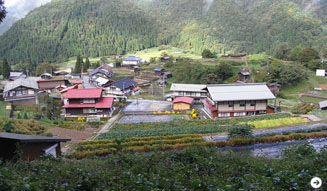
Research in Tanekura (2009)
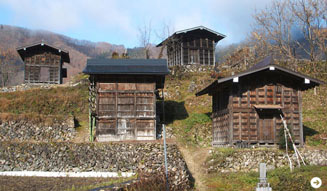
Research in Tanekura (2009)
──By engaging in areas that architects and designers have traditionally not been involved in, if we can create means to preserve the memories of people and places that would otherwise disappear as residents leave, wouldn't that foster a mutually beneficial relationship?
In the Tanekura project, we assisted in conveying the beauty of their lives and landscape from the perspective of architectural professionals. Similarly, in the Kanazawa machiya project, we aimed to support their sustainability by designing frameworks that uphold these traditional houses. I believe that the creativity to devise frameworks that allow for continuous use while adapting in form is what is needed now.
──Thank you very much for your time today.
(September 21st, at House & Atelier Bow-Wow, Shinjuku Suga-cho)
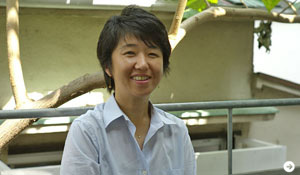
Momoyo Kajima
Born in Tokyo in 1969. Graduated from the Department of Housing, Japan Women's University in 1991. Established Atelier Bow-Wow with Yoshiharu Tsukamoto in 1992. Completed her doctoral program at the Graduate School of Tokyo Institute of Technology in 2000. Visiting scholar at Harvard University Graduate School in 2003. Visiting professor at ETH Zurich from 2005 to 2007. Associate professor at the University of Tsukuba since 2009. Major works with Atelier Bow-Wow include 'Mini House' (1999), 'House & Atelier Bow-Wow' (2005), 'Machiya Guesthouse' (2008), 'Tower Machiya' (2010), and many others. Author of 'A Scenario for Towns, Houses, and Buildings from an Architectural Perspective' (2010), among others. Received the Yoshioka Award in 2000.
http://www.bow-wow.jp