BE@RBRICK INU 400% / MLE × INU "Don't Eat!" Commemorative Release: An Interview with Kō Machida | MEDICOM TOY
MEDICOM TOY
About 40 Years Since INU's "Don't Eat!": A Conversation About Memories from That Time
Items from BE@RBRICK and MLE, inspired by the album jacket of INU's "Don't Eat!", are now on sale. To commemorate this, Kō Machida appears! The interview is packed with intriguing stories that could only be told now, and that he could only share now.
Text by SHINNO Kunihiko | Photograph by YOKOKURA Shota | Edit by TOMIYAMA Eizaburo
I'm happy, too. Because I'm human. That's how it is.
INU, the punk band that made a striking major debut on March 1, 1981, with their album "Don't Eat!". INU, which underwent repeated member changes from its formation, disbanded three months after the album's release, but the work's influence on the subsequent music scene was immeasurable.
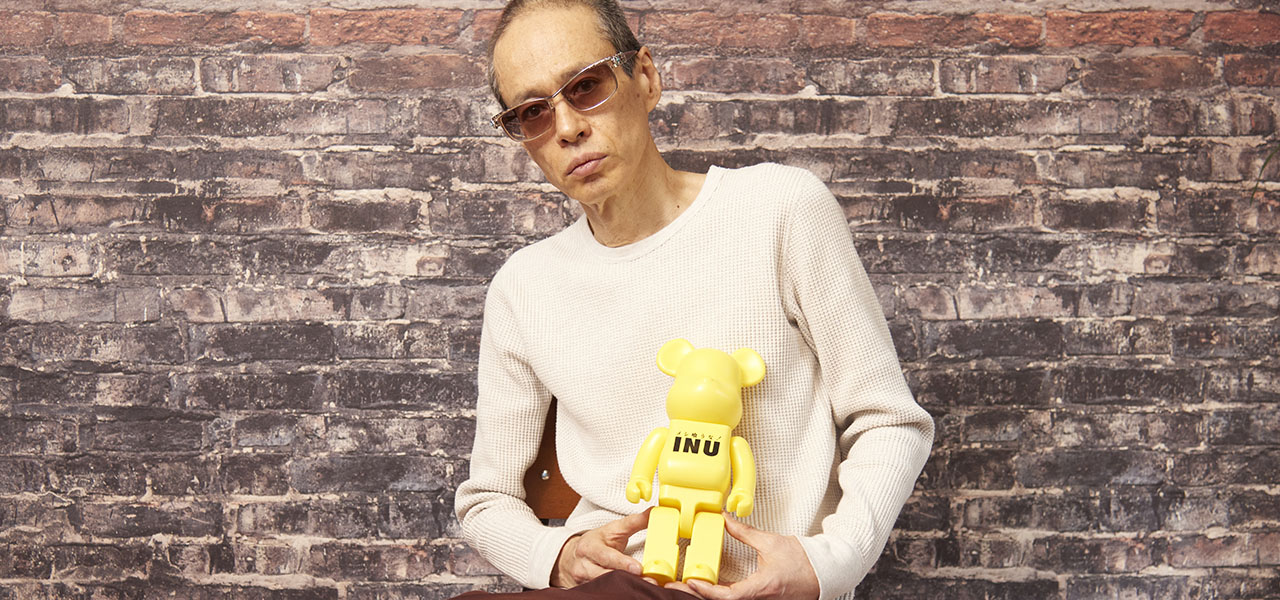
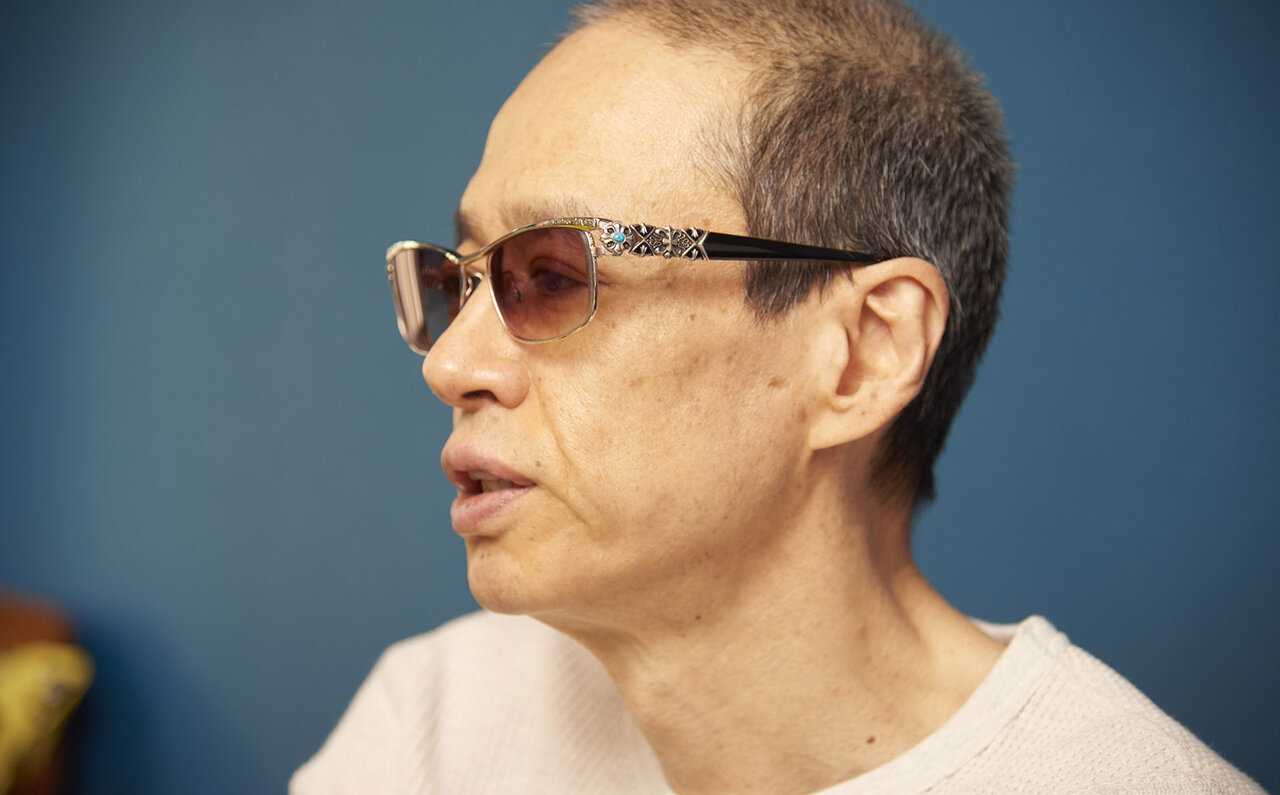
To commemorate the release of BE@RBRICK and MLE items, inspired by the album jacket featuring a close-up of vocalist Machida Machizo (now Kō Machida) against a yellow background, we interviewed Kō Machida about those days.
Kō Machida
Born in Osaka Prefecture in 1962. Began his singing career under the name Machida Machizo in high school, and made his record debut in 1981 with the punk band "INU" album "Don't Eat!". Also active as an actor. In 1992, published the poetry collection "Kageka" (Shichosha). In 1996, published his first novel "Kusshun Daikoku". The following year, he received the Bunkamura Dumago Literary Prize and the Noma Literary Newcomer's Prize. Subsequently, he won the Akutagawa Prize for "Kiregire" in 2000, the Hagiwara Sakutaro Prize for the poetry collection "Tsuchama no Yonjuhatataki" in 2001, the Kawabata Yasunari Literary Prize for "Gongen no Oiranto" in 2002, the Tanizaki Junichiro Prize for "Confessions" in 2005, and the Noma Literary Prize for "Yado ya Meguri" in 2008. His latest works include "Kōyaku Koji-ki" (Kodansha), which retells Japanese mythology in an easy-to-understand and humorous colloquial style. Since 2023, he has been a full-time faculty member in the Faculty of Letters at Musashino University.
I dislike putting on airs as part of my own nature.
—A large number of BE@RBRICK and MLE items related to INU's "Don't Eat!" are being released. How do you feel about these releases, 42 years after the album came out?
MachidaIt's a bit surprising. I never imagined it, and it's quite a shock that something like this would happen so much later.
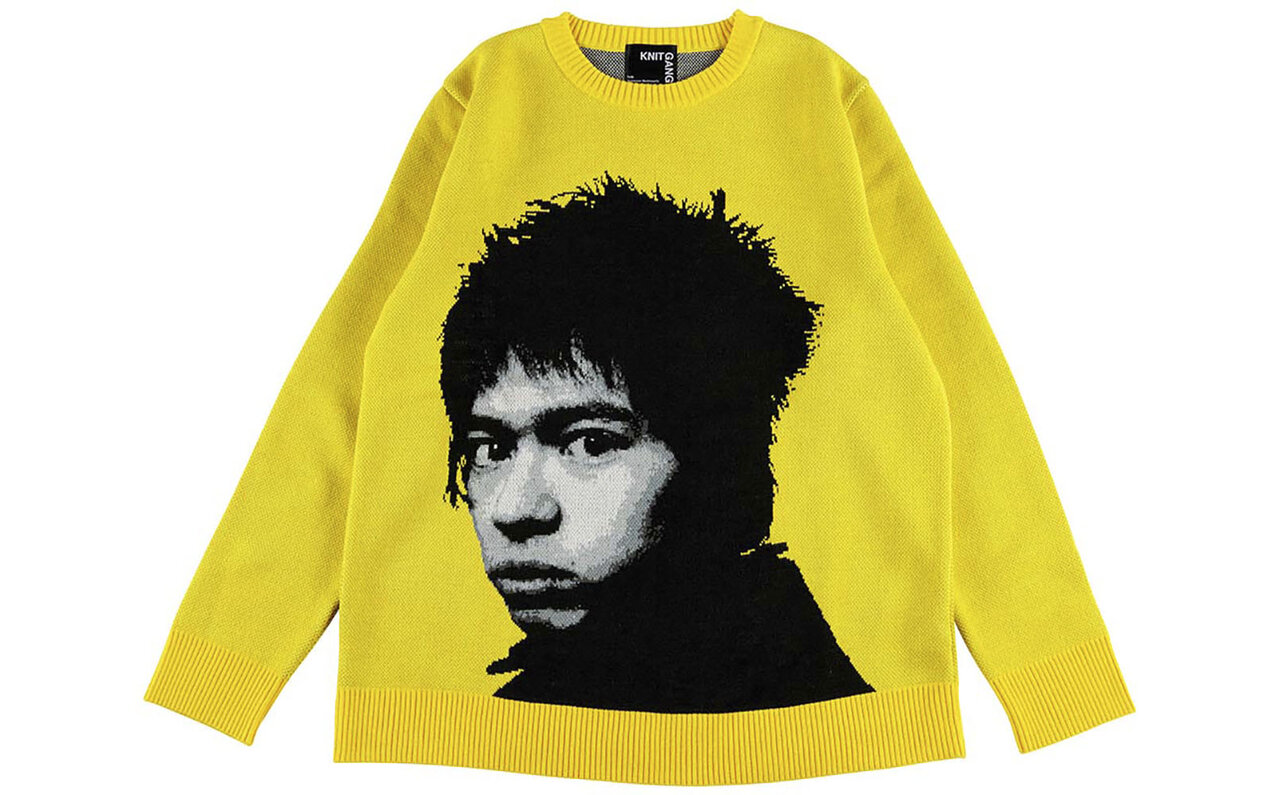
—One of the catalysts is believed to be the sweater with the "Don't Eat!" jacket pattern, personally created by knitwear designer Horinouchi Amiami. That sweater garnered significant attention, and when it was later mass-produced, it sold out on the first day. A resale is now decided.
I happened to see it online and thought, "Wow, you can make something like this with knitwear? That's amazing skill." I posted a photo of it on my Instagram, and the creator seemed to think, "Yeah, it'd be good to make it," and it ended up being sold (laughs).
Well, besides surprise, there's something else. It's a bit embarrassing, but I'm also genuinely happy that something I did in the past is still remembered and sparks interest. I'm getting on in years, and I've started writing novels, doing things different from back then.
—The recording of "Don't Eat!" took place from October to November 1980, correct?
MachidaI remember the recording sessions well. We did them at a studio in Ikebukuro, but there were parts where we didn't know how to proceed, so we worked on the sound and recorded it through trial and error. The bands that emerged back then, rather than wanting to sell a lot, were more focused on doing something different with music, on doing interesting things. That was the priority for us, and not just us.
—Your singing voice and lyrics were shocking. According to your book "My Literary History: Why Did I Become This Kind of Person?" (NHK Publishing), published last year, you were influenced by writers such as Hokuo Shio, Shusaku Endo, Yasutaka Tsutsui, and Kenzaburo Oe, as well as classical performing arts, starting with the history book "Monogatari Nihonshi" you read in childhood.
MachidaRegarding the lyrics, I was thinking about how I could utilize the vocabulary I had cultivated since then. I was about 17 or 18 at the time, but I was thinking of doing things like mixing elements from Oe's novels, classical Japanese expressions, or even rakugo.
—While the Tokyo Rockers, including INU, were directly influenced by British and American punk/new wave, the Kansai No Wave scene, with INU at its forefront, seemed to have many avant-garde bands that transcended existing musical concepts.
MachidaThere were more bands in Kansai, but because there were fewer, they became more avant-garde. Also, many of my friends liked complex music, which influenced me as well.
When I started the band, I didn't know anything and was doing Rolling Stones covers. But as I listened to CAN, Captain Beefheart, and others, I felt that the words I originally had, the straightforward music, and the complex music started to blend together. That was common in Kansai. We weren't skilled musicians, but everyone was trying to do something strange.
—In 1979, you also independently produced the omnibus album "DOKKIRI RECORD" featuring Kansai bands (INU, ULTRA BIDE, ALCOHOL 42%, Henshin Kirin, CHINESE CLUB participated).
MachidaWe made 200 copies, and they sold out quickly. I don't even have that record myself.
—What was the intention behind the band name "INU" in the first place?
MachidaOriginally, it was written with the kanji "犬" (inu, meaning dog). Essentially, like my previous name Machida Machizo, I dislike putting on airs as part of my own nature. Humans are 99% uncool, with only about 1% being good. To ignore that 99% and pretend to be only 1% is deceitful. I've disliked that since I was 16 or 17, and I still dislike it even now at 60.
Now, people might be used to it and find the band name "Inu" normal, but back then, people would laugh and say, "Inu? Haha." Everyone else had more Westernized names, so just having a Japanese name was quite unusual. I was often told, "Calling your band 'Inu,' that's so like you."
Sometimes I wrote it as "INU," because I liked the German band NEU*1. You know, it has that NEU vibe, I thought.
So, when we were releasing "Don't Eat!", the record company people said they wanted to go with "INU." They probably thought, "Do you know what will happen if you go against us?" (laughs). They didn't say it directly, though. I don't care much about names, and I had written it as "INU" myself sometimes, so I thought, "Why not?" And that's how it became "INU."
*1: Formed in 1971 by Klaus Dinger, former drummer of Kraftwerk, and guitarist Michael Rother.
—What were your thoughts when you made your major debut?
MachidaAmong the Kansai bands active at that time who made their major debut was Phew, who was in the band Aunt Sally. Phew pursued a unique path, and a single released with Ryuichi Sakamoto on PASS RECORDS was released by Trio Records at the time ("Finale / Ura Hata"). Then there were THE NO COMMENTS*2 and ZIG ZAG*3.
INU made their major debut with Japan Record, but the business of bands wasn't established back then, and we hadn't really decided how to proceed. So, there were talks from the record company about INU needing to join a production company if we were to debut, but I generally don't listen to what people say in those situations (laughs). That was how it was.
*2: A punk band formed by members of Aunt Sally. After member changes, they released the album "The No Comments" as a ska-new wave band in 1980 by Victor Musical Industries.
*3: A three-piece rock 'n' roll band from Kyoto that released the album "MADD POWER" in 1981 from Japan Record.
—The album title "Don't Eat!" had a powerful impact even back then.
MachidaThe song "Don't Eat!" itself was written shortly after the band was formed, and we had been performing it for a while. But I don't remember why the title became "Don't Eat!". Still, I think it was a good title. It certainly has impact.
—Who came up with the text on the record's obi strip: "Don't Eat! Try to Eat Us! / We Don't Need Categories! / Mind guerrillas emerging now, firing off passionate noisy beats—INU"?
MachidaThat was Gaku Torii*4.
*4: Music critic/musician. Led PAIN during the Tokyo Rockers movement. Later produced albums for INU, EASY WALKERS, THE POGO, Johnny Thunders, and others. His recording report for "Don't Eat!" is included in his book "Walk on the Wild Side."
—There's a unique atmosphere from that era, with Michiro Endo of The Stalin releasing the song "Meshi Kuwasero" (Warsaw no Gensō) influenced by INU.
MachidaANARCHY also debuted around the same time. Shinichi Fujinuma contacted me saying he wanted to talk after reading something I said about ANARCHY somewhere. We talked and became friends. He was probably serious, too.
It was a short period, but from the late 70s to around '84 or '85, there was a sense that new music was being born, at least among those involved. I'm not looking at it from a broad perspective, so it might be my imagination.
—Do you meet with the former members of INU after the band broke up?
MachidaNo, I haven't. I worked with the guitarist, Masahiro Kitada, when he made a cassette book*5 at JICC Publishing (Takarajima-sha), but I haven't seen him in over 30 years since then.
*5: "Dotterai Yatsura" Machida Machizo from Shifukudan / Released in '86. *Note: "Yatsura" is written as 男又.
I believe there has been a certain consistency from that time to the present.
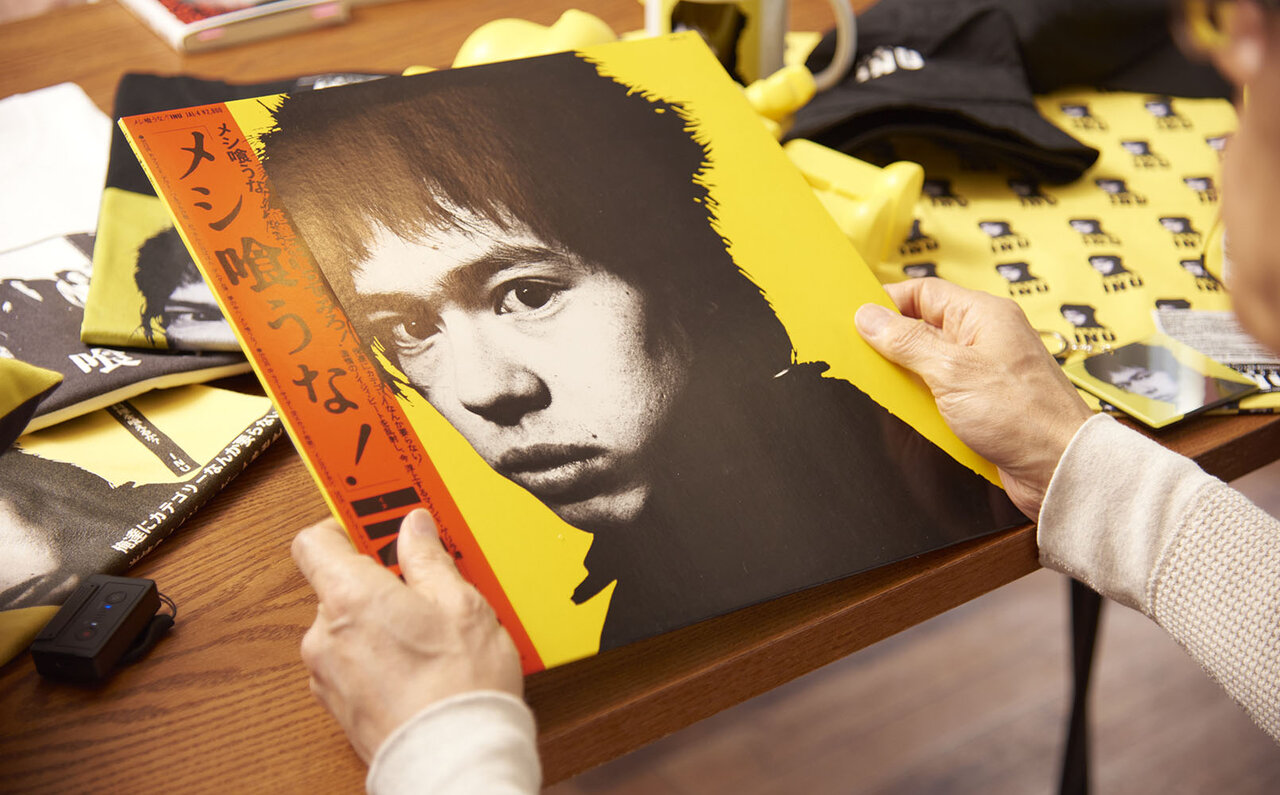
—The jacket design for "Don't Eat!" was also striking. The art direction was by Kōichi Hara, and the photographer was Katsuo Hanzawa. Both of them also worked on the jackets and promotional materials for YMO and Southern All Stars at the time.
MachidaI don't remember much about the jacket itself. I did think it was close to the feel of the album "Jonathan Richman and the Modern Lovers," which had Jonathan Richman's face on the cover.
—What are your thoughts on the jacket design?
MachidaWe're in an era of design now. Rather than creating something new from scratch, it's about how you arrange existing things. But I feel that in the past, the sense of creating something from nothing was stronger. Moreover, it was an era with much less information, so you could only infer things from the album jacket. People would buy records based on the jacket alone, the "jakke-gai" phenomenon, and often be disappointed after listening. I think that's why.
In that sense, an album that influenced me was PUBLIC IMAGE LTD.'s "METAL BOX" (released in '79). It came in a film can with three records inside. That made everyone think, "Ah, packaging can also be a form of expression." I remember that punk/new wave bands were actively experimenting with changing the packaging, releasing records on sonosheets or selling them on cassette tapes, incorporating the packaging itself into their expression.
—What do you think about the items based on the "Don't Eat!" jacket that are being released this time?
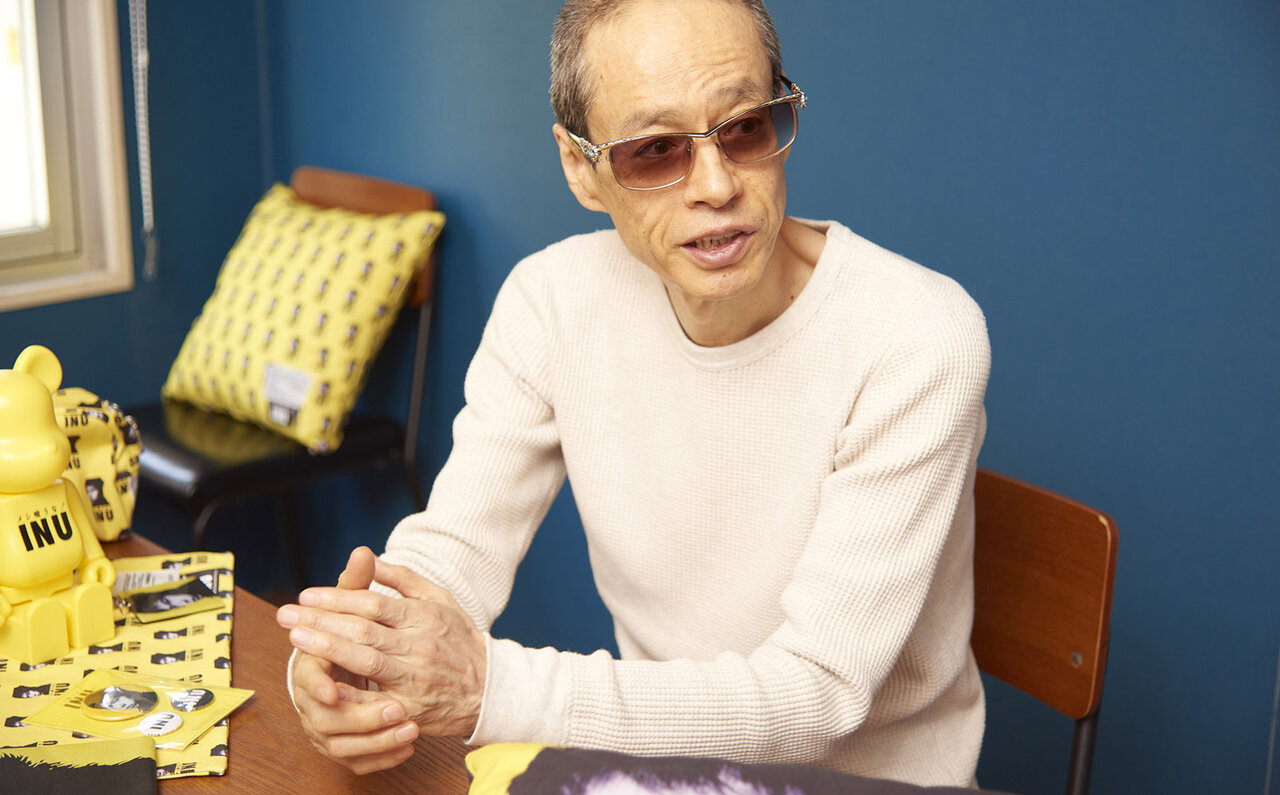
MachidaWell, I'm happy about it, but I do worry if the people who wear them will be okay, if they won't be seen as eccentric (laughs). But I imagine they might wear or display them as a statement of how I listened to this kind of music, as a stance towards the era.
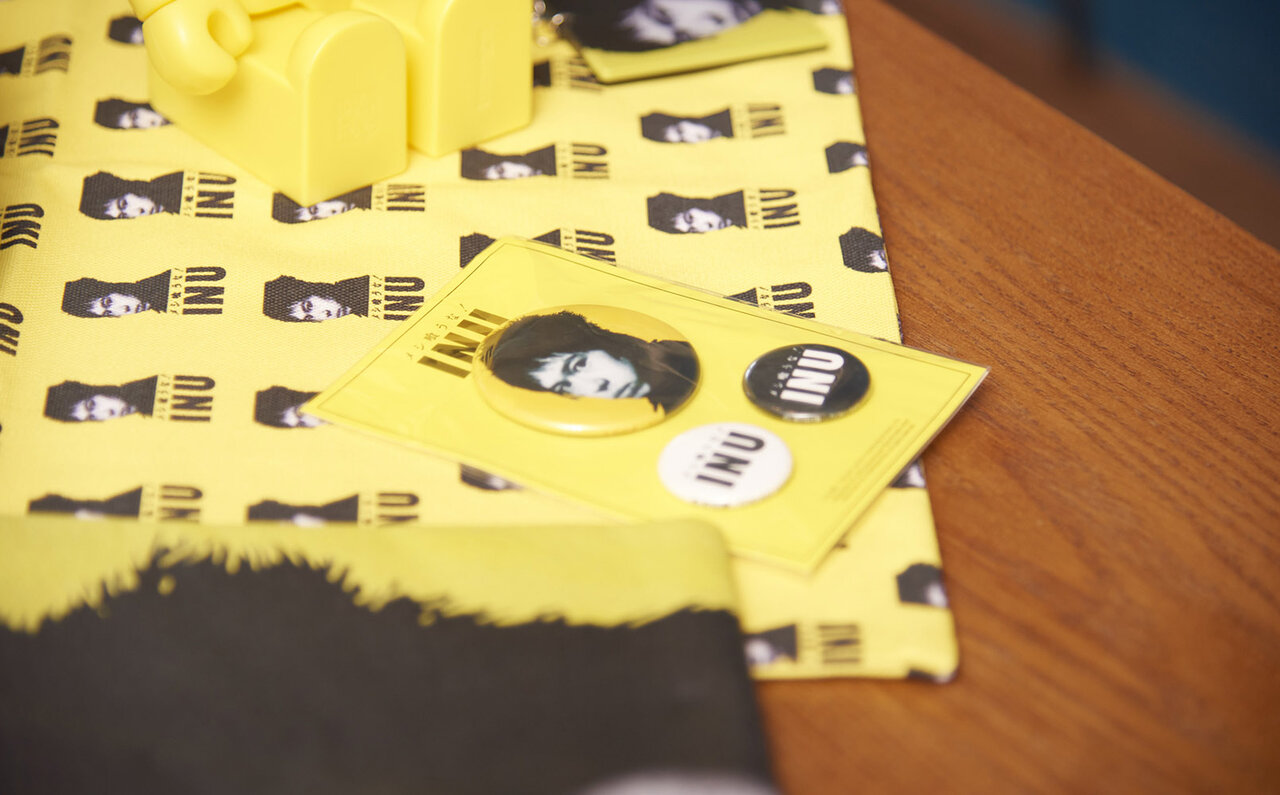
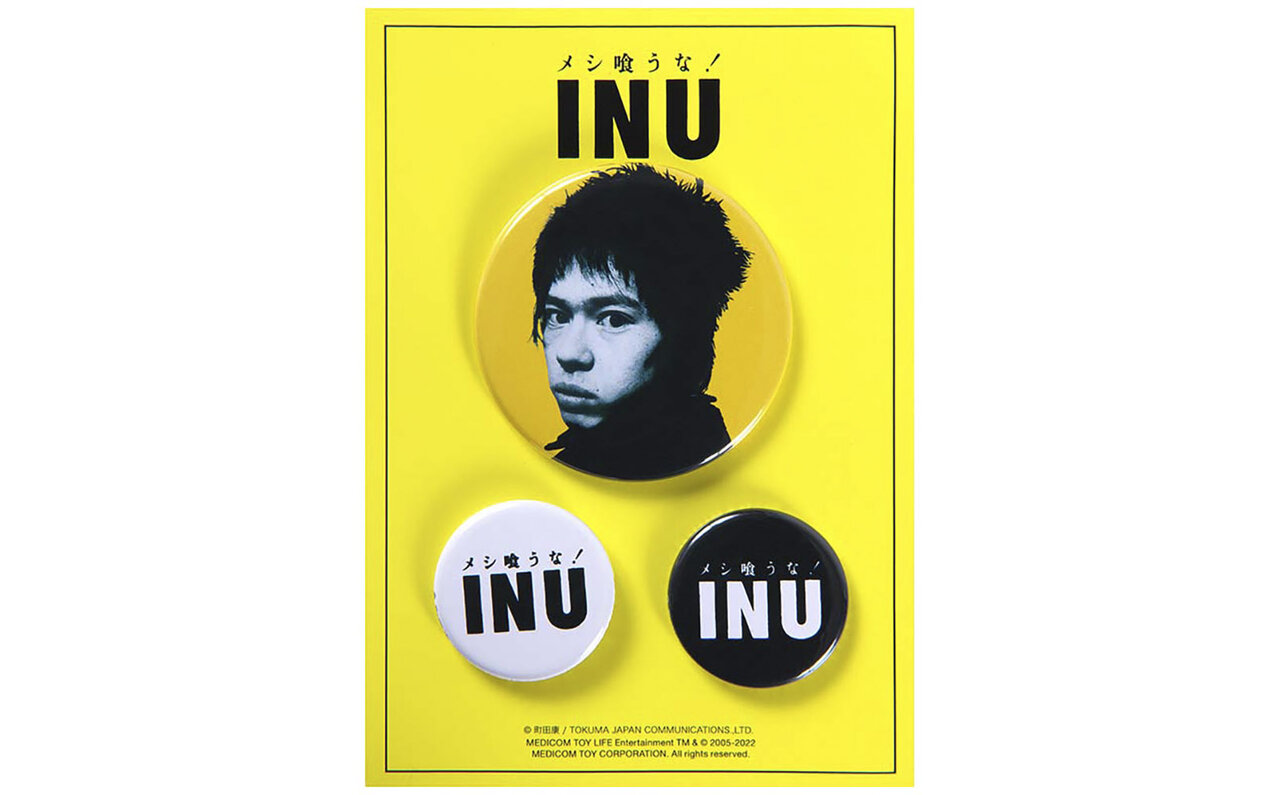
(Picking up a can badge) I used to wear things like this when I was young. I liked the band BUZZCOCKS back then, and I wore a badge when I went to driving school. The instructors back then were scary, unlike today. They had perms and looked tough. He probably didn't like my BUZZCOCKS badge. He asked, "What's that? What does it mean?" When I replied, "It means a horny dick," he was dumbfounded and said, "Are you crazy?" (laughs). Well, anyone who understands English would probably think that, but that was my way of living at the time.
—By the way, were there times when you didn't want to talk about "Don't Eat!" anymore, even when asked?
MachidaYes, there were. And people didn't ask about it that often either.
—So now you're okay with looking back?
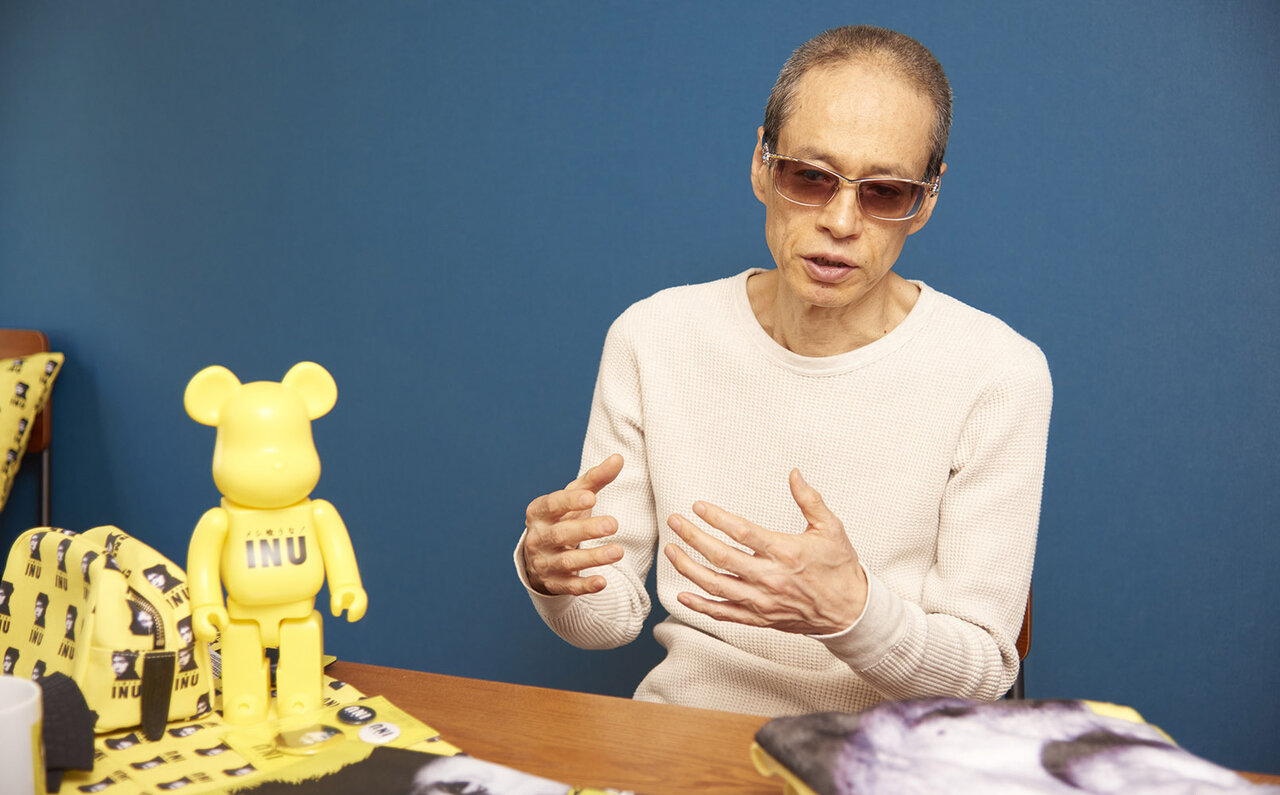
Machida(Looking at the merchandise spread out before him) Well, now that they've gone this far... (laughs).
—Who gave permission for this project?
MachidaWell, in the end, everyone values image. You often hear about "artist image," right? I used to think image was worthless. I'd say things like, "People with no substance deceive others with just their image and do business, but I will never do that!" since I was about 16. But the people around me in the record companies didn't understand what I was saying. They'd say, "Even so, image is important, isn't it?"
So, it's not that I'm particularly attached to things I did in the past. I don't cherish them, and I'm not like others who say, "What will happen to my image if they do this!" I don't have that. However, I dislike it when people use it for their own business. You could argue that this is business, but it's not my business. While I do receive some money, it's not my main focus. The reason I didn't want to talk about it was because I didn't want to make it my business. But if someone asks me to do something like this because they want to, then, as I said before, I'm happy about it. Because I'm human. That's how it is.
—You also work as an actor, and it's true that in your music activities, you don't "play" Machida Machizo or Kō Machida.
MachidaConversely, it reassures fans when they do that for me (laughs). They want me to do it. Everyone does. So, by staying within that framework, business proceeds smoothly and stably. However, I suddenly started writing novels, you see? Some might think that's also playing a role, but I've always thought image was unimportant, so I don't do theatrical performances myself.
I'm not saying this way of living is good or bad, nor am I boasting about it, but I believe there has been a certain consistency from that time to the present. There are parts where I think a little more flexibility might have been good.
—May I include what you've just said in the interview?
MachidaPlease include it in a good way. Try not to damage my image (laughs).
—Understood (laughs). Let's return to the merchandise. When the lineup was first proposed, were there any items you asked to be removed?
MachidaI asked them to remove the slippers. It felt like my own face was being stepped on, you know? I'm glad there weren't any toilet papers planned (laughs). As for the designs, I was shown them, but of course, I didn't say things like "Do it more like this." I suppose it's seen as a kind of cultural icon. More than an individual, it's a symbol of the culture of around 1980-81. Honestly, I feel it's somewhat detached from what we actually did.
—This is something that could only be realized 42 years later.
MachidaYes. There were certainly times when I didn't want to talk about INU, or even hear about it or see it. But that was only until my mid-30s. I hadn't quite moved past it. The turning point was probably after I became a writer. I thought, "That's from the past." Now, the time I spend doing things other than that is far longer. The length of time might also be a factor.
—The culture of the 1980s is still popular today, and it seems people are seeking the unique energy that existed only back then.
MachidaLooking at photos of live houses from that era, the eyes of the audience are different. Everyone is glaring, and there's a sense of urgency. Now, everyone is smiling and there's a sense of unity, but back then, each person faced the stage alone in their solitude. The way society demanded things was probably different in quality too. If young people find something in the music of that era, I can understand that they are probably seeking that sense of urgency that is absent today.
—Do you have any final words for those who will listen to "Don't Eat!" for the first time?
MachidaYou are free to feel whatever you wish. As with listening to any music, I want you to listen to what resonates with your soul, with your own sensibilities.
Four years ago, at an event called "Natsu no Mamono," I performed about four or five INU songs. I wondered if I could sing them, but I managed to sing them reasonably well. Young musicians played with me, and their drumming was better than I remembered from back then.
—We hope you'll perform them again if the opportunity arises.
MachidaWell, I'll do it if you pay me (laughs). Maybe I'll do it when the time comes, or maybe I'll just die like this.
—What are the plans for your band "Nare, Waga Tami ni Arazu"?
MachidaI've decided to wrap that up. However, I recorded enough for an album around March of last year. The mixing is done, and it's ready to be released at any time. I don't really know why I haven't released it yet (laughs).
—You started as a full-time faculty member in the Faculty of Letters at Musashino University this spring. How have the students reacted?
MachidaAfter a lecture, a student came up to me and asked, "Professor, are you acquainted with Jun Togawa?" When I said, "Yes, I know her," they seemed incredibly impressed, as if "Someone who knows Jun Togawa is this close."
—Jun Togawa's song "Suki Suki Daisuki" went viral on TikTok and is very popular among young people.
MachidaThere must be power in words. The power of expression that is still received after nearly 40 years.
Well, new generations will create their own interesting cultures, so I don't think old people should interfere. However, since having various perspectives is beneficial, I do want to teach them what I can, by showing them that there are different ways of looking at things.
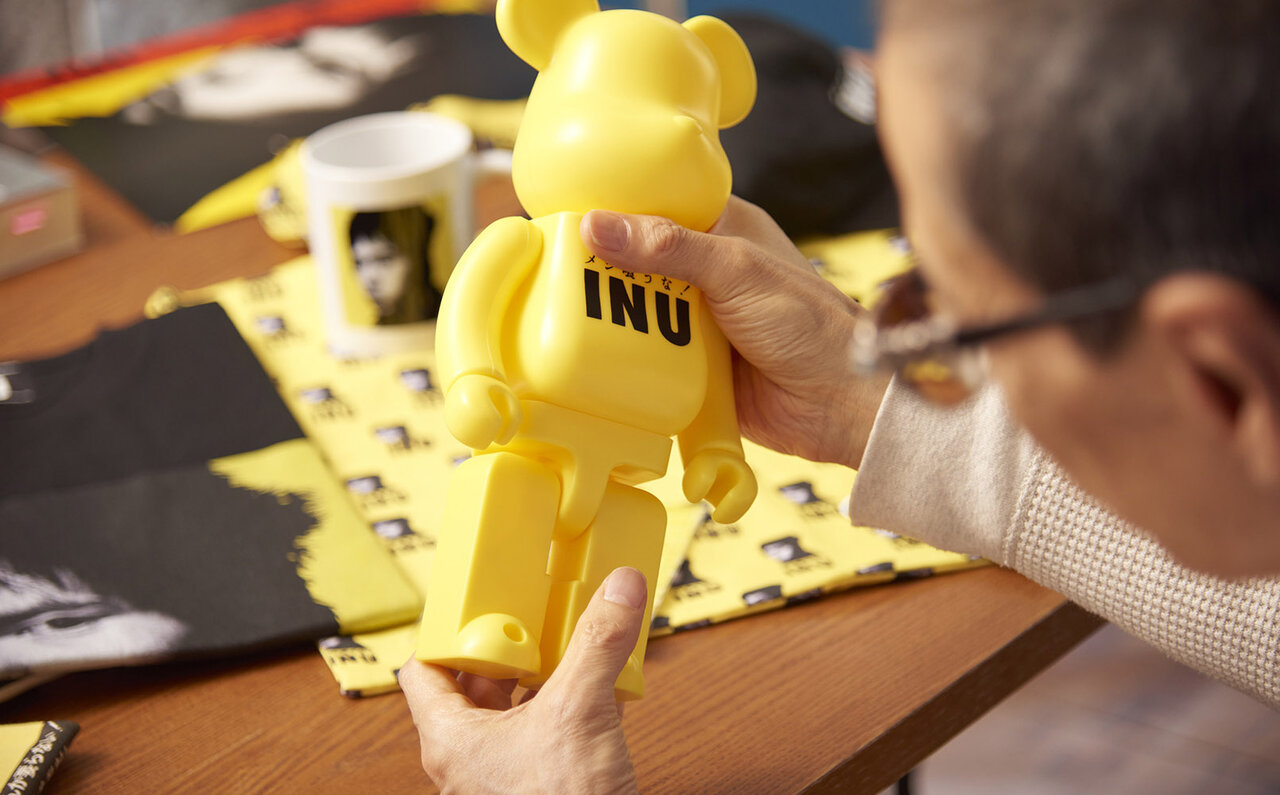
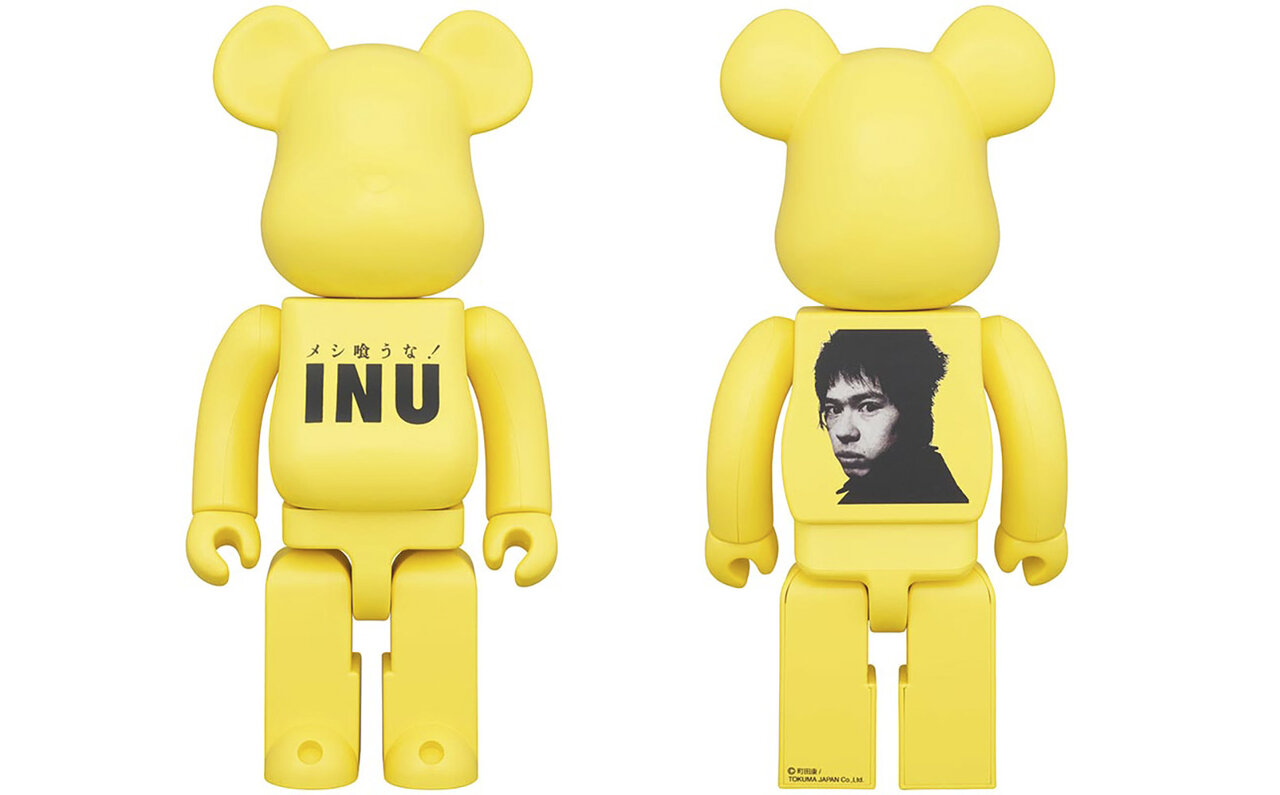
BE@RBRICK INU 400%
Size | Approx. 280mm in height
Price | ¥11,000 (incl. tax)
How to Purchase | Orders will be accepted from Wednesday, May 24, 2023, 0:00 to Saturday, June 10, 2023, 23:59 at MCT TOKYO (http://mct.tokyo). Scheduled for release and shipping in August 2023 at MEDICOM TOY's directly managed stores, online stores, and other select retailers.
© Machida Kō / TOKUMA JAPAN COMMUNICATIONS.,LTD.
MLE × INU "Don't Eat!"
How to Purchase for All Items | Orders will be accepted from Wednesday, May 24, 2023, 0:00 to Saturday, June 10, 2023, 23:59 at MCT TOKYO and other select retailers. Scheduled for release and shipping in July 2023 at MEDICOM TOY's directly managed stores, online stores, and select retailers (only the "CREW NECK SWEATER" is scheduled for release and shipping in August).
*Product photos are of a sample under supervision. Actual product may differ slightly.
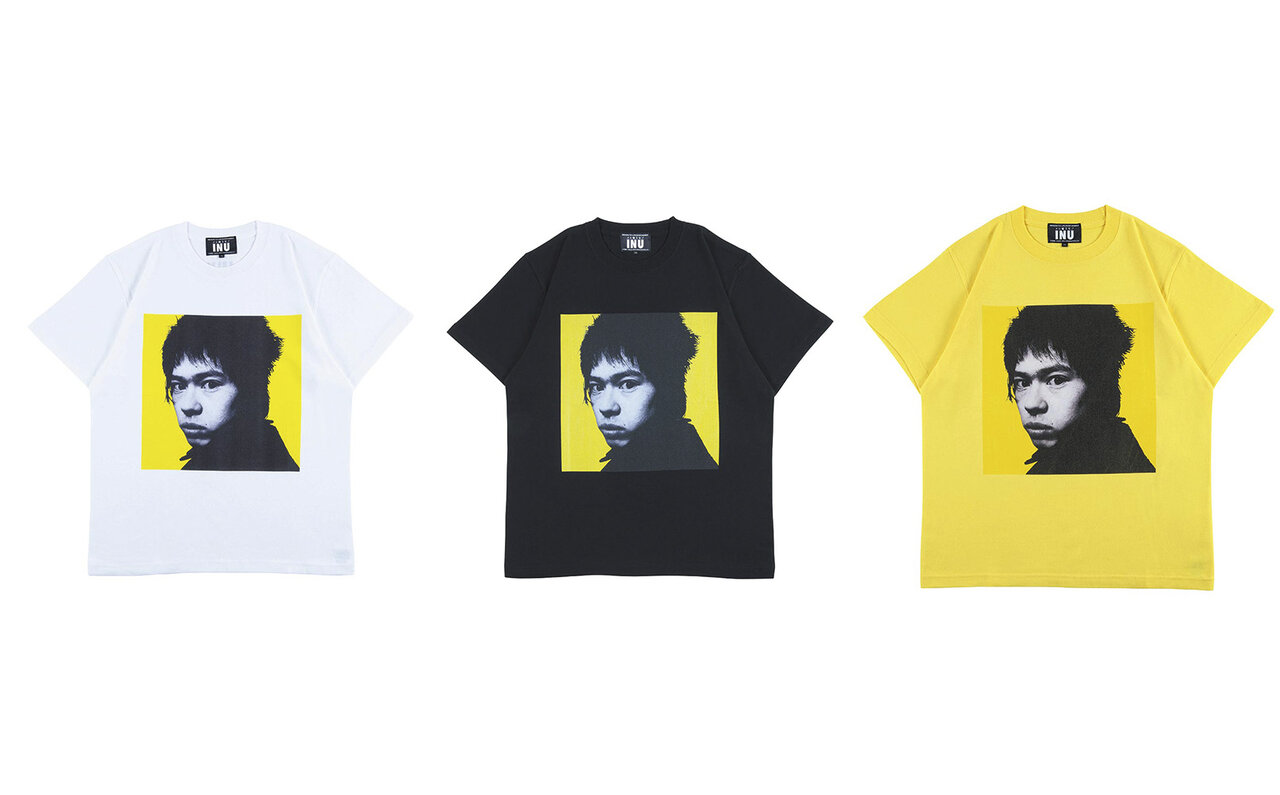
TEE 01
Color | WHITE, BLACK, YELLOW
Size | S, M, L, XL, XXL
Price | ¥6,380 (incl. tax)
© Machida Kō / TOKUMA JAPAN COMMUNICATIONS.,LTD.
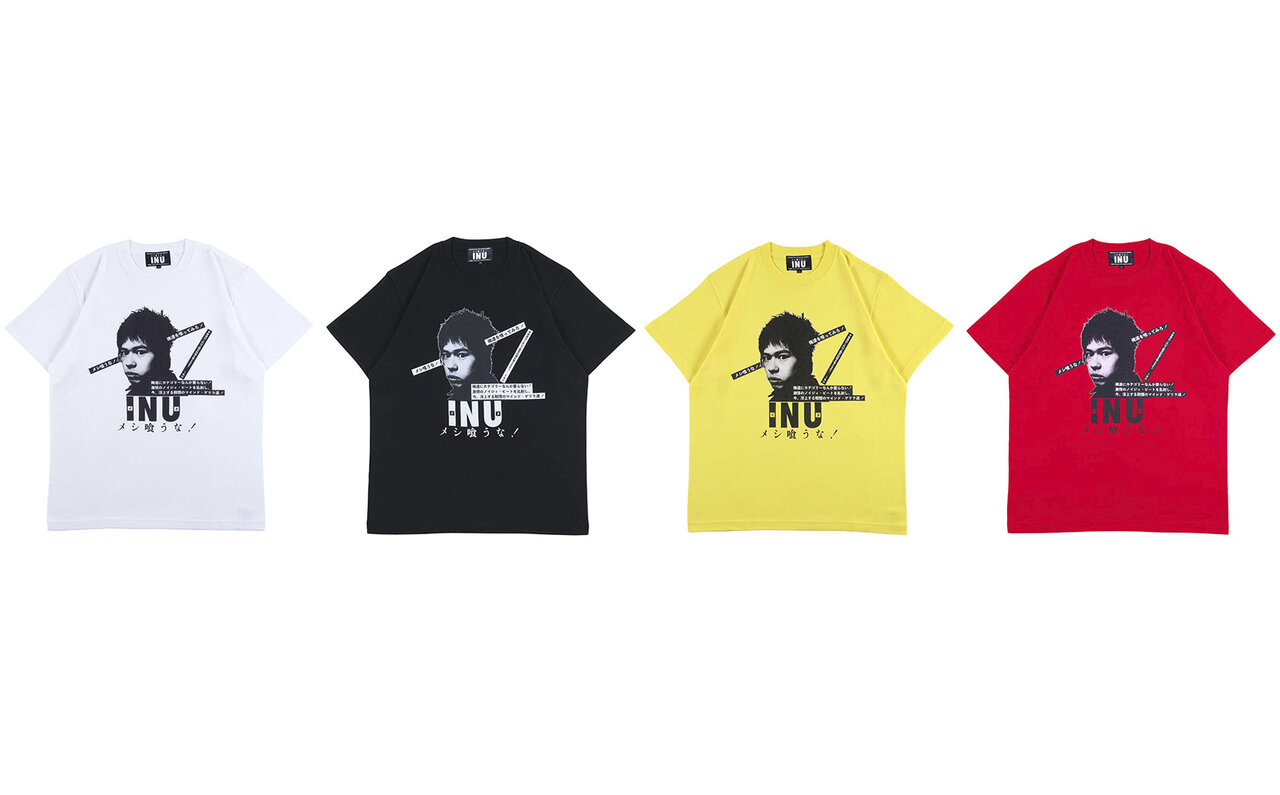
TEE 02
Color | WHITE, BLACK, YELLOW, RED
Size | S, M, L, XL, XXL
Price | ¥6,380 (incl. tax)
© Machida Kō / TOKUMA JAPAN COMMUNICATIONS.,LTD.
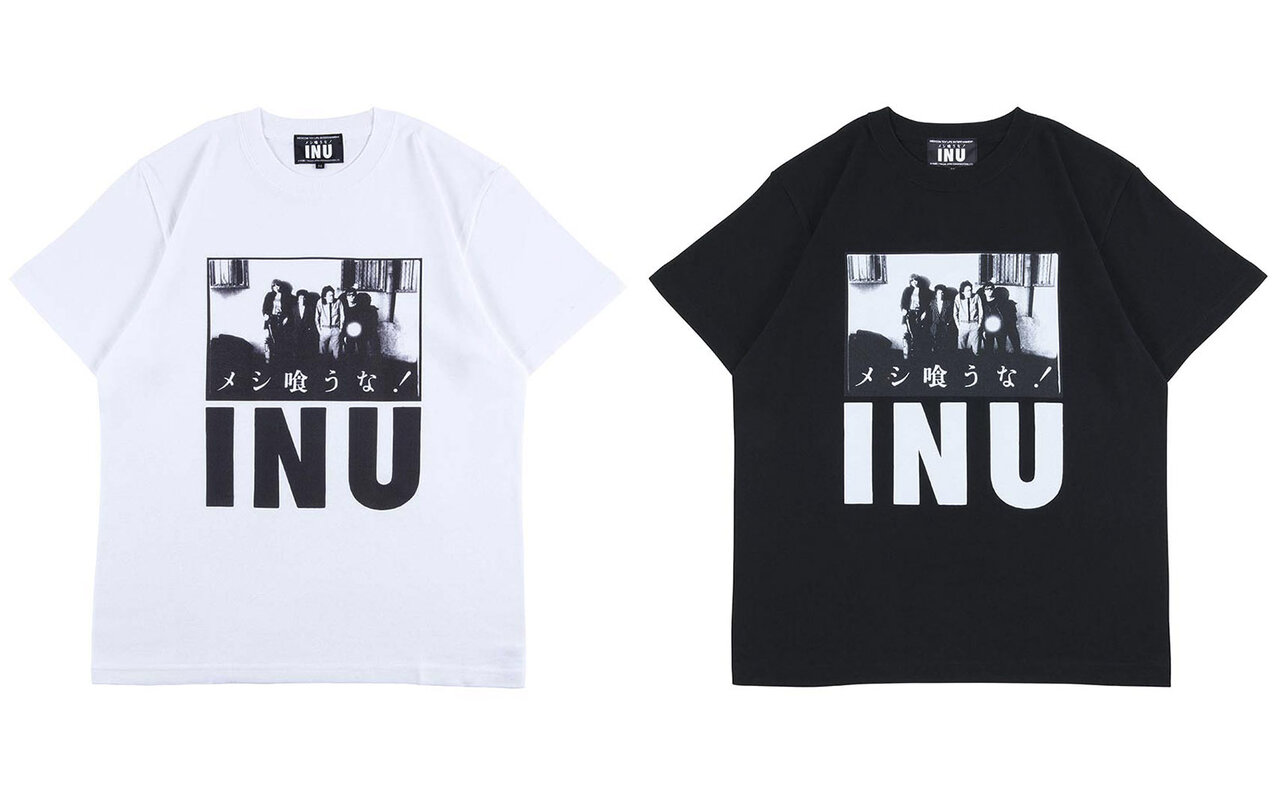
TEE 03
Color | WHITE, BLACK
Size | S, M, L, XL, XXL
Price | ¥6,050 (incl. tax)
© Machida Kō / TOKUMA JAPAN COMMUNICATIONS.,LTD.
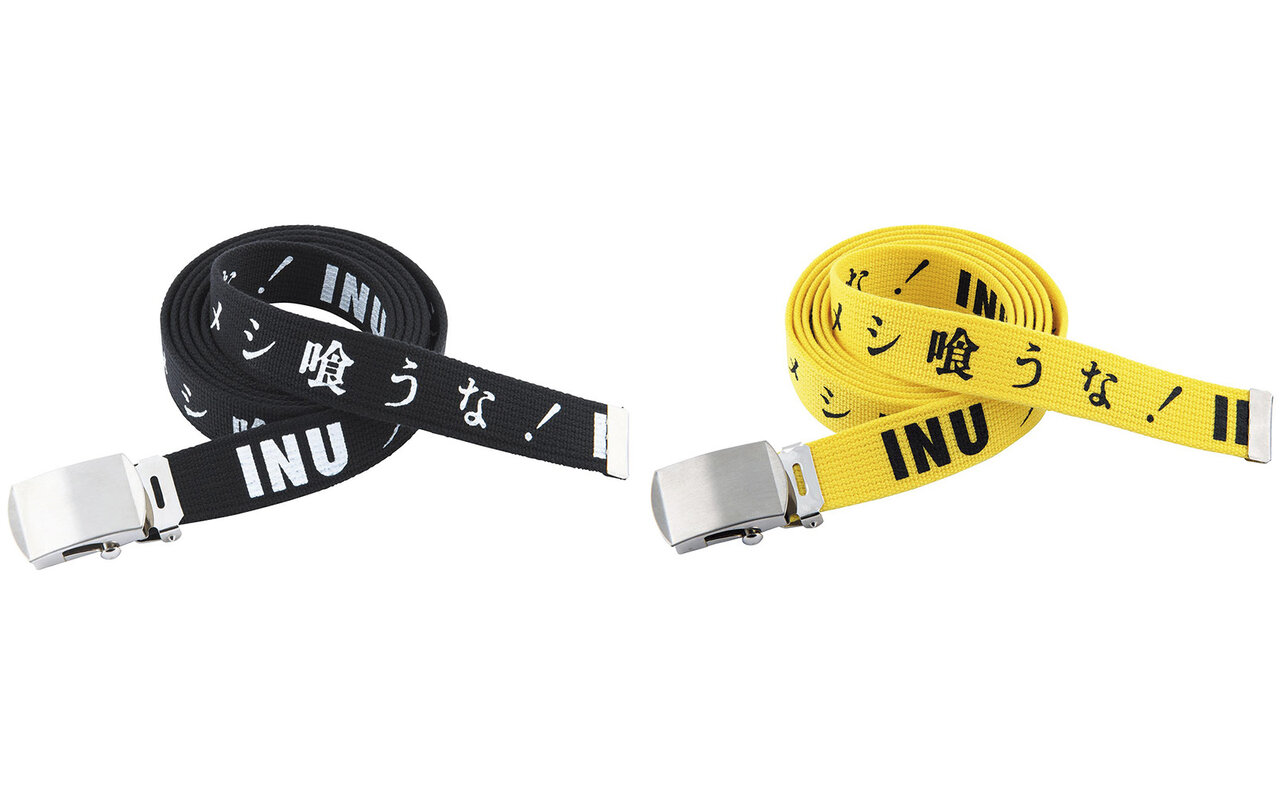
BELT
Color | BLACK, YELLOW
Size | W30mm × H1650mm
Price | ¥4,950 (incl. tax)
© Machida Kō / TOKUMA JAPAN COMMUNICATIONS.,LTD.
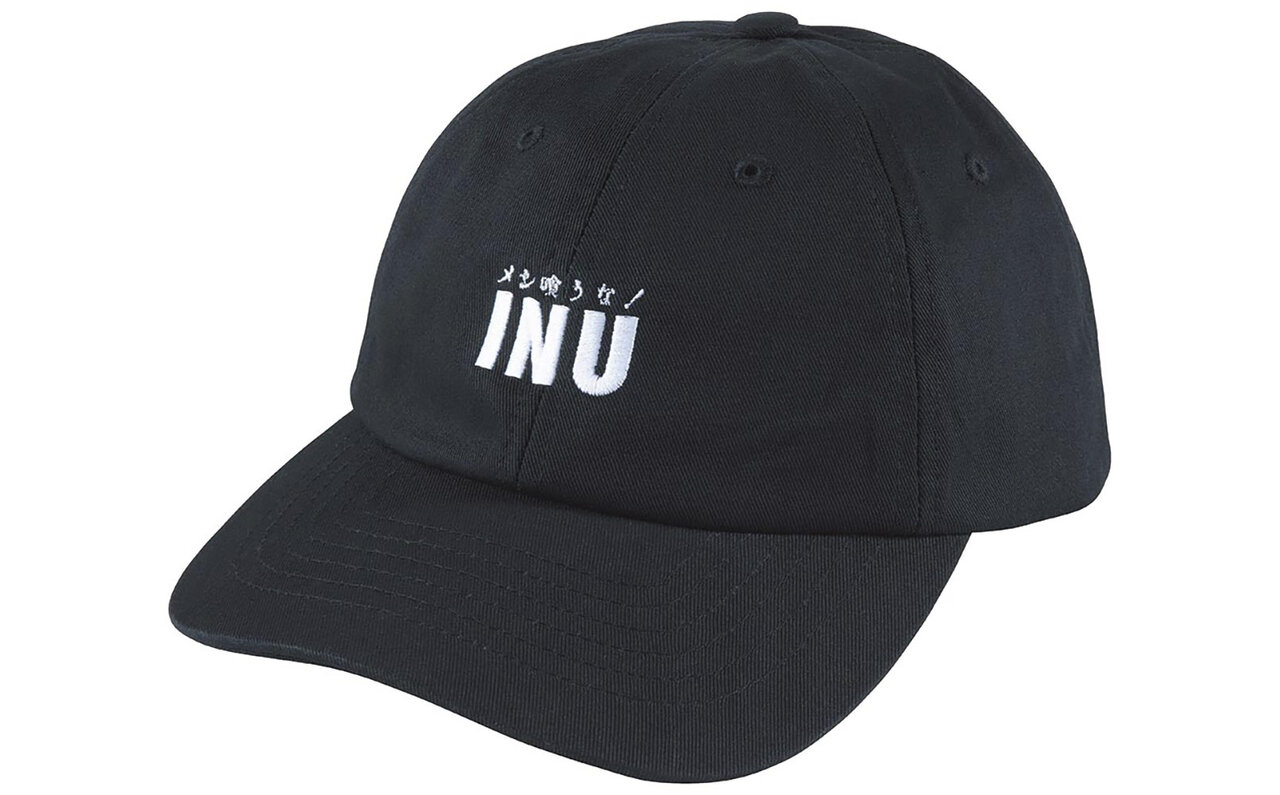
CAP
Size | FREE (55cm~60cm)
Price | ¥4,950 (incl. tax)
© Machida Kō / TOKUMA JAPAN COMMUNICATIONS.,LTD.
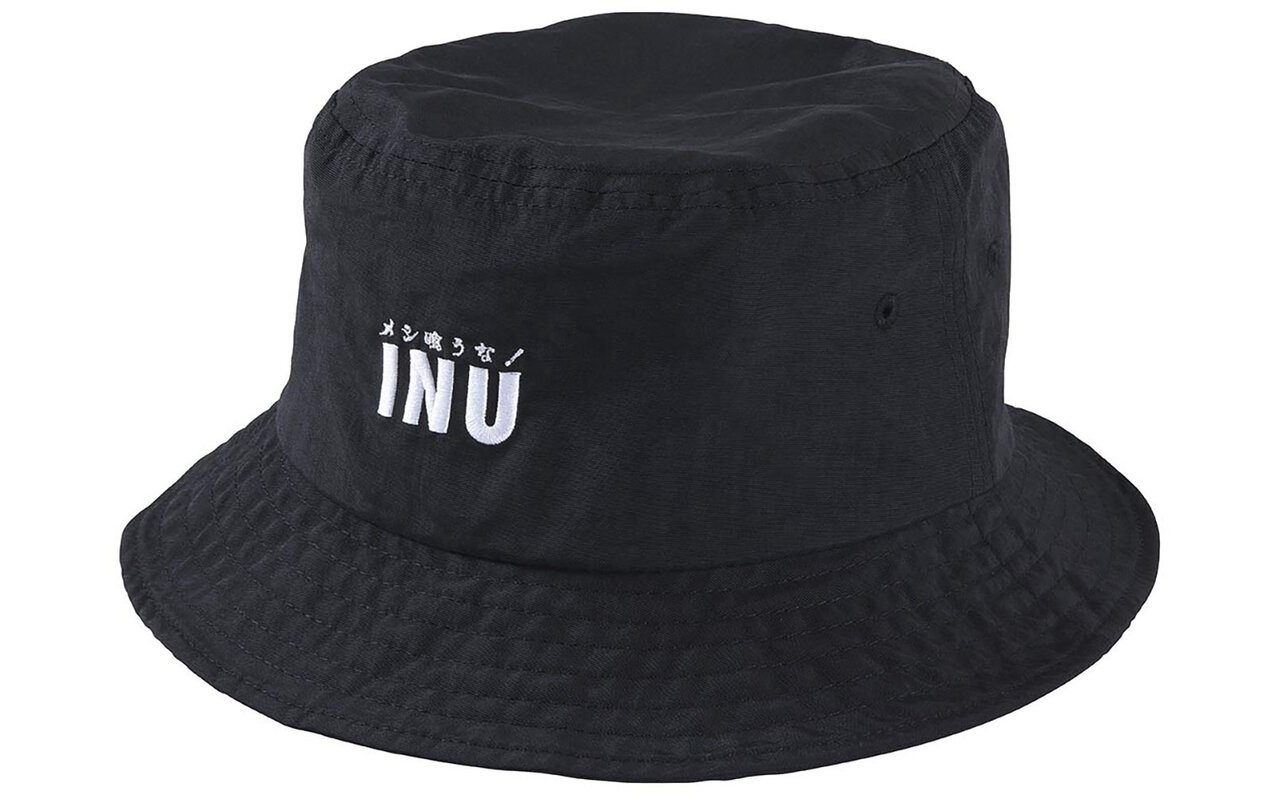
HAT
Size | FREE (60cm)
Price | ¥5,280 (incl. tax)
© Machida Kō / TOKUMA JAPAN COMMUNICATIONS.,LTD.
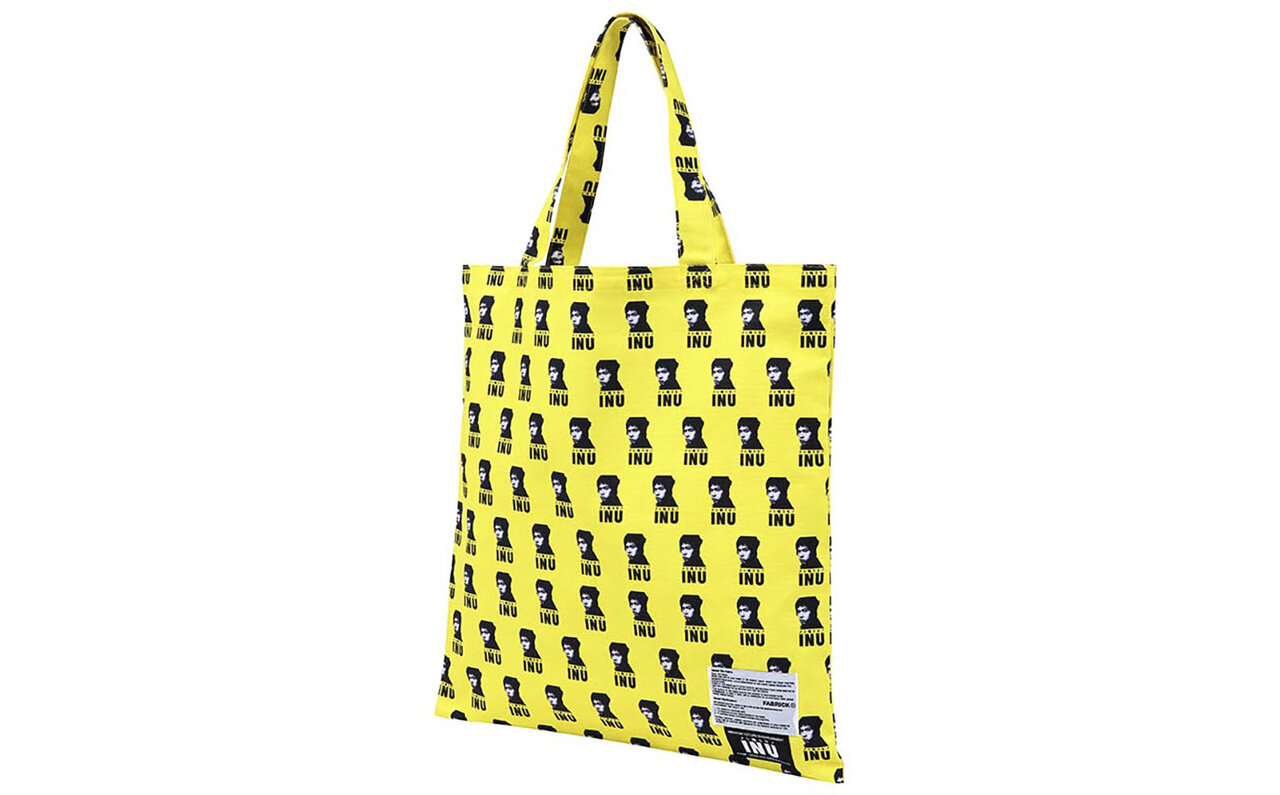
TOTE BAG
Size | W440mm × H430mm
Price | ¥5,500 (incl. tax)
© Machida Kō / TOKUMA JAPAN COMMUNICATIONS.,LTD.
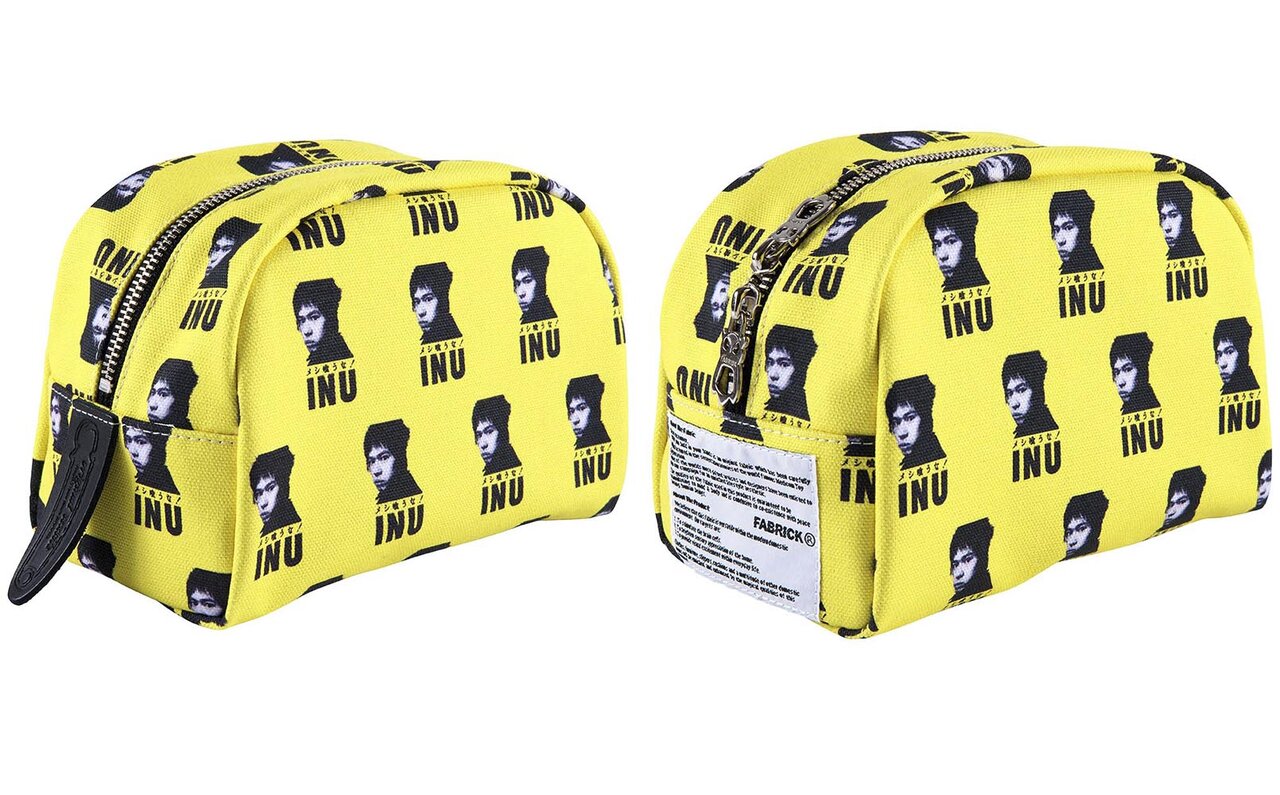
POUCH
Size | W200mm × H130mm × D110mm
Price | ¥6,380 (incl. tax)
© Machida Kō / TOKUMA JAPAN COMMUNICATIONS.,LTD.
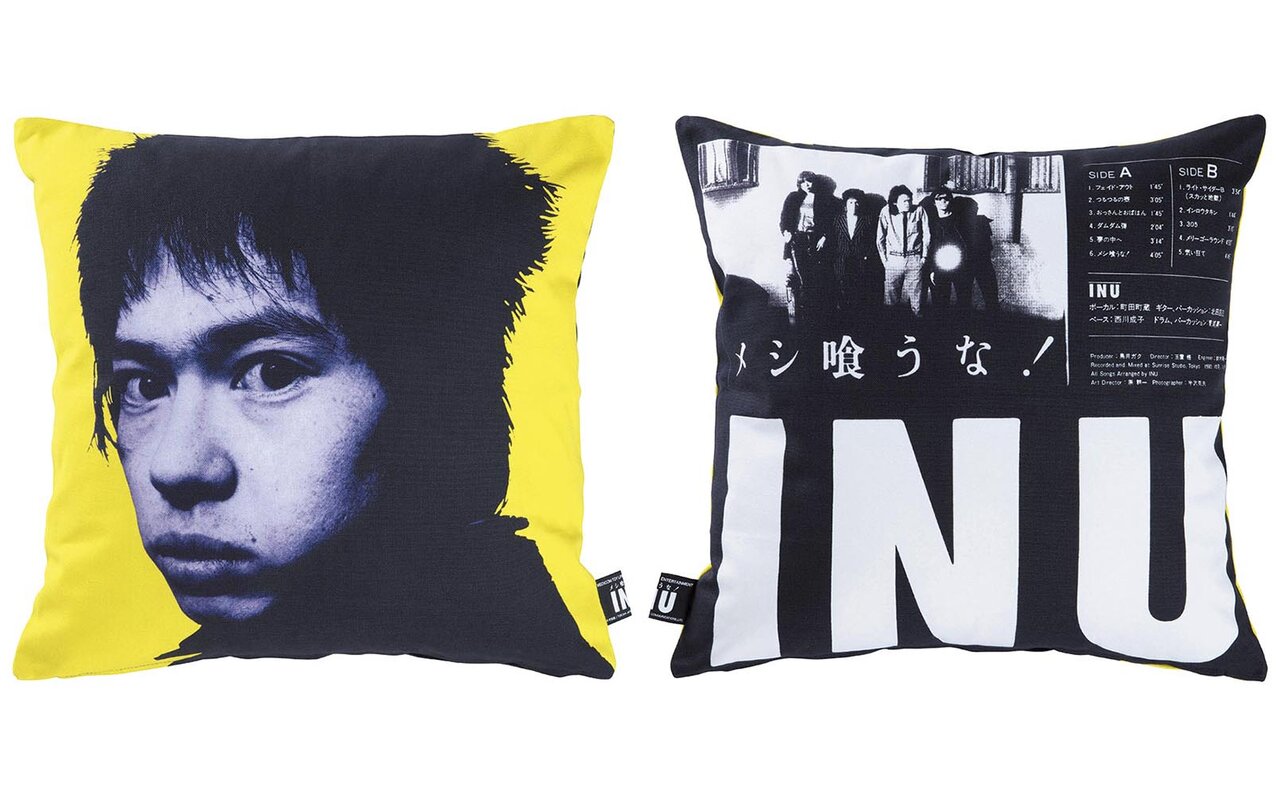
SQUARE CUSHION 01
Size | W450mm × H450mm
Price | ¥8,250 (incl. tax)
© Machida Kō / TOKUMA JAPAN COMMUNICATIONS.,LTD.
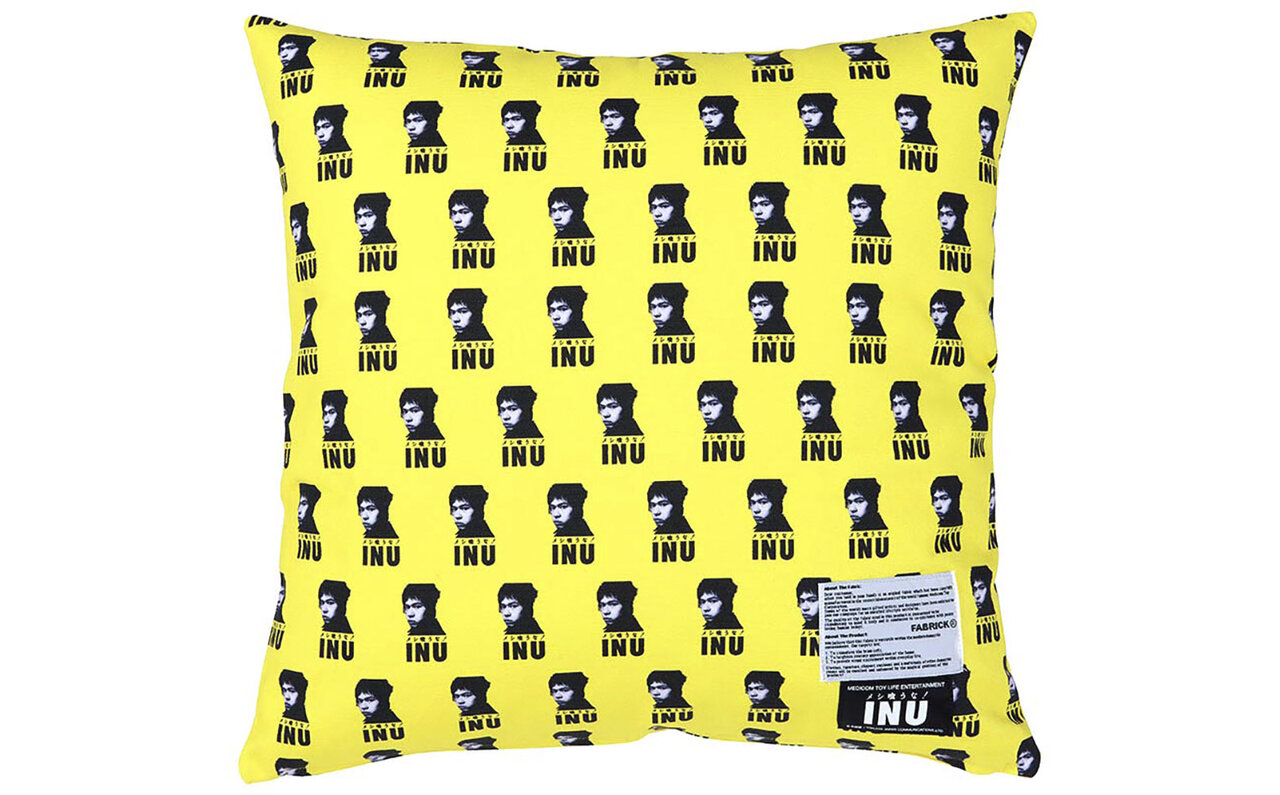
SQUARE CUSHION 02
Size | W450mm × H450mm
Price | ¥8,250 (incl. tax)
© Machida Kō / TOKUMA JAPAN COMMUNICATIONS.,LTD.
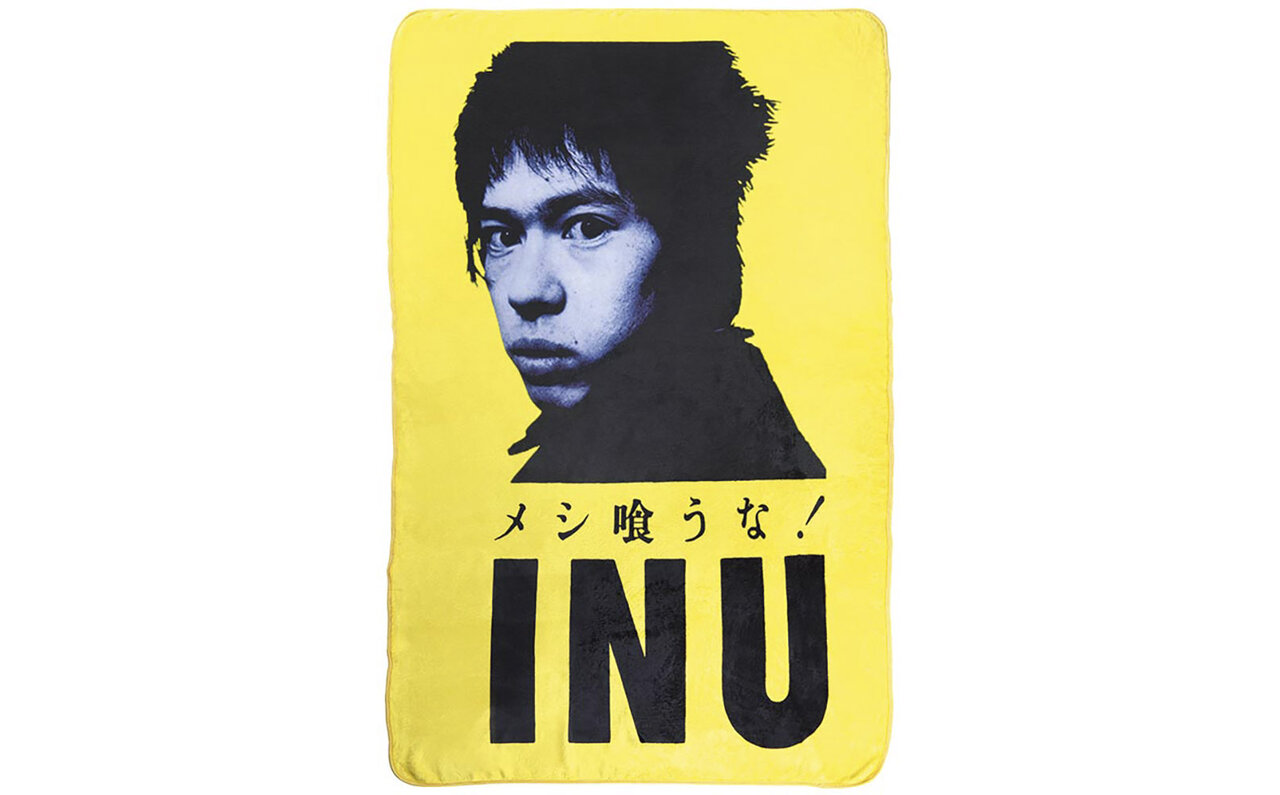
FLEECE BLANKET
Size | W1030mm × H1750mm
Price | ¥6,930 (incl. tax)
© Machida Kō / TOKUMA JAPAN COMMUNICATIONS.,LTD.
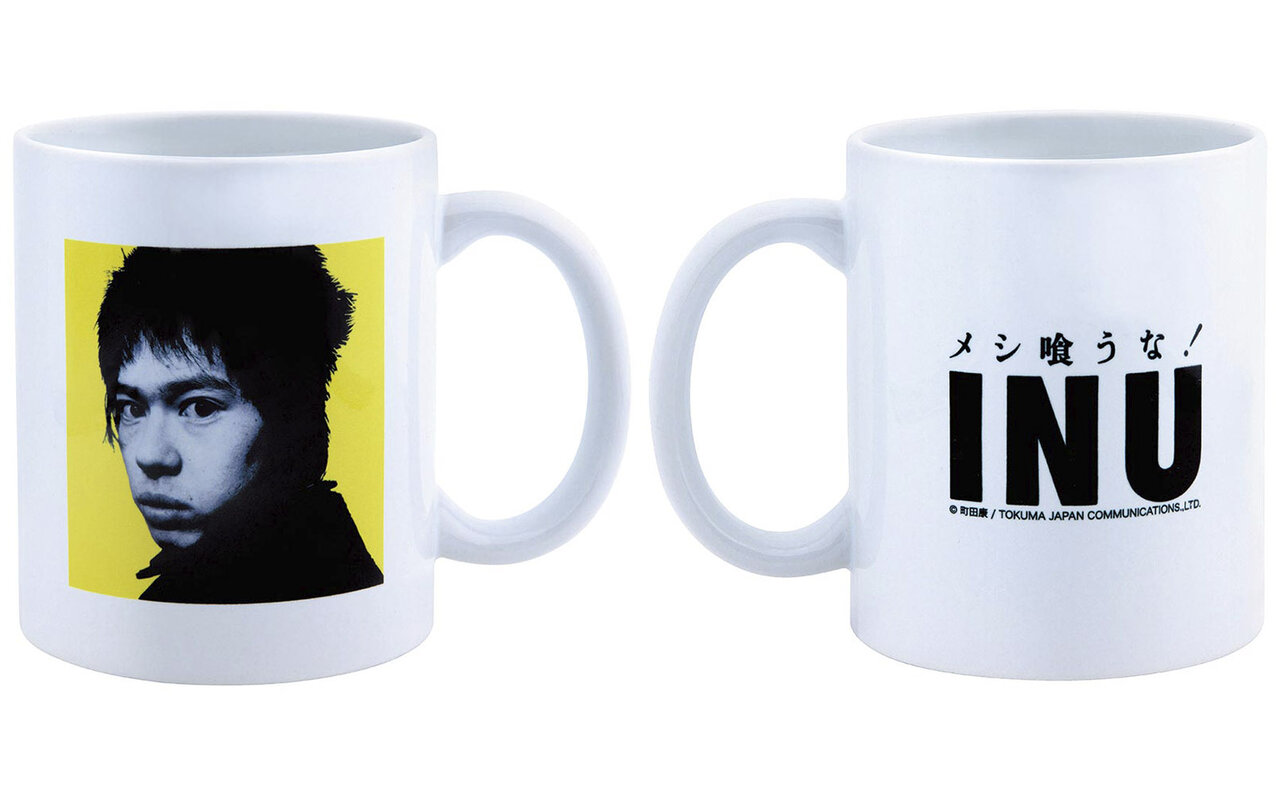
MUG
Size | φ80mm × H92mm
Price | ¥1,980 (incl. tax)
© Machida Kō / TOKUMA JAPAN COMMUNICATIONS.,LTD.
BADGE SET
Size | φ32mm, φ57mm
Price | ¥1,980 (incl. tax)
© Machida Kō / TOKUMA JAPAN COMMUNICATIONS.,LTD.
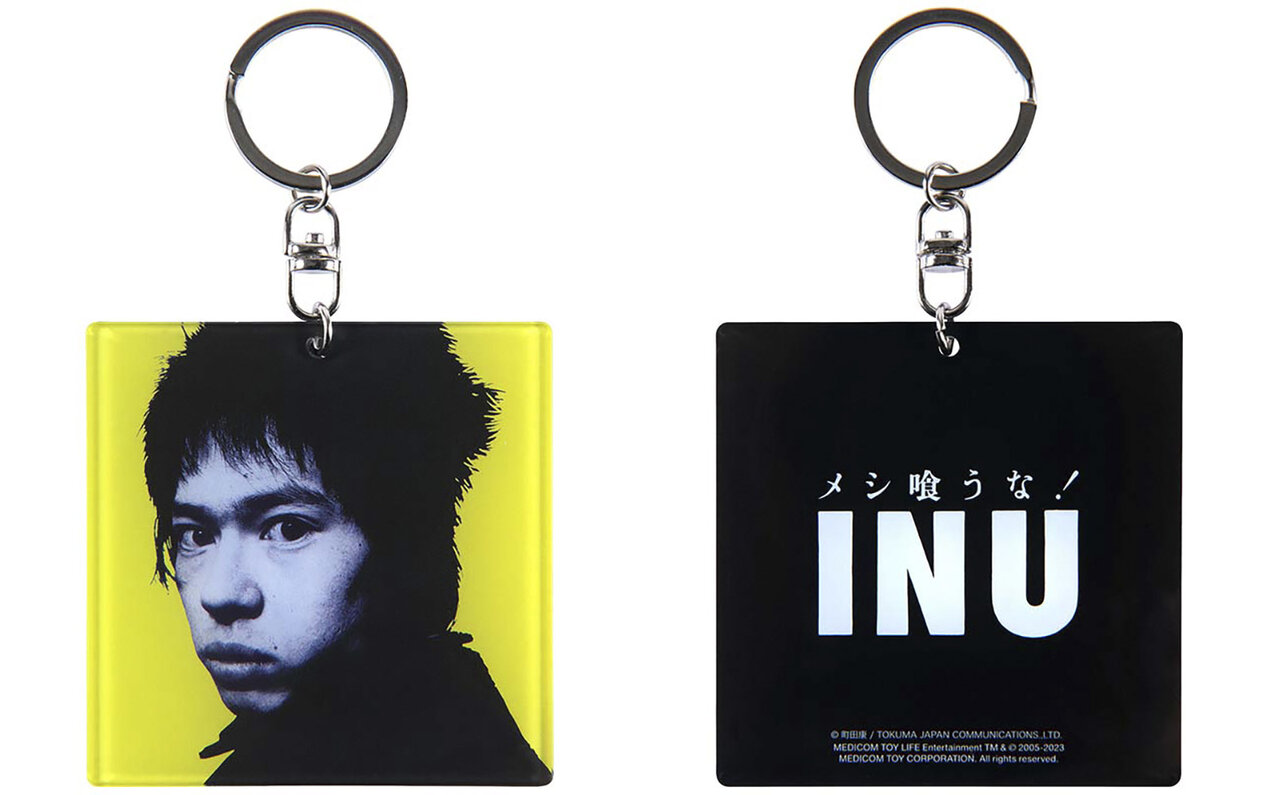
KEY CHAIN
Size | W70mm × H70mm
Price | ¥1,980 (incl. tax)
© Machida Kō / TOKUMA JAPAN COMMUNICATIONS.,LTD.
CREW NECK SWEATER
Size | M, L
Price | ¥31,900 (incl. tax)
© Machida Kō / TOKUMA JAPAN COMMUNICATIONS.,LTD.
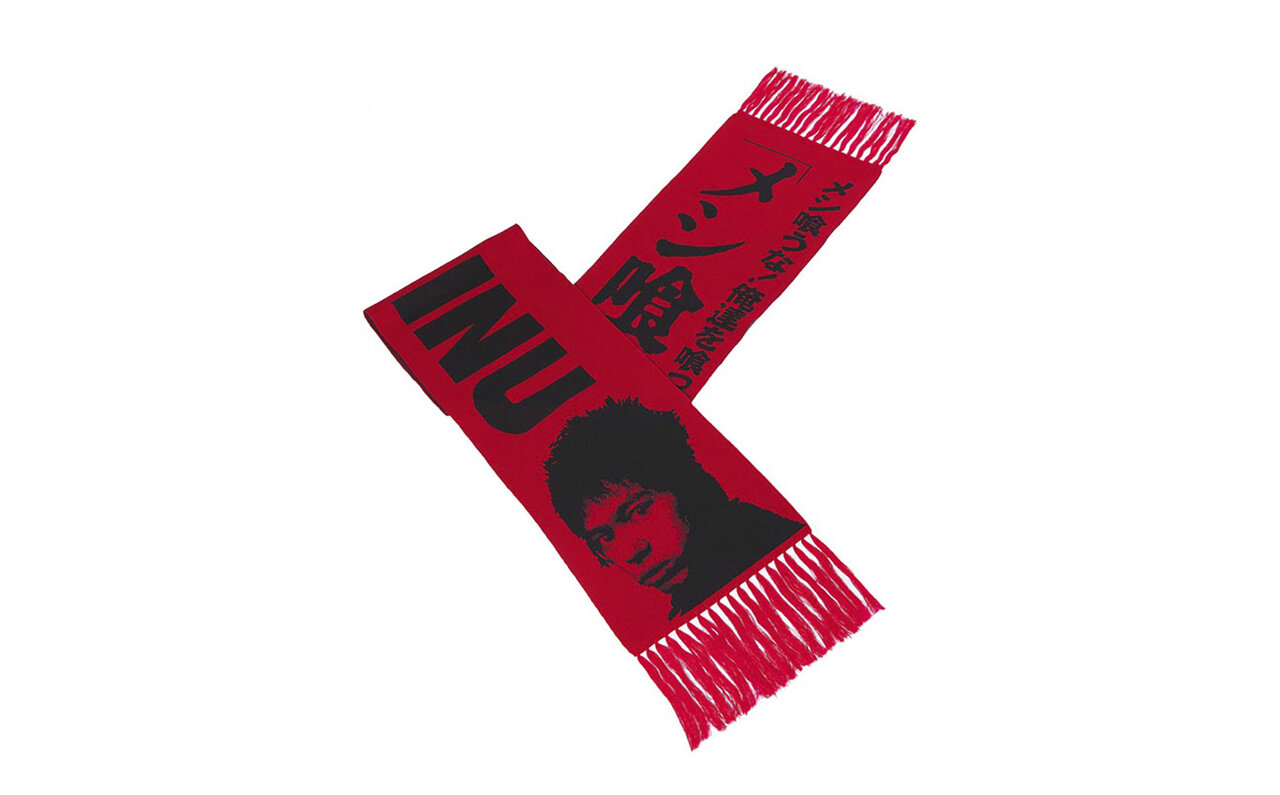
KNIT SCARF
Size | W1800mm × H300mm
Price | ¥20,350 (incl. tax)
© Machida Kō / TOKUMA JAPAN COMMUNICATIONS.,LTD.
Inquiries
MEDICOM TOY User Support
Tel. 03-3460-7555