
August 4, 2025
A gallery-like garage house adjacent to the living room. Architect Tatsuya Ogawa discusses a new spatial design for living with cars.
THE GRANDUO
The ideal for car enthusiasts: a life that cherishes automobiles. What conditions are necessary to create such a garage house? Architect Tatsuya Ogawa, who has worked on luxury rental properties like the THE GRANDUO series, shares his insights from design principles to air conditioning, lighting, and fire safety regulations from a professional perspective.
Text by AOYAMA Tsuzumi | Photographs by TAKAYANAGI Ken, THE GRANDUO (FaithNetwork)
"Garage house." What scene does this phrase conjure in your mind? A beloved car illuminated by spotlights, a living room at night enveloped in silence, with a glimpse of its form beyond. Or perhaps, a scene like a small private exhibition, unfolding beyond an open window on a weekend morning.
"Actually, creating such a 'special space' requires more meticulous design and aesthetic sensibility than you might think," says architect Tatsuya Ogawa (16Architects), who has designed numerous residences and facilities for affluent clients, primarily in Tokyo. He elaborates on the essence of garage houses.
Ogawa has experience designing a diverse range of projects, from large-scale luxury facilities like the clubhouse for the members-only circuit "THE MAGARIGAWA CLUB" to residences that maximize limited urban plots.
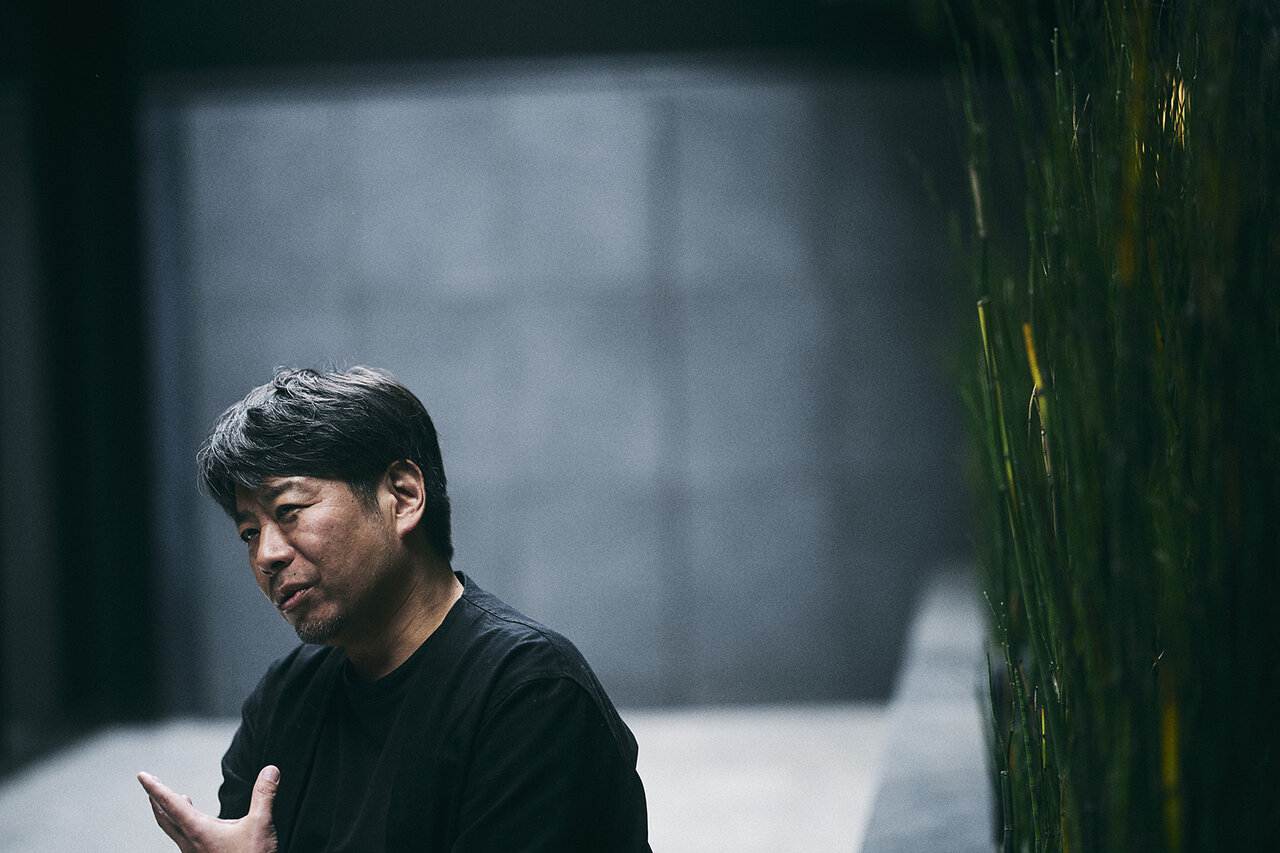
One of the challenges Ogawa highlights in urban design is "how to secure space for two cars plus a comfortable living area within a limited footprint." For instance, a garage should ideally be at least 3 meters by 6 meters, and depending on the car model, even the facade's slope angle needs consideration.
For low-profile vehicles like supercars, the bumper clearance must be calculated precisely to avoid scraping during entry and exit. However, since manufacturers do not readily disclose detailed data, the designer's experience and on-site adaptability become crucial.
Enhancing Space and Connecting with Daily Life
Furthermore, how the garage is "integrated as a space" is a key consideration. Ogawa emphasizes "visual connection." Glass, rather than a wall, is ideal for separating the living room from the garage. A design that allows sightlines to pass through and naturally connects spaces is frequently seen in Ogawa's work.
In THE GRANDUO CHITOFUNA, a recently completed apartment complex, he created "breathing room" through the use of white walls and floors, and careful manipulation of materials and light, giving the garage a more gallery-like appearance than a typical parking space.
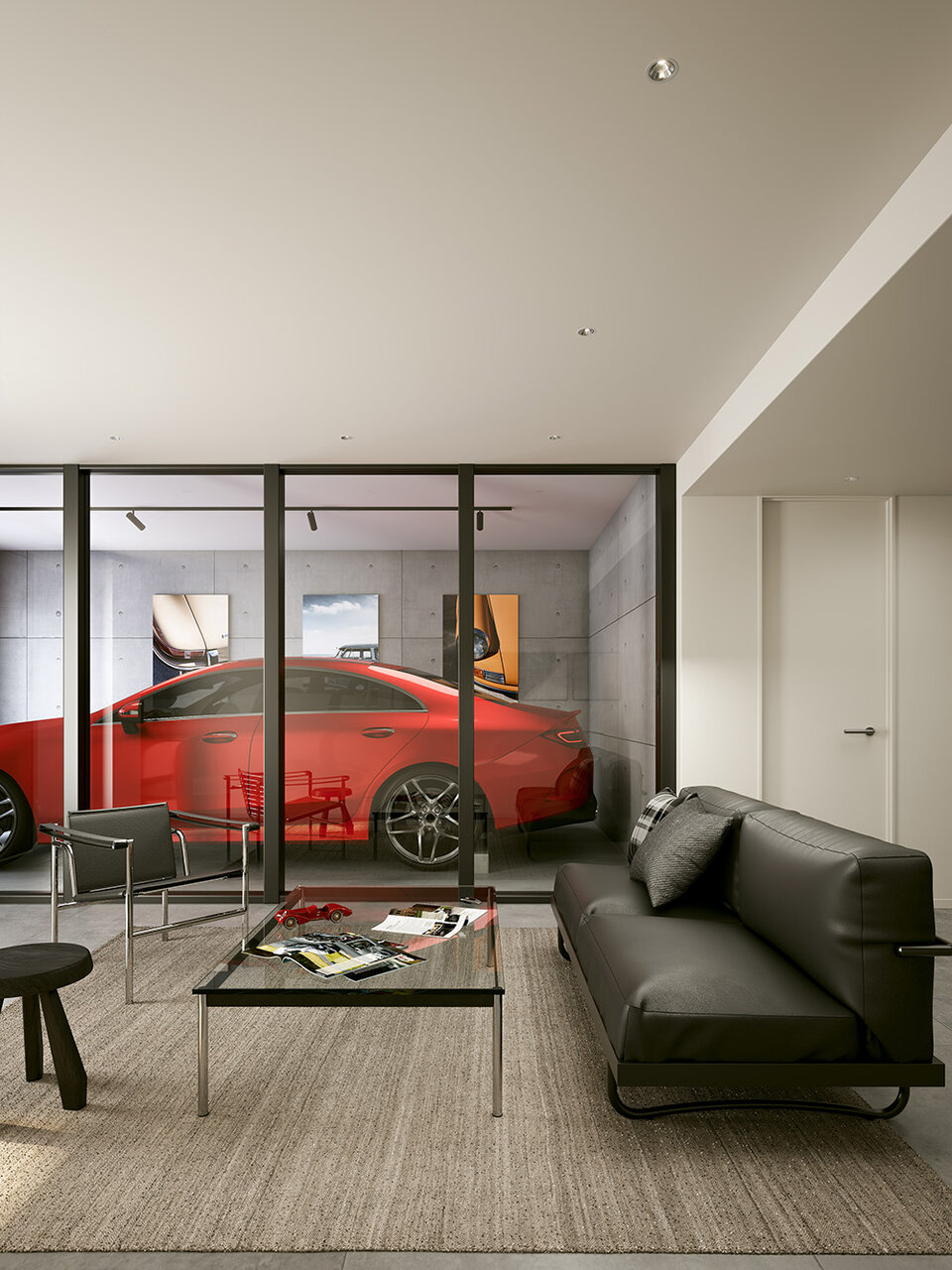
Unit 106 at THE GRANDUO CHITOFUNA. The placement of glass, rather than a wall, between the garage and living room showcases Ogawa's unique aesthetic sensibility and expertise.
With a car parked there, the living space is transformed. The presence of the beloved car becomes an integral part of daily life.
In such configurations, Ogawa considers not only sightlines but also the play of light, the flow of movement, and the balance of structural divisions. The garage is positioned to be adjacent to the living space, rather than isolated, fulfilling both aesthetic and practical demands.
"For example, when inviting friends over for a chat at night, it's more casual for both parties to be led directly into a secondary living area adjacent to the garage, rather than passing through the family living room. However, if it's intended as a secondary residence, that consideration changes. The relationship between the family and the car must be meticulously considered."
We often hear stories of condensation issues in garages of homes with built-in garages due to inadequate air conditioning design, especially during the rainy season. Cars are surprisingly delicate, and components like leather seats are particularly susceptible to moisture. Ogawa states that air conditioning and humidity control, "though often overlooked, are among the most critical points in garage design."
"Ensuring proper ventilation and designing an appropriate air conditioning system are essential. When you consider the garage as a space for yourself and your car, the importance of the air environment is self-evident. Furthermore, the emotional connection differs entirely depending on how you interact with your car. The design approach and specifications change based on whether it's for long-term storage or frequent use."
Looking ahead to the EV era, a new aesthetic of the "quiet garage" may emerge. A space that showcases cars through light and air, rather than engine noise. With reduced issues of exhaust fumes and noise, there's potential for evolution into a more public "display space."
Practical Tips for Urban Construction
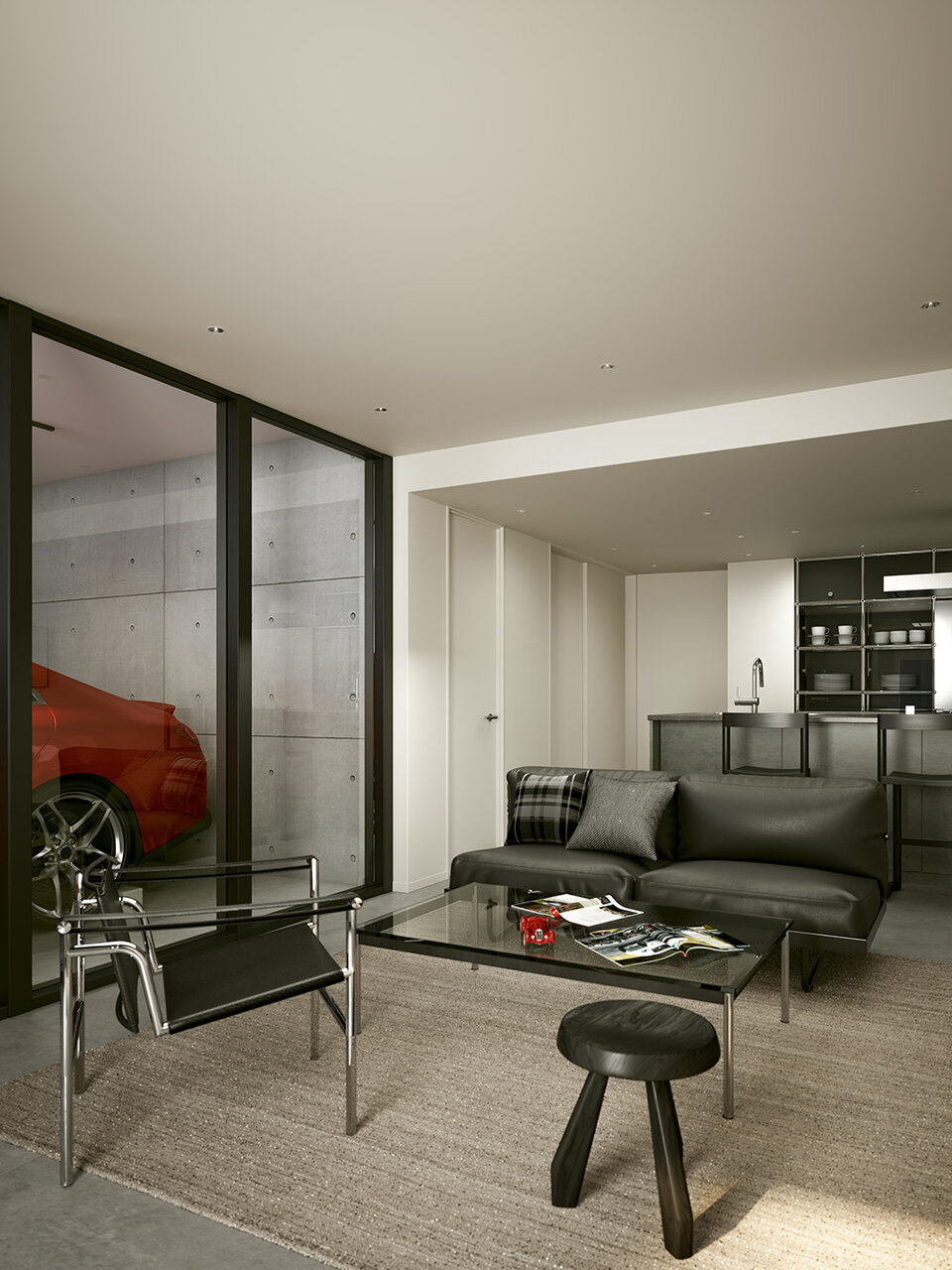
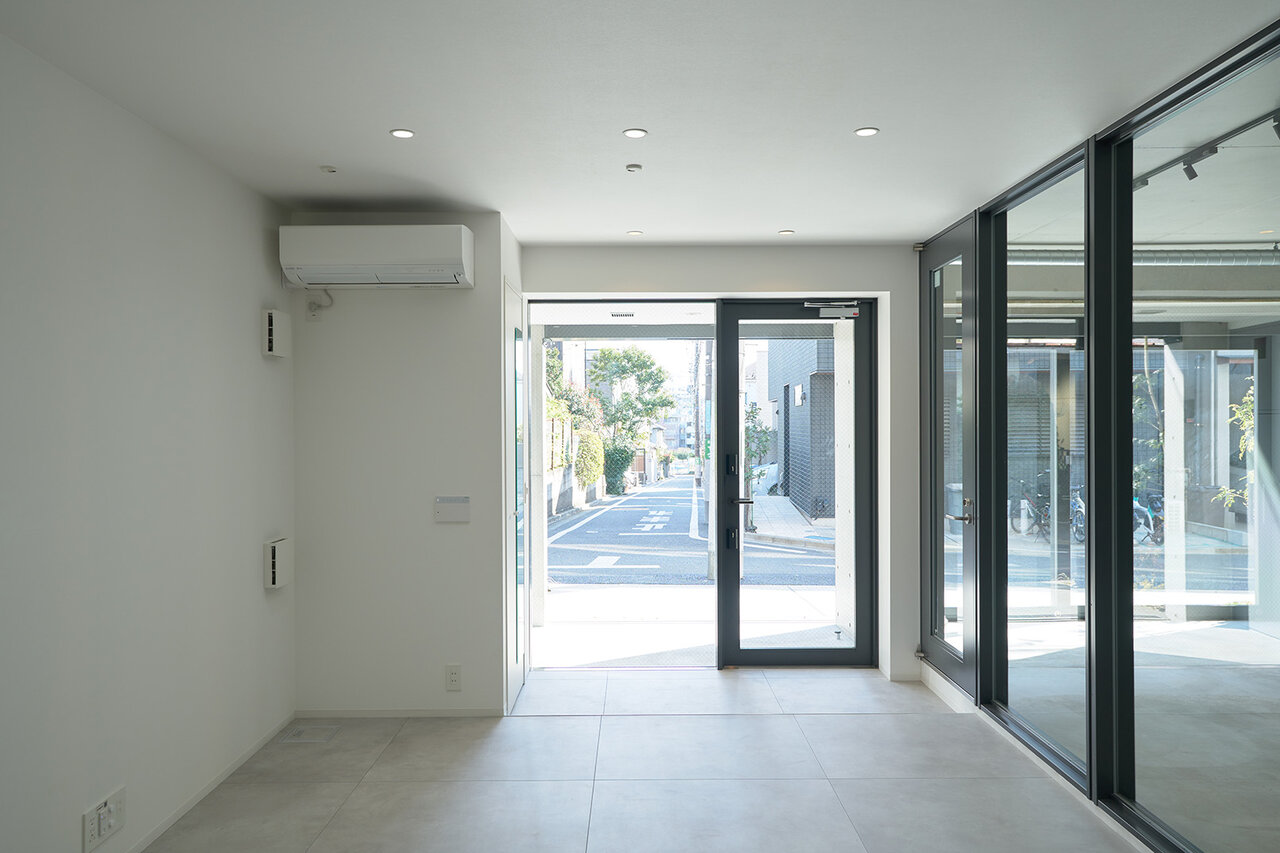
Unit 106 at THE GRANDUO CHITOFUNA. The garage is on the right. A rail for car-illuminating lights is installed on the ceiling.
What's striking about the garage at THE GRANDUO CHITOFUNA is its design, featuring a large glass panel extending to the floor, allowing the car to be viewed like a work of art.
"Actually, that glass also complies with fire safety regulations," Ogawa explains. "To meet the requirements for a specialized fire-resistant facility, we used a highly specialized and costly type of glass. But without this particular glass, the beauty of this space wouldn't have been possible."
Behind details that might seem purely aesthetic are choices made possible by an architect's deep understanding of structure and regulations. Especially when housing large vehicles alongside residential spaces, specialized perspectives on structural design and safety are indispensable.
Consideration for sound, odor, and fire safety is also crucial. In configurations where garages are adjacent to living areas, factors like exhaust and sound ventilation, material selection, soundproofing, and fire compartmentation significantly impact living comfort. Integrating future-proof facilities during the design phase is key.
Furthermore, lighting design influences the spatial experience. "Warm lighting enhances red cars, while cool white light makes yellow cars look more vibrant," says Ogawa.

Storage for tools and tires, power outlets for maintenance, and the arrangement of car washing and charging facilities. In urban garage houses, the effectiveness of equipment planning directly impacts usability. At THE GRANDUO CHITOFUNA, lighting, ventilation, and wiring were meticulously calculated to create a cohesive space, in addition to the selection of floor and ceiling materials.
Ogawa's ideal garage house? "I'd want space for at least two cars." One for daily use, another for weekends or motorcycles. And crucially, the garage and living space should not be separate but integrated. The concept of entering the house through the garage is also one of Ogawa's ideals.
A garage is a space that gently bridges hobbies and daily life. It's a manifestation of a lifestyle. Whether enjoying a morning coffee or a nightcap, a luxurious experience requires meticulous planning and experience.
Inquiries
THE GRANDUO Official Website
https://thegranduo.com/