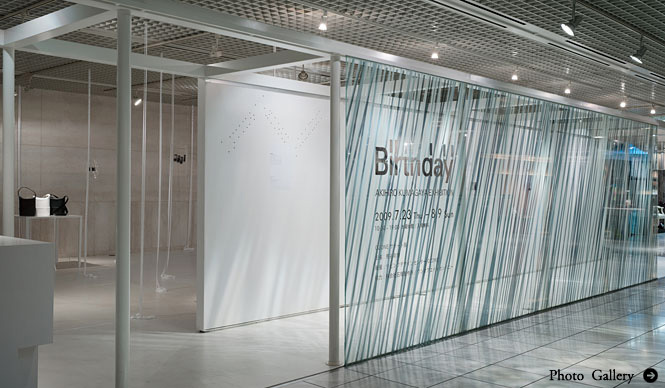
Hiroshi Yanagimoto | 19th Interview with Akihiro Kumagai (ALEKOLE) on
19th Installment: A Conversation with Akihiro Kumagai (ALEKOLE) on
In the third installment of our interview series with product designers, we welcome Akihiro Kumagai. In this second part, we delve deeper into his communication style and his thoughts on working as a freelancer.
Text by Hiroshi Yanagimoto
Communication Born from Casual Conversations While Looking at an iPod
YanagimotoYou've mentioned that connections made at events have led to work. I'm sure fellow designers are very curious about what you talk about during those encounters (laughs). How do you communicate with people and build your network?
KumagaiI don't consciously try to build a network (laughs). When the topic turns to "what kind of things you make" during conversations, I usually just show them images of my work on my iPod. At reception parties, the lighting is often dim, so people sometimes gather around the light from my iPod (laughs).
YanagimotoThat's true, it's hard to present a portfolio in an A4 file at a party (laughs). And when presenting at a company, everyone tends to be formal. So, a casual conversation over an iPod probably works well for both parties.
KumagaiI feel I need to create opportunities for people to become interested in my work. For instance, when I participated in "DESIGN TIDE" in 2008, I spoke to a great many people, almost like a "live demonstration sale" of a kitchen knife (laughs).
If Someone Wants to Become a Designer Now...
YanagimotoDid you enjoy talking to people from a young age?
KumagaiI was extremely shy. Talking to people always felt like a chore. Once I was on stage, I felt I "had to do something..." and would push myself, talking frantically. I overcame that dark period (laughs).
YanagimotoYou were shy? What kind of family did you grow up in?
KumagaiA very ordinary family. My father worked in the restaurant business, my mother did too, and I have an older sister. Everyone in the family is blood type B (laughs). Being the youngest, I grew up observing my free-spirited family objectively. As for family memories... when it was someone's birthday, instead of giving gifts, we'd go to a slightly nicer restaurant and have a meal together. Going somewhere a bit more luxurious than usual allowed me to learn a lot about customer satisfaction, the timing of service, and many other aspects. When I was in high school, I started working part-time at a restaurant, and even now as a designer, that experience is still useful. The restaurant business might have had a significant impact on my approach to creating things.
YanagimotoMy family also ran a restaurant. Even now, when relatives gather, my grandmother, who is in her 90s, is always the first to prepare tea for everyone (laughs). People in the service industry anticipate the next action. It's all driven by the desire to please the customer, which is why they constantly observe them. This kind of hospitality is also essential in design, I believe. If someone wants to become a designer now, I would recommend they first try organizing a large group gathering or working in the service industry. By the way, after graduating from vocational school, you immediately became a freelance designer. Why didn't you choose to get a job?
Common Traits Among Designers Born in the 1980s
KumagaiAt the time, I felt that simply having good styling wouldn't be enough to engage in future manufacturing and design... So, I became interested in the work of "thinking about concepts" and "planning projects." Looking around, many people who achieved success in fields like fashion, broadcasting, and copywriting became conceptors. I thought, perhaps I should follow a similar path by achieving results in design first. However, when I started job hunting, I couldn't find companies where I could take those steps. I had already given up on the idea of getting a job and becoming an in-house designer. Around that time, designers who had graduated and were working freelance began to emerge. So, I decided to start my own practice with the idea, "I'll try working freelance for three years, and if it doesn't work out, I'll get a job." And somehow, I've now reached my fourth year (laughs).
YanagimotoPerhaps it's common among designers born in the 1980s, but nowadays, the boundaries between categories like interior design, product design, and production are blurring. So, you shifted towards becoming a conceptor.
KumagaiWhen I became freelance, I first thought of the design industry as a pyramid. With star players at the top, aiming for that. But I thought, if I could create my own pyramid from the start, there would be no need to climb a narrow triangle. I want to exercise my creativity in creating work before creating things. I believe that way, I can enjoy my work more.
YanagimotoI also didn't set out to become a director or producer. As I was hands-on creating things myself, I started to feel my own limitations.—There are many more talented people out there, and if something is needed by the world, it's best to have the right person for it. At some point, I started thinking that way. Since then, I've been working with my current approach.
KumagaiIf you focus too much on just creating things, you might prioritize your own ego and end up overextending yourself. By being involved from the beginning of the creation process, you can assemble a suitable team. I also want to be someone who can offer advice to those who are trying to do something new, if I can empathize with their vision.