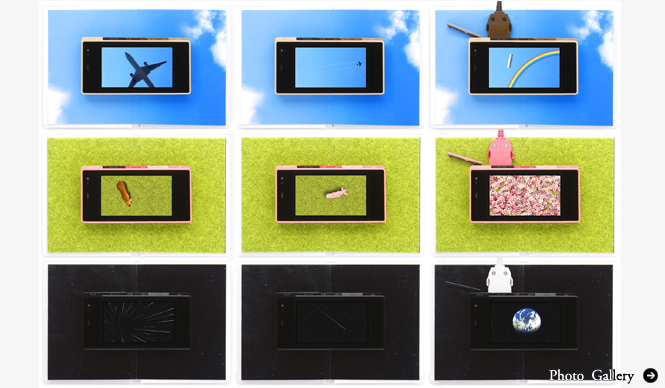
May 15, 2015
Hiroshi Yanagimoto | 18th Interview with Akihiro Kumagai (ALEKOLE) on
18th Installment: Interview with Akihiro Kumagai (ALEKOLE) on "Product Thinking" (Part 1)
Our third guest in this series of conversations with product designers is Akihiro Kumagai. He has appeared frequently on OPENERS for product launches and is a particularly dedicated designer among his peers. While I have many opportunities to meet Kumagai-san, who is of the same generation as many designers, I haven't really delved into his private life, so I'd like to explore that today.
Text by Koichi Yanagimoto
Focusing on Graphic Design to Communicate Effectively
YanagimotoNorihiko Terayama and Shunsuke Umiyama, whom I interviewed for my OPENERS series "How to see design," were influenced by "droog design" from the 2000s. They say that encountering "droog design" (a Dutch design collective founded in 1993, which produced leading Dutch product designers such as Richard Hutten, Marcel Wanders, and Hella Jongerius, and has since led the Dutch design scene) sparked their awareness of becoming designers. First, Kumagai-san, who is of the same generation, could you tell us what influenced you as a designer?
KumagaiWhile I was aware of "droog design," I wasn't particularly influenced by them. The creator who made an impact on me was "ora-ito" (around 2000, they began creating product and advertising designs for companies and publishing them online, evolving virtual designs into actual projects and garnering significant attention. "ora-ito," which started as a personal project, has now grown into a design office based in Paris). It was around the time "ora-ito" was creating designs for companies without permission and publishing them online. I followed it closely in real-time back then. I was shocked to see that this kind of work could be made known to the world and also be commercially viable.
YanagimotoI see. Indeed, you're not a pure product designer, are you? You have a stronger graphic approach.
KumagaiI studied architecture and interior design at school, but when it came to presentations, I needed boards and materials. To communicate effectively to people, I started focusing on graphic design. As I did that, I became increasingly interested in the world of graphics. The sheer volume of work is also much greater (laughs).
YanagimotoSo, you pursued practical skills like "winning competitions," and as a result, you ended up doing graphic design work. Was there a shift in your mindset that led you to approach three-dimensional forms again?
KumagaiIt wasn't entirely graphic design at the time, but considering the initial costs, I could still create my own work in graphic design. Later, as my capacity grew, I shifted from two-dimensional to three-dimensional work.YanagimotoFrom my experience working with you, Kumagai-san, I've found you to be very adept at client relations. You seem to be the type who thinks conceptually through the process and negotiates effectively with clients. Your communication skills are outstanding. You're working with large corporations despite your youth.
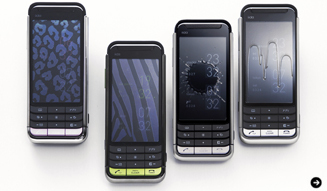
iida LIFESTYLE PRODUCTS "Design Sheet"
18th Installment: Interview with Akihiro Kumagai (ALEKOLE) on "Product Thinking" (Part 2)
YanagimotoIn 2008, you unveiled the Olympus camera bag (CBG-2) at "DESIGN TIDE." Could you tell us how that design project came about?
KumagaiThe year before, at "DESIGN TIDE 2007," there was an Olympus camera promotion exhibition held very close to where I was exhibiting. I happened to visit it. That's where I met the person who would later be in charge of the camera bag. Later, as part of a project to design accessories for Olympus, the topic of "not having a good camera bag" came up, and I proposed a camera bag. It was a series of coincidences... it started with a casual conversation.
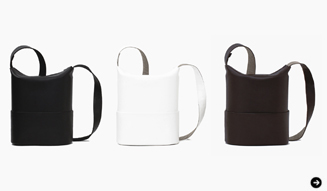
"OLYMPUS CAMERA BAG / CBG-2"
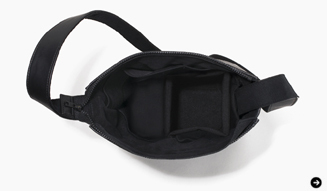
YanagimotoThat must also be a testament to your communication skills, Kumagai-san. Being able to turn chance encounters into opportunities. The "OLYMPUS CAMERA BAG / CBG-2" has been well-received, even by older demographics, I hear.
KumagaiThe brief was "simple, unisex, and functionality befitting a camera manufacturer." At the time, I noticed that people often don't take their cameras out of their bags after returning home and keep them stored there. So, I designed it with a cylindrical form that could stand on its own, allowing lenses to be removed from the top for quick shooting. The positive reception from older users seems to be partly because it "resembles a bento box" (laughs).
YanagimotoA bento box... (laughs). It makes sense that people who pursue photography (like with DSLRs) as a "hobby" tend to be older, considering the cost of equipment. It must have resonated with those who approach photography with a "more than amateur, less than professional" mindset. By the way, you also have a more artistic piece (SPACE DEBRIS) that uses "carbon" as a motif. Could you tell us about that?
KumagaiA company that handles carbon sheets approached me asking, "Can we do something with the offcuts?" Even with carbon, offcuts don't come with quality guarantees. So, I created mobiles that utilized its lightweight and tensile strength. Currently, the size isn't fixed, and I personally want to engage more deeply with the material.
YanagimotoMasters like Riki Watanabe and younger designers like Nariki Fujishiro also create mobiles. They don't have the practicality of furniture, nor are they inexpensive. Was there a specific reason why your focus shifted to mobiles, Kumagai-san?KumagaiIndeed, they don't have a specific function; they just hang. At times, they might seem like a waste of space. But I find that very uselessness appealing. For me, mobiles represent a longing for space. It's the same way boys are drawn to "space" or the feeling of being liberated from gravity. Until recently, space seemed like a mysterious entity to me, but I've increasingly felt a connection to it. Creating mobiles stems from that personal sentiment.

"SPACE DEBRIS"

Akihiro Kumagai
Designer. Born in Tokyo in 1984. Engaged in concept making, direction, and design for graphics, products, and spaces, creating with the aim of effective communication.
His major works include the genuine Olympus camera bag "CBG-2" and KDDI iida LIFESTYLE PRODUCTS "Design Sheet" and "EHON TRAY." He has received numerous awards, including the Good Design Award, DDA Award, and SDA Award.
http://alekole.jp
In the next installment, we will explore "Why Kumagai became a designer without seeking employment" and "Where the origins of his communication skills lie." Please look forward to it.