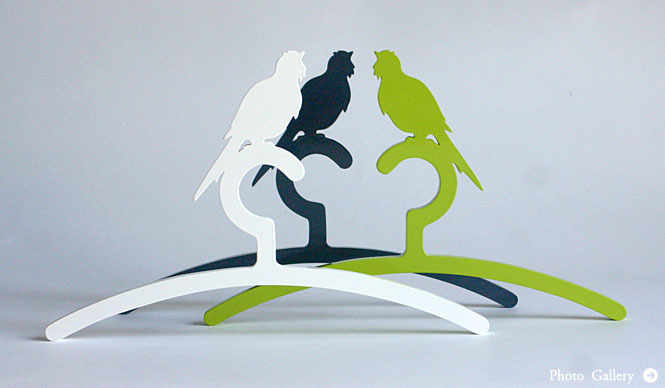
Hiroshi Yanagimoto | 16th Interview with Shunsuke Umiyama (MicroWorks) on
16th Installment: Asking Toshiaki Umiyama (MicroWorks) About
In this second installment of our conversation with designer Toshiaki Umiyama (MicroWorks), we delve into products that strike a balance between design and communication. We explore the mindset of designers born around the 1980s, driven by the desire to create what they envision.
Text by Hiroshi Yanagimoto
If You Can Do It Yourself, Do It Yourself
YanagimotoMany designers must wish for manufacturers to buy their designs. Do you ever find yourself telling your designer friends, "Why don't you just try making it yourself?"
UmiyamaYes, I do. Recently, I think more designers are taking on the role of manufacturers themselves. Designers like Norihisa Terayama and those around him are creating what they want to make, regardless of whether a manufacturer will pick it up. I became friends with them because I felt our stances were similar. Sometimes, designers who have always collaborated with manufacturers come to me saying they want to "do original work themselves." It seems they have that intention, or are starting to act on it.
YanagimotoWhen you try to make something yourself, you have to bear the cost of molds, manage inventory, and handle cost calculations – it's complex. On the other hand, when you work for a manufacturer, there are often fewer such constraints. Do you see a difference between these two approaches?
UmiyamaI think there is. While I don't consciously think about it, the idea that "if you can do it yourself, you should" is somewhere in the back of my mind. When I receive a design commission from a client, I first want to try something that's difficult for me to achieve on my own scale. Of course, I listen carefully to their requests. For my own label's items, my intentions are reflected 100%, so when it comes to expressing my "self" in commissioned work...
Yanagimoto...it's difficult to express it. I see. Those who haven't made things themselves yet try to inject their personality into every project, no matter what it is. The more you aim for mass-market design, the more a strong sense of self can alienate customers. But in your case, because you secure your own space for self-expression, your mass-market designs are readily accepted by the public. You can view yourself from a distance, not in a negative way. Even your mass-produced items have your signature style. However, for those who are creating, this can be hard to grasp, and they might feel anxious that they aren't being understood if they don't pour the same energy into everything, whether it's a million units or a hundred. They might try to invest the same energy into both.
UmiyamaI think that's true.
Yanagimoto: They worry about their "individuality" and try to express themselves in everything, but even when they tone it down, it objectively still shows their individuality, so they don't really need to worry.—
To develop this kind of sensibility, I believe it's important for young designers to actively create things. I also hope they'll try selling their work not just in design-focused circles but also in mass-market venues like department stores. That's how they'll truly understand what's missing. I consider some of our products as mass-market items and conduct experiments to see how older women choose them. Everyone has an unconscious way of selecting things, but stimulating that sense requires simulating how to draw it out. This accumulation of experience can lead to collaborations with large corporations. I also believe that designers and creators who strike a balance between pursuing niche interests and creating broadly appealing work can connect with the wider public.
UmiyamaIt's encouraging to hear you say that, Mr. Yanagimoto.
YanagimotoDesigners like Norihisa Terayama, born around the 1980s, might be from a slightly earlier generation, but he has a unique sensibility honed abroad. I believe you also possess a sensibility that differs from what's typically cultivated through Japanese education. It's not the usual path of being "earnest, delving deep, and becoming absorbed in the craft." For instance, Terayama's experience abroad seems to have instilled a sense of "just do it, and even if you stumble, you're moving forward." In contrast, Japanese people tend to approach manufacturing by thinking, "How can we avoid stumbling?" Perhaps the overseas perspective is more like, "If you stumble, just find a different way to walk." I believe those who are taking even small steps toward "wanting to do something themselves," like you and Terayama, deserve recognition.

Toshiaki Umiyama (MicroWorks) - Note 2009
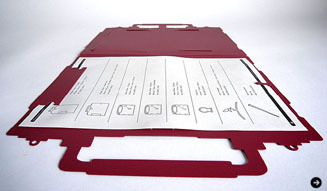
Toshiaki Umiyama (MicroWorks) - Paper Pack 2004
Approaching the Mental Aspect Can Change How Users Interact with Objects
YanagimotoBy the way, were you influenced by Droog Design?
UmiyamaYes, I was. Their fundamental way of thinking was completely different from anything I had encountered before. In my first year of vocational school, a friend invited me, saying, "They're doing something interesting, let's go." It was an exhibition at OZONE ("DROOG & DUTCH DESIGN Exhibition" in October 2000). Seeing it, I felt that their thought process began from a much deeper, or rather, a completely different starting point compared to what I had been doing. This opened up infinite possibilities for expression. While factors like ease of sitting or usability are certainly important, the visual impact was even greater.
At that time, I had a thought: imagine two cups. One is ordinary but durable, and the other is very fragile but evokes empathy through the maker's consciousness and intent. You'd likely handle the latter more carefully and cherish it more than the former. The first was made durable with the idea of long-term use, but perhaps the latter, in the end, is used for a longer period.
I realized that by approaching the mental aspect, rather than just the physical, one could change how users interact with objects. Depending on how they're handled, the value and lifespan of an object can differ. This is what I felt when I first encountered Droog Design.
YanagimotoWe were talking about Droog Design yesterday, and while their approach to "use" might seem detached from reality, I sometimes feel a sense of "realness" when interacting with their work. I pondered why, and I think it's because their designs stem from a grounded perspective, not just from form. Similar to what you said, even if it's not a finished product, the process of trial and error imbues it with a profound humanity. Furthermore, I believe their deep engagement with social issues and history also contributes to this feeling.
Toshiaki Umiyama / MicroWorks
Born in Tokyo in 1981. He began planning and producing original designs during his studies and established "MicroWorks" upon graduation in 2003.
He engages in a wide range of design work, primarily in products, transcending materials and genres. While exhibiting his work in various projects, he also launched "MicroWorks Label" to develop and sell his own creations.
http://www.microworks.jp